
Table of Contents
-
The 10 Most Common Long Term Food Storage Mistakes to Avoid
- Mistake 1: Improper Temperature Control
- Mistake 2: Storing Food in the Wrong Containers
- Mistake 3: Failure to Rotate Stock (FIFO)
- Mistake 4: Storing Food Uncovered or Exposed
- Mistake 5: Refrigerating Items That Belong in the Pantry
- Mistake 6: Overcrowding the Refrigerator
- Mistake 7: Ignoring Expiration Dates and Shelf Life
- Mistake 8: Storing Food in the Refrigerator Door
- Mistake 9: Neglecting Pest and Rodent Proofing
- Mistake 10: Skipping Inventory Management
- Best Foods for Long Term Storage and How to Protect Them
- Implementing a Food Rotation System for Your Family
- Building an Emergency Food Supply for Family Preparedness
- Mylar Bag Food Storage: Best Practices and Common Errors
- Climate-Controlled vs. Ambient Storage: What Your Family Needs
- How Nutritional Degradation Affects Long Term Stored Food
- Conclusion: Creating a Sustainable Long Term Food Storage Plan
Last Updated: July 2, 2026
The 10 Most Common Long Term Food Storage Mistakes to Avoid
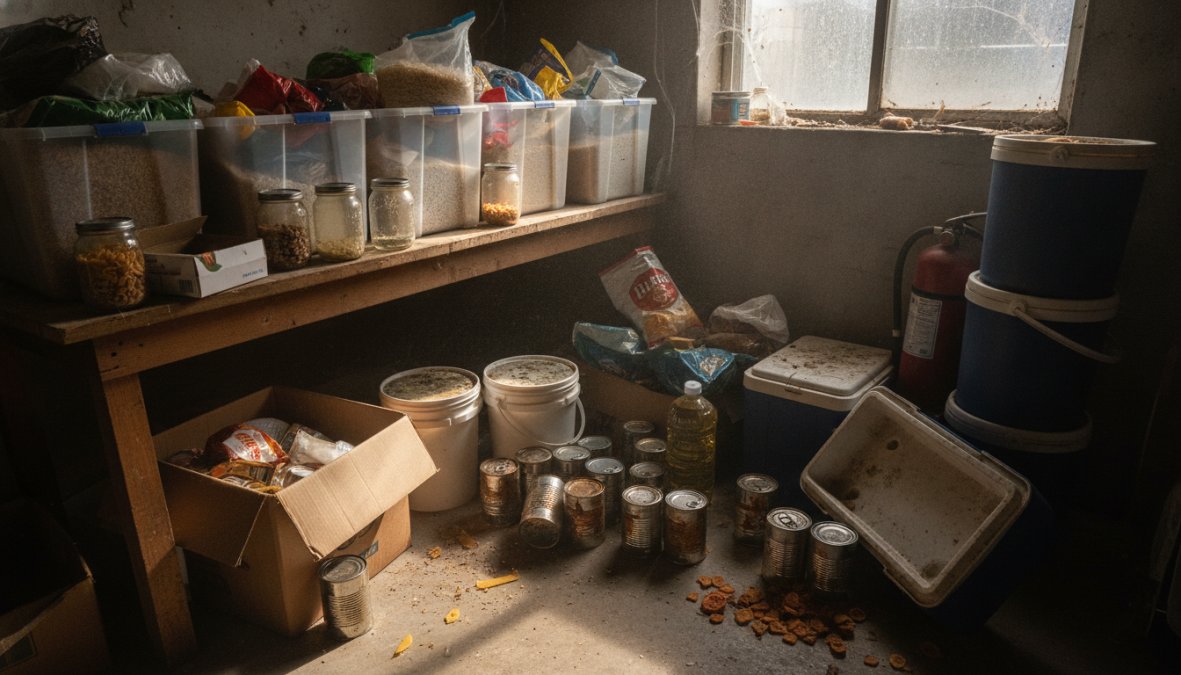
Understanding long-term food storage mistakes is essential for emergency preparedness. At SHTF Prepper Club, we've analyzed thousands of household storage setups to identify patterns that lead to spoiled food and failed plans. Most families make these mistakes unknowingly, discovering problems only during an actual crisis.
Below are ten critical errors that undermine long-term food storage, why they matter, and how to fix them.
Mistake 1: Improper Temperature Control
Temperature fluctuations accelerate spoilage, nutrient loss, and texture breakdown. Foods stored in uninsulated garages, attics, or basements near heating vents experience rapid degradation.
The ideal storage temperature for most dry goods is between 50-70°F, with consistency mattering more than hitting a specific number. A basement that stays at 55°F year-round outperforms a pantry swinging from 65°F to 80°F seasonally. Temperature fluctuations cause moisture migration inside sealed containers, promoting mold growth and bacterial activity.
Choose a cool, dark closet inside your home over an uninsulated shed. Monitor garage or basement temperatures with an inexpensive digital thermometer. If swings exceed 20°F between seasons, that location isn't suitable for long-term storage.
Mistake 2: Storing Food in the Wrong Containers
Plastic bags, cardboard boxes, and standard plastic tubs offer minimal protection against moisture, oxygen, and pests. The gold standard is airtight containers made from food-grade materials. Glass jars work well for smaller quantities. For bulk storage, Mylar bags combined with oxygen absorbers and sealed buckets create a nearly impenetrable barrier.
Common mistakes include storing flour or sugar in opened bags, using non-food-grade buckets, failing to seal containers completely, and storing food in clear containers that allow light exposure.
Invest in high-quality airtight containers and Mylar bags. Label everything with the storage date.
Mistake 3: Failure to Rotate Stock (FIFO)
FIFO, First In, First Out, ensures older supplies are used before newer ones. Without this system, food expires before consumption, wasting money and creating false confidence in preparedness.
Newer purchases should go behind existing stock. Use shelf labels with dates visible from the front. During normal times, consume from your rotation stock to keep supplies fresh and ensure familiarity with what you have.
Dedicate one shelf or cabinet to rotation stock. Always remove from the front, always add to the back.
Mistake 4: Storing Food Uncovered or Exposed
Exposed food attracts pests, absorbs odors, and loses moisture. Open bags of rice, pasta, or flour become highways for insects and rodents.
Every item in long-term food storage should be in a sealed, covered container, including dry goods, canned goods, dehydrated foods, and powdered goods. Even cardboard boxes with sealed lids are better than open storage.
Mistake 5: Refrigerating Items That Belong in the Pantry
Some families mistakenly refrigerate shelf-stable foods, wasting refrigerator space and accelerating spoilage.
Foods that should never go in the refrigerator include whole potatoes, onions, garlic, unripe bananas, tomatoes, honey, peanut butter, bread, and olive oil. Room-temperature pantry storage is correct for these items.
During power outages, your refrigerator will be among the first appliances to fail. Foods mistakenly stored there become inaccessible, while pantry-stored items remain available.
Mistake 6: Overcrowding the Refrigerator
Overcrowding reduces airflow, creates temperature inconsistencies, and accelerates spoilage. Items in the back stay colder than items in front, moisture accumulates in dead zones, and cross-contamination risk increases.
Organize your refrigerator with space between items. Use shelves intentionally: coldest items (back) for perishable proteins and dairy; warmer zones (door, upper shelves) for more stable items.
Mistake 7: Ignoring Expiration Dates and Shelf Life
Expiration dates indicate when foods lose nutritional value, taste, or safety. Different foods have different lifespans: canned goods (3-5 years), dried beans and rice (10-30 years), powdered milk (2-10 years), dehydrated vegetables (5-10 years), and freeze-dried meals (up to 25 years).
Create a simple inventory system. Write the purchase date on every item and keep a list of what you have and when it expires. Review quarterly and rotate accordingly.
Mistake 8: Storing Food in the Refrigerator Door
The refrigerator door is the warmest part, with significant temperature fluctuations every time it opens. Milk, eggs, and butter should be stored on interior shelves where temperature remains stable. Condiments with high acid content are better suited for door storage.
Mistake 9: Neglecting Pest and Rodent Proofing
Pests and rodents can destroy an entire food storage supply in weeks. Pest-proof storage requires both prevention and barriers: seal entry points larger than 1/4 inch, store food in sealed rigid containers, keep storage areas clean, use food-grade buckets with tight-fitting lids, place traps around storage areas, and elevate storage off the ground.
Mistake 10: Skipping Inventory Management
Without an inventory system, families don't know what they have, how much, or when it expires. This leads to duplicate purchases, forgotten supplies, and wasted money.
Track what food items you have, how much of each, when it was purchased or expires, and where it's stored. A simple spreadsheet or notebook works. Update it every time you add to or remove from storage.
Best Foods for Long Term Storage and How to Protect Them
The best foods for long-term storage share common characteristics: low moisture content, stable composition, and resistance to spoilage. These include dried beans and legumes (20-30 years), white rice (30+ years), pasta (8-10 years), canned vegetables and proteins (3-5 years), powdered milk (2-10 years), honey (indefinite), salt and sugar (indefinite), peanut butter (6-9 months unopened), dehydrated vegetables and fruits (5-10 years), and freeze-dried meals (20-25 years).
Protect these foods by storing in airtight containers, keeping in cool environments, protecting from light and moisture, and rotating regularly.
Implementing a Food Rotation System for Your Family
A food rotation system transforms your storage into a dynamic resource serving your family year-round. The FIFO method is the simplest approach.
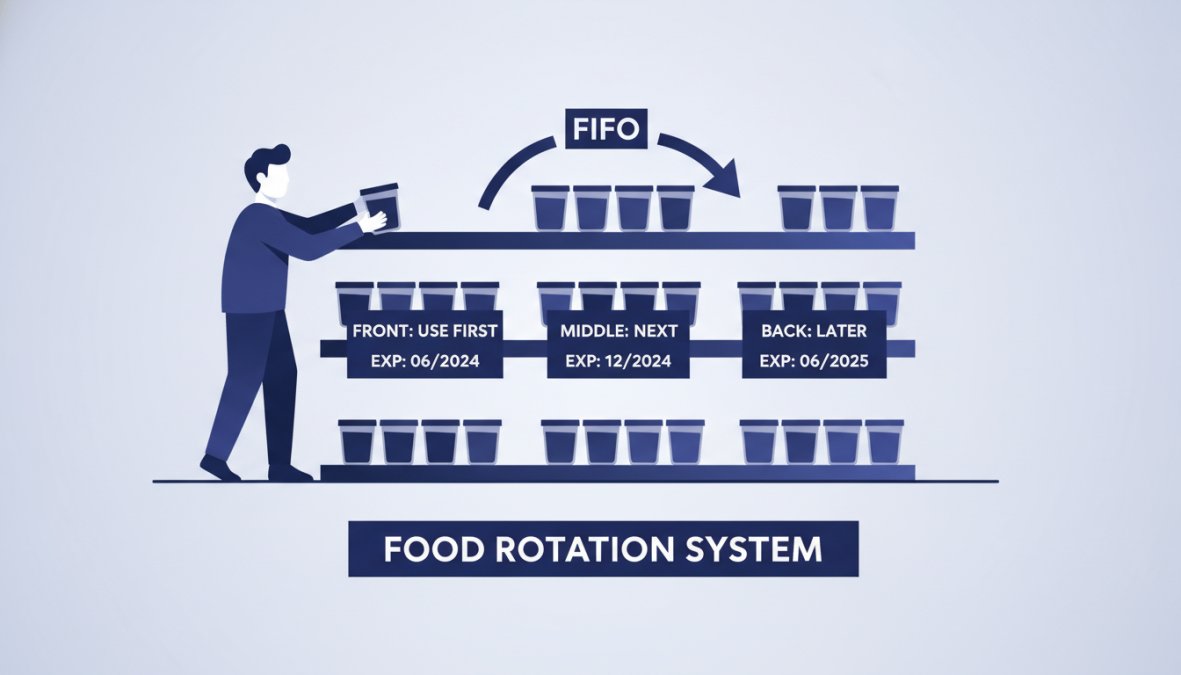
Step 1: Designate one cabinet, closet, or shelf for rotation stock, separate from everyday cooking supplies.
Step 2: Label everything with dates using a permanent marker or label maker.
Step 3: Place new items in the back to ensure older items are accessed first.
Step 4: Consume from the front during cooking.
Step 5: Review quarterly to identify items nearing expiration.
Step 6: Track what your family actually consumes to stock accordingly.
| Rotation Step | Time Required | Frequency | Purpose |
|---|---|---|---|
| Label new items | 2 minutes per item | Every purchase | Track age and expiration |
| Place items in back | 1 minute per item | Every purchase | Ensure FIFO order |
| Consume from front | Automatic | During cooking | Natural rotation |
| Review inventory | 15-20 minutes | Quarterly | Identify expiring items |
| Adjust stocking plan | 10-15 minutes | Annually | Match actual consumption |
Building an Emergency Food Supply for Family Preparedness
An emergency food supply requires intentional planning based on family size, dietary needs, and scenarios you're preparing for. Assess how many people you're feeding, any allergies or dietary restrictions, and how long you want supplies to last.
For most families, a two-week emergency supply is practical. This requires approximately 56 servings of protein, 56 servings of grains, 28 servings of vegetables, 28 servings of fruits, 14 servings of fats and oils, and 14 servings of dairy alternatives.
Stock foods your family actually eats. Include comfort foods and treats; during stressful times, familiar flavors provide psychological comfort. For families with young children, prioritize powdered formula, shelf-stable milk, baby food, and child-friendly proteins.
Store water alongside food. Most experts recommend one gallon per person per day for drinking and basic hygiene. For a family of four, that's 28 gallons for a one-week supply.
Mylar Bag Food Storage: Best Practices and Common Errors
Mylar bags block light and oxygen, creating environments where foods remain stable for decades. Combine them with oxygen absorbers for maximum effectiveness.
Best practices: Use 500cc oxygen absorbers for one-gallon bags and 2000cc for five-gallon bags. Seal using a heat sealer or clothes iron, running the heat source along the entire sealing edge. Store sealed bags in food-grade buckets for additional protection against punctures, pests, and light.
Common errors: Using regular plastic bags instead of Mylar, forgetting oxygen absorbers, sealing incompletely, storing bags on concrete floors, and exposing sealed bags to temperature extremes.
For families new to Mylar storage, start with small batches to practice sealing before committing your entire supply.
Climate-Controlled vs. Ambient Storage: What Your Family Needs
Climate-controlled storage maintains consistent temperature and humidity year-round, offering predictability but requiring electricity and equipment. Ambient storage uses natural environments and is free but less predictable.
For most families, a hybrid approach works best. Use climate-controlled spaces for items needing most protection (powdered milk, dehydrated vegetables, freeze-dried meals). Use ambient storage for stable items (canned goods, dried beans, rice, honey).
Choose the coolest, darkest, most stable location available in your home. A basement corner is better than a kitchen cabinet; a closet is better than a pantry near a window.
How Nutritional Degradation Affects Long Term Stored Food
Over time, stored foods lose nutritional value. Vitamins degrade, proteins break down, and fats oxidize faster in warm environments. Vitamin C degrades quickly; vitamin A, thiamine, and riboflavin also degrade over time. Protein and carbohydrates are more stable.
For families: don't rely solely on long-term stored food for all nutrition, include multivitamins in emergency supplies, prioritize foods with stable nutrients, rotate supplies regularly, and supplement stored foods with fresh items during normal times.
Conclusion: Creating a Sustainable Long Term Food Storage Plan
Building a sustainable long-term food storage system is one of the most practical steps toward emergency preparedness. The ten mistakes outlined are entirely preventable.
The foundation is simple: cool, dark, sealed storage with regular rotation. Add an inventory system, choose foods your family eats, and commit to quarterly reviews. These habits transform food storage into a manageable routine.
Emergency preparedness doesn't require perfection, it requires consistency. SHTF Prepper Club simplifies this process by providing expert guidance and vetted food storage solutions designed for families. Their long-term food storage kits include properly sealed containers, oxygen absorbers, and detailed rotation guides. With supplies designed to remain stable for up to 25 years, SHTF Prepper Club helps your household achieve food independence and genuine peace of mind.
Frequently Asked Questions
What are the most common long term food storage mistakes families make?
The biggest mistakes include improper temperature control, using wrong containers, neglecting FIFO rotation, and failing to protect food from pests and moisture. Many families also ignore expiration dates and store perishable goods improperly. For emergency preparedness, avoiding these errors ensures your food supply remains safe and nutritious when your family needs it most. Proper airtight containers, consistent labeling, and regular inventory checks prevent most storage failures.
How should you store food in mylar bags for maximum shelf life?
Mylar bag food storage requires airtight sealing with oxygen absorbers to prevent bacteria growth and dehydration. Store bags in a cool, dark location away from temperature fluctuations. Use food-grade Mylar bags exclusively and seal them with a heat sealer or iron. Include oxygen absorbers appropriate for bag size, and label with contents and date. Keep bags in a climate-controlled area when possible. Properly sealed Mylar bags can preserve dry goods for 25+ years, making them ideal for emergency food supplies.
What is the best food rotation system for a family emergency supply?
FIFO (First-In-First-Out) is the gold standard for food rotation. Label all items with purchase or storage dates, and always use older stock first. Create an inventory management system, digital or printed, tracking what you have, quantities, and expiration dates. Rotate stock every 6-12 months depending on item type. For families, designate one person responsible for rotation and checks. This system prevents food waste, ensures freshness, and guarantees your emergency food supply remains viable when needed.
How do you protect long term food storage from pests and moisture?
Use airtight containers and food-grade Mylar bags with oxygen absorbers to create barriers against pests and moisture. Store in pest-proof containers with tight-sealing lids. Keep storage areas clean and sealed, check for cracks or gaps rodents could exploit. Use desiccants or moisture-absorbing packets in containers. Maintain stable humidity levels below 15% when possible. For bulk storage, consider elevated shelving away from walls. Regular inspections catch pest activity early. These measures protect both dry goods and perishable items in your emergency food supply.
This article was written using GrandRanker