
Table of Contents
- Best Emergency Food Kits for Families: Top Picks Compared
- How Much Emergency Food for a Family of 4
- Freeze-Dried vs. Dehydrated: Which Works Best for Families
- Emergency Food Supply Checklist: What Your Family Needs
- How to Store Emergency Food at Home: Practical Solutions
- Budget-Friendly vs. Premium: Finding the Right Fit
- Long-Term Food Storage Shelf Life: What to Expect
- Conclusion
Best Emergency Food Kits for Families: 2026 Guide
Last Updated: July 1, 2026
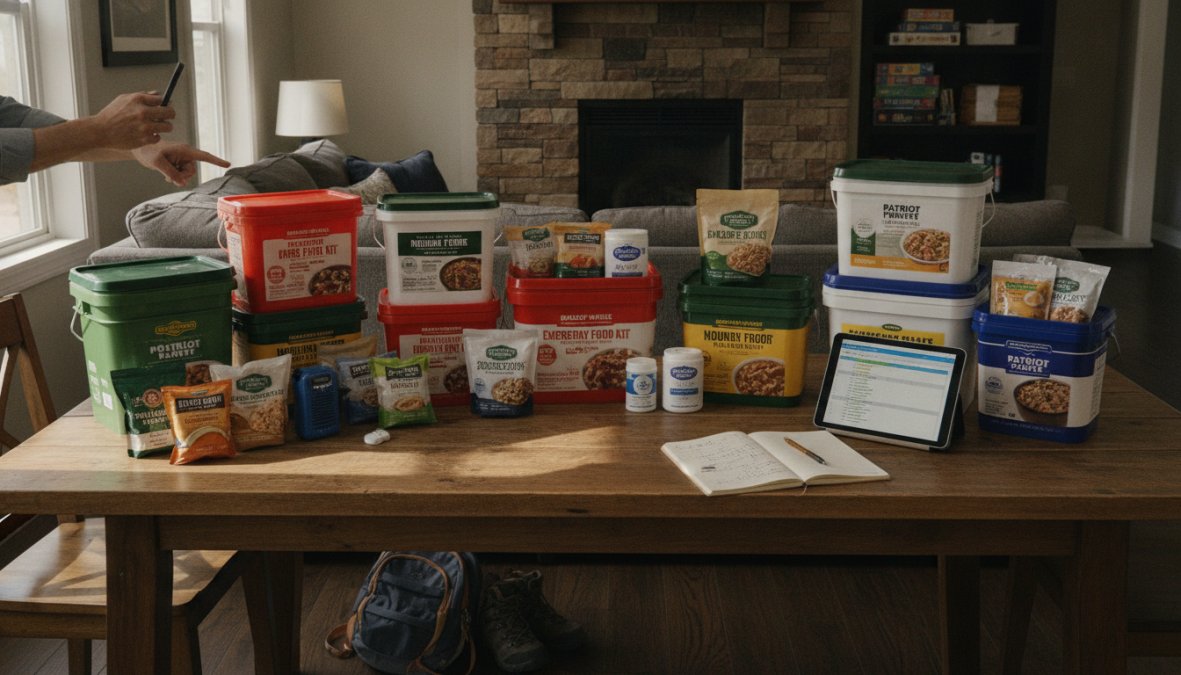
When disaster strikes, your family's survival depends on preparation. The best emergency food kits for families combine long shelf life, nutritional balance, and ease of preparation into one comprehensive solution. At SHTF Prepper Club, we understand that emergency preparedness shouldn't feel overwhelming, it should feel like peace of mind. This guide breaks down the top emergency food kits available today, comparing their features, pricing, and real-world performance so you can make an informed decision for your household.
The difference between a kit that works and one that sits unused comes down to three factors: palatability, preparation time, and storage practicality. Most families abandon their emergency supplies within two years because they chose kits that tasted like cardboard, required skills they didn't have, or took up half the basement. We'll show you how to avoid those mistakes.
Quick Comparison Table
| Kit Name | Shelf Life | Best For | Key Feature | Starting Price |
|---|---|---|---|---|
| SHTF Prepper Club | Up to 25 years | Families wanting comprehensive solutions | Expert-vetted, minimal prep required | Varies by kit |
| Legacy Food Storage | 25 years | Non-GMO priority | 100% certified GMO-free ingredients | $399 (120 servings) |
| Augason Farms | 30 years | Budget-conscious families | Bulk staples + complete meals | $174.08 (45-day kit) |
| Mountain House | 30 years | Taste-first approach | Excellent flavor, just-add-water prep | Contact for pricing |
| ReadyWise | 25 years | Portable 72-hour kits | Compact, grab-and-go design | $23.39 (72-hour kit) |
| Valley Food Storage | 25 years | Clean-label seekers | No GMOs, fillers, or artificial additives | Contact for pricing |
| Nutrient Survival | 25 years | Health-conscious families | High-protein, nutrient-dense meals | $79.99 (select buckets) |
How Much Emergency Food for a Family of 4
The amount of emergency food your family needs depends on your preparedness timeline. Most experts recommend starting with a 72-hour supply, enough for immediate shelter-in-place scenarios. For longer-term security, many families build toward a 6-month to 1-year supply, though this requires significant storage space and rotation discipline.
A family of four needs roughly 8,000 calories per day to maintain normal activity levels during an emergency. That translates to 2,000 calories per person daily. However, during high-stress situations, caloric needs may increase. The key is having variety so family members actually eat the food rather than refusing unfamiliar meals.
Calorie Density and Daily Requirements
Most quality emergency food kits provide 1,200 to 2,000 calories per serving. A typical bucket contains 120 servings, which means one bucket feeds a family of four for approximately one month if used as their sole food source. However, treating emergency food as a supplement to other supplies (canned goods, fresh items during the first week) stretches your investment further.
The calorie-per-dollar ratio varies significantly. Budget-friendly options like Augason Farms deliver calories more efficiently, while premium brands like Mountain House prioritize taste and preparation ease over raw caloric efficiency. Neither approach is wrong, they serve different priorities.
Family Size Scaling and Servings
A family of two needs roughly half what a family of four requires. However, most kits come in standard sizes designed for four-person households. Smaller families often overspend by buying full kits when smaller options would suffice. Conversely, families with six or more members should budget for 1.5x the standard four-person kit.
Serving sizes listed on emergency food packaging can be misleading. The "serving" often assumes a 1,200-calorie daily diet, below what most adults need during physical activity. In reality, expect each family member to consume 1.5 to 2 servings daily, which means your supply depletes faster than the label suggests. Always buy 20% more than you think you need.
Freeze-Dried vs. Dehydrated: Which Works Best for Families
Both freeze-dried and dehydrated meals have their place in emergency preparedness. The choice depends on your storage conditions, budget, and how quickly you want meals ready.
Freeze-dried meals retain more original flavor and texture because the freezing process preserves cell structure better than heat-based dehydration. Mountain House and similar premium brands use freeze-drying, which is why their meals taste closer to fresh food. The trade-off: freeze-dried options cost more and require boiling water for rehydration.
Dehydrated meals are lighter and often cheaper. Augason Farms specializes in dehydrated staples that work well for families who want to build custom meals rather than rely on pre-packaged entrees. Dehydrated vegetables, fruits, and proteins give you flexibility to create meals your family actually enjoys.
Preparation Time and Water Requirements
Freeze-dried meals typically require 15-20 minutes of boiling water and waiting time. You pour hot water directly into the pouch, let it sit, and eat. This simplicity matters during actual emergencies when stress levels are high and decision-making capacity is low.
Dehydrated meals often require longer cooking times, sometimes 30-45 minutes on a stove. If your emergency scenario includes power loss, you'll need an alternative heat source like a camp stove or fireplace. This adds complexity that some families aren't prepared to handle.
Water requirements vary. Most freeze-dried meals need 1 to 2 cups of water per serving. Dehydrated meals may need more. In a true water shortage scenario, this becomes critical. Families should store at least one gallon of water per person per day, with emergency food kits requiring additional water for rehydration.
Shelf Life and Storage Conditions
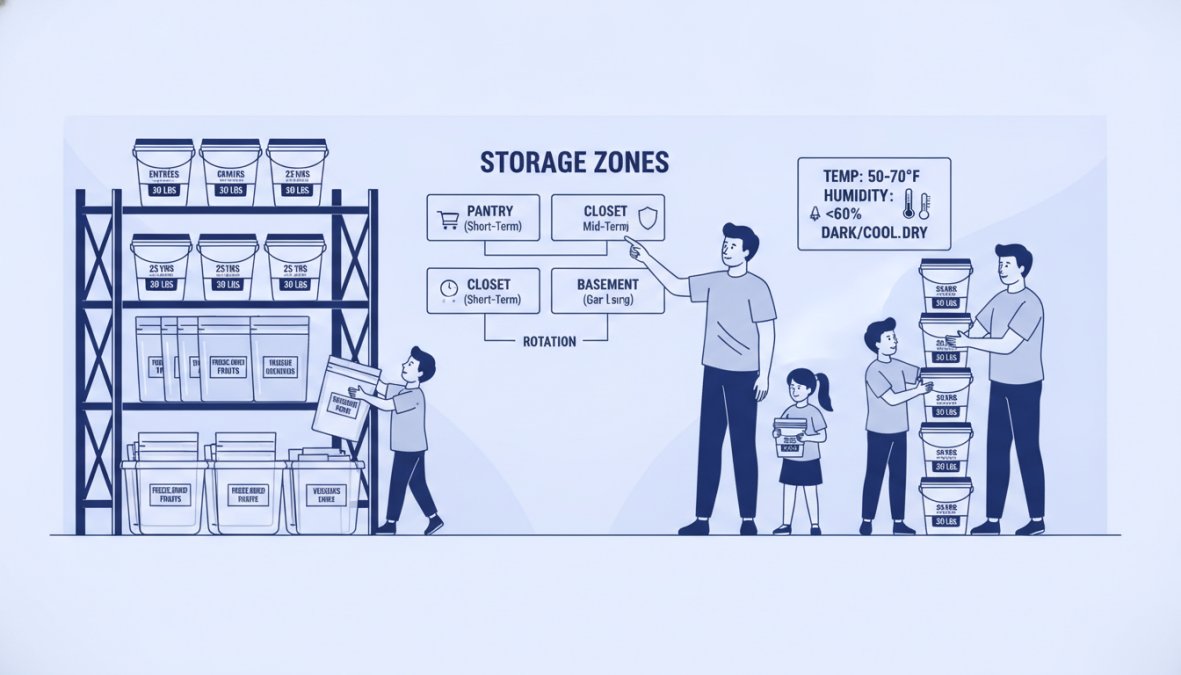
Most quality emergency food kits offer 25 to 30-year shelf lives when stored properly. The "properly" part matters more than the label claim. Shelf life assumes cool, dry conditions, ideally 50-70°F with low humidity. Basements are ideal; attics exposed to temperature swings are not.
Mylar pouches with oxygen absorbers provide the best long-term protection. Legacy Food Storage and Valley Food Storage use this method exclusively. Buckets offer convenience and stackability but may not seal as effectively as Mylar pouches if lids aren't maintained.
Temperature fluctuations degrade food faster than static heat. A pantry that swings from 40°F in winter to 80°F in summer will reduce shelf life by 30-50% compared to a consistently cool location. Humidity is equally important, moisture leads to mold and bacterial growth regardless of oxygen absorbers.
Emergency Food Supply Checklist: What Your Family Needs
A complete emergency food supply includes more than just entrees. You need breakfast items, snacks, comfort foods, and nutritional supplements to maintain morale and health during extended crises.
Most families make the mistake of buying only freeze-dried dinners, then growing tired of the same meals within days. Variety prevents what preppers call "taste fatigue", the point where your family refuses to eat the food despite hunger.
Nutritional Balance and Dietary Restrictions
Quality emergency food kits should provide balanced macronutrients: protein, healthy fats, and carbohydrates. Many budget options lean heavily on carbs and sodium while skimping on protein and micronutrients. Nutrient Survival specifically addresses this gap by formulating meals with higher protein content and essential vitamins.
Dietary restrictions complicate emergency preparedness. Families with gluten sensitivity, nut allergies, or vegetarian preferences often find standard kits unsuitable. Legacy Food Storage and Valley Food Storage both offer non-GMO options, but true allergen-free kits are rare and expensive.
If family members have dietary restrictions, build custom kits using individual ingredients from suppliers like Nutristore rather than relying on pre-assembled kits. This takes more planning but ensures everyone can actually eat during an emergency.
Entree Variety and Psychological Comfort Foods
The psychological aspect of emergency food is underestimated. Familiar, comforting meals maintain morale during stressful situations. A kit with 12 different entree varieties beats one with three options repeated four times.
Include comfort foods, items that feel like treats rather than survival rations. Freeze-dried fruits, instant coffee, hot chocolate packets, and familiar snacks make the experience feel less like deprivation. Mountain House excels here because their meals include recognizable dishes like beef stroganoff and chicken teriyaki rather than generic "survival food."
Children especially benefit from familiar options. If your kids won't eat a particular meal under normal circumstances, they definitely won't eat it during an emergency. Test your emergency food supply with your family before crisis strikes. This serves double duty: it identifies preferences and rotates stock naturally.
How to Store Emergency Food at Home: Practical Solutions
Storage location determines whether your emergency supply remains viable. The ideal location is cool, dark, and dry, conditions that preserve food integrity for decades.
Basements offer excellent temperature stability but may have humidity issues. Attics experience extreme temperature swings. Pantries work if they're interior closets away from exterior walls. Avoid kitchens near stoves or refrigerators, which generate heat. Never store emergency food in garages where temperature fluctuations are severe.
Bucket Storage, Mylar Pouches, and Rotation Schedules
Buckets provide stackability and pest protection. Food-grade plastic buckets with gamma-seal lids keep oxygen and moisture out while remaining accessible. The downside: buckets take up significant space. A one-year supply for a family of four requires roughly 12-15 buckets, equivalent to a large closet.
Mylar pouches with oxygen absorbers offer superior long-term protection and take up less space, but they're harder to organize and rotate. Once opened, Mylar pouches lose their protective seal. This works fine if you're rotating stock annually, but it's impractical for truly long-term storage.
Most families use a hybrid approach: buckets for the main supply and Mylar pouches for backup. Label everything with acquisition dates. Rotate stock annually by moving older items forward and replacing them with new purchases.
Water Storage Integration for Complete Preparedness
Emergency food is useless without water. Store at least one gallon per person per day. For a family of four, this means 120 gallons for a month-long supply. Most homes lack space for this volume, so integration with emergency food storage requires planning.
Food-grade water storage containers stack efficiently. Store them near your food supply so you remember they're part of the same system. Rotate water every six months, it degrades over time despite being "shelf-stable."
Consider water purification as a backup. A quality water filter like those from LifeStraw or Big Berkey allows you to use questionable water sources if municipal supplies are interrupted. This reduces the total water volume you need to store while providing security that your supply won't be exhausted.
Budget-Friendly vs. Premium: Finding the Right Fit
Budget emergency food kits start around $150-200 for a 30-day supply. Premium options run $400-600 or higher. The difference isn't just taste, it's ingredient quality, preparation time, and variety.
Augason Farms and ReadyWise dominate the budget segment. They deliver calories efficiently and include both complete meals and bulk staples. The trade-off: preparation takes longer, taste is utilitarian, and ingredient lists include more fillers.
Mountain House and Legacy Food Storage represent the premium tier. You pay 2-3x more per serving but receive meals that taste significantly better and prepare faster. For families who can afford it, the premium option increases the likelihood that emergency food actually gets eaten during crisis.
The sweet spot for most families: start with a 72-hour emergency kit (budget option) while building toward a 30-day supply using mid-range products. This approach balances cost, taste, and preparedness without overextending your budget.
Long-Term Food Storage Shelf Life: What to Expect
The 25-30 year shelf life printed on emergency food labels assumes perfect storage conditions. In reality, most home storage environments are imperfect. Temperature fluctuations, humidity spikes, and light exposure all reduce shelf life.
A conservatively estimated shelf life is 15-20 years in typical home conditions. This is still far longer than standard pantry items, but it means rotation matters. Plan to use and replace your emergency supply every 10-15 years rather than treating it as a "set and forget" investment.
Inspect stored food annually. Look for signs of damage: dents, rust, leaking seals, or moisture inside containers. Discard any compromised items. This inspection routine catches problems before they affect your entire supply.
Emergency preparedness for families doesn't require choosing between cost and peace of mind. SHTF Prepper Club offers expert-vetted emergency food solutions designed specifically for households that want reliability without complexity. Our curated kits combine long-term food storage with up to 25-year shelf life, minimal preparation requirements, and family-friendly variety. Start with a 72-hour emergency kit today, then expand based on your timeline and budget. Your family's security is worth the investment.
Frequently Asked Questions
What should be in a 72-hour emergency food kit for a family?
A 72-hour kit should include freeze-dried or dehydrated meals with high calorie density, covering breakfast, lunch, and dinner options. Include at least 2,000 calories per person daily, water (1 gallon per person per day), and foods that require minimal preparation. Consider your family's dietary restrictions and include comfort foods to reduce stress. Ensure variety in entrees to maintain morale during emergencies.
How much emergency food should a family of 4 store long-term?
For comprehensive preparedness, store 30-90 days of food per person. A family of 4 needs approximately 240,000-720,000 calories for a 30-90 day supply. Start with a 72-hour kit (24,000 calories), then expand to 2-week and monthly supplies. Use stackable buckets or Mylar pouches for efficient storage. Consider cost-per-meal and your family's preferences to ensure you'll actually rotate and consume the food.
Are freeze-dried emergency food kits worth the cost for families?
Freeze-dried kits offer excellent value for families prioritizing long shelf life (25+ years), minimal preparation, and high nutritional density. They're lightweight, stackable, and require only boiling water. While more expensive upfront than dehydrated alternatives, the calorie density and palatability often justify the investment. Compare cost-per-meal across brands; premium options like Mountain House cost more but deliver superior taste and ease.
How should I rotate emergency food to keep it fresh?
Implement a real-world rotation schedule by consuming and replacing food every 6-12 months, depending on shelf life. Label all items with purchase dates. Use older stock first (FIFO method). Organize by expiration date in your storage area. For 25-year shelf-life items, rotate every 2-3 years to ensure familiarity with meals and maintain inventory accuracy. Track consumption in a simple spreadsheet to stay organized.
This article was written using GrandRanker