
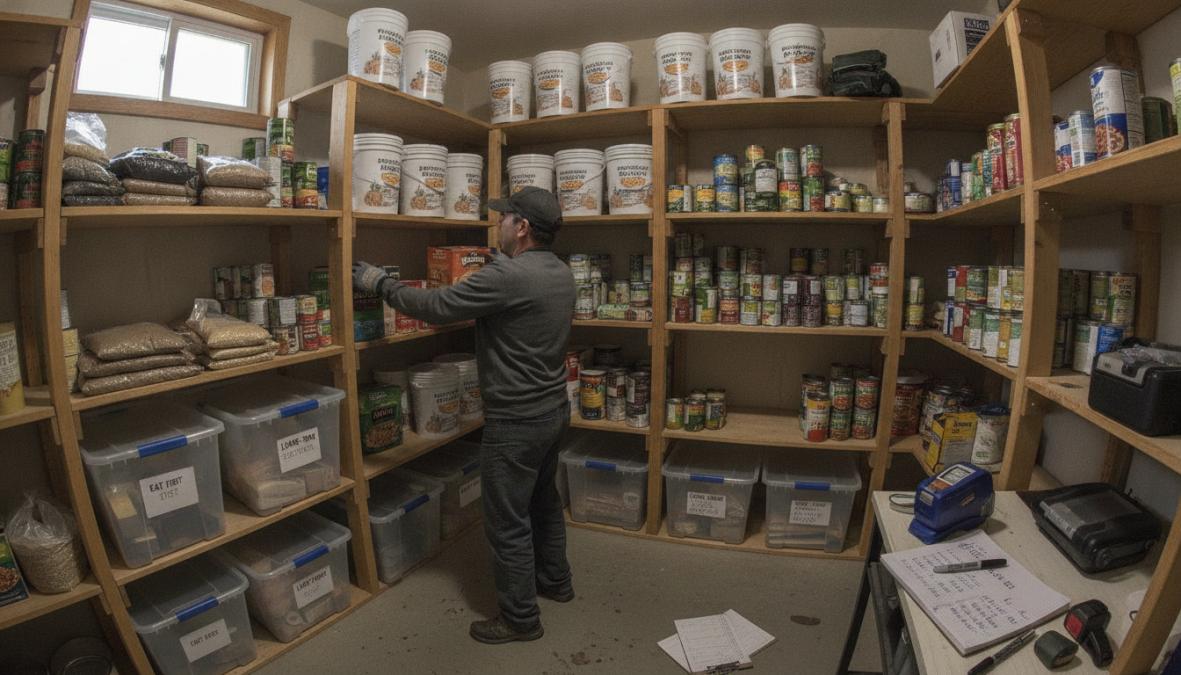
Table of Contents
- How to Rotate Emergency Food Supplies: The FIFO Foundation
- Understanding FIFO Food Rotation System Mechanics
- How to Organize a Prepper Pantry for Easy Rotation
- Long-Term Food Storage Shelf Life and Rotation Schedules
- Emergency Food Storage Checklist and Labeling System
- Digital Inventory Management for Emergency Supplies
- Common Mistakes in Food Rotation and How to Avoid Them
- Maintaining Your Emergency Food Stockpile Long-Term
Last Updated: June 30, 2026
How to Rotate Emergency Food Supplies: The FIFO Foundation
Learning to rotate emergency food supplies prevents waste, ensures food safety, and maximizes stockpile lifespan. The key principle is FIFO: First In, First Out. Older items move to the front; newer purchases go to the back. When you reach for food, grab from the front. This simple system prevents expired food from sitting unused while newer items get consumed.
What FIFO Means and Why It Works
FIFO stands for First In, First Out. The food you purchased first should be consumed first. Older items stay at the front of shelves or containers; new purchases go behind them. This prevents expiration and waste.
A stockpile that expires is a stockpile that fails. When disaster strikes, you need supplies you can trust immediately, not expired goods requiring sorting.
Why Rotation Prevents Food Waste and Ensures Food Safety
Food waste costs households hundreds of dollars yearly. In an emergency stockpile, waste means lost irreplaceable resources. Rotation solves this by ensuring nothing sits untouched for months.
Even shelf-stable foods have expiration dates. Canned goods typically last 3-5 years; dehydrated foods last 10-25 years with proper storage. Moisture, temperature, and light all reduce shelf life. Regular rotation catches items approaching expiration before they become unsafe.
Understanding FIFO Food Rotation System Mechanics
First In, First Out in Practice
FIFO functions through a simple, repeatable action: consume older stock before newer stock. You purchase canned beans on January 15th and place them at the front-left of your shelf. On February 10th, you buy another case and place it behind the first. When you need beans on March 1st, you reach for the January case. The February case remains in reserve.
Over time, items gradually move from back to front as you consume them. New purchases always go in the back. The oldest items are always accessible at the front.
This system requires three things: visibility, consistency, and discipline. You need to see what you have, follow the same placement rule every time you restock, and actually take from the front.
Applying FIFO to Different Food Categories
Canned goods are easiest to rotate, durable, clearly labeled, and stackable. Place older cans in front.
Dry goods (flour, rice, pasta, sugar) should be stored in airtight containers with purchase dates. Rotate oldest containers to the front.
Dehydrated and freeze-dried foods have the longest shelf life (15-25 years). Rotate by production year: use older years before newer ones.
Oils and fats oxidize and go rancid within 1-2 years. Rotate these aggressively.
Powdered milk and protein powders absorb moisture and clump over time. Rotate before degradation occurs.
The principle is identical across all categories: consume what you purchased first before consuming what you purchased later.
How to Organize a Prepper Pantry for Easy Rotation
Physical Shelf Layout and Visibility
Your storage shelves must be organized so you can see everything at a glance. Forgotten items expire.
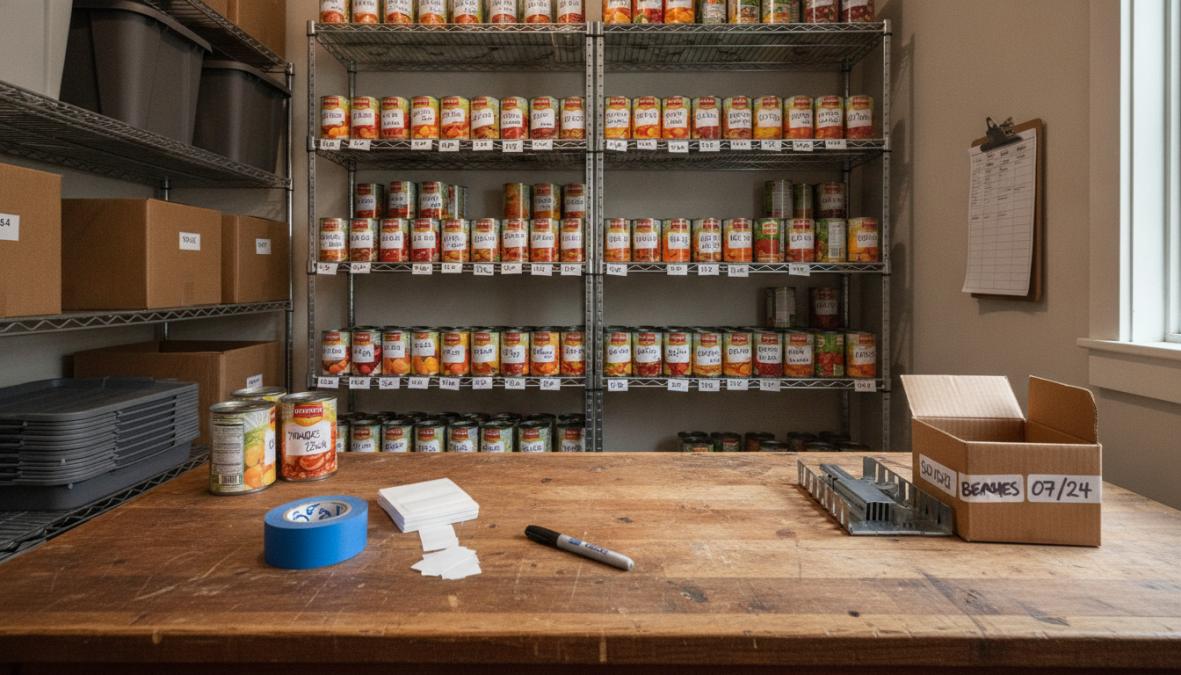
Use the principle: front to back, oldest to newest. Oldest items should be at eye level and easily accessible. Use wire shelves to allow air circulation, reducing mold and condensation risk.
Label the front edge of each shelf with the category: "Canned Vegetables," "Canned Proteins," "Dry Goods," "Dehydrated Meals." Keep shelves at middle height for easy access and monitoring.
Grouping Foods by Shelf Life and Category
Group foods by both category and shelf life:
Upper shelves: Items with shorter shelf lives, oils, powdered milk, flour, items approaching expiration. These need frequent rotation and visibility.
Middle shelves: Canned goods (3-5 year shelf life), organized by type for easy access.
Lower shelves: Dehydrated meals, freeze-dried foods, and bulk dry goods. These have longer shelf lives and can be stored more densely.
Within each category, arrange by expiration date with oldest items in front.
Long-Term Food Storage Shelf Life and Rotation Schedules
Shelf Life Expectations by Food Type
Canned vegetables and fruits: 3-5 years. Acidic foods like tomatoes degrade faster than low-acid vegetables.
Canned proteins (tuna, chicken, beans): 3-5 years.
Canned soups and stews: 2-4 years. Multiple ingredients and fats degrade faster.
Dry goods (rice, pasta, flour, sugar): 6 months to 2 years. Store in airtight containers with desiccant packets.
Powdered milk: 2-10 years, depending on temperature. Cool storage extends shelf life significantly.
Dehydrated meals: 15-25 years with proper storage.
Freeze-dried foods: 20-30 years.
Oils and fats: 1-2 years. Store in cool, dark places.
Peanut butter: 1-2 years unopened; 6-9 months after opening.
Creating a Rotation Schedule That Works
Use one item from your stockpile per week for a meal or snack. This accomplishes two things: you rotate supplies regularly and test whether your emergency food is actually edible.
Create a monthly rotation checklist. On the first of each month, select items approaching expiration to use during that month. Plan one meal per week using emergency supplies. Make it routine.
For long-term items, create a schedule based on manufacturer dates. Use items from the oldest production year before moving to newer years.
Emergency Food Storage Checklist and Labeling System
Labeling Best Practices for Expiration Dates
Use a permanent marker to write the purchase date and expiration date on every item. For bulk containers, label the outside with contents and purchase date.
Create a simple labeling format:
- Item: [What it is]
- Purchase Date: [MM/DD/YYYY]
- Expiration Date: [MM/DD/YYYY]
- Quantity: [How many]
Use color-coded labels: Red for "use within 3 months," yellow for "use within 6 months," green for "good for 1+ year."
Building Your Rotation Checklist
Create a spreadsheet with these columns:
| Item | Category | Quantity | Purchase Date | Expiration Date | Last Used | Priority |
|---|---|---|---|---|---|---|
| Canned Black Beans | Protein | 12 | 3/15/2024 | 3/15/2027 | 5/20/2026 | Low |
| White Rice | Dry Goods | 25 lbs | 1/20/2024 | 1/20/2026 | 4/15/2026 | High |
Update this checklist every time you add or use items. Print a copy and post it on your pantry door. Review it monthly.
Digital Inventory Management for Emergency Supplies
Tracking Systems and Tools
Digital tracking eliminates guesswork. Use Google Sheets or Excel for small to medium stockpiles. For larger stockpiles, consider apps like Pantry Check or Foodkeeper.
The best system is one you'll actually maintain. Include columns for item name, category, quantity, purchase date, expiration date, storage location, and last-used date.
Alerts and Reminders for Rotation Dates
Set conditional formatting in spreadsheets to highlight rows where expiration dates are within 90 days. If using an app, enable push notifications for items expiring soon.
Set a recurring calendar reminder for the first of each month to review expiration dates and plan stockpile meals.
Common Mistakes in Food Rotation and How to Avoid Them
Neglecting Expiration Dates and Best-By Labels
The biggest mistake is ignoring dates entirely. Expiration dates exist for a reason. Even shelf-stable foods degrade. Canned goods can develop swelling, rust, or leaks.
Solution: Check dates monthly. Review your inventory and note which items are approaching expiration. Plan meals around these items.
Understand the difference between "best-by" dates (peak quality) and true expiration dates (safety). For emergency preparedness, use best-by dates as your rotation target.
Inconsistent Rotation Practices
Rotation only works if it's consistent. The problem usually stems from lack of system.
Solution: Establish a fixed routine. Use one item from your stockpile every week. Make it a habit. Also, enforce the FIFO rule strictly: "New items go in the back. We take from the front."
Poor Storage Conditions and Climate Control
Temperature fluctuations, humidity, light exposure, and pest access all reduce shelf life. A pantry in an uninsulated garage experiences temperature swings that accelerate degradation.
Solution: Store food in cool (50-70°F), dry (below 15% humidity), dark places. Use airtight containers for dry goods. Store items in food-grade buckets with oxygen absorbers. Keep items off the floor to prevent moisture and pest access.
Maintaining Your Emergency Food Stockpile Long-Term
Regular Inspection and Maintenance
Every 6 months, conduct a full inspection. Check for signs of damage: swollen cans, rust, leaks, discoloration, or off-smells. Discard any questionable items.
Check for pest activity: droppings, gnaw marks, or webbing. If found, discard affected items and improve storage conditions.
Verify that airtight containers remain sealed. If a container isn't airtight, transfer contents to a new one.
Seasonal Rotation Patterns
Spring: Review winter supplies. Discard items that didn't survive cold storage. Restock degraded items.
Summer: Use canned goods and dry goods actively. Summer is ideal for cooking with stockpile items.
Fall: Prepare for winter. Verify storage areas are sealed. Restock items used during summer.
Winter: Focus on long-term items. Review dehydrated and freeze-dried foods.
Key Takeaways
-
FIFO is the foundation. Place older items in front, newer items in back. Always take from the front.
-
Different foods have different shelf lives. Canned goods last 3-5 years. Dry goods last 6 months to 2 years. Dehydrated and freeze-dried foods last 15-30 years.
-
Organization and visibility are essential. Store items where you can see them. Label everything with purchase and expiration dates.
-
Consistency beats perfection. Use one item from your stockpile weekly. Set monthly reminders to check expiration dates.
-
Digital tracking prevents forgotten supplies. Use a spreadsheet or app to track what you own, when it expires, and when you last used it.
-
Storage conditions matter. Keep food cool, dry, and dark. Poor storage accelerates degradation.
-
Regular inspection catches problems early. Every 6 months, check for damage, pests, or degradation.
Final Thoughts
How to rotate emergency food supplies comes down to one principle: use what you bought first before using what you bought later. Combine this simple rule with organized storage, clear labeling, and consistent habits, and you'll build a stockpile you can actually rely on.
The families that successfully maintain emergency food supplies aren't the ones with the biggest pantries. They're the ones with systems. They organize logically, label everything, use items regularly, and check expiration dates.
Start with FIFO. Add organization. Include labeling. Make rotation a habit. Your emergency food supplies will work when you need them.
Visit FEMA's food storage guidance for official recommendations on long-term food storage and safety. The USDA's FoodKeeper app guidance provides science-based shelf-life timelines. Reference Ready.gov's emergency food and water guidance for comprehensive preparedness planning.
SHTF Prepper Club offers long-term food storage solutions, including dehydrated meals with 25-year shelf lives, freeze-dried vegetables and fruits, and food-grade storage containers. Start small, build gradually, and rotate consistently. That's how preparedness works.
Frequently Asked Questions
What is the FIFO method for food storage, and why does it matter for emergency supplies?
FIFO (First In, First Out) means using older food items before newer ones. For emergency supplies, this ensures your stockpile stays fresh and prevents spoilage. By consuming the oldest items first, you maintain food safety and reduce waste. This method is essential for long-term food storage and food security, ensuring your emergency pantry remains reliable when you need it most.
How often should you rotate your emergency food supply?
Rotation frequency depends on food type and shelf life. Non-perishable items like canned goods and freeze-dried foods may need checking annually, while items with shorter shelf lives require quarterly reviews. Create a rotation schedule based on expiration dates and best-by dates on your inventory. Regular rotation, whether monthly or seasonally, prevents food waste and maintains the integrity of your emergency food stockpile for long-term food storage.
What's the best way to organize emergency food for easy rotation?
Organize your prepper pantry by placing newest items at the back and oldest at the front, following FIFO principles. Group foods by category and shelf life, label everything with purchase and expiration dates, and use clear storage containers. Keep frequently rotated items at eye level for easy access. A well-organized storage system makes rotation schedules easier to maintain and helps you quickly identify which items need attention during your emergency preparedness routine.
How do you track expiration dates and prevent food from spoiling?
Label all items with purchase dates and expiration dates using permanent markers or printed labels. Use a digital inventory system or simple spreadsheet to track what you have and when items expire. Conduct regular inspections, at least quarterly, to check for signs of spoilage or damage. Store items in cool, dry conditions away from light and moisture. Proper labeling and tracking systems are critical components of an emergency food storage checklist that ensures food safety and prevents waste.
This article was written using GrandRanker