
Table of Contents
- What Makes the Best Survival Food Brands
- Top Survival Food Brands Compared
- Long-Term Food Storage Requirements for Your Family
- Calories Per Day for Survival: Calculating Your Needs
- Building Your Emergency Food Supply Checklist
- Common Mistakes When Choosing Survival Food Brands
- Conclusion
Last Updated: June 30, 2026
What Makes the Best Survival Food Brands
Finding the best survival food brands requires understanding what separates functional emergency rations from truly reliable long-term storage solutions. The difference between a brand that performs and one that disappoints comes down to shelf life consistency, taste retention, preparation simplicity, and nutritional density, not marketing claims alone.
When evaluating survival food brands, you're asking: which companies have proven they can preserve nutrition and palatability for decades? This matters because poor food choices in an emergency compound stress with disappointment. The core distinction lies in freeze-dried versus dehydrated versus canned formats, bulk staple ingredients versus complete meals, and clean-label formulations versus budget-focused production.
Key Selection Criteria for Survival Food
Shelf Life Verification requires understanding how it's tested. Nitrogen-flushed packaging, oxygen absorbers, and proper moisture control enable long storage. Brands like Mountain House and Augason Farms publish detailed storage condition specifications.
Taste and Palatability matter more than most preppers admit. Emergency food you won't eat is worthless. Freeze-dried meals taste substantially better than dehydrated alternatives because the freeze-drying process preserves flavor compounds that heat-drying destroys. Mountain House's 30-year taste guarantee reflects genuine confidence in flavor retention.
Preparation Requirements determine whether your family can actually use the food during a crisis. "Just add boiling water" becomes complicated without power and water pressure. Brands offering meals that work with minimal water and heat have a practical advantage.
Caloric Density and Macronutrient Balance affect whether your stockpile actually sustains your family. Legacy Food Storage built their reputation on high-calorie, generous serving sizes, typically 1.5 to 2 cups per serving, which matters when food security is the concern.
Ingredient Quality and Dietary Accommodations influence both health outcomes and usability. Valley Food Storage focuses on clean-label formulations without MSG, hydrogenated oils, or artificial additives. This matters for families with sensitivities or those prioritizing whole-food ingredients even in emergencies.
Top Survival Food Brands Compared
Freeze-Dried Leaders: Mountain House and Peak Refuel
Mountain House has operated since 1969, making them the oldest continuously operating freeze-dried food company. Freeze-dried technology preserves approximately 97% of the original food's nutrients while removing water weight, a critical advantage for families prioritizing both nutrition and portability.
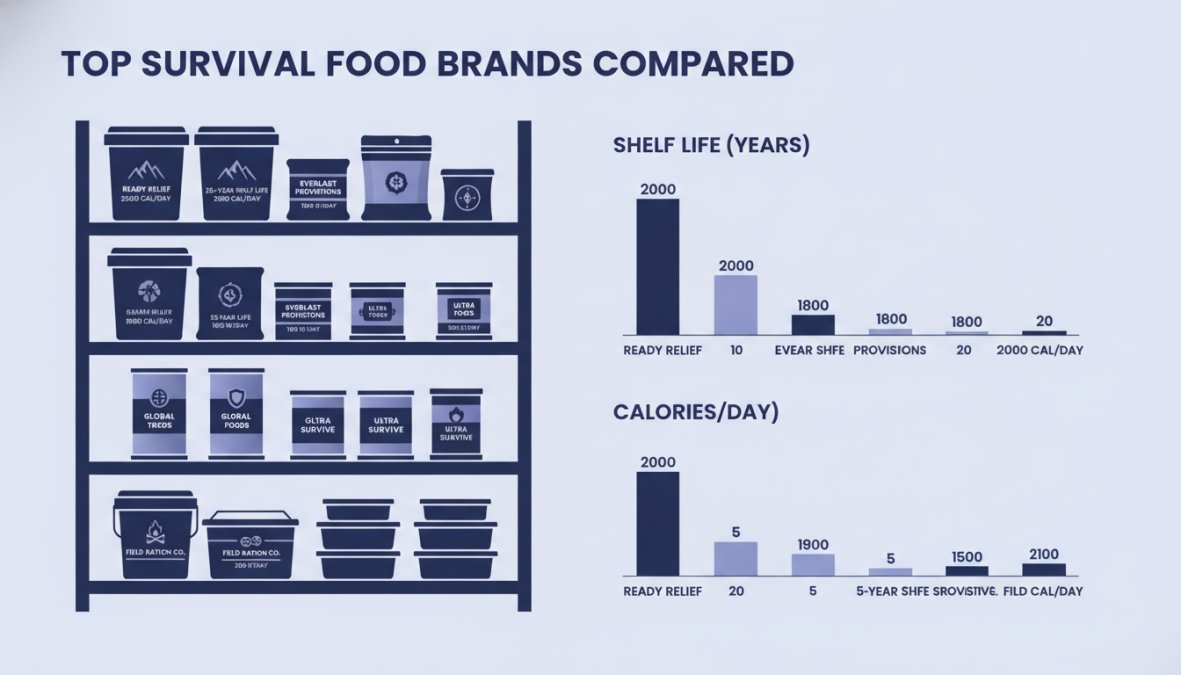
Mountain House meals deliver authentic taste because freeze-drying preserves actual food structure. Preparation simply requires adding boiling water and letting it sit 8-10 minutes, which works with any heat source from a camping stove to a fire.
Peak Refuel approaches freeze-dried meals from a performance nutrition angle, emphasizing high protein content and real-food ingredients. Their chicken and rice options deliver 25+ grams of protein per serving, which matters for families with active members or those concerned about muscle preservation during extended emergencies.
The trade-off is cost. Both brands price higher because freeze-drying is capital-intensive. Mountain House meal kits start around $80 for multi-day supplies. For families building comprehensive stockpiles, these brands work best as supplements to bulk staples rather than your entire food storage strategy.
Bulk Storage Specialists: Augason Farms and Nutristore
Augason Farms provides both complete meals and individual bulk staples, from powdered eggs and milk to complete meal kits. This flexibility appeals to families wanting to build custom meal plans rather than relying on pre-designed emergency menus.
Augason Farms' stackable pail packaging maximizes storage efficiency with 25+ year shelf life. The brand excels at offering variety, you can build a stockpile that includes both quick-meal options and ingredients for actual cooking if you have time and resources during an extended emergency.
Nutristore focuses specifically on #10 can packaging, which provides maximum durability and protection against environmental factors. Their freeze-dried fruits, vegetables, and meats come in heavy-duty cans designed to withstand temperature fluctuations and physical handling. If your storage environment involves temperature swings or potential rodent exposure, #10 cans offer superior protection compared to pouches or buckets.
Budget-Focused Options: Legacy Food Storage and ReadyWise
Legacy Food Storage built their market position on the lowest cost-per-pound in the industry. Their meals are non-GMO certified and deliver generous serving sizes, typically 1.5 to 2 cups per serving. For families building comprehensive stockpiles on tight budgets, Legacy provides realistic access to 25-year shelf-life meals.
ReadyWise positions themselves at the intersection of convenience and accessibility. Their stackable bucket packaging appeals to beginners wanting organized, grab-and-go emergency kits. ReadyWise kits come in various sizes, from 7-day supplies to long-term stockpiles.
Clean-Label and Specialty Brands: Valley Food Storage and 4Patriots
Valley Food Storage targets health-conscious preppers who refuse to compromise on ingredient quality even during emergencies. Their meals contain no MSG, hydrogenated oils, or artificial flavors. This brand works best for families where health considerations outweigh budget constraints.
4Patriots focuses on accessible entry-level emergency kits with chef-created recipes. Their small kits start around $29.95, making them approachable for families just beginning emergency preparedness. The brand emphasizes ease of use and quick preparation.
Long-Term Food Storage Requirements for Your Family
Storage Environment and Shelf Life
Shelf life claims assume specific storage conditions: 50-70°F with low humidity. Real-world storage often deviates significantly, affecting actual shelf life compared to manufacturer claims.
Temperature stability matters more than absolute temperature. A cool basement maintaining 55°F year-round outperforms an uninsulated garage swinging from 30°F to 85°F. Temperature fluctuations accelerate nutrient degradation and compromise packaging integrity. Expect actual shelf life to fall 20-30% shorter than manufacturer claims in unstable environments.
Humidity control prevents moisture infiltration that degrades food quality and promotes mold growth. Light exposure, particularly UV light, degrades certain nutrients. Store emergency food in opaque containers or dark spaces.
According to FEMA guidance on food storage, proper environmental control can extend shelf life by 30-50% beyond baseline claims.
Rotation and Inventory Management
Food rotation using FIFO (First In, First Out) prevents waste and ensures older products get used before expiration. However, FIFO requires actual tracking and discipline.
Effective rotation involves three components: labeling with purchase dates, tracking inventory, and actually using older items. A simple spreadsheet listing purchase dates, product names, quantities, and locations prevents forgotten stockpiles.
Build rotation into your normal meal planning, using older stockpile items in regular meals. This keeps everything fresh and maintains your family's familiarity with the foods you've stored.
Calories Per Day for Survival: Calculating Your Needs
Emergency food planning requires calculating actual caloric requirements. Generic recommendations of "2,000 calories per day" miss critical variables affecting real needs.
Daily Caloric Requirements by Scenario
Sedentary shelter-in-place scenarios require approximately 1,800-2,200 calories daily for adults. Children require 1,200-1,800 calories depending on age.
Active emergency scenarios, managing property damage, securing shelter, gathering firewood, increase requirements to 2,500-3,500 calories daily. Cold weather emergencies increase caloric needs by 20-40% as your body burns calories maintaining core temperature. Stress and anxiety increase metabolic rates by 10-15%.
Calculate your family's realistic needs by considering: number of people, ages and activity levels, likely emergency scenarios, and expected duration.
Matching Food Brands to Your Caloric Goals
Mountain House meals typically provide 400-600 calories per serving. Legacy Food Storage meals often deliver 600-800 calories per serving due to larger portions. This difference affects how much volume you need to purchase to meet caloric targets.
Build your calculation spreadsheet to include: serving size, calories per serving, servings per package, and total calories per package. This prevents the common mistake of purchasing "emergency food" without verifying it actually meets your family's caloric requirements.
Building Your Emergency Food Supply Checklist
Comprehensive emergency food storage requires mixing formats and categories. No single brand or format solves all emergency scenarios.
Mixing Freeze-Dried, Dehydrated, and Canned Goods
Freeze-dried meals (Mountain House, Peak Refuel) provide quick preparation and excellent taste. Allocate approximately 30-40% of your emergency food budget to freeze-dried options if you have reliable heat sources.
Dehydrated foods and bulk staples (Augason Farms, Nutristore) provide flexibility for actual cooking. Powdered eggs, instant potatoes, and dehydrated vegetables cost less per pound than complete freeze-dried meals. Allocate 30-40% of your budget to bulk staples.
Canned goods provide ready-to-eat options requiring minimal preparation. Include 20-30% of your stockpile in canned goods for scenarios where cooking isn't possible.
Supplemental items round out your stockpile: peanut butter, nuts, dried fruits, protein bars, and comfort foods. Allocate 5-10% of your budget to supplements.
Organizing Your Stockpile by Category
Physical organization prevents forgotten items and enables quick access. Group similar items together and arrange by FIFO principles, oldest items in front, newest in back.
Label everything with purchase dates using masking tape and permanent marker. Create a master inventory list showing location, quantity, and expiration dates. Update it when you rotate items or add new supplies.
| Storage Category | Format | Shelf Life | Best For | Allocation |
|---|---|---|---|---|
| Freeze-Dried Meals | Pouches | 25-30 years | Quick preparation with water | 30-40% |
| Bulk Staples | Buckets/Cans | 25+ years | Cooking and meal flexibility | 30-40% |
| Canned Goods | Cans | 3-10 years | Ready-to-eat options | 20-30% |
| Supplements | Various | Varies | Comfort and variety | 5-10% |
Common Mistakes When Choosing Survival Food Brands
Buying based on price alone leads to inadequate caloric density and poor taste. Calculate cost-per-calorie, not cost-per-package.
Neglecting to verify shelf life claims leaves you with expired food when you need it most. Manufacturer claims assume specific storage conditions. Research specific brand claims and verify they match your storage reality.
Purchasing foods your family won't eat wastes resources. Buy familiar foods your family actually enjoys. Test products before committing to bulk purchases.
Ignoring water requirements creates problems when water is scarce. Freeze-dried meals require significant water for rehydration. If your emergency scenario involves water scarcity, bulk staples and canned goods become more practical.
Failing to rotate stock results in expired food you never use. Build rotation into your normal meal planning so stockpile items actually get used and replaced.
Underestimating caloric needs leaves your family underfed during emergencies. Calculate specifically for your situation rather than relying on generic recommendations.
Conclusion
Selecting the best survival food brands requires balancing shelf life, taste, preparation simplicity, nutritional density, and budget constraints. Build diversified stockpiles combining freeze-dried meals for quick preparation, bulk staples for cooking flexibility, and canned goods for ready-to-eat options. The ideal approach depends on your family's specific needs, storage environment, and emergency scenarios you're planning for.
Start with what fits your budget. Build gradually, adding freeze-dried meals one month, bulk staples the next, canned goods the following month. Over time, consistent additions create comprehensive stockpiles that actually protect your family.
Frequently Asked Questions
What is the best survival food brand for long-term storage?
The best survival food brand depends on your priorities. Mountain House excels in taste and 30-year shelf life for freeze-dried meals. Augason Farms offers versatility with bulk staples and complete meals. Legacy Food Storage provides the lowest cost per pound for high-calorie options. Valley Food Storage prioritizes clean ingredients without additives. Choose based on whether you prioritize taste, variety, budget, or ingredient quality for your family's emergency stockpile.
How many calories per day do I need for emergency survival food?
FEMA recommends 2,000 calories per person per day for basic survival. However, this varies by age, activity level, and climate. Children need fewer calories; active adults in cold environments need more. For emergency preparedness, calculate 2,000-2,200 calories daily per person for a 2-week supply minimum. When selecting survival food brands, check calorie counts per serving and multiply by daily servings needed to ensure your stockpile meets family requirements.
How long does emergency survival food actually last?
Most quality survival food brands offer 25-30 year shelf life when stored properly in cool, dry conditions. Mountain House guarantees 30-year taste quality. Freeze-dried and dehydrated foods in Mylar pouches with oxygen absorbers last longest. Storage temperature is critical, each 10°F increase can reduce shelf life by 50%. Check expiration dates annually and rotate stock using FIFO (First In, First Out) methods. Canned goods and #10 cans typically last 10-25 years depending on contents.
What should I look for when buying best survival food brands?
Evaluate shelf life (aim for 25+ years), calories per serving, preparation time, storage space needed, and ingredient quality. Consider dietary restrictions and family preferences, brands like Valley Food Storage offer gluten-free and dairy-free options. Check if meals require only water or additional cooking. Review storage conditions required (temperature, humidity). Compare cost per calorie and serving size. Read customer reviews about taste and texture. Start with smaller quantities to test what your family will actually eat during stress.
This article was written using GrandRanker