
Table of Contents
- Water Filtration Systems for Survival: Why Your Family Needs One
- Water Filtration vs Purification: Understanding the Difference
- How to Purify Water for Survival in Emergency Situations
- Emergency Water Storage for Families: Capacity and Setup
- Types of Water Filtration Systems for Survival
- Water Rotation Schedules and Long-Term Preservation
- Container Maintenance and Water Quality Testing
- Choosing the Right System: A Decision Framework
- Conclusion: Building Your Family's Water Security
Water Filtration Systems for Survival: A Family Guide
Last Updated: July 6, 2026
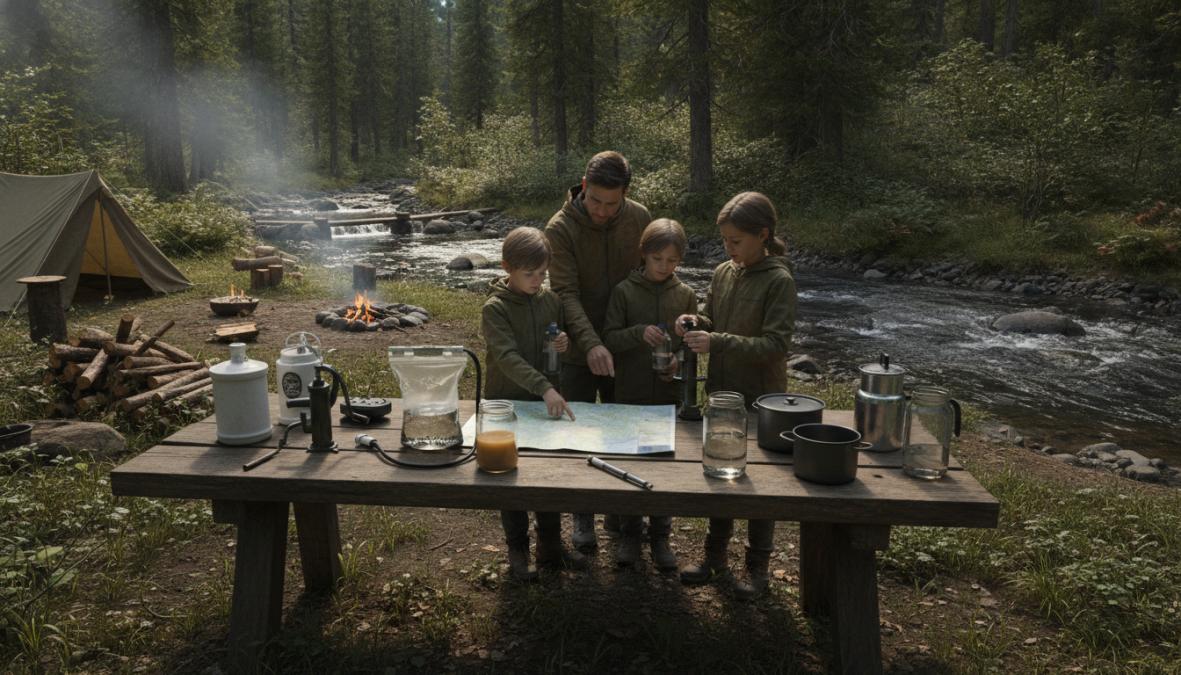
When disaster strikes, clean drinking water becomes your family's most critical survival need. Water filtration systems aren't luxury items, they're essential infrastructure that separates preparation from panic. This guide walks you through selecting, installing, and maintaining water filtration systems that match your family's real emergency scenarios.
The challenge most families face isn't understanding why they need filtration, it's choosing between competing approaches without clear guidance on what each system removes, how long it lasts, and whether it fits your space and budget.
Water Filtration vs Purification: Understanding the Difference
Filtration and purification solve different problems. Filtration removes particles, sediment, bacteria, and some chemicals through physical barriers. Purification eliminates viruses, dissolved minerals, and chemical contaminants that filters alone cannot catch.
Filtration forces water through media (sand, activated carbon, ceramic) that traps contaminants. A 0.1-micron ceramic filter stops bacteria; a 0.01-micron hollow-fiber membrane blocks viruses. Activated carbon absorbs chlorine, pesticides, and odors. But filtration cannot remove dissolved salts, heavy metals in solution, or all chemical compounds.
Purification uses boiling, chemical treatment, ultraviolet light, or reverse osmosis to destroy contaminants that pass through filters. Boiling kills pathogens but doesn't remove chemicals. Chlorine tablets kill microorganisms but leave some viruses viable. The most reliable survival approach combines filtration and purification, using each method's strengths to cover the other's weaknesses.
Filtration Methods and What They Remove
Sediment filters catch visible particles, sand, and silt, your first line of defense. A 5-micron filter removes most visible particles; a 1-micron filter catches finer sediment. These work well for cloudy water but do nothing for dissolved chemicals or microorganisms.
Activated carbon filters absorb chlorine, pesticides, herbicides, and industrial chemicals, improving taste and odor significantly. They don't remove bacteria, viruses, or heavy metals effectively. Carbon filters typically last 500 to 1,000 gallons before saturation.
Ceramic filters provide mechanical removal of bacteria and protozoa. A 0.2-micron ceramic filter stops most bacteria, including E. coli and Salmonella. They don't remove viruses or dissolved chemicals but last 2,000+ gallons and are cleanable by scrubbing the surface to restore flow.
Reverse osmosis forces water through a semipermeable membrane, removing dissolved solids, salts, heavy metals, and most chemicals. It's highly effective but slow (5-15 gallons per day in gravity systems) and wastes 3-4 gallons for every gallon produced. In survival situations with limited water, the waste ratio makes it less practical than layered filtration.
Purification Approaches for Maximum Safety
Boiling is the oldest and most reliable purification method. One rolling boil for one minute kills bacteria, viruses, and parasites. At elevations above 6,500 feet, boil for three minutes. Boiling doesn't remove chemicals and is fuel-intensive for large volumes.
Chlorine tablets kill most bacteria and viruses when dosed correctly (2-8 mg/L depending on water clarity and temperature). They're lightweight, shelf-stable for years, and inexpensive. Chlorine doesn't remove particles or chemicals, and some viruses require higher doses or longer contact time.
Iodine tablets work similarly to chlorine but are less effective against Cryptosporidium. They're useful as backup but not ideal for long-term storage. Iodine can cause health issues with prolonged use, making it better suited for emergency travel than home systems.
Ultraviolet (UV) light kills microorganisms by damaging their DNA but requires electricity and doesn't provide residual protection. UV works best combined with other methods.
How to Purify Water for Survival in Emergency Situations
When municipal water fails or you're using untreated sources, a systematic purification sequence ensures safety. Start by letting visibly cloudy water settle in a clean container for several hours. Sediment sinks to the bottom; carefully pour the clearer water into your filtration system.
Boiling and Chemical Treatment Methods
Boiling is your most reliable final step. Bring water to a rolling boil for one minute (three minutes above 6,500 feet). Allow it to cool before storage. Boiling requires significant fuel, approximately 0.1 gallons per gallon of water boiled. In prolonged emergencies, fuel scarcity makes boiling impractical for large volumes.
Chemical treatment with chlorine tablets offers a practical alternative. Dissolve one tablet in one liter of water and wait 30 minutes. The chlorine residual continues protecting water during storage. For heavily contaminated water, use two tablets and wait 60 minutes. Store treated water in food-grade containers away from sunlight.
A hybrid approach combines both methods: use chlorine tablets for initial treatment and storage, then boil water before drinking if you suspect contamination during storage.
Multi-Stage Filtration Approaches
A gravity-fed filtration system handles multiple stages without requiring electricity. Layer a 5-micron sediment filter, activated carbon, and a 0.2-micron ceramic filter in sequence. Pour untreated water into the top chamber; gravity pushes it through each stage over 2-4 hours. The result is clearer, better-tasting water safe for storage or further treatment.
Portable pump filters compress water through cartridges under hand pressure, producing filtered water in minutes. They're lighter than gravity systems but require physical effort and are less practical for processing large daily volumes.
Stackable filter pitchers work for smaller quantities (2-3 liters per pitcher) and are convenient for daily use but impractical for emergency storage of 50+ gallons.
Emergency Water Storage for Families: Capacity and Setup
Proper storage begins with calculating your actual needs, then selecting containers that preserve water quality over months or years.
Calculating Water Needs for Your Household
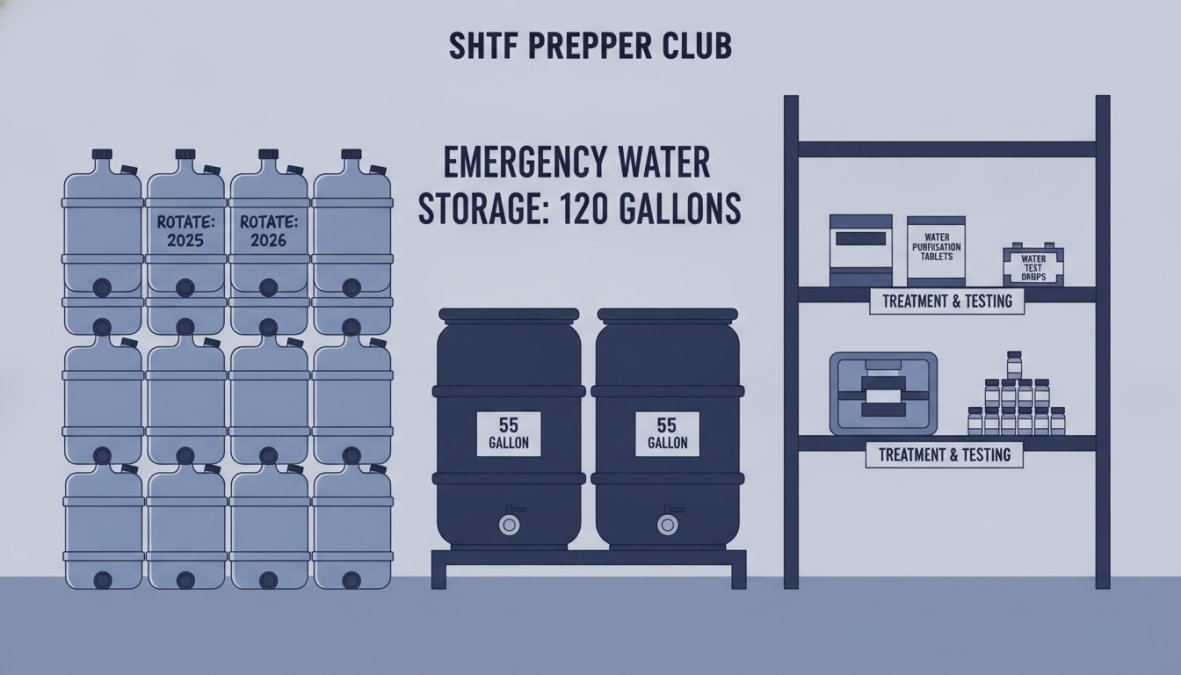
The baseline is one gallon per person per day for drinking and basic hygiene. A family of four needs a minimum of 120 gallons for one month. During heat waves, illness, or sheltering multiple people, consumption doubles or triples. A realistic emergency supply for a family of four should be 200-250 gallons for 30 days.
Calculate your household size, then add 25% for unexpected needs. Include water for pets, a 40-pound dog needs roughly 2.5 gallons monthly. Account for storage space realistically: a 55-gallon drum occupies 2.5 square feet. Five drums take up roughly 12-15 square feet. Many families use a combination: two 55-gallon drums in a basement corner, plus stackable 5-gallon containers in a closet or pantry.
FDA-Approved Containers and Food-Grade Materials
Food-grade plastic is the standard for long-term water storage. The safest plastics are high-density polyethylene (HDPE) and polypropylene (PP), marked with recycling codes 2 and 5. These materials resist UV degradation and don't impart taste or odors.
BPA-free plastic certification indicates the absence of bisphenol A, a chemical that can leach from some plastics under heat or age. NSF-certified containers meet standards for material safety; look for NSF Mark 51 certification, which specifically indicates suitability for drinking water contact.
Avoid storing water in containers previously used for chemicals, pesticides, or non-food products. Glass containers work but are fragile and heavy. Stainless steel is excellent but expensive. For most families, food-grade plastic offers the best balance of safety, durability, weight, and cost.
New containers should be cleaned before first use: rinse with clean water, then fill and drain once to remove manufacturing residue. Never use containers that have held milk, juice, or other beverages.
Types of Water Filtration Systems for Survival
Different scenarios demand different systems. A gravity-fed filter works well for home storage but is impractical for evacuation. A portable pump filter is lightweight for travel but slow for large volumes.
Portable and Gravity-Fed Filters
Portable squeeze filters (like LifeStraw or Sawyer Squeeze) weigh ounces and fit in a backpack. They filter through a 0.1-micron hollow-fiber membrane, removing bacteria and protozoa. They're excellent for evacuation but slow (1-2 liters per hour) and clog quickly in sediment-heavy water. Use them as backup or for travel, not as your primary home system.
Gravity-fed filters use two stacked chambers. Untreated water fills the top; gravity pulls it through filter elements into the lower chamber. They process 2-4 gallons daily without electricity or effort, ideal for sheltering in place. The drawback is slow processing; you need multiple systems for large groups or high-volume needs.
Pump filters require hand-pumping or battery power to force water through cartridges. They're faster (5-10 gallons per hour) but require physical effort. They're useful for processing large quantities quickly but impractical for daily use without significant effort.
Countertop pitcher filters are convenient for daily drinking but inadequate for emergency storage. Use them as a final polishing step, not your primary system.
Stackable and Space-Saving Solutions
For apartments or homes with limited storage, stackable 5-gallon containers are essential. They nest when empty and occupy minimal floor space. Five containers (25 gallons) fit in roughly 3 square feet.
Water cooler bottles (5-gallon inverted bottles on a cooler stand) provide convenient access and easy rotation. The cooler stand includes a spigot for easy dispensing. Drawback: cooler bottles are more expensive per gallon than bulk containers.
Under-sink water storage bags fit behind cabinet doors and hold 3-5 gallons in minimal space. Bathtub liners hold 100+ gallons but occupy your entire bathtub, practical only if you have a second bathroom.
A mixed approach works best for most households: one 55-gallon drum as your primary reserve, supplemented by stackable 5-gallon containers for easier rotation and access.
Water Rotation Schedules and Long-Term Preservation
Stored water doesn't spoil like food, but it can become contaminated or develop unpleasant tastes if not managed properly. A rotation schedule ensures you use older water regularly and replace it with fresh supply.
Chlorine Treatment and Shelf-Life Management
Untreated water stored in sealed, food-grade containers away from light lasts indefinitely if kept cool (below 70°F). However, in typical home conditions, stored water gradually develops flat taste and potential microbial growth. Adding chlorine during storage prevents this deterioration.
Use unscented household bleach (5.25% sodium hypochlorite) at a rate of 1/8 teaspoon per gallon. Mix thoroughly and let sit for 30 minutes before sealing. For a 55-gallon drum, add 1.5 teaspoons of bleach, mix well, and seal. Label the container with the treatment date.
Rotate this water every 6 months: use it for non-drinking purposes (cleaning, watering plants, toilet flushing) and replace it with freshly treated water. Commercially treated water (bottled water designed for emergency storage) includes stabilizers that extend shelf life to 5+ years without rotation, though it costs more per gallon.
UV Inhibitors and Storage Best Practices
Store water in opaque containers or in dark locations. Ultraviolet light promotes algae growth and degrades some plastics. Blue or opaque white containers block light better than clear ones. Never store water in clear bottles exposed to sunlight.
Temperature stability matters more than absolute coolness. A basement (steady 50-60°F) is ideal. An unheated garage with temperature swings is acceptable. A sunny kitchen shelf is poor. If you must store water in a warm location, use chlorine treatment and rotate more frequently (every 3-4 months).
Elevate containers off concrete floors. Concrete wicks moisture and can degrade container bottoms over years. Use wooden pallets, shelving, or plastic racks to create air space underneath. Stack containers securely to prevent tipping; a 55-gallon drum weighs 440 pounds when full.
Container Maintenance and Water Quality Testing
Even properly stored water requires monitoring. Containers can develop slow leaks, and stored water can become contaminated if containers are damaged.
Cleaning Protocols and Spigot Care
Inspect containers monthly for signs of damage: cracks, bulging, discoloration, or leaks. Check spigots for mineral deposits or mold. If a spigot drips, tighten the valve or replace the seal.
Clean spigots every 3-6 months. Mineral deposits and biofilm can accumulate inside the valve. Unscrew the spigot, soak it in equal parts white vinegar and water for 30 minutes, scrub with a soft brush, and rinse thoroughly before reattaching.
Never use bleach to clean food-grade containers. Use plain water and gentle scrubbing. For stubborn deposits, vinegar is safe and effective.
Water Testing Kits and NSF Certification
Basic water testing kits measure chlorine residual, pH, and hardness, confirming whether your stored water remains stable and whether treatment is adequate. Test kits cost $15-30 and provide results in minutes. NSF-certified test kits meet standards for accuracy; look for NSF Mark 42 certification.
If you suspect serious contamination, send a water sample to your local health department or a certified laboratory for comprehensive analysis. This costs $50-100 but identifies specific contaminants and confirms whether your approach is adequate.
Choosing the Right System: A Decision Framework
The best water filtration system depends on your primary scenario, available space, maintenance tolerance, and family size. Most households benefit from multiple systems serving different purposes.
| Scenario | Best System | Why | Space Needed |
|---|---|---|---|
| Sheltering in place | 55-gallon drum + gravity filter | High volume, no electricity, easy rotation | 3-5 sq ft |
| Evacuation or travel | Portable squeeze filter | Lightweight, compact, no batteries | Backpack pocket |
| Apartment with limited space | Stackable 5-gallon containers | Nests when empty, fits closets | 2-3 sq ft |
| Large family or group | Multiple drums + pump filter | Volume + speed for high demand | 10+ sq ft |
| Daily drinking + emergency backup | Pitcher filter + stored water | Convenience + insurance | Minimal |
Assessing Your Family's Emergency Preparedness Needs
Start by identifying your most likely scenarios. Are you sheltering in place (power outage, water contamination) or evacuating (flood, wildfire, chemical incident)? Most families face both possibilities, requiring different systems.
For sheltering in place, prioritize volume and low maintenance. A 55-gallon drum with gravity filtration handles a family of four for 20+ days.
For evacuation, prioritize portability and weight. A squeeze filter (8 ounces) fits in a backpack and filters water from any source.
For mixed scenarios, combine systems: store 100+ gallons at home for sheltering in place, and keep portable filters and purification tablets in your evacuation kit.
Consider your family's physical capabilities. Gravity filters require no strength but are slow. Pump filters are faster but demand sustained hand-pumping effort. Match the system to your family's realistic ability to operate it.
Common Mistakes in Water System Selection
The most common mistake is buying a single "perfect" system that compromises on all fronts. Accept that you need multiple systems for different scenarios.
Another mistake is storing water without treatment or rotation. Chlorine costs pennies per gallon and takes seconds to add. Rotation takes an hour every 6 months.
Underestimating space requirements leads to inadequate storage. A family of four needs 120+ gallons minimum. Many families plan for 30-60 gallons and believe it's sufficient.
Choosing clear containers or storing water in sunlight promotes algae growth and plastic degradation. Opaque, dark-colored food-grade containers cost the same and last significantly longer.
Neglecting to test your system before emergency. Practice your system during normal times so you operate it confidently under stress.
Conclusion: Building Your Family's Water Security
Water filtration systems for survival aren't optional, they're foundational to any emergency plan. The families most vulnerable during extended water outages are those who waited until crisis to address the problem.
Start with one 55-gallon drum and a gravity filter. Add stackable 5-gallon containers as your budget allows. Include portable filters in your evacuation kit. Establish a rotation schedule and stick to it. Test your system before you need it. This foundation, established over weeks, provides genuine security when water becomes scarce.
The time to build water security is now, before you face the choice between contaminated water and thirst. CDC guidance on water storage and treatment confirms that properly stored and treated water remains safe indefinitely, making long-term preparedness both feasible and practical.
Frequently Asked Questions
What is the difference between water filtration and water purification for survival?
Water filtration removes sediment, particles, and some contaminants using physical barriers, while water purification eliminates bacteria, viruses, and chemical pollutants through methods like boiling, chemical treatment, or multi-stage systems. For survival, purification provides more comprehensive protection. Most comprehensive water filtration systems for survival combine both approaches for maximum safety and potable water reliability.
How much emergency water storage does a family need for preparedness?
Emergency preparedness guidelines recommend one gallon per person per day for drinking and sanitation. A family of four should store at least 14 gallons for a two-week supply. Consider stackable 5-gallon containers or 55-gallon drums in food-grade polyethylene with tight seals. Store in cool, dark areas away from UV light. Rotate water every six months to maintain freshness and shelf life.
How do you purify water for survival without modern equipment?
Boiling water for one minute kills most pathogens and is reliable in emergencies. Add chlorine treatment (bleach) at recommended doses for chemical purification. Combine methods: pre-filter through cloth, boil, then add chlorine for layered protection. Store purified water in NSF-certified, food-grade containers with tight seals. Water rotation schedules every six months maintain quality. Consider portable filtration systems with UV inhibitors for long-term storage.
What features should you look for in a survival water filtration system?
Choose BPA-free, food-grade plastic containers with tight seals and spigots for easy access. Look for FDA-approved materials and NSF-certified filters. Stackable designs save space, critical for apartments and smaller homes. Verify water filtration systems include multi-stage purification, UV inhibitors, and chlorine treatment options. Check water weight capacity and ensure the system fits your emergency preparedness plan. Test with water testing kits before relying on it.
Your family's water security begins with a single decision: to prepare rather than react. SHTF Prepper Club provides the guidance, systems, and equipment to make that preparation straightforward. Get started today with a complete water filtration and storage solution, and give yourself the peace of mind that comes from knowing your family can access clean water regardless of what happens to municipal supply.
This article was written using GrandRanker