
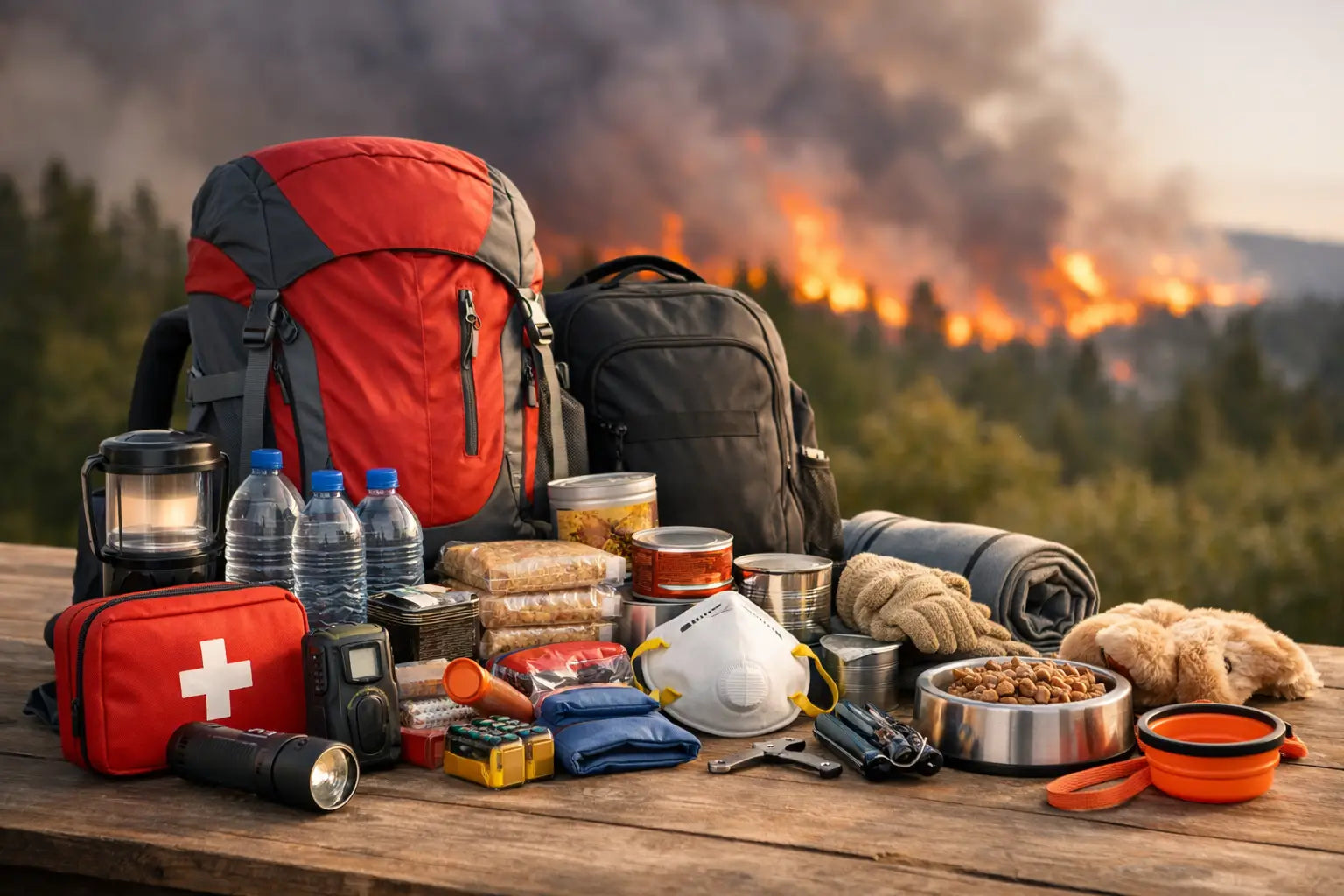
One warning on your phone can turn an ordinary evening into 20 rushed minutes of decisions. That is why a wildfire evacuation kit should be built before smoke is in the air, not while you are trying to remember where the pet carrier, inhaler, and chargers ended up.
For most families, the hard part is not understanding that they need a kit. It is deciding what actually belongs in it, how much is enough, and how to keep it realistic. A good kit is not a fantasy camping setup or a military pack you can barely lift. It is a fast-grab system that gets your household out safely and keeps everyone functional for the first 72 hours.
What a wildfire evacuation kit is really for
Wildfire evacuations move differently than many other emergencies. You may get a few hours of notice, or almost none. Roads can clog fast. Power can fail. Smoke can make even familiar routines feel disorienting. In some cases, families leave for one night and stay gone for a week.
That changes how you should think about your gear. Your wildfire evacuation kit is not meant to help you live in the woods. It is meant to support a quick departure, a stressful drive, a hotel stay, a shelter stay, or several days with friends or relatives. That means documents matter. Medications matter. Comfort items for kids matter. Clean clothes and phone power matter more than fancy tools.
Start with the 72-hour baseline
A practical kit covers each person in the household for about three days. That is long enough to bridge the first phase of evacuation, but still light enough to carry and store near the door, in a mudroom, or in the trunk.
Water is the first category families usually underestimate. Pack enough drinking water for the drive and the first day, then add a backup filtration option if you have room. Full three-day water storage is heavy, so this is one of those areas where it depends. If your family evacuates by vehicle, you can stage more water in the car. If you may need to leave on foot even for part of the trip, keep the bag lighter and lean on refillable bottles plus filtration.
Food should be simple, shelf-stable, and familiar. Think calories with low fuss: protein bars, shelf-stable snacks, nut butter pouches, crackers, dried fruit, and ready-to-eat meals if space allows. This is not the place for foods your children have never tried or meals that require a stove, a pot, and patience.
Clothing needs to match the reality of wildfire season. Pack one change of clothes, extra socks, sturdy shoes if they are not already by the door, and a layer for cooler nights. Even in hot regions, evacuation centers and hotels can feel cold after a long day.
The non-negotiables families forget
The most overlooked part of a wildfire evacuation kit is paperwork. In a real evacuation, proving who you are, where you live, what you own, and what medical needs you have can save hours of frustration. Keep copies of IDs, insurance cards, home insurance information, prescription lists, emergency contacts, and basic banking details in a waterproof pouch. A small amount of cash belongs here too, because card systems do fail.
Medications deserve their own check. If anyone in your home uses daily prescriptions, inhalers, insulin, EpiPens, or medical devices, build around those first. A perfect kit without your child’s asthma medication is not a real plan. If possible, keep a refill buffer specifically designated for evacuation use and rotate it responsibly.
Chargers and backup power matter more than many people expect. Your phone becomes your map, your alert system, your contact list, your payment method, and your flashlight. Pack charging cables, a fully charged power bank, and a car charger. If your family already keeps larger power outage gear at home, that is great, but your evacuation bag needs its own compact power setup.
Wildfire-specific items worth adding
A standard emergency bag is a good start, but wildfire conditions call for a few extra items. Smoke is the big one. N95 masks can help reduce smoke exposure during loading, driving, or short periods outside. They are not magic, and they do not make dangerous air safe, but they can make a real difference.
Eye irritation is another common issue. Add basic saline, glasses if anyone in the family wears contacts, and extra contact supplies if needed. Smoke, ash, and dry air can make contacts miserable very quickly.
Flashlights and headlamps are useful in any evacuation, but they are especially helpful when visibility is poor or the power is out while you are packing. A headlamp keeps both hands free when you are buckling kids into the car or checking the yard one last time.
If your home is in a wildfire-prone area, keep a paper map in the vehicle or kit. Phones fail. Signal drops. Roads close. You do not need to become a navigation expert, but you do want a backup if your usual route is blocked.
Build for your actual family, not an imaginary one
Parents often make one of two mistakes. They either under-pack because they want everything tiny and minimal, or they over-pack because they are picturing every possible emergency at once. The better approach is to pack for the people who live in your house and the problems they are most likely to face.
If you have young children, your wildfire evacuation kit should include diapers, wipes, comfort items, and easy snacks that do not melt into a mess in the car. If you are caring for an older parent, include spare hearing aid batteries, mobility aids, medication schedules, and a written care summary that someone else could understand in a stressful moment.
Pets count too. If the dog or cat is part of your evacuation plan, then food, water bowl, leash, carrier, waste bags, and vet records belong in the system. Many families say they would never leave a pet behind, then realize during an evacuation that they cannot find the crate.
One bag per person, plus one household file
This setup works well because it keeps confusion down. Give each person a personal evacuation bag with clothing, hygiene basics, snacks, water, medications, and comfort items. Then keep one shared household file or tote with documents, chargers, backup power, first aid, pet supplies, and a few higher-value items.
That split matters. If one adult needs to leave with one child while the other loads the car, each person already has the essentials. You are not standing in the driveway sorting through one overloaded bag.
Weight matters more than people think. A bag that feels manageable in the bedroom may feel very different when you are moving fast, carrying a toddler, or walking through smoke. Test it. If it is too heavy, fix it now.
Keep your wildfire evacuation kit staged and current
A kit is only useful if you can grab it immediately. Store it in a consistent place, preferably near your main exit. If wildfire risk is seasonal where you live, treat the start of that season as your review point. Check expiration dates, replace outgrown kids’ clothing, recharge power banks, swap food, and update documents.
This is also the right time to look at your vehicle. Keep the gas tank from dropping too low during peak fire season. Put a basic car kit in place with water, blankets, phone charging, and a printed list of emergency contacts. Evacuation does not begin when you close the front door. It begins when you can actually get moving.
For households building readiness from scratch, this is one of the clearest places to start. SHTF Prepper Club serves a lot of families in exactly that stage - not trying to prepare for everything overnight, just trying to make the next emergency less chaotic and more manageable.
What not to put in the bag
Do not fill your kit with gear you have never used, food your family will not eat, or tools that solve unlikely problems while ignoring obvious ones. A hatchet, fishing kit, and camping stove may look useful on paper, but they are not usually what gets a family through a wildfire evacuation smoothly.
Also skip sentimental overloading. You may want to save every photo album, keepsake, and childhood blanket. That feeling is understandable. But your evacuation kit should stay focused on safety, identification, medical needs, communication, and basic comfort. Separate your irreplaceable items plan from your go-now plan.
Preparedness works best when it feels doable. If building a complete wildfire evacuation kit this weekend feels like too much, start with documents, medications, chargers, water, and a change of clothes. A simple kit in the right place beats a perfect plan that never gets packed.