
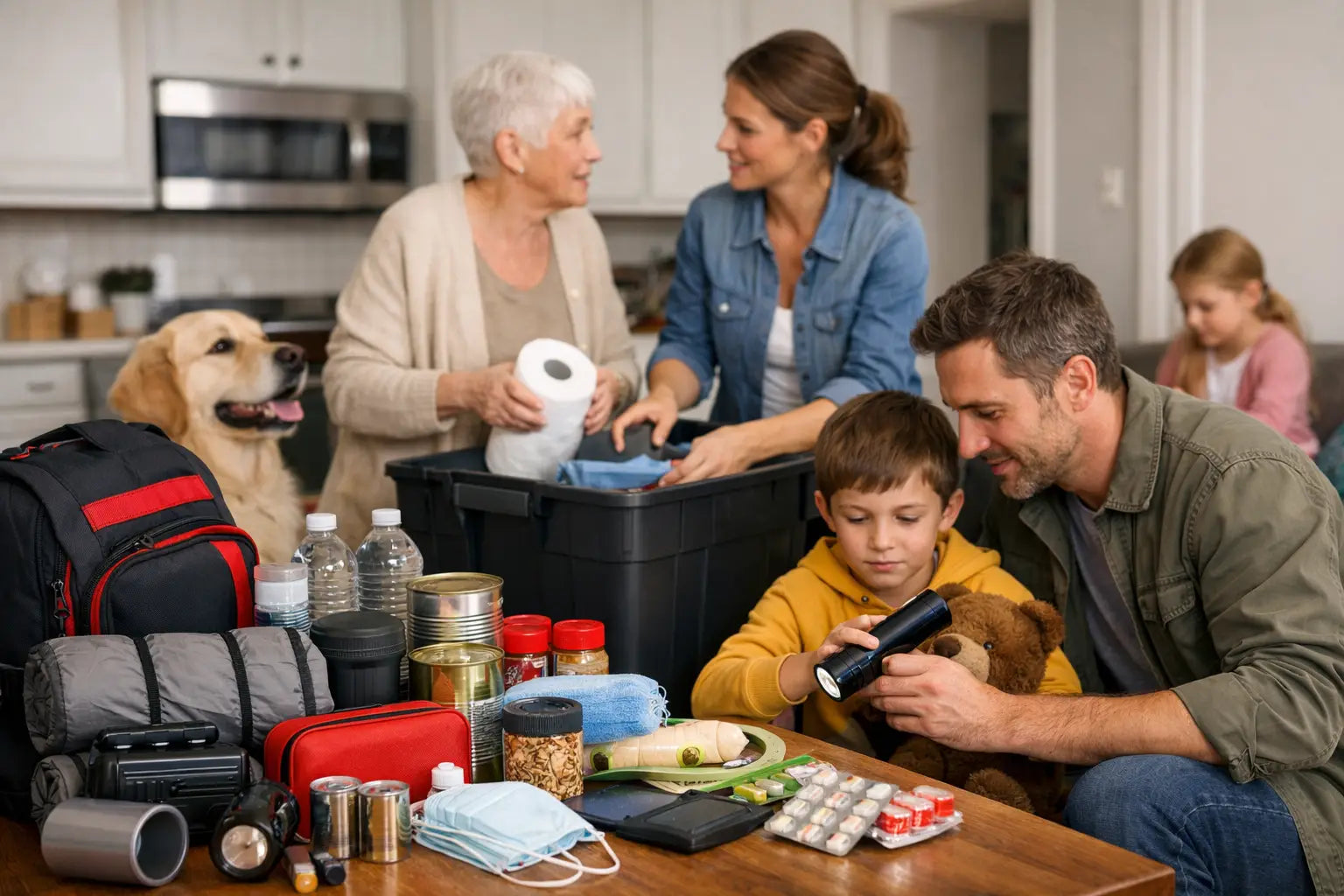
The next pandemic probably will not look exactly like the last one. That is why pandemic preparedness matters so much for families. The goal is not to predict every detail. The goal is to make sure your household can function calmly when stores are picked over, school routines change, and basic errands suddenly get harder.
Most families do not need a bunker. They need margin. Enough food to skip panicked grocery runs. Enough water and medicine to ride out a rough month. Enough backup power, hygiene supplies, and planning to keep the house running when the wider system gets strained.
What pandemic preparedness really means at home
For a family, pandemic preparedness is less about dramatic scenarios and more about friction. During a public health emergency, ordinary tasks can become unreliable. You may still have electricity and running water, but the pharmacy could be short on refills, delivery windows could disappear, and common items like cleaning supplies, formula, cough medicine, or shelf-stable food might get hard to find.
That is why a practical home plan works better than a fear-based one. You are building resilience for interruptions, not trying to outguess the headlines. If you prepare for shortages, temporary isolation, work-from-home disruption, and a sick family member needing extra care, you cover a lot of ground.
This is also where many households get stuck. They think preparedness means buying everything at once. It does not. The smarter approach is to start with the basics your family will actually use, then build depth over time.
Start with the five pressure points
When families struggle during a pandemic, the same categories show up again and again: food, water, medicine, hygiene, and power. Those are the pressure points worth fixing first.
Food is usually the easiest place to begin. A two-week pantry buffer is good. A 30-day buffer is better. Focus on meals your family already eats, plus shelf-stable staples that can stretch dinner when fresh groceries are limited. Rice, oats, pasta, canned proteins, soups, nut butters, baking basics, freeze-dried fruits and vegetables, and ready-to-make meals all help. If you have young kids, include the foods they will reliably eat when everyone is tired and stressed. Preparedness is not the time to test whether your child suddenly likes lentils.
Water is just as important, but many families understore it because they assume the tap will always work. During a pandemic, municipal water may still be fine, but it is wise to have stored water anyway. It covers contamination events, storm overlap, and the simple reality that emergencies do not wait their turn. A practical baseline is one gallon per person per day for at least two weeks, with more if you have pets, medical needs, or live where disruptions stack on top of each other.
Medicine deserves more attention than it usually gets. Keep a current supply of prescriptions, over-the-counter fever and cold remedies, children’s medications, a thermometer, electrolyte support, and basic first aid items. If someone in your home uses inhalers, glucose supplies, or other routine medical items, pandemic preparedness should include a refill strategy and a written list of what that person needs.
Hygiene supplies matter because they disappear fast when demand spikes. Soap, toilet paper, trash bags, disinfecting supplies, tissues, feminine care items, diapers if needed, and laundry detergent are not exciting purchases, but they are exactly the kind of products families wish they had bought earlier.
Power is the category people forget until they need it. A pandemic itself may not cause an outage, but storms, grid strain, and local disruptions still happen. Backup batteries, charged power stations, flashlights, headlamps, and a way to keep phones, medical devices, and internet equipment running make a big difference when your home becomes school, office, and sick room at the same time.
Pandemic preparedness should match your household
A retired couple, a family of six, and grandparents who host kids on weekends do not need the same setup. The best plan fits your real life.
If you have children, think in terms of rhythm as much as supplies. What happens if school closes for a week or two? Who supervises? What meals can be made quickly? What do you need on hand for boredom, home learning, and keeping younger kids calm if routines change?
If you care for older relatives, factor in mobility, prescriptions, special diets, hearing aid batteries, and comfort items. During a pandemic, reducing unnecessary errands can protect vulnerable family members and lower stress for everyone else.
Pet owners should plan as if animals are part of the household budget and logistics, because they are. Store extra pet food, medications, litter, waste bags, and copies of vaccine records. Families often remember the dog food after the shelves are empty.
Build your buffer in layers, not one big shopping trip
There is a reason many people quit before they really start. They imagine a massive purchase, a giant storage room, and a perfect system. That picture is expensive and discouraging.
A better method is layered preparedness. First, get through 72 hours comfortably. Then extend to two weeks. Then aim for 30 days. After that, decide whether your family would benefit from a deeper pantry, larger water storage, or more backup power.
This approach keeps your spending realistic and helps you learn what your family actually uses. A parent who has lived through hurricane season may want more power backup. A rural household might prioritize long-term food and water filtration. A suburban family with two busy working adults may put convenience first and choose a mix of ready-to-eat foods, organized medical storage, and simple household systems.
It depends on your budget, your region, and your tolerance for inconvenience. There is no prize for making preparedness harder than it needs to be.
Organize for speed, not perfection
A pile of supplies is not the same as a plan. Pandemic preparedness works best when your household can find what it needs quickly.
Keep medical items together in one clearly labeled place. Store extra food in a way that lets you rotate what you eat. Group hygiene items so you know when stock is getting low. If you use an emergency kit, make sure it reflects a shelter-at-home event as much as an evacuation event.
A simple written sheet helps more than most people expect. Include emergency contacts, medication lists, insurance information, pediatrician and pharmacy numbers, and basic care instructions for children, pets, or aging relatives. If one adult gets sick, the other should not have to guess where everything is.
Don’t overlook the mental side of readiness
Pandemics strain families because uncertainty drags on. It is not just a supply problem. It is a stress problem.
That is why comfort belongs in your plan. Familiar foods, coffee or tea, shelf-stable treats, books, cards, backup chargers, and basic home routines all matter. If someone in your home gets anxious during emergencies, predictability helps. So does having a plan people can see.
Children especially take cues from the adults around them. If your home has what it needs and you know what the next two weeks look like, that calm spreads. You do not need all the answers. You just need enough preparation to avoid chaos.
What to buy first if you are starting from zero
If your current setup is a few canned goods and half a pack of batteries, that is okay. Start where you are. A sensible first round of pandemic preparedness would include a 14-day food supply, two weeks of water, basic first aid and over-the-counter medicine, sanitation and hygiene supplies, and backup lighting and charging.
After that, improve the weak spots. Maybe your family needs better food storage. Maybe you need a water filtration option, a power station, or a more complete medical kit. Families who want a straightforward place to begin often do well with category-based planning, which is one reason SHTF Prepper Club organizes preparedness around practical needs like food, water, power, first aid, and family kits rather than hype.
Preparedness is not about living in fear of the next pandemic. It is about protecting your family from avoidable stress. When the next disruption hits, whatever shape it takes, you want your household to say, we already thought this through.