
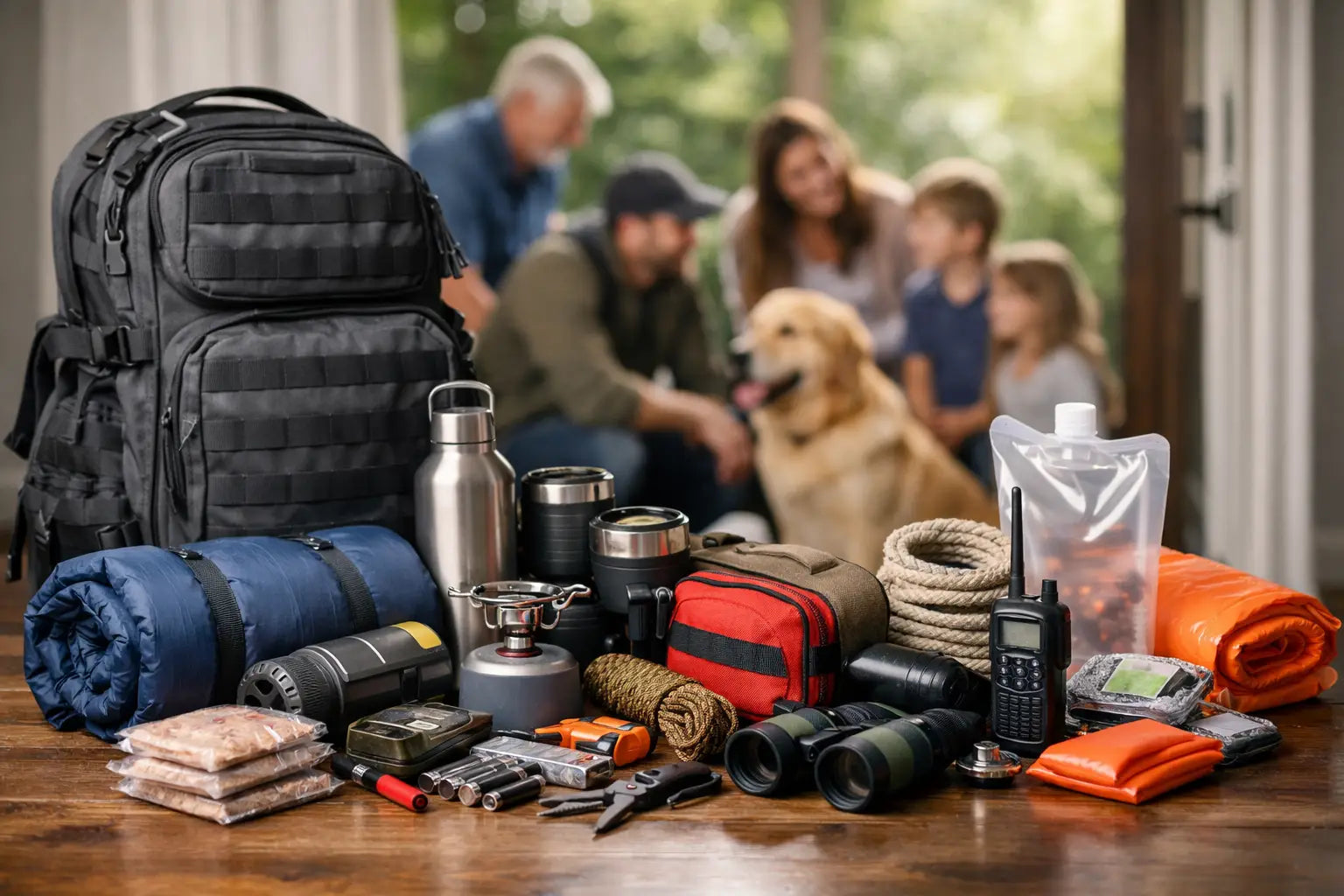
The moment you realize your family may need to leave fast, the question gets very practical. Not what would a survival expert carry, but what will help your people stay safe, fed, warm, and accounted for during a stressful evacuation. A family bug out bag is really an evacuation bag built for real households, and that distinction matters.
Most families do not need a movie-version backpack stuffed with axes, fishing line, and ten ways to start a fire. They need a grab-and-go setup that works for a hotel stay after a hurricane, a night in a school gym after a wildfire evacuation, a few days with relatives during an ice storm, or a sudden departure during a gas leak, flood, or chemical spill. The best bag is not the most impressive one. It is the one you can carry, find quickly, and trust under pressure.
What a family bug out bag is really for
Think in terms of 72 hours, not wilderness living. Your bag bridges the gap between leaving home and getting to a safer, more stable place. That could be a shelter, a friend's house, a rental, or your car if roads are blocked and plans are changing by the hour.
This is why a good family setup looks different from a solo bag. Parents are not just packing for themselves. They are carrying margin for children, medication, comfort items, paperwork, and the small things that prevent a hard day from turning into a meltdown. Grandparents may need to account for mobility, extra prescriptions, or backup hearing aid batteries. Pet owners need to think about leashes, food, and proof of vaccinations.
A realistic bag solves likely problems first. Water. Basic food. Weather protection. Light. Power. First aid. Hygiene. Identification. Communication. If those are covered, you are already ahead of most households.
Start with your evacuation plan, not your gear
Before you buy or pack anything, get clear on the kind of emergency you are most likely to face. A family in coastal Florida will build differently than a family in wildfire country or a household in a northern state that deals with winter outages and road closures.
That changes the details. In a hurricane zone, your bag may lean harder on waterproof storage, extra chargers, important documents, and medications because evacuation often means traffic, hotels, and uncertainty. In wildfire country, respiratory protection, goggles, and quick vehicle loading may matter more. In earthquake country, sturdy shoes, gloves, and dust protection deserve more attention than they usually get.
The point is simple. Pack for the emergencies you are actually likely to see. Preparedness gets easier when you stop preparing for every scenario at once.
The right way to build a family bug out bag
For most households, one giant backpack is a mistake. It sounds organized, but it creates a single point of failure and usually becomes too heavy. A better approach is one primary family bag plus smaller personal bags when age and strength allow.
The primary bag carries shared essentials. Water treatment, first aid, paperwork, chargers, lighting, hygiene supplies, and some of the food can live there. Then each family member has their own smaller bag with clothing, snacks, medications if appropriate, a water bottle, and comfort items. Even younger kids can carry something light. It gives them a role and reduces the load on adults.
If you have a baby or toddler, accept that one parent bag may function more like a diaper bag with emergency upgrades. That is fine. Realistic beats ideal every time.
Choose durable bags with simple compartments and comfortable straps. You do not need military styling. You need something that opens easily, rides well in the car, and can survive being moved around in a closet, garage, or mudroom.
What to pack first
Water comes first because dehydration gets serious quickly, especially for children and older adults. You may not be able to carry three full days of water for an entire family, so think in layers. Start with filled bottles or pouches for immediate use, then add a compact filtration or purification option for backup. Storage capacity matters too. A collapsible container takes up little room and gives you options later.
Food comes next, but keep your standards realistic. This is not the place for a month's worth of meals. Pack ready-to-eat items your family will actually eat under stress. Bars, pouches, crackers, nut butter, shelf-stable milk for kids, electrolyte packets, and simple comfort foods all make sense. If anyone in your home has allergies, this section deserves extra care. The wrong snack in an emergency is not a small mistake.
Clothing should cover temperature swings, rain, and dirty conditions. Extra socks are worth their weight. So are lightweight layers and a simple rain shell or poncho. For children, include one full clothing change in a zip bag. For adults, focus on layers rather than bulk.
Shelter and warmth do not have to mean camping gear. Emergency blankets, a compact tarp, hand warmers, knit caps, and gloves may be enough depending on your region. If your likely evacuation means car travel, you can stage heavier blankets there instead of stuffing them into backpacks.
The supplies families forget
Medications are the big one. If someone in your household relies on daily prescriptions, inhalers, insulin, EpiPens, or medical devices, your evacuation bag needs a current plan, not a vague intention. Rotate supplies before expiration and keep a written medication list in a waterproof pouch.
Documents matter more than people think. Include copies of IDs, insurance cards, emergency contacts, medical information, and key account numbers. Add recent family photos. If a child is separated in a chaotic evacuation, having a current photo on hand helps immediately.
Power is another blind spot. A dead phone turns a manageable disruption into a much harder one. Keep charging cables, a power bank, and if possible a way to recharge in the car. In longer outages, small portable power solutions become more than convenience. They support communication, lighting, and medical devices.
Then there is hygiene. It sounds minor until you are living out of a bag with children. Wipes, toilet paper, trash bags, hand sanitizer, feminine hygiene products, diapers, and a few basic toiletries can preserve comfort and dignity in crowded or temporary conditions.
What to skip
This is where many family bug out bag lists go off the rails. They confuse capability with excess.
Skip heavy tools unless you know exactly why they are there. Skip survival gadgets you have never used. Skip food that requires a full cooking setup unless your evacuation plan truly depends on it. Skip packing for fantasy scenarios while ignoring basic things like eyeglasses, chargers, or a child's comfort item.
Also be honest about weight. A bag that looks complete on the floor may become impossible after twenty minutes on foot, especially if one adult also ends up carrying a tired child. Test the load. Then cut what does not earn its place.
Pack for your actual family, not an average one
A strong evacuation setup reflects the people in your home. If you have teenagers, include more calories and charging needs. If you have an infant, formula, bottles, and diapering supplies will dominate the bag. If an older parent lives with you, account for mobility aids, extra layers, and medication routines. If you have pets, include food, bowls, waste bags, and copies of vaccination records because many shelters and hotels will ask.
This is also where comfort items stop being optional. A deck of cards, a stuffed animal, a small book, or headphones can make a huge difference for a child waiting through uncertainty. Emotional regulation is part of preparedness too.
Maintenance is what makes the bag useful
A packed bag is not a finished project. It is a system that needs light maintenance.
Check it every six months. Replace expired food, medications, and batteries. Update clothing sizes for kids. Refresh documents. Recharge power banks. Adjust for season changes. If your family has moved, changed schools, added a pet, or started a new medication, your bag should reflect that.
Store it where you can grab it in seconds, not buried behind holiday bins. And make sure everyone in the house knows where it is. In many emergencies, the challenge is not packing. It is acting quickly without confusion.
If you are building from scratch and feeling behind, keep it simple. Start with one solid bag, water, food, medications, documents, light, and power. Add from there. That is how most well-prepared households actually get ready - one smart layer at a time.
Your family does not need perfect gear or a dramatic plan. They need a calm, practical bag that works when the day goes sideways, and the peace of mind that comes from knowing you thought it through before you had to.