
Table of Contents
- Choosing the Right Emergency Water Storage Containers
- Container Sizes and Water Storage Capacity Requirements
- How Much Water Per Person for Emergency Situations
- Long-Term Water Storage Tips and Preservation Methods
- How to Purify Stored Water and Ensure Water Quality
- Emergency Water Rotation Schedule for Household Preparedness
- Container Maintenance and Cleaning Best Practices
- Emergency Preparedness Planning With Water Storage
Emergency Water Storage Containers: A 2026 Guide
Last Updated: July 6, 2026
Choosing the right emergency water storage containers is one of the most overlooked decisions families make when preparing for unexpected situations. According to the CDC, most households don't store enough water to sustain themselves through even a brief emergency, yet water remains the single most critical survival resource. Material quality, design, and maintenance matter far more than brand recognition.
Below, we'll show you exactly how to select, maintain, and rotate stored water so your family stays protected when municipal supplies fail.
Choosing the Right Emergency Water Storage Containers
When evaluating emergency water storage containers, three factors determine success: the material must be food-grade and BPA-free, the design must prevent contamination, and the capacity must match your household's actual needs. The best containers are manufactured from food-grade plastic, seal tightly to block light and contaminants, and are designed for long-term storage without degradation.
SHTF Prepper Club recommends starting with your household size and expected emergency duration. A family of four needs one gallon per person per day for drinking and basic hygiene. If you're planning for a two-week scenario, that's 56 gallons minimum.
FDA-Approved Food-Grade Materials
Food-grade plastic meets strict safety requirements set by the FDA. Polyethylene terephthalate (PET) and high-density polyethylene (HDPE) are the most common food-grade options. PET containers are lightweight and transparent, letting you monitor water levels. HDPE containers are thicker and more durable, making them better for long-term storage and stacking.
The critical detail most guides miss: just because plastic is food-grade doesn't mean it's suitable for water storage. The container must also be NSF-certified specifically for potable water. This certification confirms the plastic won't leach harmful chemicals into your stored water over time.
Glass and stainless steel containers are alternatives, though they're heavier and more expensive. They don't degrade over time and block light completely, making them ideal for long-term storage. However, their weight makes them impractical for most households storing 50+ gallons.
FDA food contact substances guidance
BPA-Free Plastic Safety Standards
Bisphenol A (BPA) is a chemical used in some plastics that can leach into water, especially when containers are exposed to heat or UV light. A container labeled BPA-free has eliminated this specific chemical, but it may contain other plasticizers with similar concerns.
Temperature matters significantly. Containers stored in hot garages or attics are more likely to leach chemicals than those kept in cool basements. If your storage area experiences temperature swings above 70°F regularly, prioritize containers with UV inhibitors.
Reputable manufacturers test their containers for chemical leaching and publish safety data. A manufacturer unwilling to share safety testing results is a red flag.
Container Sizes and Water Storage Capacity Requirements
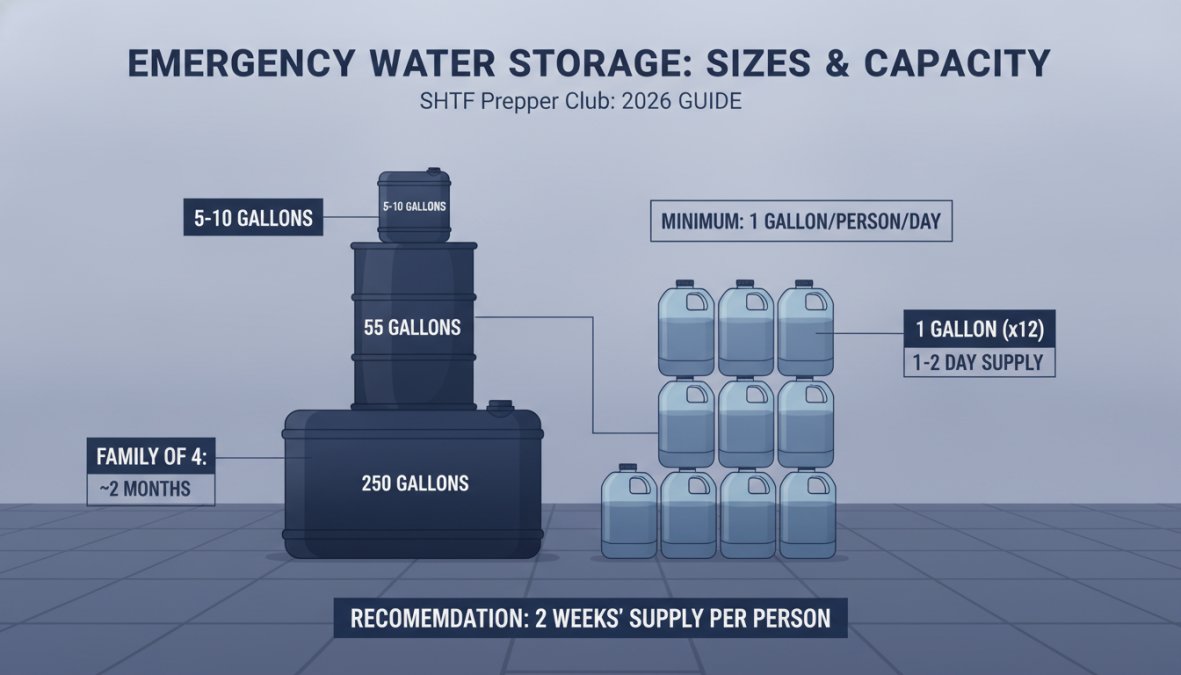
Selecting the right container size depends on your storage space, physical capability, and rotation frequency. The two most common options are 5-gallon and 55-gallon containers.
5-Gallon and 55-Gallon Options
5-gallon containers are the most practical choice for most households. They weigh about 40 pounds when full, making them manageable for one person to move. A family of four storing a two-week supply needs roughly 14 containers. They stack reasonably well and fit into basements, closets, and garage corners.
55-gallon drums are the choice for serious long-term storage. A single drum supplies a family of four for approximately two weeks. They're more efficient for space-per-gallon and require less frequent rotation. However, a full 55-gallon drum weighs 440 pounds, making it impossible for most people to move without equipment.
| Container Type | Weight (Full) | Best For | Rotation Frequency |
|---|---|---|---|
| 5-gallon | 40 lbs | Families under 6, frequent access | Every 6-12 months |
| 55-gallon | 440 lbs | Stationary storage, larger groups | Every 12-24 months |
| 2-gallon | 16 lbs | Apartments, quick grab-and-go | Every 3-6 months |
Stackable Designs for Space-Saving Solutions
Stackable emergency water storage containers are essential if you're working with limited space. Most 5-gallon containers are designed with reinforced bottoms and tapered tops that allow stacking up to 4-5 containers high without crushing the bottom ones.
Apartment dwellers benefit enormously from stackable designs. A 4-high stack of 5-gallon containers occupies roughly 2 square feet of floor space while storing 20 gallons. Look for containers with flat, reinforced bottoms and slightly narrower tops that prevent stable stacking.
How Much Water Per Person for Emergency Situations
The standard recommendation is one gallon per person per day, but this covers only drinking water and basic hygiene. For a 72-hour emergency, one gallon per person is adequate. For a two-week scenario, many preparedness experts recommend 1.5 gallons per person per day to account for cooking and sanitation.
Your climate affects calculations too. Hot, dry climates require more drinking water. Cold climates require less.
Long-Term Water Storage Tips and Preservation Methods
Water itself doesn't spoil, but stored water degrades when exposed to light, heat, and contaminants. Proper storage extends shelf life indefinitely.
UV Inhibitors and Temperature Control
UV light accelerates chemical degradation in plastic containers. Containers manufactured for long-term storage include UV inhibitors that block light penetration and slow chemical leaching.
Ideal storage temperature is between 50-70°F. Basements naturally maintain this range in most climates. Never store water near chemical products, pesticides, paint, gasoline, or cleaning supplies. Volatile organic compounds can permeate plastic containers and contaminate water.
Store containers in opaque areas or cover transparent containers with dark blankets or tarps.
Maintaining Water Shelf Life
Untreated water stored in ideal conditions lasts indefinitely, but in real-world conditions, it typically remains safe for 6-12 months without treatment. Adding food-grade chlorine extends shelf life significantly. Use unscented household bleach (5.25% sodium hypochlorite) at a rate of 1/8 teaspoon per gallon. Treated water remains safe for 5+ years when stored properly.
Rotation is the simplest preservation method. Using your stored water regularly and replacing it ensures freshness. A 6-month rotation schedule means you drink your stored water twice per year and replace it.
CDC guidance on storing safe water
How to Purify Stored Water and Ensure Water Quality
Even properly stored water may need purification before consumption if you're uncertain about its condition.
Water Filtration Systems and Chlorine Treatment
Boiling is the most reliable method if you have fuel. Bringing water to a rolling boil for one minute kills most pathogens. At high altitudes above 6,500 feet, boil for three minutes.
Water filtration systems remove particles and many pathogens. Gravity-fed filters are practical for emergency situations, you pour water into the top chamber and it filters through activated charcoal and ceramic filters into a lower chamber. These systems don't require electricity and can filter hundreds of gallons.
Chlorine treatment is effective for bacterial and viral contamination. Add 2-8 drops of unscented household bleach per gallon depending on water clarity. Let it sit for 30 minutes before drinking.
Water testing kits allow you to verify safety before consumption. These kits test for bacterial contamination, pH levels, and chlorine residual. They're inexpensive and provide confidence that your water is safe.
Emergency Water Rotation Schedule for Household Preparedness
A rotation schedule prevents water from sitting indefinitely and ensures you're always drinking fresh water. Untreated water should be rotated every 6 months. Mark your containers with the storage date using a permanent marker. On that date, use the oldest water for watering plants or cleaning, and replace it with fresh water.
Chlorine-treated water can be rotated annually. Many families use a one-year rotation schedule, replacing containers on the anniversary of storage.
Create a simple tracking system. A spreadsheet listing each container's storage date and rotation date takes minutes to maintain.
Container Maintenance and Cleaning Best Practices
Before first use, rinse new containers thoroughly with clean water. Don't use soap or bleach, as these leave residues. Fill the container with clean water, shake vigorously for 30 seconds, then empty and repeat twice.
During storage, inspect containers monthly for cracks, leaks, or discoloration. When rotating water, clean containers before refilling. Empty the old water, rinse with fresh water, and allow to air dry completely.
For containers that develop algae, clean with a dilute bleach solution (one part bleach to ten parts water). Scrub the interior with a bottle brush, rinse thoroughly multiple times, and air dry completely before refilling.
Never use abrasive scrubbers or harsh chemicals on food-grade containers. Soft brushes and mild soap are sufficient. Spigots and caps require attention too, ensure they seal tightly and replace them if they crack or fail.
Emergency Preparedness Planning With Water Storage
Water storage is foundational to comprehensive emergency preparedness. Start by identifying potential emergencies in your area. Hurricanes, floods, earthquakes, winter storms, and utility failures all disrupt water supplies differently.
Calculate your household's actual needs. Don't rely on generic one-gallon-per-person rules. Consider your family's health conditions, ages, and any special requirements.
Diversify your storage strategy. Store some water in portable 5-gallon containers that you can grab quickly, and larger reserves in 55-gallon drums for extended scenarios. Keep a small emergency supply in your vehicle and at your workplace.
Combine water storage with purification capability. A gravity-fed filter costs less than $50 and provides security that transcends stored water.
Test your emergency plan. Conduct a practice scenario where you use only your stored water for 24 hours. You'll discover practical issues and whether your family actually drinks the amount you calculated.
Water storage is one of the most practical investments your family can make for emergency preparedness. The containers you choose today determine whether your family stays hydrated during a crisis. Start with your household's specific needs, select food-grade containers suited to your space, and implement a rotation schedule that keeps your water fresh. Your family's safety depends on decisions you make now.
Frequently Asked Questions
What is the best type of container for long-term water storage?
FDA-approved food-grade plastic containers are ideal for emergency water storage containers. Look for polyethylene or other NSF-certified materials that are BPA-free and feature UV inhibitors. Stackable designs maximize space, while tight-seal spigots prevent contamination. Avoid regular milk jugs or non-food-grade plastics, as they degrade over time and may leach harmful chemicals into your potable water supply.
How much water per person should I store for emergencies?
Most emergency preparedness guidelines recommend storing one gallon of water per person per day for at least two weeks. For a family of four, this means 56 gallons minimum for basic hydration and sanitation. Consider storing additional water for cooking, hygiene, and potential extended emergencies. Account for climate, activity level, and any special needs when calculating your total emergency water storage capacity.
How do I keep stored water from going bad?
Maintain water quality through proper long-term water storage tips: store containers in cool, dark locations away from direct sunlight to prevent algae growth. Use chlorine treatment or food-grade preservatives if recommended. Rotate water every six months to one year as part of your emergency water rotation schedule. Keep containers tightly sealed with secure spigots, and store them away from chemicals or pesticides that could contaminate your supply.
Can I test the quality of my stored water?
Yes, water testing kits are available to monitor your stored water's safety and potability. These kits typically test for pH, chlorine levels, and basic contaminants. Before using stored water, consider using a water filtration system or water purification method like boiling or adding approved water treatment chemicals. If you're unsure about water quality, purify it before consumption as part of your emergency preparedness planning.
This article was written using GrandRanker