
Table of Contents
- What Are Survival Kits for Home Safety and Why They Matter
- Essential Items Every Home Survival Kit Must Include
- Best Emergency Food Supplies for Home Storage
- Home Emergency Water Storage and Purification
- How Long Should a Survival Kit Last and Shelf-Life Basics
- Emergency Preparedness Checklist for Families
- Pre-Made vs. DIY Survival Kits: Budget-Friendly Comparison
- Customizing Survival Kits for Regional Hazards and Family Needs
- Maintenance Schedule and Rotation Tips for Survival Kits
- Psychological Preparedness: The Often-Overlooked Element
Survival Kits for Home Safety: A Complete 2026 Guide
Last Updated: July 11, 2026
What Are Survival Kits for Home Safety and Why They Matter
Families face unpredictable emergencies from severe weather to utility failures to unexpected displacement. Survival kits for home safety provide essential supplies that keep households functioning when normal systems fail. A well-stocked survival kit reduces panic, extends self-sufficiency, and protects vulnerable family members including children, elderly relatives, and those with medical needs.
Research from the Federal Emergency Management Agency on disaster preparedness emphasizes that households with emergency supplies experience significantly faster recovery and fewer stress-related complications during crises. The investment in a quality survival kit today prevents scrambling when stores are closed, roads are blocked, or panic buying has stripped shelves bare.
Essential Items Every Home Survival Kit Must Include
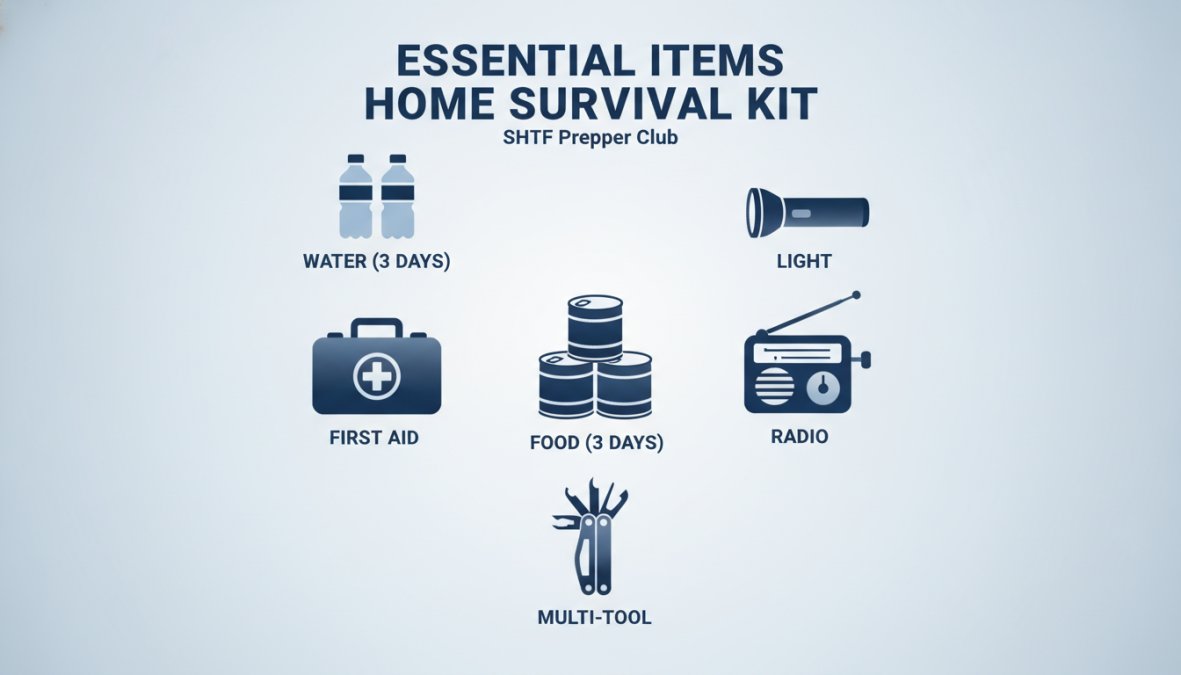
The core of any effective home survival kit contains items that address humanity's most immediate needs: water, food, first aid, light, communication, and sanitation. When you organize your thinking around these core needs, you avoid both dangerous gaps and wasteful duplication.
Water Purification and Storage
Water is non-negotiable; a person can survive three weeks without food but only three days without water. A baseline recommendation is one gallon per person per day for drinking and basic sanitation, multiplied by however many days you want to cover.
Shelf-stable water stored in food-grade containers lasts indefinitely when kept in cool, dark places. Beyond stored water, include multiple purification methods: water purification tablets, a gravity-fed filter system, and boiling capability. Redundancy in water purification is insurance, if one method fails, you have backup.
Include smaller, portable water containers alongside bulk storage. A 55-gallon barrel helps during a three-day outage, but if your family can't easily access it or lacks containers to distribute it, its value drops dramatically.
First Aid and Medical Supplies
A comprehensive home emergency medical kit addresses ongoing medical needs for family members with chronic conditions and anticipates common illness scenarios. Include prescription medications in quantities covering at least two weeks beyond your normal supply, stored in original bottles with clear labeling and expiration dates.
Add over-the-counter pain relievers, anti-diarrheal medication, antihistamines, and antacids. Include sterile gauze, medical tape, elastic bandages, tweezers, and antibiotic ointment. A tourniquet and trauma dressing belong in any modern first aid kit for serious bleeding that standard bandages cannot address.
Perform quarterly checks of your medical supplies, replacing expired items and adjusting for any new prescriptions or health conditions.
Lighting, Power, and Communication Tools
When the power grid fails, darkness becomes a serious safety issue. Include multiple light sources: flashlights with extra batteries, LED lanterns, glow sticks, and matches or lighters. Battery-powered or hand-crank flashlights eliminate dependency on battery supplies.
A battery-powered radio lets you receive emergency broadcasts and weather updates. Include a NOAA weather radio to receive official emergency alerts. For power, a portable power bank charges essential devices like phones or medical equipment. Solar chargers provide renewable power if your outage extends beyond a few days.
Communication tools matter more than many realize. A whistle signals for help without draining batteries. A simple mirror reflects sunlight to attract attention from rescuers.
Best Emergency Food Supplies for Home Storage
Emergency food must be shelf-stable, require minimal preparation, and provide adequate calories and nutrition during stress. Canned goods form the foundation of most home food storage, choose canned vegetables, fruits, beans, soups, and proteins like tuna, chicken, and salmon. Include a manual can opener, as electric openers become useless during power failures.
Shelf-stable proteins include peanut butter, nuts, seeds, and protein bars. Dried pasta, rice, and oats store well and provide carbohydrate-based calories. Include powdered milk or shelf-stable milk alternatives if your family uses dairy products.
High-calorie, nutrient-dense foods matter during emergencies when stress burns extra calories. Include comfort foods like chocolate, coffee, tea, or hard candies to support morale. A critical mistake is storing foods your family won't eat, stock foods your household actually consumes and rotate them into regular meals every few months.
Home Emergency Water Storage and Purification
Water storage represents the single largest volume component of most home survival kits. Beyond drinking water, include water for sanitation, hygiene, and pet needs. A realistic emergency water supply for a family of four covering two weeks requires significant storage space.
Food-grade plastic containers are the standard for water storage. Five-gallon buckets work well for bulk storage, while smaller bottles offer portability. Label all water containers with the storage date. Replace stored water every six months if using standard plastic, though food-grade containers rated for long-term storage extend this timeline significantly.
Purification methods create redundancy in your water safety system. Boiling kills pathogens but requires fuel and containers. Water purification tablets work anywhere but taste unpleasant. Gravity-fed filter systems remove bacteria and many chemicals without requiring electricity or heat. A combination of methods ensures that if one fails, others remain available.
Store purification supplies with clear instructions. Include bleach (unscented, regular household bleach works for water treatment) with dosing instructions written clearly on the bottle.
How Long Should a Survival Kit Last and Shelf-Life Basics
A 72-hour kit covers the critical period immediately after most emergencies when emergency services are still mobilizing. Extended-duration kits covering two weeks or longer address scenarios like extended power outages or major supply chain disruptions. The specific duration you target depends on your region's hazard profile.
Shelf-stable foods last years when stored properly. Canned goods maintain quality for 3-5 years. Dried goods like pasta, rice, and beans last 6-12 months in sealed containers, longer in vacuum-sealed or oxygen-absorbing packaging. Powdered milk lasts 2-3 years. Check expiration dates annually and rotate older items into regular meals.
Water storage lasts indefinitely in food-grade containers kept in cool, dark conditions. Medications have specific expiration dates. Batteries lose charge over time; rotate them every 12-18 months. First aid supplies need annual review for damage or expiration.
Treat your survival kit as a living system that requires regular attention. Quarterly reviews catch expired items, identify supplies that have been used, and allow you to adjust for changes in family circumstances.
Emergency Preparedness Checklist for Families
Family emergency preparedness extends beyond physical supplies to include planning and communication. Start with an evacuation plan identifying two meeting points, one near your home and one outside your neighborhood. Ensure every family member knows these locations and practice your evacuation plan annually.
Create an emergency contact list with phone numbers, addresses, and email contacts for family members, neighbors, and local emergency services. Store this list in multiple formats: printed copies in your survival kit, digital copies on multiple devices, and memorized numbers for critical contacts.
Identify family members with specific needs. Children require different supplies than adults. Elderly family members might need medications or mobility aids. Pets require food, water, and comfort items. Document these needs explicitly so whoever assembles emergency supplies understands what each person requires.
Establish a communication protocol. If your family is separated during an emergency, designate an out-of-area contact person that family members can call to report their location and status.
| Planning Element | Action | Frequency |
|---|---|---|
| Evacuation plan | Identify routes and meeting points | Review annually |
| Contact list | Create and distribute emergency numbers | Update quarterly |
| Medical needs | Document medications and health conditions | Review when conditions change |
| Supply inventory | Check expiration dates and rotation | Quarterly |
| Family drills | Practice evacuation and communication | Annually |
Pre-Made vs. DIY Survival Kits: Budget-Friendly Comparison
Pre-made survival kits offer convenience and expert curation. Someone has already selected items, tested combinations, and packaged everything together. This eliminates decision fatigue and ensures nothing critical is forgotten.
DIY kits provide customization and typically lower cost. You select items based on your family's specific needs, dietary preferences, and regional hazards. Building your own kit encourages deeper engagement with preparedness planning and lets you include comfort items and preferred foods.
The real advantage of DIY kits emerges during maintenance. When you understand what's in your kit and why each item is there, you're more likely to actually maintain it. Consider a hybrid approach: start with a pre-made kit to establish your foundation, then customize and expand it based on your family's specific needs.
Customizing Survival Kits for Regional Hazards and Family Needs
A truly effective kit addresses your region's specific hazards and your family's unique needs. Identify your region's primary hazards. Coastal areas face hurricanes and flooding. Mountain regions experience heavy snow. Urban areas face infrastructure failures. Earthquake zones require different preparation than tornado zones.
Flood-prone areas need waterproof containers and water purification supplies. Hurricane zones benefit from extra water and longer-duration food supplies. Snow-heavy regions need heating supplies and extra food for extended isolation. Earthquake zones require sturdy shelters and trauma first aid supplies.
Family composition drives kit customization. Households with infants need formula and diapers. Families with elderly members might need mobility aids and medications. Pet owners must include food and water for animals. Medical needs deserve particular attention, document medications and supplies for chronic conditions explicitly.
Store survival kits in multiple locations. A primary kit at home covers shelter-in-place scenarios. A go-bag at work or in your vehicle provides supplies if you're displaced while away from home. This distributed approach ensures you have access to critical supplies regardless of where you are when emergency strikes.
Maintenance Schedule and Rotation Tips for Survival Kits
A survival kit that sits untouched for years becomes increasingly unreliable. Establish a quarterly review schedule. Every three months, open your survival kit and perform a basic inventory. Check expiration dates on medications, food, and batteries. Replace anything that's expired or damaged.
Rotate food supplies into your regular meals. Incorporate canned goods and shelf-stable items into your normal diet, buying replacements each time you use something from your emergency supply. This rotation ensures your emergency food stays fresh while normalizing these items as part of your regular diet.
Battery rotation follows a similar pattern. Use batteries from your emergency supplies in household items and replace them with fresh batteries. Water rotation depends on your storage method, food-grade containers rated for long-term storage can hold water for years. Standard plastic bottles should be replaced every six months.
Create a simple checklist for your maintenance schedule. Post this checklist inside your survival kit or on your refrigerator as a reminder. Some households set phone reminders for quarterly maintenance checks.
| Item Category | Check Frequency | Rotation Method | Typical Lifespan |
|---|---|---|---|
| Medications | Monthly | Replace as needed | Per expiration date |
| Batteries | Quarterly | Use in household items | 12-18 months |
| Water (standard bottles) | Every 6 months | Use for cleaning | Indefinite in food-grade |
| Canned food | Quarterly | Incorporate into meals | 3-5 years |
| First aid supplies | Annually | Replace as used | Per expiration |
| Blankets/clothing | Annually | Inspect for damage | 10+ years if maintained |
Psychological Preparedness: The Often-Overlooked Element
Physical supplies matter, but psychological preparedness determines how effectively your family responds when crisis strikes. Knowledge reduces panic. Teach family members basic emergency response: how to safely evacuate, where to shelter, how to turn off utilities, when to call for help.
Regular drills build competence and normalize emergency procedures. Practice your evacuation plan annually. Conduct shelter-in-place drills. Teach family members how to use communication tools and purification supplies. Drills transform emergency procedures from abstract concepts into practiced behaviors that execute automatically during actual emergencies.
Establish emotional support systems. Identify trusted neighbors, friends, or family members who can provide emotional support during crises. Discuss your emergency plans with these people so they understand your household's approach.
Manage expectations realistically. Emergencies are uncomfortable and inconvenient. Acknowledge that emergencies will be difficult while emphasizing that preparation makes them manageable. This balanced perspective builds resilience without creating false comfort.
Children benefit from age-appropriate emergency preparation. Young children respond well to simple, concrete information and regular drills. Teenagers can understand more complex scenarios and participate in planning. Including children in preparedness activities reduces their anxiety while building competence.
Building effective survival kits for home safety requires balancing preparation with practicality. The most comprehensive kit fails if it's so complex that your family can't maintain it. The most convenient kit fails if it doesn't address your specific hazards and needs. Start with a foundation of basic supplies, customize based on your region and family, and maintain your kit through regular reviews and rotations.
SHTF Prepper Club simplifies this process by offering expert-vetted survival kits and guidance designed for families facing real emergencies. Our kits include shelf-stable food supplies with up to 25-year shelf life, reliable water purification solutions, and comprehensive first aid components, all selected for reliability and practicality. Get started with SHTF Prepper Club and transform your household from reactive and vulnerable into prepared and resilient.
Frequently Asked Questions
What should be in a basic home survival kit?
A basic survival kit should include water (1 gallon per person per day), non-perishable food, first aid supplies, flashlight, battery-powered radio, whistle, dust mask, and multi-tool. Add prescription medications, important documents, and personal hygiene items. Include communication tools and emergency contact lists. Tailor contents to your family's specific needs and any regional hazards you face.
How long should a survival kit last for emergency preparedness?
Most emergency preparedness experts recommend a 72-hour survival kit as the minimum baseline for home safety. However, extending your kit to cover 2 weeks or longer provides better protection during prolonged disruptions. Shelf-stable food and water storage should be rotated every 6-12 months. Check expiration dates on first aid supplies and medications quarterly to maintain kit readiness.
How much emergency water storage do I need at home?
Store at least 1 gallon of water per person per day for drinking and sanitation. For a family of four, that's 4 gallons daily. A 72-hour kit requires 12 gallons minimum; a two-week supply needs 56 gallons. Include water purification tablets or a filtration system as backup. Store water in food-grade containers in a cool, dark place. Rotate stored water every six months.
How often should I update and maintain my home survival kit?
Review your survival kit every six months and rotate supplies with approaching expiration dates. Check batteries, test your battery-powered radio and flashlight, and verify first aid supplies are complete. Update your emergency contact list and family safety plan annually. After any emergency or evacuation drill, restock used items immediately. Seasonal changes may require adjustments for regional hazards like extreme heat or cold.
This article was written using GrandRanker