
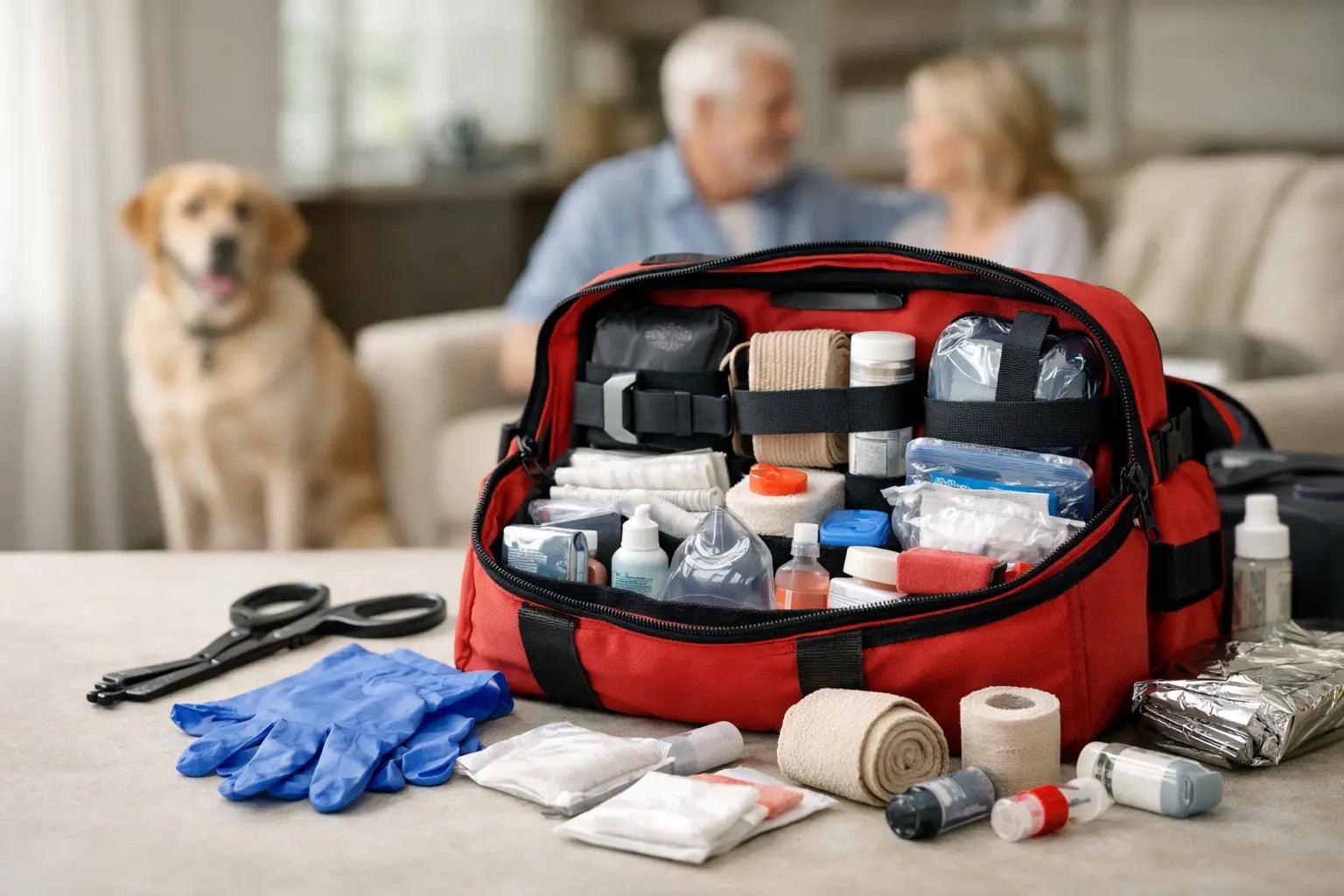
The worst time to realize your first aid kit is too small is when someone is bleeding on your kitchen floor.
That is why families asking about the best emergency trauma kit for home are asking the right question. A basic first aid box handles scrapes, headaches, and blisters. A trauma kit is different. It is meant for the serious stuff you hope never happens but know can - a deep knife cut while cooking, a chainsaw injury after a storm, shattered glass during a hurricane, a bad fall down basement stairs, or a car-crash injury when you get someone back to the house and need to stabilize them while waiting for EMS.
For most households, the best choice is not the biggest or most tactical-looking kit. It is the one that helps an ordinary adult respond fast, under stress, with supplies they can identify and use. That means clear organization, quality components, and a setup that matches your real risks at home.
What makes the best emergency trauma kit for home
A home trauma kit should do three things well. First, it should help control life-threatening bleeding. Second, it should support airway and breathing until professional help arrives. Third, it should be organized enough that your spouse, older teen, or visiting grandparent can find what they need without dumping the whole pouch onto the floor.
That last point matters more than people think. Many kits look impressive online but are packed with low-grade extras and duplicate items that add bulk instead of capability. Families do better with fewer, better tools arranged by purpose. When stress spikes, simplicity wins.
The best home trauma kits usually include a tourniquet from a reputable manufacturer, pressure bandages, hemostatic gauze or compressed gauze, chest seals, trauma shears, gloves, and a marker for recording tourniquet time. Depending on your comfort level, a CPR mask and basic airway items may also make sense. If children are in the home, adding pediatric-friendly basics nearby is smart, but your trauma kit itself should stay focused on immediate life threats.
A trauma kit is not the same as a first aid kit
This is where many households get tripped up. A first aid kit is built for common minor injuries. A trauma kit is built for the first five to ten minutes of a bad emergency.
If your current kit is mostly adhesive bandages, antiseptic wipes, tweezers, and ibuprofen, you do not have trauma coverage. You have a first aid kit, which is still useful, but it serves a different role. Ideally, your home should have both. Keep the first aid kit where daily life happens. Keep the trauma kit where a severe injury is most likely to happen or where it can be reached quickly from several parts of the house.
For many families, that means one trauma kit inside the home and another in the garage, workshop, or primary vehicle. If you run a chainsaw, split wood, use power tools, keep firearms, or live where storms regularly create debris hazards, this becomes even more practical.
What to look for in a home trauma kit
Quality matters more here than in almost any other preparedness category. In a trauma event, poor gear is not a small inconvenience. It can fail when you need it most.
Start with the tourniquet. This is not the place for a no-name bargain product. Look for a proven windlass-style tourniquet that is widely used and easy to apply one-handed if necessary. The same goes for chest seals and pressure dressings. Trusted medical brands are worth paying for.
Next, look at organization. A good kit does not bury the most urgent tools under minor items. Bleeding-control supplies should be immediately accessible. Labels, tear-away panels, or clearly separated compartments are helpful, especially if more than one adult may use the kit.
Then think about environment. A compact soft case works well in a hallway closet or mudroom. A more rugged pouch may make more sense in a garage, barn, truck, or workshop where heat, dust, and rough handling are part of the deal.
Finally, consider your own training honestly. Buy for the level you can use today, then improve from there. It is better to own a smaller kit with components you understand than a large advanced kit full of tools no one in the house knows how to use.
What most families should skip
A lot of kits are padded with items that sound useful but add little value in the first critical minutes. Tiny bandages, dozens of alcohol pads, fishing line, sewing needles, or survival-card gimmicks do not belong at the center of a home trauma plan.
Be cautious with decompression needles, advanced airway tools, and anything that crosses into procedures you have not been trained to perform. This is not about fear. It is about function. The goal is to stop preventable death from bleeding, support breathing as best you can, and bridge the gap until EMS takes over.
Also skip kits that are vague about brand names and contents. If a listing says only things like tactical emergency system or premium medical tools without identifying what is included, that is a red flag.
The best setup for most households
For a typical suburban family, the best emergency trauma kit for home is a medium-sized, clearly organized kit built around bleeding control, with room to add a few household-specific extras.
That usually means a quality tourniquet or two, compressed gauze, hemostatic gauze, a pressure bandage, chest seals, trauma shears, nitrile gloves, a CPR barrier, and a permanent marker. Add a flashlight if the kit may be used during outages, and consider a small emergency blanket if your region has severe cold or you are likely to use the kit outside.
Then customize. If your household has a woodshop, chainsaw, table saw, livestock, or a remote driveway that delays ambulance access, lean heavier into trauma capability. If your biggest risks are kitchen injuries, falls, broken glass, and storm debris, keep the kit simple and highly accessible.
This is where a family-first preparedness approach helps. You are not building a medic bag for a movie scene. You are building a stabilizing tool for the emergencies your home is actually likely to face.
Where to store your home trauma kit
A trauma kit that is hard to reach is a good kit in the wrong place.
Store it somewhere adults can access fast, but where small children cannot treat it like a toy box. Many families do well with a central hallway closet, mudroom cabinet, laundry room shelf, or kitchen-adjacent pantry area. If your higher-risk area is the garage or workshop, put one there too.
Visibility matters. If nobody in the home knows where the kit is, you do not really own it. Show everyone. Say it out loud. If older kids are mature enough, teach them what it is for and when to get it.
A small label on the cabinet or shelf is not overkill. During a stressful moment, clear beats clever every time.
Training matters as much as the gear
The best emergency trauma kit for home is only as useful as the person opening it.
You do not need to become a paramedic. But every household should have at least one adult who knows how to apply a tourniquet, pack a wound, use a pressure dressing, and recognize when chest seals may be needed. Better yet, have two adults trained. Emergencies do not always happen when the most prepared person is home.
A short bleeding-control class can make a bigger difference than adding another twenty items to your kit. Practice opening the pouch. Handle the supplies. Read the instructions before the emergency, not during it.
If you are building broader family readiness, this is a smart place to start. Medical readiness feels intimidating, but it is one of the few categories where a modest investment of time and money can make an immediate difference.
Should you buy prebuilt or build your own?
It depends on your starting point.
A well-built preassembled kit is often the best option for busy families because it removes guesswork and gets quality gear into the house quickly. That is especially true if the kit uses trusted components and sensible layout. At SHTF Prepper Club, that kind of practical curation matters because families do not need more noise. They need equipment that works.
Building your own can be excellent if you already know what you want, have some training, or need to tailor the kit around farm tools, remote property, or a family member with specific medical concerns. The downside is that many people overcomplicate the process or delay it for months while researching every detail.
If that sounds familiar, buy a solid prebuilt kit first. Then improve it over time.
Preparedness does not have to begin with a perfect plan. Sometimes it begins with one shelf, one kit, and the quiet relief of knowing your family is better covered tonight than they were yesterday.