
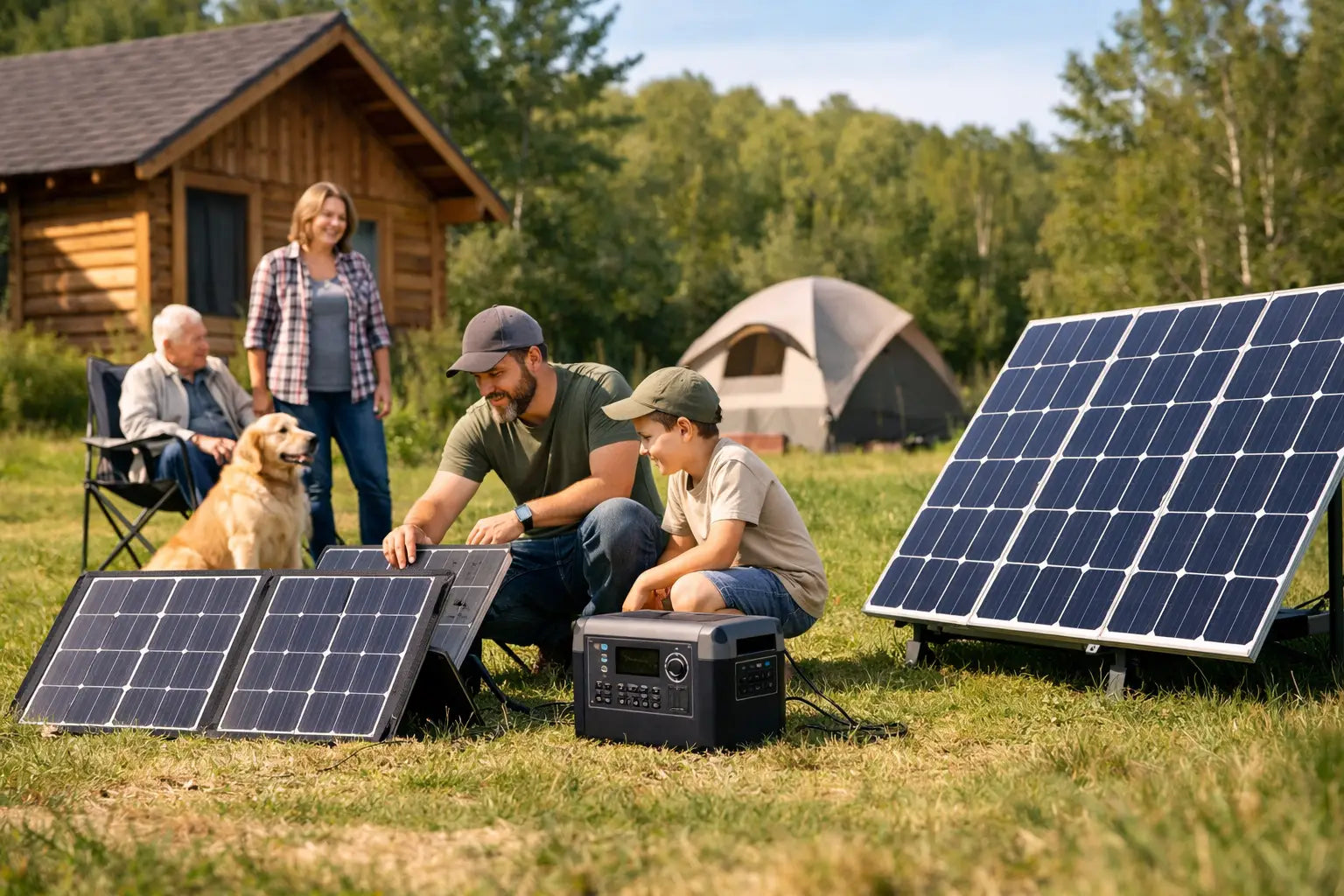
A solar panel on its own will not keep a refrigerator cold during a three-day outage. It needs sunlight, the right cables, and usually a battery power station to store that energy for after dark. That is why the best solar panels for preppers are not always the panels with the biggest watt number. They are the ones that fit your family’s actual emergency plan.
For most households, portable solar paired with a battery power station is the most practical starting point. It can run lights, phones, a modem, medical devices, a small fan, and selected kitchen appliances without fuel runs or permanent installation. A rooftop system can offer more capacity, but it is a larger project with different rules and costs.
Start With What Your Family Needs to Power
Before comparing panels, decide what has to stay on. During an outage, that often means communication, light, refrigeration for essential medications or food, a CPAP machine, a sump pump, or a way to keep phones charged. It usually does not mean powering the entire house exactly as usual.
Make a short list of essential devices and check their wattage labels. Then consider how long each device needs to run. A 10-watt LED lamp used for five hours needs far less stored power than a refrigerator cycling all day. This simple exercise prevents a common and expensive mistake: buying a panel first, then finding out the battery cannot accept its output or cannot run the equipment that matters.
Solar panels make energy. A battery power station stores it. The inverter inside the power station turns that stored energy into the household-style AC power many appliances use. Think of these as one system, not separate purchases.
What Are the Best Solar Panels for Preppers?
The best solar panels for preppers fall into two useful categories: portable folding panels for temporary power and fixed panels for a home-based backup system. Neither is automatically better. Your location, budget, storage space, and outage history decide which makes sense.
Portable folding panels for flexible emergency power
Portable panels are the right fit for many families because they are simple to store, move, and deploy. You can set them in the yard, on a driveway, or outside a window where they get direct sun, then bring them inside when weather turns or when you need to leave. They also make sense for evacuation, camping, RV travel, and helping a relative after a storm.
Look for a panel that is compatible with your battery power station’s solar input range and connector. This matters more than brand loyalty. A 200-watt panel sounds straightforward, but a power station may limit solar input below that amount. In that case, the extra panel capacity will not necessarily recharge the battery faster.
Jackery SolarSaga panels are a natural pairing for Jackery power stations, especially for households that value a straightforward, matched system. Lion Energy portable panels can also be a good option for families building a broader backup-power setup. Matched equipment usually reduces connector confusion, but confirm the specifications before buying. Voltage limits, input wattage, and cable requirements need to line up.
Portable panels have trade-offs. Their output changes through the day, they need to be repositioned for best results, and they should not be left unsecured in high winds. A panel rated at 200 watts will rarely produce a steady 200 watts in real conditions. Haze, partial shade, heat, cloud cover, and a poor angle to the sun all reduce output.
Fixed panels for larger, repeatable backup power
Fixed solar panels can produce far more energy than a portable setup. They are worth considering if your family regularly faces lengthy outages, you have clear roof or ground space, and your budget includes professional design and installation. A properly designed system with batteries can support selected home circuits, such as refrigeration, lighting, internet equipment, and some well pumps.
There is an important distinction here. Standard grid-tied rooftop solar often shuts down when the utility grid fails. This is a safety feature that protects utility workers. Solar panels on your roof do not automatically mean you have backup power.
To use rooftop solar in an outage, your system generally needs battery storage and equipment designed for islanding or backup operation. That is a conversation for a qualified installer who understands local permits, utility requirements, and your specific electrical panel. For a family that wants dependable whole-home or critical-load backup, this is a long-term home improvement, not an impulse purchase.
Choose Panel Size Around Recharge Time
Panel size is measured in watts, but the useful question is how quickly the panel can refill your battery in the weather you expect. A 100-watt portable panel may be enough to keep phones, lanterns, and a small power station going during a sunny weekend. It is unlikely to fully support a refrigerator and several household devices after multiple cloudy days.
For a medium or large power station, 200 to 400 watts of portable solar is often a practical family starting range. It gives you meaningful daytime charging without creating a huge, awkward setup. If your power station accepts more solar input and you have the space to deploy it, adding panels can shorten recharge time.
Do not assume bigger is always better. A 400-watt folding array may be heavy, bulky, and difficult for one person to position. A parent or grandparent should be able to set up the system safely without turning it into a weekend engineering project. Two manageable panels can be more useful than one oversized panel that stays in the garage.
Pay Attention to the Details That Decide Real-World Performance
Panel efficiency matters, especially when storage space is limited, but it is not the first thing to compare. A higher-efficiency panel can generate more power from a smaller surface area, yet a well-sized panel in direct sun will usually beat a premium panel sitting in shade.
Weather resistance matters for emergency equipment. Look for solid hinges, protected ports, sturdy kickstands, and materials that can handle ordinary outdoor use. Portable does not mean indestructible. Bring panels inside during severe wind, hail, or a hurricane. Never put them where floodwater could reach cables or connectors.
Cable length deserves more attention than it gets. You want enough distance to place the panel in sun while keeping the battery power station dry and secure indoors or under cover. Do not run cables across a walkway where someone can trip, and avoid pinching them in doors or windows.
Also plan for winter. Shorter days, low sun angles, snow cover, and heavy cloud can cut solar production sharply. Families in northern climates should treat portable solar as a valuable recharge source, not the only answer. A generator, vehicle charging option, extra stored battery capacity, or a plan to reduce power use can fill the gap.
Build a System You Will Actually Use
The strongest emergency power plan is tested before an emergency. On a clear weekend, set up your panel, connect it to the power station, and run the equipment you expect to use. See whether the refrigerator starts properly. Check that the CPAP cable reaches the bedroom. Teach another adult in the household how to position the panel and read the battery display.
Keep the panel, cables, adapters, and instructions together. Label the bag or storage bin so nobody has to hunt for a missing connector after a storm. At SHTF Prepper Club, the goal is not to sell a complicated pile of gear. It is to help families build power readiness that works on an ordinary stressful day.
Start at the level your household can use now. A small solar panel and power station that keep communication and medical needs covered are a meaningful first step. Once you know how your family uses power during an outage, expanding the system becomes much easier and much more worthwhile.