
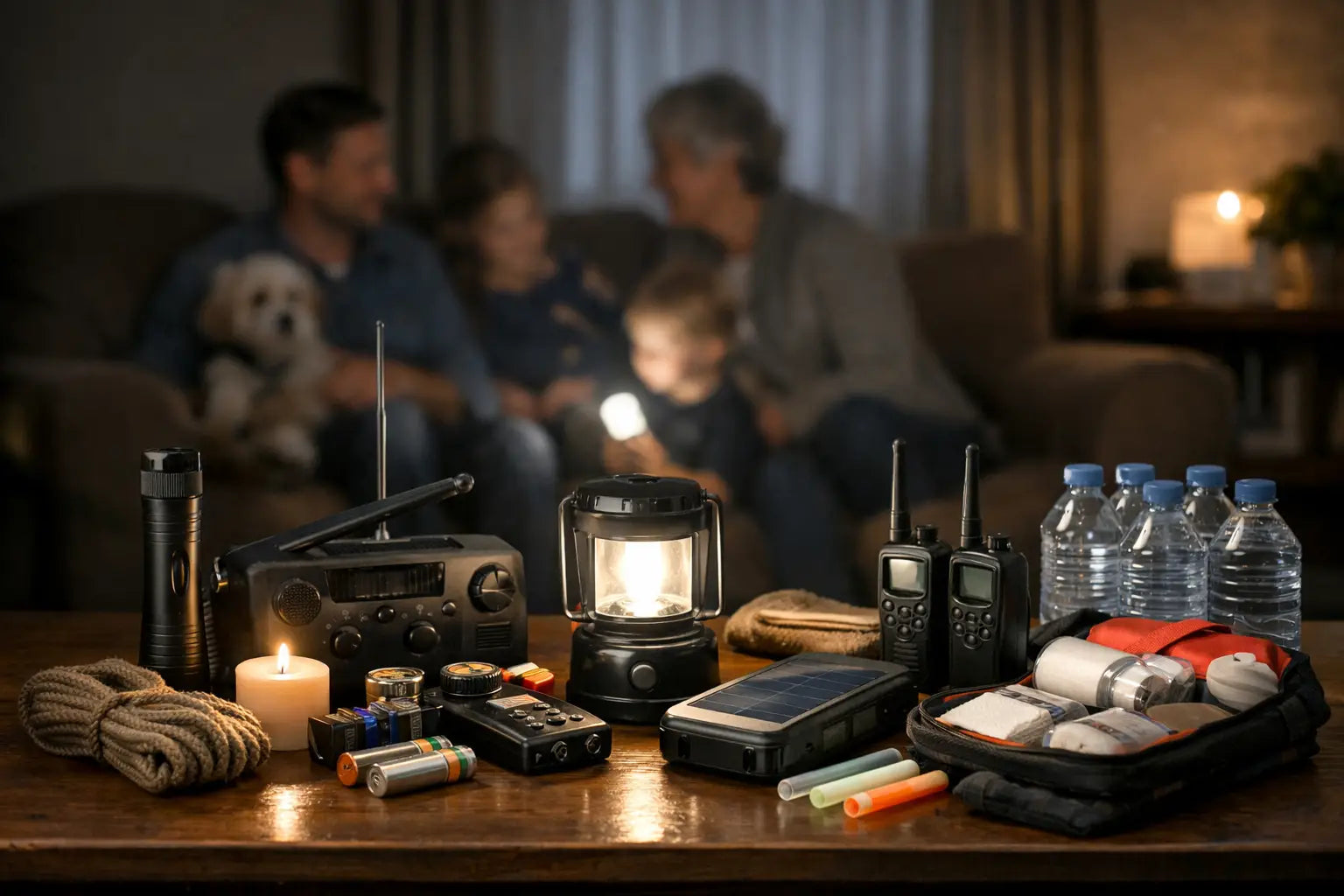
The refrigerator goes quiet first. Then you notice how quickly the house changes after sunset: no lights, no Wi-Fi, no working garage door, and no easy way to charge a phone. A blackout kit gives your family a practical answer before that moment arrives. It is not a pile of random gear. It is a set of supplies arranged around the real jobs your home must handle when the power is out.
Most households do not need to prepare for every possible emergency at once. Start with the kind of outage your area is most likely to face, whether that is a summer thunderstorm, a hurricane, an ice storm, wildfire-related shutoffs, or an overloaded power grid. Then build for the first 72 hours at home. That is a useful, achievable starting point.
What a Blackout Kit Should Do
A good blackout kit helps your family do six things: see safely, communicate, keep water available, eat simple meals, stay warm or cool enough, and manage basic medical needs. It should also reduce the small stresses that turn a power outage into a long, uncomfortable night.
Think in layers. A short outage may only require flashlights and charged phones. An outage that lasts several days can affect grocery stores, fuel stations, cell service, water pressure, refrigerated medication, and your ability to cook. Your kit should work without assuming that help, stores, or charging outlets will be immediately available.
Keep the core supplies together in a clearly marked tote, cabinet, or rolling bin. The exception is equipment you use often, such as flashlights, power stations, and first-aid supplies. Those should stay accessible, with everyone in the household knowing where they belong.
Start With Light, Not Candles
Darkness creates many of the first risks during an outage. Falls, burns, and frantic searches for batteries are all avoidable. Give every bedroom a flashlight or headlamp, and place additional lights near exterior doors, the kitchen, and the electrical panel.
Headlamps are especially useful because they leave both hands free for cooking, carrying a child, finding medicine, or checking a breaker. Lanterns make common spaces easier to use. Small LED lanterns are safer than open-flame candles, especially around children, pets, curtains, and tired adults moving through an unfamiliar dark house.
Store fresh batteries in their original packaging and label the bin with the battery sizes your equipment uses. Rechargeable lights are excellent, but only if you have a way to recharge them during an extended outage. A mix of battery-powered and rechargeable lighting is more dependable than relying on one system.
Water Comes Before Convenience
If the power outage affects a private well, your taps may stop working. Municipal water can also be interrupted during major storms or infrastructure problems. Store at least one gallon of water per person per day for drinking and basic sanitation, with a three-day supply as a minimum target. Families in hot climates, households with infants, older adults, pets, or medical needs should plan for more.
Bottled water is a reasonable way to begin, but it is not the only option. Purpose-built water containers make rotation and storage easier. A water filter adds another layer of flexibility if you have access to a water source but are uncertain about its safety.
Do not forget the unglamorous parts of water planning. Keep disposable cups, a manual can opener, moist wipes, trash bags, and hand sanitizer with your kit. If water service is unreliable, a simple sanitation plan matters as much as drinking water.
Food That Works When the Kitchen Does Not
Your blackout food does not need to look like camping food, and it does not need to be elaborate. It needs to be familiar, shelf-stable, and easy to prepare with little or no electricity. Choose foods your family already eats: ready-to-eat soups, canned chicken, beans, fruit, nut butter, crackers, oatmeal, shelf-stable milk, and comfort foods that help children feel settled.
Build around meals that require no cooking first. Then add foods that can be prepared with hot water or a simple camp stove used outdoors. Never use charcoal grills, propane camp stoves, or fuel-burning heaters inside the house, garage, basement, or near open windows. Carbon monoxide is colorless, odorless, and dangerous.
If your household depends on refrigerated food, make a plan before the outage. Keep refrigerator and freezer doors closed as much as possible. A refrigerator generally keeps food cold for about four hours unopened, while a full freezer can hold its temperature for roughly 48 hours. A thermometer helps you make safer decisions than guessing by touch.
Backup Power: Match It to the Job
Backup power is where families can overspend quickly. The right choice depends on what must keep running. Charging phones and powering a lamp is very different from operating a refrigerator, a CPAP machine, a sump pump, or medical equipment.
A compact power bank covers phones and small electronics. A portable power station can run lights, a router, laptops, and certain medical devices, depending on its capacity and output. Larger solar generators or battery systems may support bigger needs, but they require more planning and a realistic understanding of wattage and run time.
Before buying anything, make a short list of critical items and check each device's power label or manual. Identify its running watts, starting watts if it has a motor, and how many hours you truly need it to operate. A refrigerator, for example, may not need continuous power if you can run it in intervals while keeping the door closed.
Fuel generators can be valuable during long outages, but they have trade-offs. They require fuel storage, routine maintenance, outdoor placement well away from doors and windows, and a safe connection plan. If you want to power hardwired household circuits, talk with a qualified electrician about a transfer switch. Never backfeed a generator through a wall outlet.
Keep Your Family Comfortable and Connected
Temperature is often the difference between an inconvenience and an emergency. In winter, focus on warm layers, sleeping bags, blankets, hats, gloves, and choosing one room for the family to occupy. Close doors to unused rooms and cover drafty windows if needed. In extreme heat, prioritize drinking water, shade, battery-powered fans, cooling towels, and knowing where to go if your home becomes unsafe.
Your communication plan should not depend on one phone battery. Keep car chargers, power banks, a battery-powered or hand-crank weather radio, and a written list of important phone numbers. During widespread emergencies, text messages often go through when calls do not. Choose an out-of-area contact who can serve as a check-in point for relatives.
For households with children, add a few low-tech distractions: card games, coloring supplies, books, and a familiar comfort item. For pets, store extra food, water, medication, waste bags, and copies of vaccination records. A blackout plan is stronger when every member of the household is included.
The Medical and Safety Layer
Keep prescription medications in mind early, not after the storm warning. Ask your pharmacist and health care provider about refill timing, storage requirements, and backup options for medications that need refrigeration. If someone uses oxygen, a CPAP, mobility equipment, or another powered medical device, their backup power needs deserve a separate, specific plan.
Your kit should include a well-stocked first-aid kit, spare eyeglasses, basic hygiene items, gloves, masks, and a fire extinguisher appropriate for the kitchen and garage. Check smoke alarms and carbon monoxide alarms regularly. Many homes have alarms installed, but dead batteries and expired units are common weak points.
Keep a small amount of cash in small bills as well. Card readers, ATMs, and gas pumps may not work during a local outage. This is not about anticipating chaos. It is about preserving options when normal payment systems are temporarily unavailable.
A Practical Blackout Kit Checklist
Use this as a starting point, then adjust it for your climate, household size, and medical needs:
- Flashlights, headlamps, LED lanterns, and the correct spare batteries
- Three or more days of water, plus a way to filter and store additional water
- Familiar shelf-stable food, a manual can opener, and safe outdoor cooking equipment
- Phone power banks, charging cables, a weather radio, and backup power sized for critical devices
- First-aid supplies, prescriptions, hygiene items, pet supplies, and copies of key documents
- Blankets or cooling supplies, work gloves, basic tools, cash, and a printed contact list
Store It Where You Can Reach It
A blackout kit buried in an attic is not much help at 9 p.m. during a storm. Store core supplies on the main floor or near the most likely gathering area. Keep heavy water containers low, batteries dry, and food away from extreme heat. Label bins plainly so a teenager, grandparent, or neighbor can find what they need without a search.
Set a reminder twice a year to check batteries, rotate food and water, recharge power stations, review prescriptions, and update documents. Pair the task with daylight saving time changes, hurricane season, or the first cold snap of fall. A kit that is maintained in small steps is far more useful than one built once and forgotten.
Preparedness does not have to begin with a generator or a wall of supplies. Start with light, water, and a way to communicate. Then add one useful layer at a time. The best blackout kit is the one your family understands, can afford, and will be ready to use on an ordinary difficult night.