
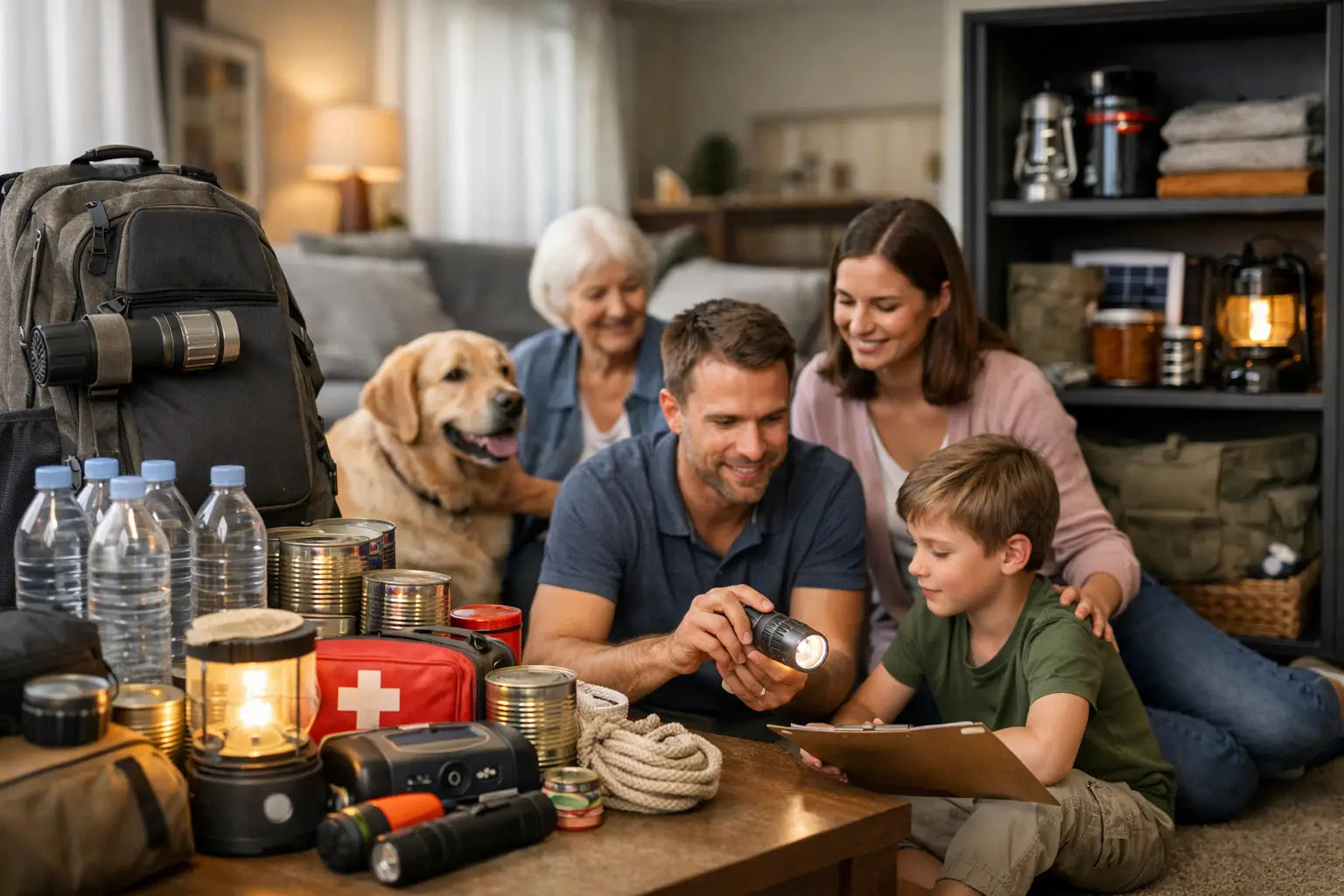
The power goes out at 8:30 p.m. Your phone is at 22 percent, the kids are asking whether school is canceled, and you realize the flashlight is somewhere in the garage. That is the moment family disaster preparedness stops being an abstract project and becomes a very practical question: What does our household need to stay safe, comfortable, and informed for the next few days?
The good news is that you do not need a bunker, a massive budget, or a weekend spent learning wilderness skills. Most families need a simple plan and a few dependable systems for water, food, power, health, warmth, and communication. Start with the disruptions most likely where you live, then build from there.
Start Family Disaster Preparedness With Your Real Risks
A family in coastal Florida should plan differently from a family outside Denver or in earthquake country. Hurricanes may mean evacuation and weeks without power. Wildfire season may demand a fast departure with little notice. Winter storms can leave a home intact but isolate it for days. An earthquake can make water, gas, and roads unreliable all at once.
Look at what has actually happened within a few hours of your home during the past five years. Then ask three questions: Could we need to leave quickly? Could we be stuck at home without utilities? Could roads and stores be unavailable for several days? Your answers should shape what you buy and where you store it.
Plan for both staying and leaving. An evacuation bag helps each person get out the door with essentials. Home supplies help everyone remain safely in place when travel is the bigger risk. These are related needs, but they are not the same kit.
Build Around the Needs That Cannot Wait
Preparedness is easier when you organize it by what your family will use first. A sensible baseline is enough supplies to cover at least 72 hours, then expand toward one or two weeks as budget and storage allow. For some households, especially those in storm-prone or rural areas, a longer supply is reasonable.
Water Comes Before Almost Everything Else
Store at least one gallon of water per person per day for drinking and basic sanitation. That is a starting point, not a magic number. Families in hot climates, households with infants, older adults, pets, or medical needs may require more.
Bottled water is easy to start with, but it takes up space and eventually needs rotation. Larger water containers make more sense once you have a place for them. Add a reliable water filter and a purification backup so your plan is not dependent on stored water alone. Keep some water inside the home, not only in a shed or garage where freezing temperatures, heat, or storm damage may affect it.
Food Should Be Familiar and Easy to Make
A shelf full of food is useful only if your family can prepare it with the tools and fuel available. Start with meals your household already eats: canned proteins, soups, rice, pasta, nut butters, oatmeal, shelf-stable milk, snacks, and foods that fit dietary restrictions.
Long-term food storage can add depth to the pantry, particularly for larger households or families building greater self-sufficiency. But do not buy a year of meals before solving the next question: How will we cook them? A camp stove, safe indoor-rated cooking option, fuel supply, or outdoor cooking setup may be appropriate depending on your home and local conditions. Never use charcoal grills, gasoline generators, or other carbon-monoxide-producing equipment indoors or in a garage.
Keep a manual can opener with your food. It is a small detail that becomes a big one during an outage.
Power Is About More Than Keeping the Lights On
A power outage affects refrigeration, charging, work, communication, medical devices, sump pumps, and sometimes heat or air conditioning. Begin with light and communication: headlamps, lanterns, spare batteries, charging cables, and power banks. Headlamps are especially helpful because they keep both hands free for cooking, carrying a child, or checking a breaker panel.
From there, decide what loads truly matter. A portable power station may keep phones, a modem, lights, and selected medical equipment running. A generator can support more, but it requires fuel management, safe placement, maintenance, and careful attention to carbon monoxide. The right choice depends on your household's essential equipment, budget, and whether outages in your area typically last hours or days.
If someone relies on oxygen, dialysis equipment, refrigerated medication, mobility devices, or other medical equipment, make that need the center of your power plan. Talk with the equipment provider and medical team before an emergency, and keep written instructions where caregivers can find them.
Medical Supplies Need to Match Your Household
A basic first-aid kit is a good start, but a family kit should reflect real life. Include your preferred pain relievers, fever reducers, bandages in useful sizes, wound-cleaning supplies, gloves, thermometer, and any over-the-counter items your family reaches for regularly.
Prescription medications deserve special attention. Keep an updated medication list with dosages, prescribing providers, pharmacy information, allergies, and insurance details. Ask your pharmacist or physician what refill options are available before storm season or a known disruption. Do not wait until the last dose to make a plan.
Make the Plan Usable on a Stressful Day
Supplies help. A shared plan prevents confusion.
Choose an out-of-area contact who can relay messages if local phone networks are overloaded. Decide where family members will meet if they cannot return home. Parents should make sure children know their address, caregivers' names, and at least one phone number. A printed contact card belongs in backpacks, vehicles, and evacuation bags because phones can lose power or service.
Also decide who does what. One adult may handle pets and medications. Another may secure documents, grab the evacuation bags, and shut off utilities if instructed by local officials. Older children can carry their own small bag, shoes, comfort item, and water. Assigning roles is not about making a crisis feel dramatic. It reduces the number of decisions everyone must make when time is short.
Keep copies of insurance information, identification, home inventory photos, medical records, and key account numbers in a waterproof folder. Store digital copies securely as a backup, but do not rely only on cloud access.
Do Not Forget the People and Pets in Your Plan
The best family disaster preparedness plan accounts for the people who need extra support. Babies need formula, diapers, wipes, and familiar comfort items. Older relatives may need extra medications, hearing-aid batteries, mobility support, and a written care routine. Pets need food, water, carriers, leashes, waste supplies, vaccination records, and a safe place to go.
Think about comfort, too. A deck of cards, books, battery-powered fan, familiar blanket, or small toy can make a long outage much easier on children. These items are not frivolous. Keeping people calm, warm, fed, and occupied makes the household safer.
Buy in Layers, Not All at Once
A complete readiness setup can look expensive when you view it as one large purchase. Break it into layers. First, cover 72 hours of water, food, light, first aid, and communication. Next, create evacuation bags and improve your cooking and backup-power options. Then add longer-term water storage, deeper food reserves, and equipment that fits your regional risks.
This approach avoids two common mistakes: buying specialized gear before covering basics, and buying food your family will never eat. Rotate pantry items into normal meals. Test your lanterns, filters, stove, and power source before an emergency. A tool still in its packaging is not yet part of your plan.
SHTF Prepper Club organizes practical supplies around these priorities, from family emergency kits and water storage to power outage essentials, medical gear, and long-term food independence. The goal is not to buy everything. It is to build a setup your family understands and can maintain.
Set a calendar reminder twice a year to check expiration dates, replace batteries, update contact information, and review the plan with everyone at home. Start with one shelf, one bin, or one weekend task. The quiet confidence that comes from knowing where the water, lights, medications, and plan are kept is worth far more than a garage full of gear nobody has used.