
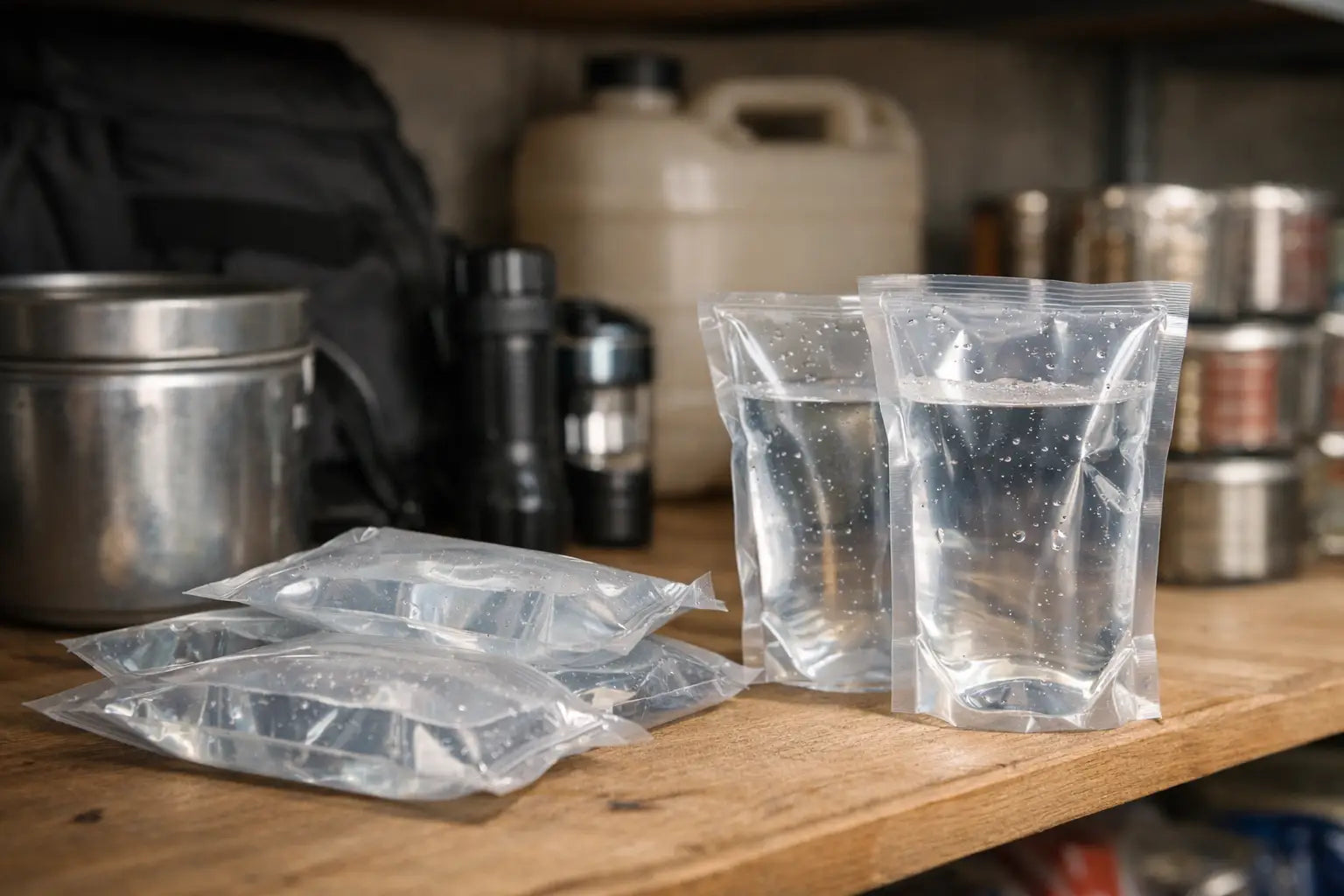
A flat pouch of drinking water can be one of the easiest things to pack for an evacuation, a long power outage, or a storm shelter. But how long do water pouches last once you put them on a shelf, in a closet, or in the trunk of a car? For most commercially packaged emergency water pouches, the answer is usually about five years from the date of manufacture, provided the pouch stays sealed and is stored correctly.
The date printed on your specific pouch is the number to follow. Water itself does not spoil the way food does. The pouch, seams, and packaging are what determine whether that water remains safe and pleasant to drink.
How Long Do Emergency Water Pouches Last?
Most factory-sealed emergency drinking-water pouches have a stated shelf life of five years. Some brands may use a shorter or longer period, so check the packaging before you buy and again when you add the pouches to your family emergency kit.
That shelf-life date reflects more than the water inside. Manufacturers test the pouch material, seal strength, and water quality over time. A pouch that remains intact helps keep bacteria, dirt, and chemicals out. If the package breaks down, leaks, or is punctured, the water is no longer protected.
A printed expiration date is a rotation date, not a reason to panic. A pouch that is a few months past its date, still fully sealed, and stored in a cool indoor location may not suddenly become unsafe at midnight. Still, for the water you expect to hand to a child, an older parent, or a guest during an emergency, replacing it on schedule is the sensible choice.
Not Every Water Pouch Is the Same
The phrase “water pouch” can describe a few different products, and their storage lives are not interchangeable.
Single-serve emergency water pouches are factory-filled with purified drinking water. These are the familiar small, flexible packets made for emergency kits, vehicles, shelters, and evacuation bags. They are convenient because each serving stays sealed until needed, and a damaged pouch does not ruin your entire supply.
Collapsible water containers are different. These are empty, reusable pouches or bladders that you fill at home. Their usable life depends on the material and how well you clean and dry them, while the water you put inside should be treated and rotated according to your water-storage method. Do not assume an empty reusable pouch turns tap water into long-term stored water.
Drink pouches sold as juice, electrolyte drinks, or flavored beverages also follow their own dates and storage instructions. They are not a substitute for plain emergency water, especially if someone in your family has dietary restrictions or a sensitive stomach.
What Shortens the Shelf Life of Water Pouches?
Heat is the biggest enemy. A garage that gets hot every summer, an attic, a shed, or a vehicle can expose pouches to temperatures far above what their packaging was designed to handle. Repeated heat can weaken seams and affect the taste of the water. A car is especially tough on emergency supplies because it can be freezing one week and dangerously hot the next.
Direct sunlight creates a similar problem. Store pouches in their original case or in an opaque bin, away from windows. Keep them off concrete floors when possible, particularly in garages or basements where moisture, temperature swings, and pests are concerns.
Physical pressure matters, too. Do not stack heavy canned goods, tools, or bulk supplies on top of water pouches. A tiny crease at a seam can become a leak months later. Place cases where they will not be crushed when you are searching for batteries or holiday decorations.
Strong chemical odors can also be a concern. Keep drinking water away from gasoline, paint, solvents, pesticides, and household cleaners. Even when a pouch looks fine, emergency water belongs in a clean, dedicated storage area.
Where Should Your Family Store Water Pouches?
An interior closet, pantry, under-stair storage space, or a temperature-stable section of a basement is usually a better choice than a garage. Aim for a cool, dry, dark place that is easy to reach during a power outage or evacuation.
Pouches work best as part of a layered water plan. Keep a small supply in each evacuation bag and in the vehicle if local temperatures allow it. Store a larger amount at home for the first hours of an emergency. Then add more substantial water storage and a reliable filtration method for disruptions that last longer than a day or two.
This approach avoids a common mistake: buying one large container of water and calling the job done. A large container is efficient for home use, but it is not easy to carry if your neighborhood is ordered to evacuate. Pouches are light, portable, and easy to share. Their trade-off is that they cost more per gallon and take up more space than larger water containers.
How Many Water Pouches Should You Keep?
A practical baseline is one gallon of water per person per day for drinking and basic sanitation. Plan for at least three days, then build toward a two-week supply as your budget and storage space allow. People living in hurricane zones, wildfire areas, rural locations, or places with frequent winter outages may want more.
For drinking alone, many emergency water pouches hold about 4.2 ounces. That means an adult would need roughly 30 pouches to equal one gallon. It is a useful calculation because a box of pouches can look substantial while providing only a portion of a family’s needs.
Consider your household, not a generic headcount. Add water for pets, formula-fed infants, people who take medications, and anyone who may need extra fluids in hot weather. If grandparents or adult children often shelter at your home during storms, include them in the plan. You can store enough for your immediate household first, then expand a little at a time.
How to Inspect and Rotate Your Supply
Twice a year, inspect your emergency water when you change smoke-detector batteries, prepare for hurricane season, or set clocks forward and back. You do not need an elaborate tracking system. A simple label on the storage bin with the earliest replacement date is enough.
Look for four issues: leaks or dampness in the box, swollen or misshapen pouches, damaged seams, and water that looks cloudy after opening. If a pouch is leaking, torn, or unusually swollen, discard it. If an opened pouch has an odd smell, strange taste, or visible particles, do not drink it.
Rotate unopened pouches before their printed date whenever possible. Use older pouches for a planned camping trip, a day at the beach, or non-emergency hydration if they are still within date and the packaging is intact. Then replace what you used with fresh stock. This keeps the system familiar and prevents a neglected case from sitting in the back of a closet for a decade.
Can Water Pouches Freeze?
They can freeze, but that does not mean they should be stored where freezing is routine. Water expands as it freezes, which can stress seams and create small leaks. Some emergency pouches are designed to tolerate rough conditions better than rigid containers, but the manufacturer’s storage guidance still comes first.
If pouches in your vehicle or garage freeze during a cold snap, inspect every one before relying on it. Move them indoors if you can. For families in cold-weather regions, it is often smarter to keep the main supply in a conditioned area and use vehicle water as a smaller, frequently checked backup.
Do Water Pouches Replace Water Filters?
No. Water pouches and water filters solve different problems. Pouches give your family immediate, known-safe water without needing a water source, electricity, or setup. A filter helps extend your options when stored water runs low and you have access to a source that can be treated.
For the first 72 hours, stored water should do most of the work. A filtration system is your next layer for a longer outage, boil-water advisory, or supply interruption. If you collect water from an unknown source, remember that not every filter removes viruses, chemicals, or all contaminants. Read the specific treatment instructions before an emergency, not while everyone is thirsty.
A few cases of properly stored water pouches will not make your family prepared for every possible disruption. They can, however, make the first stressful hours calmer. Put them somewhere cool, write down the rotation date, and build the rest of your water plan one practical layer at a time.