
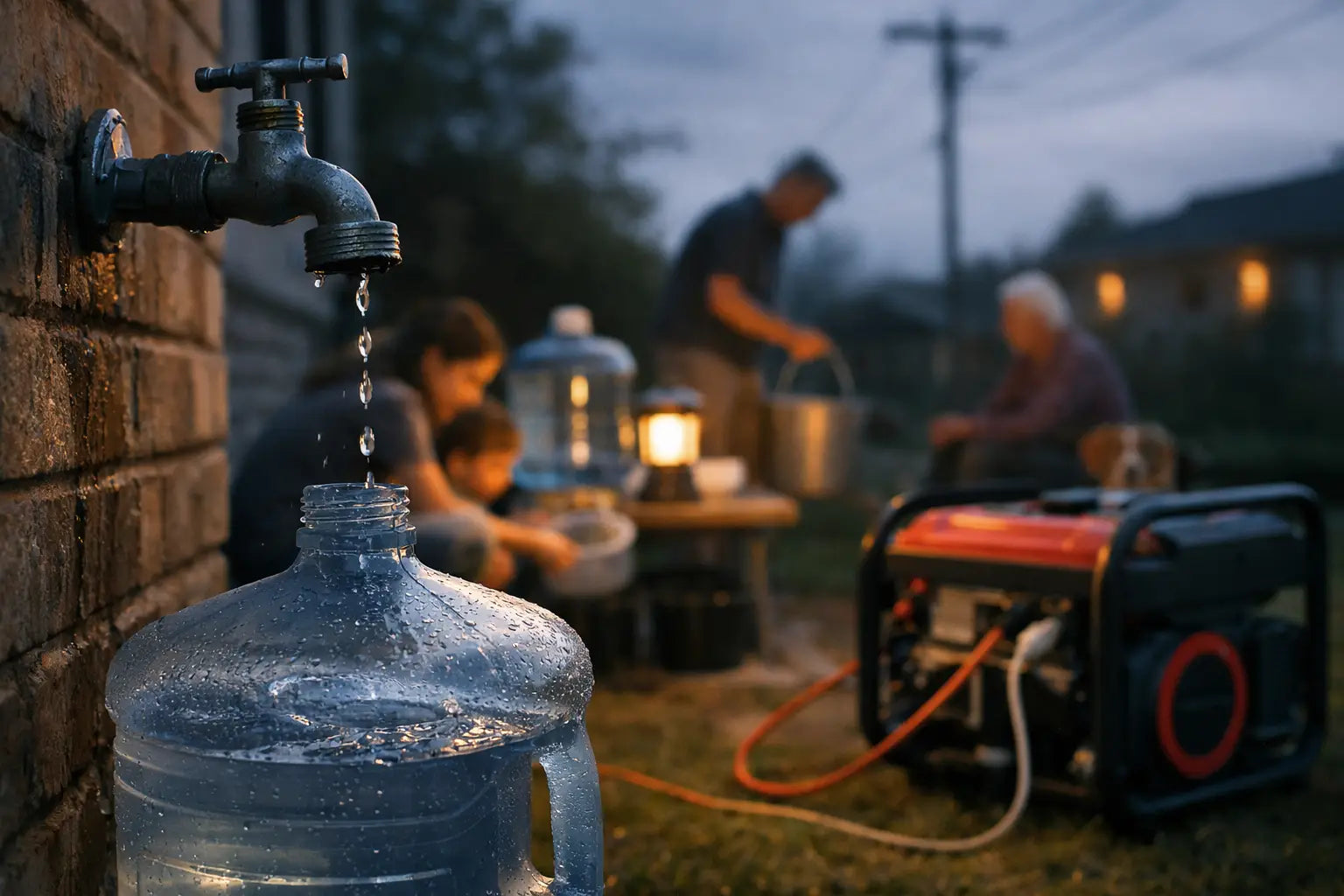
The lights go out, and most families reach for flashlights first. Water is usually the second concern, until the faucet slows to a trickle or the toilet will not flush. That is how water becomes an issue with grid outage: the water may still be in the pipes at first, but the systems that move, treat, and safely remove it rely heavily on electricity.
A few stored cases of bottled water are a good start. For a multi-day outage, though, a family needs a plan for drinking, cooking, hygiene, pets, and sanitation. The goal is not to turn your home into a bunker. It is to make sure your household can stay healthy and reasonably comfortable while utilities recover.
Why a Grid Outage Can Affect Water So Quickly
Municipal water systems use electric pumps to pull water from a source, move it through treatment plants, pressurize storage tanks, and push it through distribution lines. Many systems have backup generators, fuel supplies, and elevated water towers that buy time. That is good news. It does not mean every neighborhood will have normal water service throughout a long outage.
When the outage is widespread, backup power may be limited to essential equipment. A utility may also reduce pressure, issue a boil-water notice, or ask customers to conserve water while crews assess the system. Flooding, broken mains, wildfire damage, and frozen pipes can create problems that electricity alone cannot solve.
The first practical rule is simple: if the power goes out and water is still running, fill clean containers right away. Fill pitchers, pots, food-grade jugs, and a bathtub for sanitation water. Do not wait until the next morning. Water pressure can disappear without much warning.
Homes on Wells Lose Water When Pumps Stop
If your home has a private well, the connection is even more direct. Your well pump runs on electricity. No power usually means no water from the tap, even if the well itself has plenty of water underground.
Some homes have a pressure tank that provides a small amount of water after the power fails. It may be enough for a few glasses of water and one or two toilet flushes. Treat that reserve as a brief head start, not a water supply.
A properly sized generator, battery power station, or solar-capable backup system can sometimes run a well pump, but this requires planning. Well pumps can have a high startup power demand, and the answer depends on your pump's voltage, horsepower, wiring, and whether your system includes a pressure tank. Have an electrician or qualified pump professional help you understand the load before an emergency.
High-Rise Buildings and Neighborhood Pumps Have Limits
Apartment and condo residents may have city water available, yet still lose service because building booster pumps need power to move water above a certain floor. Some suburban developments also use shared pumping equipment. Ask your property manager, homeowners association, or local water provider how your system performs during an outage.
This is one reason a household water supply matters whether you use city water or a well. The source may be reliable, but the route from the source to your kitchen sink may not be.
Water Quality Can Become a Problem, Too
An empty tap is obvious. Unsafe water is harder to spot.
Water pressure helps keep contaminants from entering damaged pipes. When pressure falls, especially after flooding or a water-main break, utilities may issue a boil-water advisory out of caution. The water can look and smell normal and still be unsuitable for drinking, brushing teeth, making baby formula, washing produce, or giving to pets.
A boil-water advisory and a do-not-use order are not the same thing. Under a boil-water advisory, bringing clear water to a rolling boil for one minute is generally used to kill disease-causing organisms. At elevations above 6,500 feet, boil it for three minutes. Let it cool in a clean, covered container.
A do-not-use order is more serious. It may involve chemical contamination or another hazard that boiling will not fix. In that situation, use stored water and follow local instructions. Do not assume a filter or boiling will solve every water-quality problem.
How Much Water Should Your Family Store?
The common baseline is one gallon per person per day for at least three days. For a real household plan, two weeks is a more useful target when space and budget allow. That gallon is a minimum for drinking and basic food preparation. Hot weather, illness, pregnancy, physically demanding cleanup, and pets all increase what you need.
A family of four should aim for 56 gallons for 14 days at the one-gallon baseline. That sounds like a lot because it is. Water is heavy, roughly 8.3 pounds per gallon, and it takes space. The answer is usually not one enormous container. It is a mix of manageable containers stored where your family can actually reach them.
Keep drinking water in food-grade containers intended for water storage. Store it in a cool, dark place away from gasoline, paint, pesticides, and other strong chemicals. Label containers with the fill date and rotate them according to the container maker's guidance and your local water conditions.
If a 14-day supply feels out of reach, start with three days. Then add one container each month. Preparedness works better when it becomes a household habit than when it becomes an expensive project you never finish.
Build a Water Plan That Covers More Than Drinking
Drinking water comes first, but your family will also need a way to prepare meals, wash hands, clean minor wounds, and manage toilets. A simple plan separates water by purpose so no one accidentally uses the last safe drinking water to rinse muddy boots.
Store treated drinking water for consumption. Keep a second source of non-potable water, such as filled bathtub water or collected rainwater where permitted, for flushing toilets and basic cleaning. Never assume rainwater is safe to drink without proper treatment.
For sanitation, reduce water use before you run short. Use disposable plates briefly if your household supply allows, postpone laundry, and take short sponge baths rather than showers. If sewer service may be compromised, do not keep flushing out of habit. A toilet that backs up is much harder to manage than a toilet used carefully.
Households with infants, older adults, medical needs, or pets should add those needs to the math. Formula preparation requires safe water. Some medications require water or refrigeration. Dogs and cats need reliable drinking water, too. Write these details into your family emergency plan rather than trusting everyone to remember them under stress.
Treatment Gives You Options, Not an Excuse to Store Less
Water filters and purification supplies are valuable backups. They can extend your options if stored water runs low, if you need to use a nearby source, or if an evacuation disrupts your plan. But treatment has limits.
Different methods address different problems. A quality filter may reduce bacteria and protozoa but not viruses or dissolved chemicals. Purification drops or tablets can be effective against microorganisms when used correctly, but they need contact time and may not work well in cloudy water without pre-filtering. Boiling handles biological contamination, but it uses fuel and does not remove chemicals, salt, or heavy metals.
A sensible household setup includes stored water first, then at least two treatment methods you understand how to use. For example, many families pair a gravity-fed filter with Aquamira-type purification treatment and a way to boil water outdoors or with safe backup cooking equipment. Read the instructions now. Emergency supplies are only useful when they are familiar.
Prepare Before the Next Outage
Take ten minutes this week to find your water shutoff valve, check whether your home uses a well, and count the gallons you already have. If severe weather is forecast, fill every appropriate clean container while service is normal. Keep a written note of your water utility's outage and boil-water alert channels, since cell service and internet access may be spotty.
At SHTF Prepper Club, water storage, filtration, and backup-power planning are treated as connected household needs because they are. A filter cannot pump a well. A generator cannot make contaminated water safe. A case of bottles may not cover a family for long. Each layer solves a different part of the problem.
The reassuring part is that you do not need to solve every scenario at once. Start by adding enough clean water for your family to get through the next three days. Then build from there, one practical container, treatment tool, and power decision at a time.