
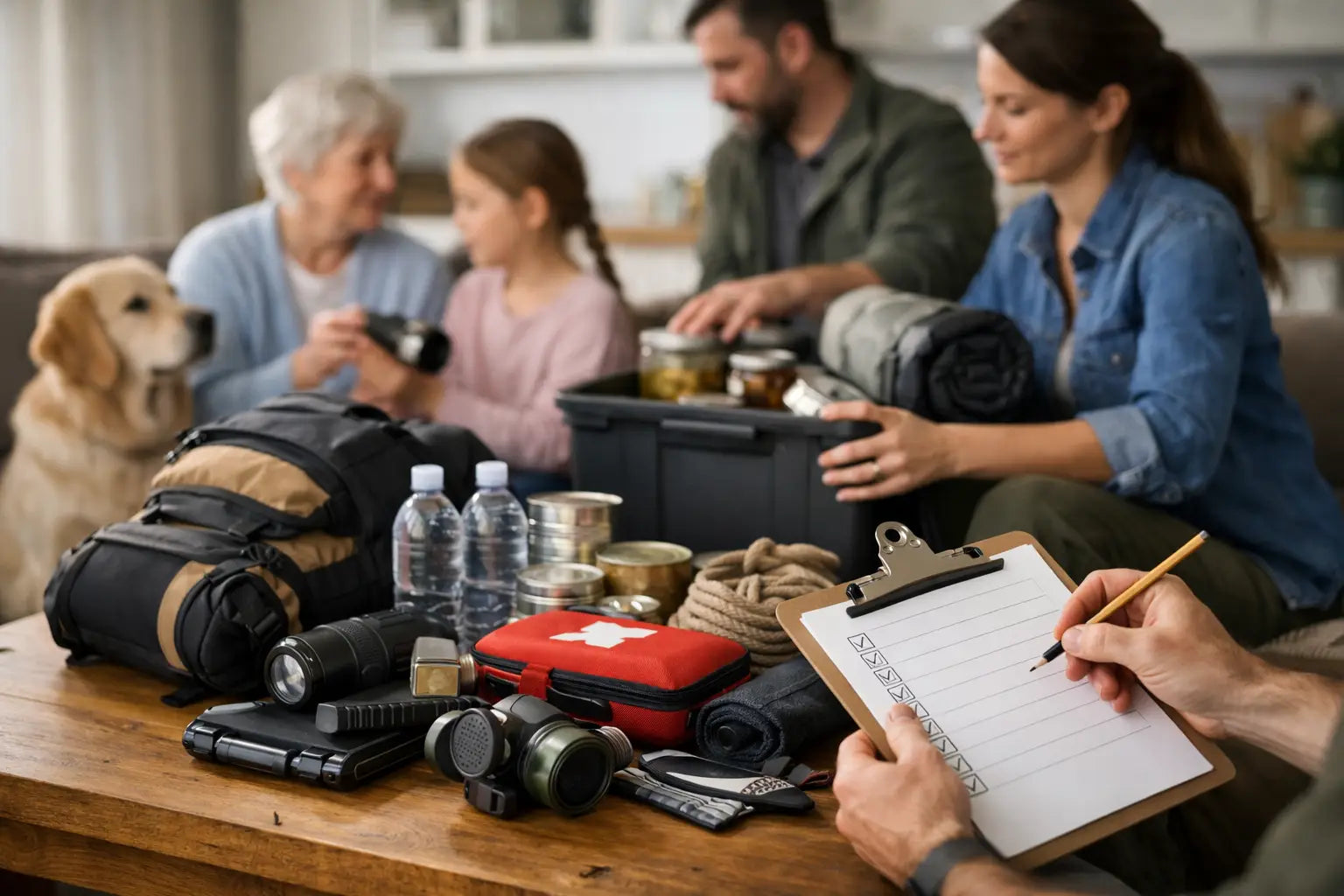
Most families do not need a bunker. They need a plan that works when the power is out for four days, the grocery store shelves are thin, or a wildfire warning turns into an evacuation notice before dinner. A good SHTF Family Preparedness Checklist is really a family emergency checklist - practical, clear, and built for the disruptions people actually face.
That matters because stress makes people forget obvious things. Medications get left behind. Phones die. Nobody knows where the shutoff valve is. The goal is not to prepare for every possible scenario in detail. The goal is to cover the basics so your household can stay safe, fed, warm, informed, and mobile when normal systems stop working for a while.
Start with the risks your family actually faces
Preparedness gets expensive and confusing when it becomes abstract. Start with your real-world risks. If you live in Florida, your checklist should account for hurricanes, long outages, and evacuation traffic. If you live in California, smoke, wildfire evacuation, and rolling blackouts may matter more. In the Midwest, winter storms and tornadoes may shape your plan.
This first step keeps you from buying random gear that never fits your life. A suburban family with two kids, a dog, and a parent on a prescription medication has a very different set of needs than a single adult in a city apartment. Your plan should reflect your house, your region, your health needs, and the ages of the people in your care.
Your SHTF Family Preparedness Checklist: the core categories
If you want a checklist that is actually usable, organize it by function. Families do better when they think in categories: water, food, power, medical, shelter, communication, sanitation, and evacuation. That makes it easier to build over time.
Water comes first
Most families understore water. It feels bulky, so it gets postponed. But water is usually the first thing that becomes urgent in an emergency. A good baseline is one gallon per person per day for at least two weeks. In hot climates, or if you have infants, pets, or medical needs, you will likely want more.
Stored water should not be your only plan. Containers can leak, storage space is limited, and outages can last longer than expected. Every household should have both water storage and a reliable way to filter or purify additional water. That could mean countertop filters for home use, portable options for evacuation, and purification drops as backup. Redundancy matters here because water is not a category where you want a single point of failure.
Food should match how your family really eats
Emergency food is not just calories. It is routine, comfort, and stability. For most households, the smartest approach is layered. Keep a short-term pantry of foods your family already uses. Add shelf-stable meals that need minimal cooking. Then build a deeper reserve of long-storage staples if you want to be ready for longer disruptions.
The trade-off is convenience versus cost. Ready-made emergency meals are simple and fast, especially during outages. Bulk staples are usually more economical over time, but they require planning, water, fuel, and cooking confidence. If your child will not eat spicy rice or your grandparents need low-sodium options, account for that now instead of finding out during a stressful week.
Backup power is a quality-of-life issue and a safety issue
When families think about power, they often focus on lights. In reality, backup power supports phones, medical devices, refrigerators, internet access, fans, small heaters, and the ability to receive updates. For many homes, a portable power station is the most approachable place to start.
Think through what you actually need to run. Charging phones and flashlights is a very different load than keeping a freezer cold or powering a CPAP machine overnight. The right setup depends on your priorities, but every family benefits from having rechargeable lighting, battery banks, and a basic plan for preserving food if the outage stretches beyond a day.
Medical and first aid should reflect your real household
A family first aid kit should go well beyond adhesive bandages and antiseptic wipes. Stock for the injuries and illnesses you are likely to handle at home: cuts, burns, fever, stomach upset, allergies, splinters, sprains, and minor wound care. Then add the household-specific items that matter, like inhalers, prescription backups, extra glasses, pediatric medicine, mobility aids, or blood sugar supplies.
This is one of the most personal parts of any checklist. A family with young children needs different supplies than a retired couple. A household caring for an aging parent may need incontinence products, backup power for medical equipment, or written medication schedules. Keep a printed medication list in case phones are dead or service is down.
Shelter, warmth, and cooking are often overlooked
You may still be in your home and still be uncomfortable enough to make poor decisions. Heat loss in winter, indoor cooking limitations, and poor sleep all make emergencies harder. Your checklist should account for blankets, sleeping bags, weather-appropriate clothing, basic repair supplies, and a safe way to boil water or heat food.
The details depend on your environment. In a winter storm, warmth is the priority. During a summer outage in the South, airflow and hydration become more urgent. Families with young children should think about sleep arrangements and familiar comfort items too. A rough night becomes a rough week very quickly.
Sanitation deserves more attention than it gets
When water service is disrupted or plumbing fails, sanitation becomes stressful fast. Families should store toilet paper, wipes, trash bags, gloves, feminine hygiene supplies, diapers if needed, and a plan for waste if toilets cannot flush normally.
This category is not exciting, which is exactly why people skip it. But clean hands, clean surfaces, and waste management do a lot to keep a temporary disruption from becoming a health problem.
Communication and documents can save time when time matters
Every household should have a printed contact list, an out-of-area contact person, and a simple communication plan. If local service is overloaded, text messages may work when calls do not. If family members are separated, everyone should know who to contact and where to meet.
Keep copies of key documents in a protected, easy-to-grab folder. That includes identification, insurance information, home records, medical details, pet vaccination records, and school or custody paperwork if relevant. Digital copies are helpful, but they should not be your only copies.
Build evacuation bags that are actually ready to go
Most families are more likely to evacuate than to disappear into the woods. That is why an evacuation bag should be practical, not theatrical. Pack for 72 hours with clothing, medications, copies of documents, chargers, snacks, water, hygiene supplies, cash, and comfort items for children.
Do not stop with the bag. Your vehicle matters too. Keep the gas tank from living on empty during high-risk seasons. Store maps if your area loses cell service easily. Include a small car kit with jumper cables, basic tools, first aid, water, and seasonal supplies. Evacuation gets easier when half the work is already done.
Do not forget kids, pets, and older adults
A checklist that ignores dependents is not a family plan. Children may need comfort items, kid-friendly foods, diapers, formula, and familiar routines. Pets need food, water, medications, leashes, carriers, waste supplies, and records. Older adults may need hearing aid batteries, mobility support, backup prescriptions, or help evacuating quickly.
This is also where practice matters. If your dog hates the carrier or your child cannot sleep without a specific blanket, fix that gap before an emergency. Preparedness is not just about gear. It is about reducing friction when everyone is tired and stressed.
The smartest way to build your checklist is in phases
You do not need to buy everything this month. In fact, most families make better decisions when they build in layers. Start with a two-week foundation: water, pantry food, lights, batteries, first aid, medications, sanitation, and communication basics. Then expand into backup power, deeper food storage, better cooking options, and longer-term resilience.
That approach keeps preparedness approachable. It also helps you test what works. Maybe your family uses more water than you expected. Maybe your backup lights are too dim. Maybe your stored meals are fine for adults but not for your kids. Small corrections now are much cheaper than big surprises later.
A realistic home checklist beats a dramatic one
The best preparedness plan is the one your family can maintain. That usually means organized shelves, labeled bins, fresh batteries, rotated food, and written plans everyone can understand. It means choosing dependable tools over gimmicks and building around likely disruptions, not fantasy scenarios.
If you want to go further over time, that is fine. Add larger water storage, long-term food options, solar-compatible power, garden seeds, or freeze-drying when your budget and goals support it. But the strongest move is still the simplest one: build a calm, functional system that helps your family get through a hard week with a lot less chaos.