
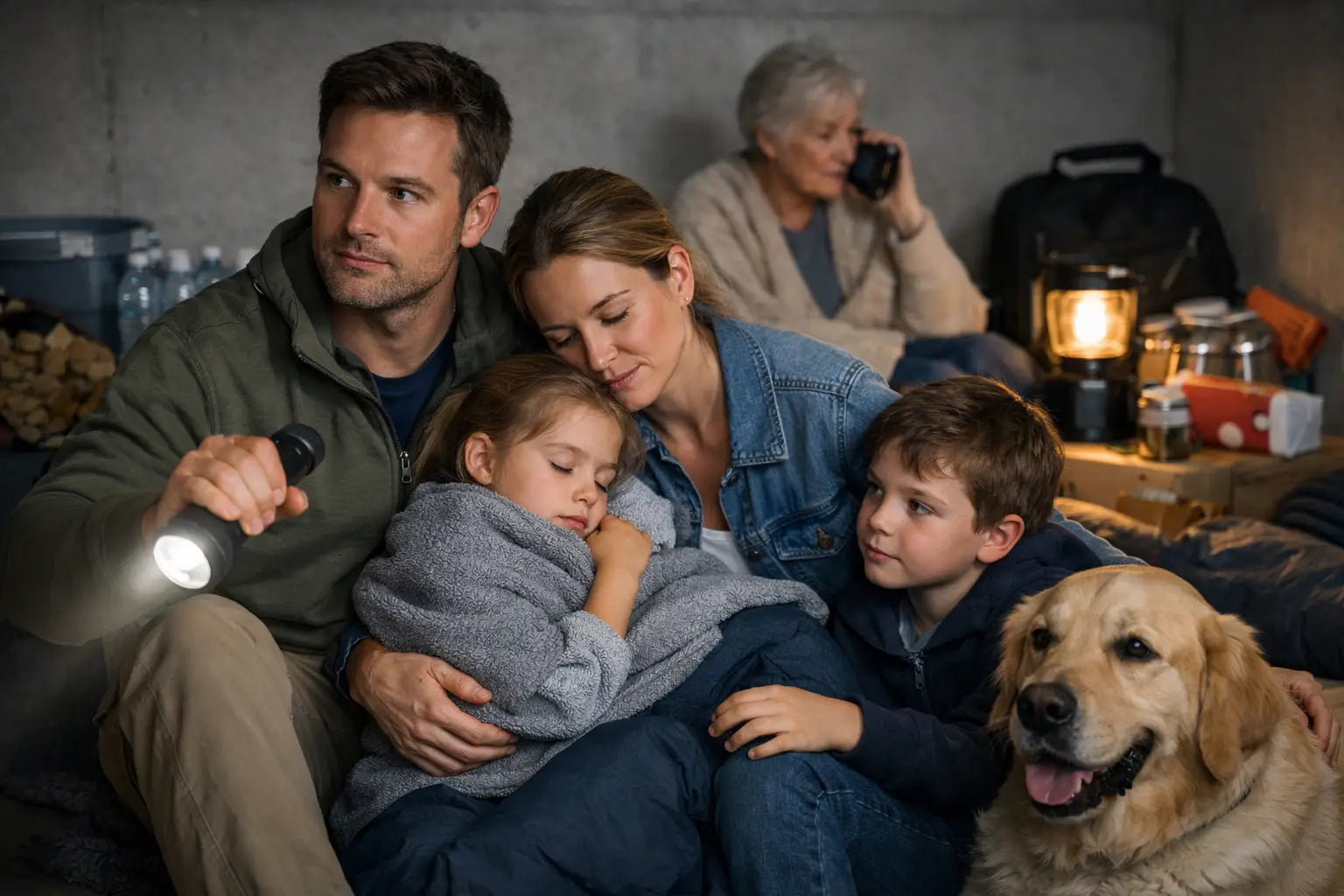
When officials tell you to stay put, the first hour matters more than most families realize. The people who do well are usually not the ones with the fanciest gear. They are the ones who already know how to shelter in place, what to grab first, and how to keep the household calm while the situation develops.
Sheltering in place sounds simple. Stay home, close the door, wait it out. In real life, it depends on why you are staying home and how long normal services are disrupted. A tornado warning is different from wildfire smoke. A chemical spill is different from a winter storm or a three-day power outage. The goal is the same in every case: keep your family safe indoors with the supplies, air quality, communication, and routines you need to get through the emergency.
What shelter in place actually means
To shelter in place means staying inside a building because going outside is more dangerous than remaining indoors. Sometimes that lasts 30 minutes. Sometimes it lasts several days. The advice may come from local officials, your employer, a school district, or plain common sense when roads are unsafe and conditions are deteriorating.
For most households, this is the more likely emergency posture than evacuation. Hurricanes, ice storms, wildfire smoke events, civil unrest nearby, pandemic disruptions, and power outages often leave families safer at home than on crowded roads. That is why a shelter-in-place plan should sit right next to your evacuation bag and family contact plan.
How to shelter in place based on the emergency
The biggest mistake families make is treating every emergency the same way. You do not need a sealed room for every event. You do not need to run a generator for every outage. Start by matching your actions to the hazard.
If the issue is severe weather, such as a tornado or hurricane, your safest move is usually interior shelter. Get away from windows, move to the lowest practical level, and bring your essentials with you. In a winter storm, the priority shifts toward heat retention, safe lighting, food that needs little prep, and protecting pipes if temperatures plunge.
If the issue is wildfire smoke, ash, or a chemical release nearby, indoor air becomes the main concern. Close windows and doors, shut off systems that bring in outside air if you know how, and move the family into the room or area that can be kept cleanest. Towels under doors can help in a short-term situation, but this is not a replacement for proper filtration and good judgment. If officials call for evacuation, leave.
If the issue is civil unrest or a security concern in your area, sheltering in place may mean limiting visibility, securing entry points, staying away from street-facing windows, and maintaining communication without advertising that your home is occupied and well supplied.
That is the trade-off with sheltering in place. It is often safer and more practical than leaving, but only if your home can support the basics for the duration.
Build your shelter-in-place plan around five needs
A good plan is not complicated. Your family needs water, food, power, sanitation, and information. Everything else supports those five.
Water comes first
If the power goes out or local water service is interrupted, bottled water disappears fast. A practical target is at least one gallon per person per day for drinking and basic hygiene, with more if you live in a hot climate, have children, are caring for older adults, or need water for pets.
For a short event, stored water is the easiest answer. For a longer disruption, you need backup ways to filter or purify additional water. Families often underestimate how fast they go through water when dishwashing, handwashing, and toilet issues enter the picture.
Food should be easy, familiar, and low-stress
You do not need an extreme pantry. You need food your family will actually eat when the power is out, routines are disrupted, and nerves are already frayed. Think shelf-stable meals, ready-to-eat snacks, infant supplies if needed, and simple comfort foods that keep morale up.
If you rely heavily on refrigerated food, your plan is thin. Add options that need no cooking, plus a few meals you can heat with a safe indoor or sheltered outdoor setup if conditions allow. Families with dietary restrictions should plan separately, not assume they will figure it out under pressure.
Power is about function, not convenience
Most families think of lights first. In reality, communication and temperature control matter just as much. You may need to charge phones, power medical devices, run a fan, keep small electronics going, or preserve refrigerated medication.
Portable power stations make a lot of sense for family households because they are simpler and quieter than fuel-heavy alternatives. But even a modest setup helps if you also lower your power demands. Use headlamps, charge devices early, and decide what truly needs electricity.
Sanitation gets unpleasant fast
If water service is interrupted or sewage systems are strained, sanitation becomes one of the biggest quality-of-life issues in a shelter-in-place event. Stock toilet paper, wipes, trash bags, gloves, soap, feminine hygiene supplies, diapers if needed, and a backup toilet plan if your plumbing becomes unusable.
This is one area where families often delay planning because it is not exciting. It is still one of the first things that makes an emergency feel unmanageable.
Information keeps you from making bad decisions
A charged phone is good. A battery-powered or hand-crank weather radio is better. During a regional emergency, cell networks can slow down, and rumors spread faster than facts. Your family needs at least two ways to receive updates and one simple contact plan in case household members are separated when the emergency begins.
Set up your home for sheltering in place
Preparation works best before the warning goes out. You do not need to turn your house into a bunker. You do need to make it easier to operate when normal systems fail.
Start by identifying the best shelter areas in your home. For storms, that may be an interior bathroom, hallway, or basement. For smoke or air-quality events, it may be a room you can close off and keep cleaner than the rest of the house. For winter outages, it may be one room where the family can consolidate body heat, blankets, lighting, and supplies.
Then organize supplies by function, not by where they happened to fit in the garage. Keep water together. Keep first aid together. Keep batteries, lanterns, chargers, and radios together. In an emergency, wasted motion matters.
Labeling also helps. If a grandparent is watching the kids, or an older teenager is home first, they should be able to find what they need without hunting through five bins.
The first 30 minutes of a shelter-in-place event
When something happens, slow the pace down on purpose. Confirm the threat. Bring everyone inside. Charge devices immediately if grid power is still on. Fill tubs or spare containers with water if interruption seems possible. Move vehicles if needed. Gather pets and their supplies right away, not later.
Next, secure the house based on the situation. Close windows. Lower blinds if privacy matters. Move necessary supplies to your shelter area. Check flashlights, radios, medications, and shoes for each person. If a storm is coming through overnight, do this before anyone is tired.
This is also the time to use your family communication plan. A short text to key relatives can prevent hours of worry and unnecessary phone traffic later.
Don’t forget the people who change the plan
Every household has variables. Small children need routine and reassurance as much as calories and water. Older adults may need mobility help, extra medication, hearing aid batteries, or backup power for medical equipment. Pets need food, water, leashes, carriers, waste supplies, and a place to settle.
That is why off-the-shelf plans often fall short. A family of five in suburban Texas during a summer outage has different shelter-in-place needs than a retired couple in the Carolinas during hurricane season or grandparents preparing for grandkids during a blizzard weekend. The plan has to fit the household you actually have.
Common mistakes when learning how to shelter in place
The first mistake is assuming you will only need supplies for 24 hours. Many real disruptions last longer than that, especially if roads are blocked or utility crews are overwhelmed.
The second is overbuying one category and ignoring another. Cases of food do not help much if you cannot sanitize, light the house safely, or keep phones charged.
The third is waiting to organize until after the event starts. Preparedness does not need to be expensive, but it does need to be findable.
And the fourth is treating sheltering in place like a one-time project. Kids grow. Medications change. Batteries age. Food expires. A plan that worked three years ago may not match your household now.
At SHTF Prepper Club, we see this again and again: families do best when they start small, cover the basics well, and improve their setup over time.
A calm house is a more resilient house. If you can give your family water, light, clean air, familiar food, and a clear plan, you have already done something that matters when the grid is shaky and the forecast is getting worse.