
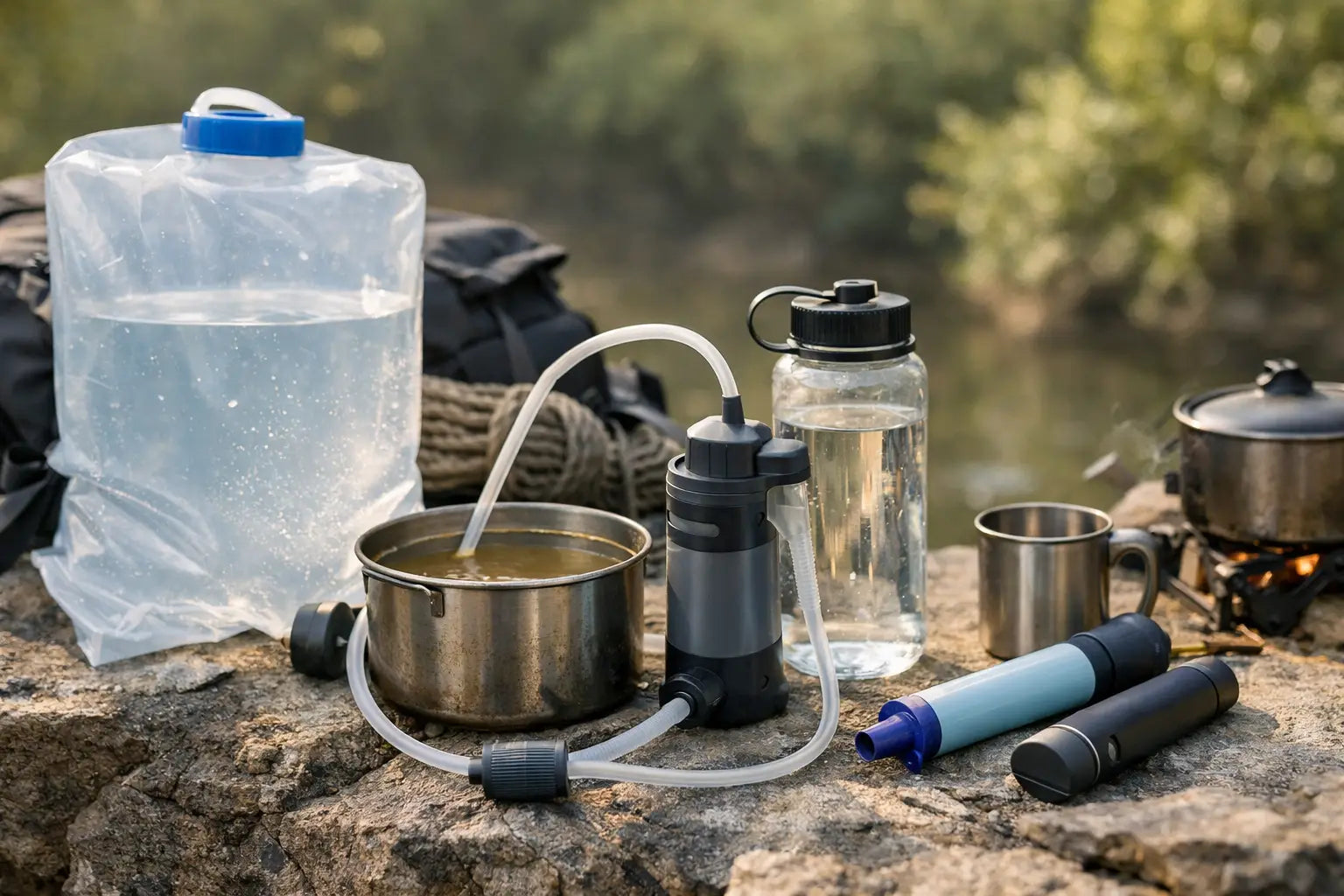
The problem usually starts small. The power is out, the stores are stripped, and suddenly the water coming from your tap looks fine but doesn’t feel trustworthy. That is exactly when water purification for emergencies stops being a prepper idea and becomes a household necessity.
For most families, the goal is not to build a wilderness survival system. It is to make sure the people in your home can drink, cook, brush teeth, and stay healthy through a disruption that lasts longer than expected. A hurricane, boil-water advisory, winter storm, wildfire evacuation, or broken water main can all leave you dealing with water that is unavailable, contaminated, or both.
Why water purification for emergencies matters at home
Municipal water systems are reliable until they are not. Flooding can introduce bacteria and debris. Power loss can interrupt treatment processes. Pipes can break. Even if water still flows, local officials may issue a boil-water notice because they can no longer guarantee safety.
That matters fast. A family can stretch food, delay laundry, and live without many comforts for a few days. Safe drinking water is different. Kids get dehydrated quickly. Adults make poor decisions when they are run down. Pets need water too. If someone in the house is elderly, pregnant, or immunocompromised, the margin for error gets smaller.
This is why smart preparedness starts with two layers. First, store enough clean water to cover the first phase of an emergency. Second, have a reliable way to purify more if the disruption lasts longer than your stored supply.
Start with storage, not just purification
A lot of people shop backwards. They buy a filter first and assume that solves the whole problem. Filters are useful, but stored water gives you immediate breathing room.
A simple planning baseline is one gallon per person per day for drinking and basic sanitation. In real life, many families find that number a little lean, especially in hot weather, with children, or if cooking from shelf-stable food. If you have the space, planning closer to two gallons per person per day is more comfortable.
For a family of four, even a modest seven-day supply adds up quickly. That is why container choice matters. Sealed factory jugs are easy to start with, but they are bulky and rotate poorly. Larger stackable containers or dedicated water storage tanks make more sense for households building a longer runway.
Stored water and purification are partners, not substitutes. Your stored supply covers the first days when everything is hectic. Your purification plan covers the next phase if roads stay closed, stores stay empty, or the advisory drags on.
The safest ways to purify water in an emergency
Not all water problems are the same, and not all purification methods solve the same problem. That is where many families get tripped up.
Boiling
Boiling is one of the most dependable methods for killing bacteria, viruses, and parasites. If you can get water to a rolling boil for one minute, that is usually enough at lower elevations. At higher elevations, extend the time.
The trade-off is obvious. Boiling requires fuel, cookware, time, and a safe place to do it. During a power outage, that may mean using a camp stove or backup cooking setup. Boiling also does not remove chemical contamination, sediment, or bad taste. If the water is cloudy, let particles settle and pre-filter it through a clean cloth before boiling.
Chemical treatment
Water treatment drops and tablets are compact, affordable, and excellent to keep in an evacuation bag, vehicle kit, or backup bin. They are especially useful when you need a lightweight option or want something with a long shelf life.
The downside is patience and taste. Chemical treatment usually takes time to work, and very cold or cloudy water can reduce effectiveness. Some products leave an aftertaste that children may dislike. Still, for emergency backup, chemical treatment is one of the easiest methods to store and forget until needed.
Filtration
Filters are convenient because they improve water quickly and often make it taste better. But this is where details matter. Some filters handle bacteria and protozoa well but do little for viruses. Some reduce sediment but are not designed for questionable floodwater. Others are made for household gravity use and are excellent for families sheltering in place.
If you are choosing a filtration setup for home emergencies, pay attention to what the unit is actually rated to remove. A good family system should be easy to operate, not require electricity, and produce enough water each day without becoming a full-time chore.
Combined approach
In many situations, the best answer is not one method but two. Pre-filter dirty water to remove sediment, then boil or chemically treat it. Or use stored water for drinking while using filtered and treated water for cooking and cleaning. Layering methods gives you more flexibility and a better safety margin.
Water purification for emergencies depends on the water source
A kitchen tap under a boil-water notice is one thing. Floodwater in the street is another.
If tap water is still running but officials say to boil it, that usually means the concern is microbial contamination. Boiling or an appropriate treatment method may solve the issue. If the water is discolored, smells like fuel, or may have been exposed to chemicals, that is a different level of risk.
Rainwater can be useful, but it should still be treated before drinking. Pond, creek, and lake water can contain parasites, bacteria, and runoff. Floodwater should be treated as highly unsafe. It can carry sewage, chemicals, heavy debris, and all kinds of contamination that ordinary backpacking filters are not built to handle.
That is why your plan should start with the cleanest source available. Stored water comes first. Then municipal water under advisory if properly treated. Collected rainwater may be next. Surface water is further down the list and usually needs more care.
What to keep on hand for a family-ready setup
A realistic household water plan is not complicated, but it should be complete. Most families do well with a mix of dedicated water storage, a dependable gravity or pump filter, and a backup chemical treatment option. Add a way to boil water if needed, along with clean containers for transporting and separating treated water from untreated water.
This is also the point where organization matters. Label your containers. Mark treatment instructions clearly. Keep one area for clean water tools only. During an emergency, confusion causes mistakes. You do not want someone using a dirty scoop in your purified water container because everything got tossed into one tote.
If you have babies, formula-fed children, elderly relatives, or pets, build around their needs too. Pets can drink more than many people expect, especially during heat or stress. Families with well water should think through power loss separately, because a private well may leave you with water underground but no way to pump it.
Common mistakes families make
The first mistake is assuming bottled water from the garage is enough. It helps, but most families underestimate how quickly they use water once basic hygiene and cooking are included.
The second is buying a filter without understanding its limits. If a filter is not rated for the threats you may face, it can create false confidence, which is worse than having no plan at all.
The third is skipping practice. Water purification should not be the first thing you figure out by flashlight after a storm. Test your system ahead of time. Treat a batch. Boil water on your backup stove. Teach older kids the difference between untreated and safe water.
The fourth is forgetting rotation and storage conditions. Water treatment supplies expire. Plastic containers degrade in poor conditions. If your emergency supplies live in a hot shed for years, inspect them regularly.
How much is enough?
Enough means you can cover your household for the disruptions most likely to happen where you live. In many parts of the country, that means planning for at least one to two weeks without dependable water service or easy store access.
If that feels like a lot, start smaller. Three days is better than none. One extra case of water is better than good intentions. Preparedness does not need to happen all at once. It just needs to move in the right direction.
At SHTF Prepper Club, that steady approach is the one that lasts. Families who start with a workable plan, then add capacity over time, usually end up far better prepared than people who wait for the perfect setup.
Safe water is not a luxury item in an emergency. It is the piece that keeps the rest of your plan functioning. Start with what your family will actually use, make sure you understand the trade-offs, and build a system calm enough to trust when the pressure is on. That kind of readiness pays you back long before anything dramatic happens.