
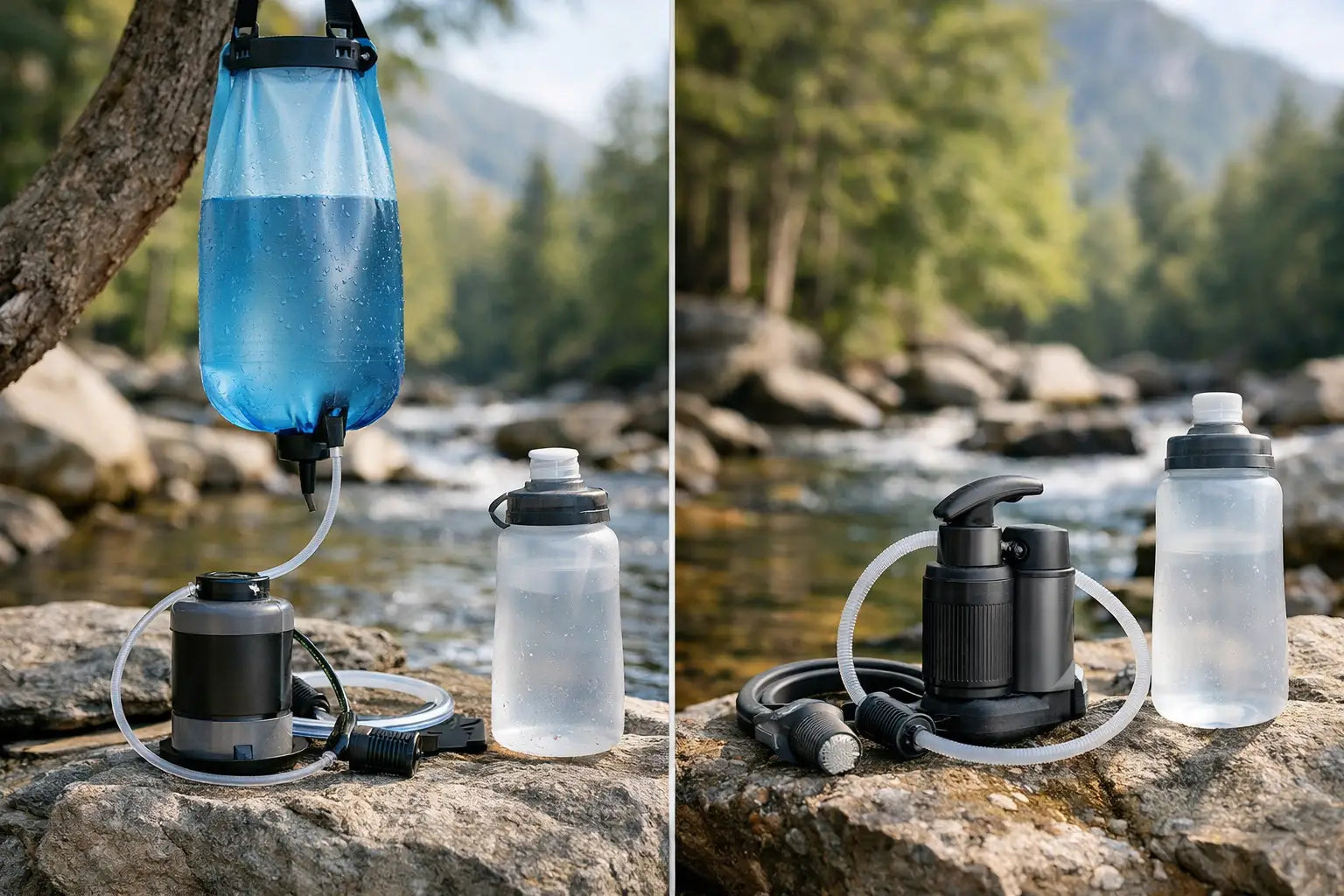
You do not want to figure out your water filter setup when the power is out, the store shelves are thin, and your family is already asking what is safe to drink. In the gravity filter versus pump filter debate, the right answer usually comes down to one thing: how many people you need to supply, and how tired you want to be while doing it.
That matters more than marketing. Both filter types can be excellent. Both also have limits that become obvious fast once you move from a weekend outing to a real household emergency.
Gravity filter versus pump filter: the real difference
A gravity filter uses height and time. You fill a dirty-water bag, reservoir, or upper chamber, hang or place it above the clean side, and let gravity pull water through the filter. There is very little effort once it is set up.
A pump filter uses hand pressure. You place an intake hose into the water source and physically pump water through the filter into a bottle, pot, or storage container. It works faster in short bursts, but only while someone is doing the work.
For a solo hiker, that trade-off may barely matter. For a household of four or five trying to cover drinking, basic cooking, and maybe a pet, it matters a lot. Water gets heavy. Filtering enough of it by hand can turn into a chore your family will quickly resent.
What families usually get wrong
Many first-time buyers focus on speed numbers on the box. That sounds reasonable until you realize those numbers are often based on ideal conditions with clean source water and a fresh filter. In real use, muddy water, cold temperatures, and repeated filling slow everything down.
Families also underestimate volume. A person may only think about drinking water, but emergencies add other needs. You may need filtered water for oatmeal, rice, baby formula, coffee, medication, brushing teeth, and a dog bowl. If your outage lasts several days, convenience becomes part of preparedness. A system that technically works but wears everyone out is not a great system.
When a gravity filter makes more sense
A gravity filter is usually the better fit for home backup, sheltering in place, and group use. If your plan is to stay home through a hurricane aftermath, boil-water notice, winter storm, or municipal water interruption, gravity is hard to beat.
The biggest advantage is low effort. One person can collect water, fill the reservoir, and let the system work while the family handles everything else. That matters when stress is already high and energy is limited.
Gravity systems also scale better. If you need to fill several bottles, a cooking pot, or larger storage containers, a gravity setup feels much less tedious than pumping each one by hand. For parents, grandparents, or anyone preparing for guests during an emergency, that ease matters.
There are trade-offs. Gravity filters are often bulkier. They need somewhere to hang or rest. They are less convenient if your water source is shallow or awkward to scoop from. They also tend to be slower when you need one bottle right now.
Still, for family readiness, gravity usually wins on sustainability. Not just the kind involving the environment - the kind involving your patience on day three.
Best use cases for gravity filters
Gravity filters shine in shelter-at-home situations, campsite base setups, cabin use, and family evacuation stops where you can pause long enough to process larger amounts of water. They are especially helpful when you have kids, older adults, or anyone in the household who may not be able to pump repeatedly.
If you store water but want a backup way to treat additional water from rain catchment, nearby surface water, or other uncertain sources, a gravity filter can also fit neatly into that layered plan.
When a pump filter is the better tool
Pump filters are strong where mobility matters. If you are moving, collecting from narrow creeks, or filtering one or two bottles at a time, a pump can be more direct and less fussy.
That makes pump filters useful for evacuation bags, vehicle kits, day trips, scouting routes, and shorter disruptions where you may need water quickly from a less-than-ideal source. A pump can reach water that is hard to scoop, such as a shallow puddle between rocks or a narrow stream bank.
There is also a control advantage. With a pump, you can start and stop instantly, fill a specific container, and avoid setting up a hanging system. For one person or two people on the move, that can be the smarter choice.
The downside is simple: pumping gets old. It is fine for a liter. Less fine for several gallons. In a real emergency, repetitive hand work is not nothing. If the person doing the pumping is tired, injured, or trying to manage children at the same time, output drops quickly.
Best use cases for pump filters
Pump filters make sense for mobile emergency use, smaller households, and situations where the water source is difficult to access. They are also a solid secondary tool, especially if your primary household system is larger and less portable.
The hidden factor: your water source
Not all bad water is the same, and this is where smart buying matters. Are you filtering from a clear mountain stream, a farm pond, storm runoff, or a questionable neighborhood retention area after flooding? Sediment, organic matter, and contamination levels change how well any filter performs.
Gravity and pump filters can both struggle if the source water is silty or dirty. Pre-filtering through a cloth or letting sediment settle first can help. In flood conditions, chemical contamination may also be a concern, and not every filter handles that equally well.
This is why families should think in systems, not gadgets. Filtration, storage, and disinfection all have roles. A filter may remove many biological threats, but depending on the source, you may still want purification tablets, boiling capability, or additional treatment options as backup.
Which one is better for a family emergency plan?
For most households, gravity filter versus pump filter is not really a battle. It is a priority question.
If you are building your first serious water plan for home emergencies, start with a gravity filter. It is easier for multiple people, better for larger daily volumes, and more realistic for the kinds of disruptions suburban families actually face. It supports calm routines instead of creating another manual task.
If your budget allows a second layer, add a pump filter for mobility. That gives you coverage for evacuations, vehicle breakdowns, short-term field use, or any situation where a larger gravity setup is inconvenient.
If you can only buy one and your plan centers on evacuation rather than sheltering at home, a pump filter may be the better first purchase. But be honest about your real life. Most families are far more likely to face a boil-water advisory, storm outage, or temporary service disruption at home than a long trek on foot.
A few buying questions that actually matter
Before you choose, ask how many people you are filtering for, how much water you realistically need each day, and whether your primary plan is to stay or go. Then think about who will operate the system. A filter that depends on upper-body effort may not be ideal if the main user is an older adult, a teen, or a parent already managing several tasks.
Maintenance matters too. Some filters are easier to clean in the field. Some clog faster. Some replacement elements are easier to keep on hand for long-term readiness. Do not just compare price tags. Compare the full burden of ownership.
Storage matters as well. A pump filter tucks into a smaller space. A gravity system takes up more room but can serve more people with less hassle. Neither is automatically better. The better choice is the one your family will actually use correctly under stress.
The practical answer for most households
If a neighbor asked me what to buy for a family of four preparing for outages and water disruptions, I would tell them to store water first, then add a gravity filter as their main treatment tool, and keep a smaller mobile option if budget permits. That is a balanced setup. It covers the likely scenario without pretending convenience does not matter.
At SHTF Prepper Club, that is the mindset we trust most: start with the problem you are actually likely to face, then build out from there. Water preparedness does not need to be extreme. It just needs to work when life gets inconvenient fast.
A good water filter is not about looking prepared. It is about making sure your family can keep drinking, cooking, and functioning without turning every gallon into hard labor. Choose the setup that fits your real emergency plan, and you will be glad you settled it before you needed it.