
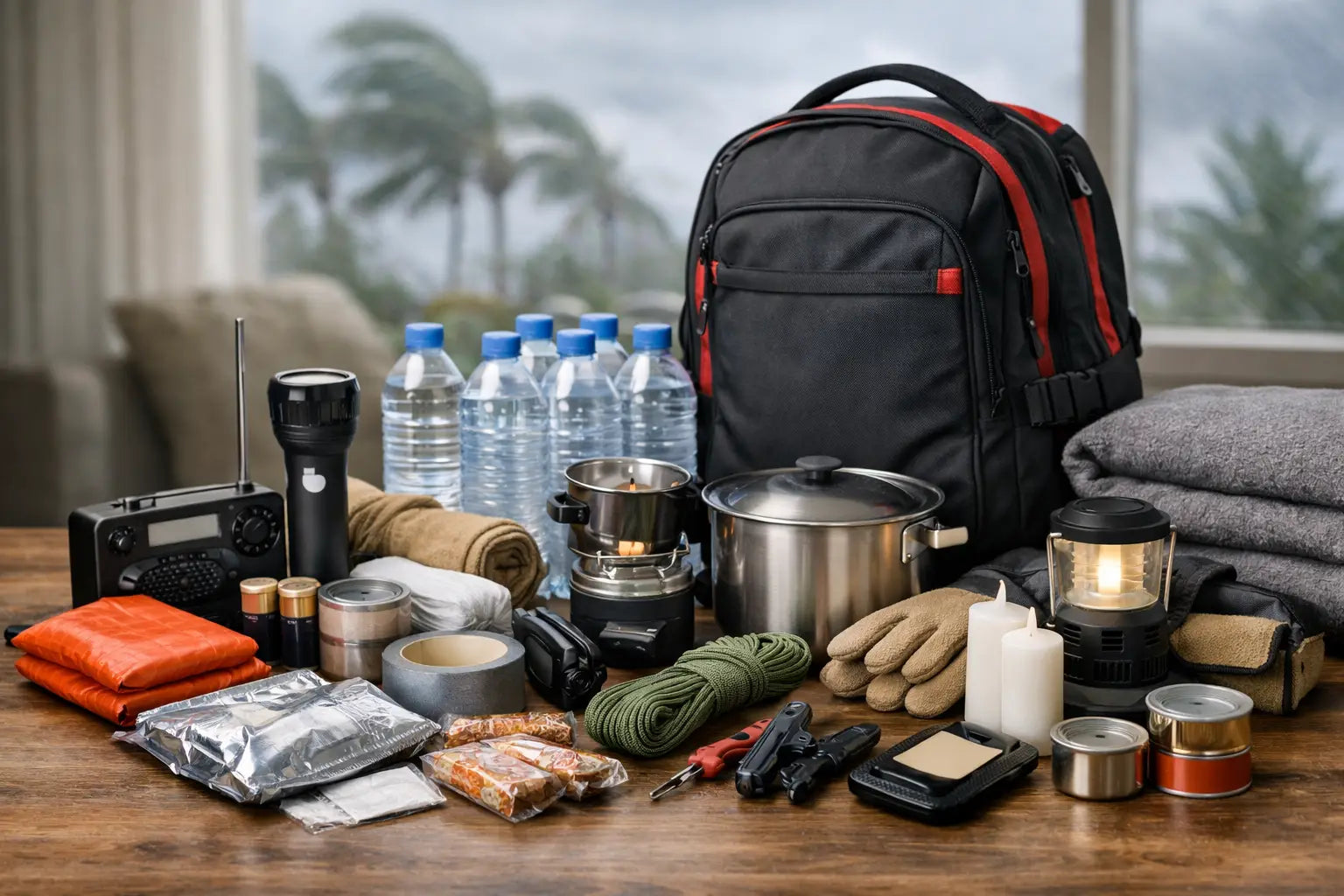
The grocery shelves are already thinning out, the gas station line is wrapped around the block, and the weather update just shifted the storm track closer to home. That is the worst time to figure out what your family actually needs. A hurricane preparedness kit works best when it is built calmly, checked seasonally, and packed for the disruptions hurricanes really cause - long outages, unsafe water, road closures, heat, stress, and sudden evacuation.
For most households, the goal is not to create a movie-version survival stash. It is to cover the basics well enough that your family can stay safe, stay fed, and stay functional for at least 72 hours, and preferably a full week. If you have children, older relatives, pets, or anyone with medical needs, your margin should be bigger.
What a hurricane preparedness kit needs to do
A good kit is not just a pile of supplies in a closet. It should solve predictable problems. After a hurricane, the first issues are usually water, food, light, communication, sanitation, and temperature control. Sometimes the house is intact but the grid is down. Sometimes you are sheltering with relatives. Sometimes you need to leave fast and spend a night in a hotel, school gym, or unfamiliar town.
That is why one kit is rarely enough. Most families do better with a layered setup: a stay-at-home supply, an evacuation bag for each person, and a smaller car kit. It sounds like more work, but it actually makes preparedness simpler. You are matching gear to how hurricanes disrupt normal life.
Water comes first
If you only improve one part of your hurricane preparedness kit this year, make it water. Municipal water systems can lose pressure, become contaminated, or issue boil notices. Bottled water helps, but many families underestimate how fast it disappears in heat and humidity.
A practical rule is one gallon per person per day for drinking and basic sanitation, with a minimum of three days and a week if you have the storage space. In real life, many families feel better closer to two gallons per person per day during hot weather, especially if they are cleaning up, flushing toilets manually, or caring for children.
Stored water should be easy to access, not scattered in random half-used cases. Water containers, stackable storage, and a backup filtration method give you options if the outage lasts longer than expected. Filtration matters more for extended disruption than for the first day or two, but it matters.
Food should be boring, familiar, and easy
Storm food does not need to be exciting. It needs to be simple, shelf-stable, and realistic for your family. Focus on foods you will actually eat without much preparation: ready-to-eat meals, canned soups, protein bars, nut butters, crackers, fruit cups, shelf-stable milk, and simple comfort foods for kids.
If you own a camp stove or other safe outdoor cooking option, your menu can widen. If not, build around food that requires little or no heat. This is where many people overbuy dry staples and underbuy convenience. Rice and beans are great long-term foods, but they are less helpful on day two of a humid outage if you have no safe way to cook them.
A week of food is a strong target for hurricane season. Rotate what you store. Check can openers. Include paper plates, utensils, and trash bags so cleanup does not become its own problem.
Power and light matter more than people expect
When the lights go out, a house gets frustrating fast. Phones die. The refrigerator becomes a countdown clock. Medical devices, fans, and internet gear suddenly matter a lot more.
Every hurricane preparedness kit should include multiple light sources. Flashlights and headlamps are better than candles for obvious reasons. Lanterns help with room light. Batteries should be organized and labeled by size. Better yet, choose rechargeable lights and keep them topped off before a storm.
Backup power is where budget really changes the conversation. A basic household can get by with battery banks for phones, small radios, and rechargeable lights. A larger setup might include a portable power station for CPAP use, modems, fans, and small appliances. The right choice depends on your family, your climate, and how often you lose power. If you live on the Gulf Coast or in a part of the Southeast where outages can drag on, backup power stops being a luxury pretty quickly.
Communication and information
Do not rely on one phone and a weather app. Cell service can get spotty, and batteries run down faster when networks are overloaded. Keep car chargers, battery banks, and at least one way to receive updates if internet service drops. A weather radio with battery or hand-crank backup is still one of the most useful low-cost items you can own.
Print a short contact sheet too. Include family phone numbers, addresses, insurance contacts, pediatrician information, and an out-of-town check-in person. It feels old-fashioned until your phone is dead.
Health, hygiene, and the overlooked basics
Most emergency checklists mention first aid, but hurricane cleanup creates very specific problems: cuts, punctures, headaches, dehydration, blisters, back strain, and stress. A solid first aid kit should cover more than bandages. Think wound cleaning, antiseptic, gloves, pain relief, allergy meds, anti-diarrheal medication, prescription backups, and any family-specific needs.
Hygiene supplies matter because water may be limited and bathrooms may not work normally. Baby wipes, hand sanitizer, toilet paper, heavy-duty trash bags, paper towels, and feminine hygiene products all belong in the kit. If you have infants, add enough diapers and formula for several days. If you have an older adult in the home, include mobility aids, hearing aid batteries, glasses, and incontinence supplies if needed.
This is also the section where documents belong. Keep copies of IDs, insurance cards, medication lists, home insurance information, and a few recent family photos in a waterproof pouch. Add cash in small bills. After storms, card systems and ATMs do fail.
Do not forget the people who change your plan
Children, pets, and medically vulnerable family members can turn a decent kit into an incomplete one if you plan only for the average adult. Kids may need comfort items, simple snacks, books, games, or headphones. That is not extra. That is part of keeping a difficult situation manageable.
Pets need food, water, bowls, leashes, carriers, medications, waste bags, and vaccine records. If evacuation is possible, assume pet-friendly lodging may be limited and slower to find. Your supplies need to travel.
For anyone using prescription medication, insulin, mobility equipment, oxygen, or powered medical devices, your hurricane planning should start there, not end there. Those needs determine your power plan, your evacuation timing, and how much redundancy you should build in.
Build for sheltering at home and leaving quickly
Many families think of a hurricane preparedness kit as one big bin in the garage. Keep that, but also pack for departure. If local officials issue an evacuation order, you may have only a short window before roads get worse.
Each person should have a small evacuation bag with clothing, medications, chargers, toiletries, copies of documents, snacks, water, and comfort items. Keep sturdy shoes and rain gear ready. In the car, store a basic backup kit with jumper cables, a phone charger, flashlight, bottled water, and paper maps if you still have them.
There is always a trade-off here. A larger home kit supports longer shelter-in-place needs. A lighter evacuation setup is easier to grab fast. Most families need both, even if the first version is simple.
How to maintain your hurricane preparedness kit
Preparedness falls apart in the maintenance phase. Batteries corrode. Kids outgrow clothing. Medications expire. The flashlight you were counting on got borrowed for a camping trip six months ago.
Check your kit before hurricane season starts and again midway through. Replace expired food and medications. Recharge power banks and power stations. Refresh water if you are using containers that require rotation. Review your family contact plan and make sure everyone knows where supplies are stored.
If building all of this at once feels expensive, start with the failure points that become dangerous fastest: water, light, first aid, medications, and basic food. Then add power, sanitation, and comfort. SHTF Prepper Club serves a lot of families who did not start with a perfect setup. They started with one shelf, one tote, one better plan. That counts.
A hurricane does not care whether your checklist is finished. But your family will feel the difference between hoping and preparing. Start before the forecast gets busy, build around real life, and make your kit something you can trust when the house goes quiet and the power stays off.