
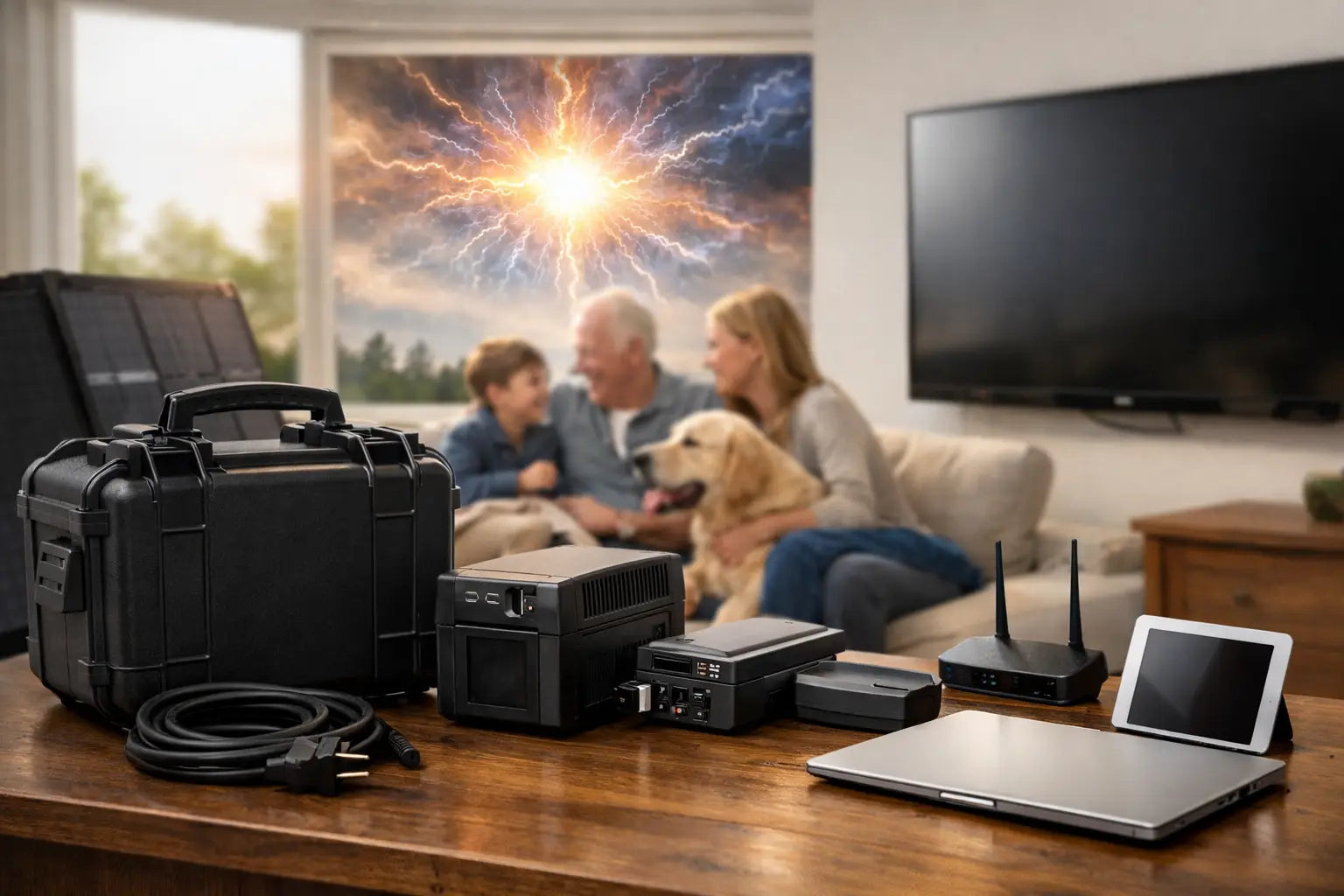
A long outage is frustrating. A fried furnace board, dead router, and unusable backup power system all at once is a much bigger problem.
That is why emp protection for home electronics gets attention from families who are already thinking seriously about resilience. Not because every household expects a worst-case event tomorrow, but because modern homes depend on delicate electronics for heat, refrigeration, communication, security, and power management. If those systems fail together, recovery gets expensive fast.
What EMP protection for home electronics actually means
Let’s start with the plain-English version. An electromagnetic pulse, or EMP, is a burst of electromagnetic energy that can damage unprotected electronics. The source matters. A high-altitude nuclear EMP is the scenario most people think about, but severe solar activity and certain localized electrical events can also create damaging surges or grid instability.
That does not mean every device in your house would instantly fail in every scenario. It depends on pulse strength, distance, wiring exposure, grounding, device design, and whether the electronics are connected to long conductors like household wiring, antenna lines, or communication cables. That uncertainty is exactly why this topic gets confusing.
For most families, the practical goal is not chasing perfect protection. It is reducing the number of critical systems that could be taken out at the same time.
The biggest mistake people make
Many people assume a regular surge protector solves this problem. It helps with common household surges. It does not automatically mean it is designed for EMP-related threats.
A standard power strip with surge suppression is built for everyday electrical spikes, not necessarily for the fast, high-energy characteristics associated with an EMP event. That does not make surge protectors useless. They still belong in a well-planned home. But they should not be your whole plan if you are specifically thinking about EMP protection for home electronics.
The second mistake is focusing only on entertainment devices while ignoring the systems that make a house livable. If your TV dies, that is inconvenient. If your freezer, well pump controller, garage door opener, solar charge controller, furnace board, or communications gear fail, that affects safety and daily function.
Which home electronics matter most
A family-first preparedness plan starts with priorities. You do not need to shield every gadget in the house on day one.
Start with systems tied to health, communication, food preservation, water access, and backup power. In many homes, that means the refrigerator control board, chest freezer electronics, modem and router, radios, medical devices, solar components, battery generators, inverter systems, and any spare power station parts that would be hard to replace after a wide disruption.
Then think regionally. A family in Florida may care deeply about keeping backup power and communications available through hurricane season. A rural household with a well may put pump controls near the top of the list. A household with an elderly parent may prioritize medical and heating equipment. Preparedness is always local.
Layers matter more than one magic fix
The best approach is layered. That is true for water, food, first aid, and power, and it is true here too.
One layer is whole-home or panel-level protection designed to address harmful electrical surges entering through the home electrical system. Another layer is device-level protection for specific equipment. A third layer is having some critical electronics disconnected and stored when not in use. A fourth layer is redundancy - owning backup versions of a few essential devices and storing them protected.
This layered approach matters because no single product can promise to make every electronic device invulnerable in every EMP scenario. Be careful with sweeping claims. Good preparedness usually sounds boring because it is based on probabilities, failure points, and backups.
Whole-home protection vs. device protection
Whole-home protection makes sense for homeowners who want to reduce risk across the electrical system. These systems are generally installed at the service panel or meter and are intended to intercept damaging energy before it spreads through household circuits. That is attractive because many expensive items are hardwired into your home life, not just plugged into a wall.
Device-level protection is narrower but still useful. It is often the better entry point for families who want to protect a freezer, a power station, a radio setup, or a small group of communications devices without starting with electrical work.
There is a trade-off. Whole-home protection can cover more ground, but it usually requires higher upfront cost and proper installation. Device-level options are easier to adopt in stages, but they only protect what is connected through them. Many families do both over time.
Don’t forget what is unplugged and stored
One of the simplest and most affordable strategies is storing a few critical spare electronics in a protected setup when they are not needed. This can include handheld radios, a backup router, spare solar charge components, battery chargers, flashlights with charging circuits, or a small inverter.
The reason this works is straightforward. Electronics that are disconnected from household wiring and communication lines are generally less exposed than devices actively tied into a larger system. That does not solve everything, but it is a smart, budget-friendly layer.
This is especially helpful for parents who are building preparedness slowly. You may not be ready to invest in a large system this month. You can still set aside a few important backups and protect them well.
What about Faraday bags and cages?
They can be useful, but quality matters. A true Faraday enclosure is meant to block electromagnetic fields from reaching the electronics inside. In practice, effectiveness depends on material quality, seal integrity, correct use, and whether the item inside is isolated from conductive contact points.
That last part gets overlooked. Tossing a radio into a metal box without understanding insulation and sealing does not automatically create reliable protection. Some products are thoughtfully designed and tested. Some are little more than storage pouches with aggressive marketing.
If you go this route, think in terms of protecting smaller, mission-critical electronics and spare components, not your whole house. It is one tool in the plan, not the plan itself.
Solar setups and backup power need special attention
Families investing in resilience often buy a portable power station, generator, solar panels, or a larger home backup system. Those are smart purchases. They also add electronics that may be vulnerable.
Modern backup power gear relies on inverters, battery management systems, digital displays, and charge controllers. These are incredibly useful, but they are not the same as an old gas can and a pull-start generator. If your family depends on backup power for refrigerated medication, CPAP use, freezer storage, or basic communications, protecting those systems deserves extra thought.
In many cases, that means protecting both the operating system and a few critical spare components where possible. It may also mean keeping one lower-tech backup option in the mix. Redundancy is not old-fashioned. It is how families stay functional when conditions get messy.
How to make a realistic plan without overspending
Start with a short list of what your family cannot comfortably lose for two weeks. Not what would be annoying to replace. What would seriously disrupt safety, health, communication, food storage, water access, or heat.
Next, separate those items into three groups. The first group is hardwired home systems, like furnace controls or well pump electronics. The second is plugged-in gear, like your modem, freezer, and portable power station. The third is small backup electronics you can store protected.
From there, build in order. For many homeowners, it makes sense to address home electrical protection first, then key device-level protection, then protected storage for spare essentials. If budget is tight, start with the smallest set of highest-value devices and expand over time.
This is where a practical preparedness mindset helps. You do not need to solve every edge case this weekend. You need a plan that improves your odds and gets stronger each season.
A calm word on risk
Not every family needs the same level of EMP planning. If you live in a condo, rent your home, or are still working on basics like water storage and backup lighting, it may be wise to cover those essentials first. EMP protection should support your emergency plan, not distract from the fundamentals.
But if your household already depends on electronic systems for daily safety and continuity, this is a reasonable next step. It belongs in the same broader conversation as surge protection, backup power, extra food, water filtration, and communication tools. At SHTF Prepper Club, that is how we look at it - not as a fear purchase, but as one more way to protect what your family relies on.
Preparedness works best when it feels steady. Pick the most important systems, add protection in layers, and give your family one less weak point to worry about when the lights stay out longer than expected.