
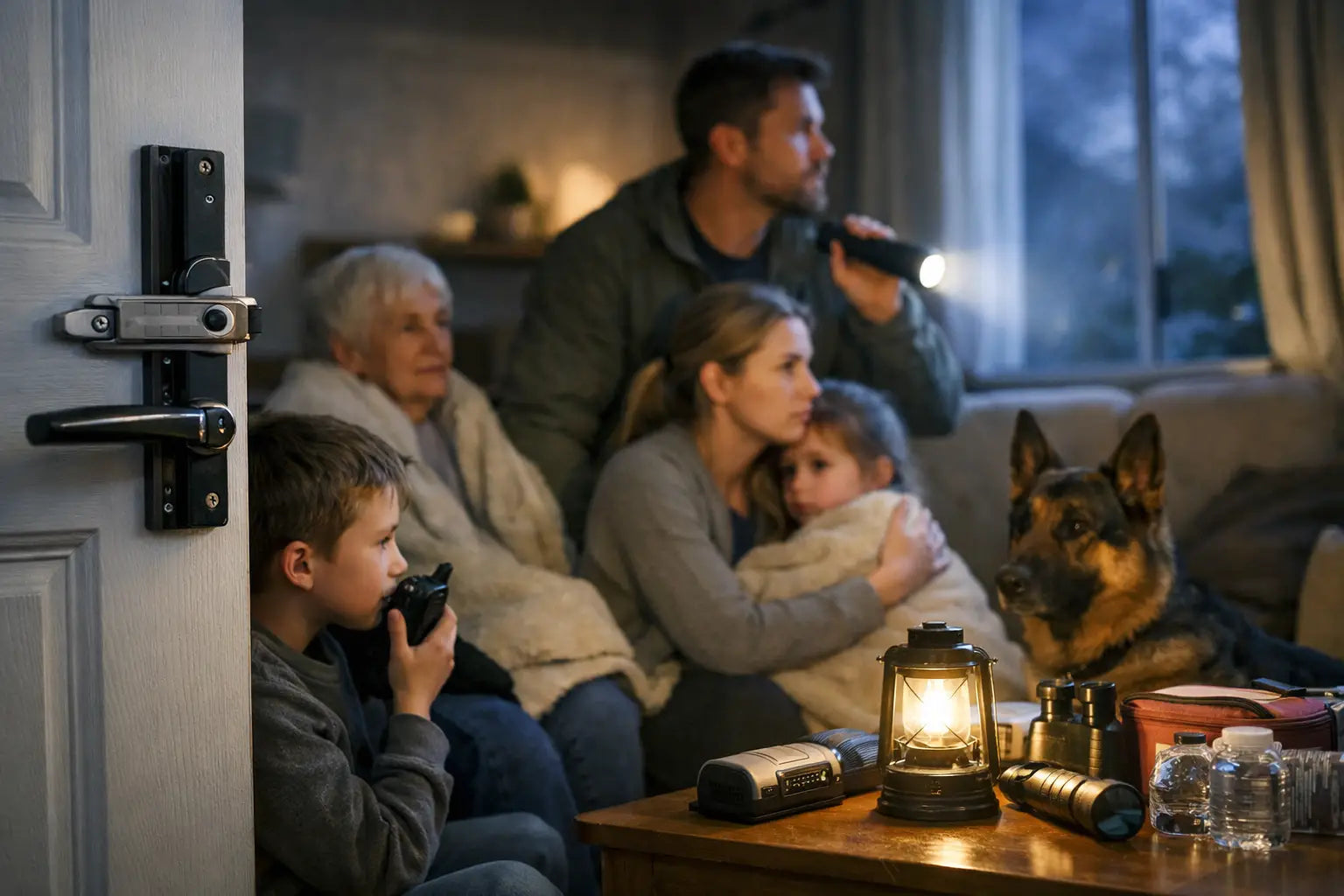
The moment the power goes out, your house changes. Doors that felt secure yesterday suddenly depend on battery backups. A warm, well-lit kitchen can become a cold room with melting food, no running internet, and a garage door that may not open when you need it most. That is why home protection in emergency situations is not just about locks or alarms. It is about keeping your family safe, sheltered, informed, and functional when normal systems fail.
Most families do not need a bunker. They need a house that can handle a bad 72 hours, and ideally a bad two weeks, without turning every problem into a crisis. That means thinking about protection in layers. Physical security matters. So do water, backup power, lighting, first aid, communication, and the ability to stay in place if roads are blocked or stores are empty.
What home protection in emergency really means
A lot of people hear the word protection and think only about intruders. That is part of the picture, but it is not the whole picture. During an emergency, homes are more vulnerable to a mix of problems at once. A storm can knock out power, spoil food, disable security cameras, and flood a first floor. A wildfire threat can force a fast evacuation. A winter storm can trap your family at home when heat is unstable and roads are unsafe.
Real home protection means your household can absorb stress without falling apart. You can lock the house, yes, but you can also light it, warm it, cool it, cook in it, filter water, treat injuries, and leave quickly if staying becomes the riskier choice. The best plans are simple enough to use when everyone is tired, worried, and operating on partial information.
Start with the house itself
Your home already has strengths and weak points. In an emergency, the weak points get exposed fast.
Walk the property with a practical eye. Which doors are solid-core and which are decorative? Do your windows have functioning locks? Can you cover broken glass or a damaged window if weather hits? If the garage loses power, does anyone know how to open it manually? If your sump pump fails, what happens next?
This is not glamorous work, but it pays off. Reinforcing a strike plate, replacing weak exterior screws with longer ones, trimming back shrubs near first-floor windows, and keeping motion lights charged or on backup power can all improve security without turning your home into a fortress. For many suburban families, visibility and delay are more realistic goals than dramatic hardening. A well-lit home with sturdy entry points and a family plan is a far better starting point than a house full of gadgets no one has tested.
Power changes everything
When households picture emergencies, they often underestimate how much of home safety runs on electricity. Refrigerators, Wi-Fi routers, security systems, phone chargers, garage doors, medical devices, and even some stoves all depend on power.
That is why backup power is one of the most practical categories in family preparedness. It does not have to start with a whole-home generator. A quality power station can keep phones charged, run lights, support a modem, and help protect refrigerated medications. For some homes, that is enough. For others, especially in hurricane or wildfire zones, it makes sense to build toward larger battery systems, generator capacity, or both.
The trade-off is cost, fuel, and complexity. Portable power is easy to store and quiet to use, but it has limits. Fuel generators offer more output, but they require safe storage, maintenance, and good ventilation practices. The right answer depends on your region, your budget, and whether your priority is comfort, medical need, or basic continuity.
Water is part of home protection too
A secure home without safe water is not secure for long. Water service can fail after storms, freeze events, earthquakes, and infrastructure problems. Even if water still runs, boil notices and contamination concerns can change how usable it is.
For most families, water protection starts with storage and then moves to treatment. Stored water buys you time. Filtration and purification give you options when stored water runs low. If you have children, older adults, or pets in the home, your margin should be bigger than the bare minimum. A family that plans for exactly one gallon per person per day often finds that real life asks for more, especially in hot climates or during cleanup.
The key is accessibility. If your water plan is hidden in the back of the garage behind holiday boxes, it is not much of a plan. Keep some water ready to use now, and keep the rest organized so it can be rotated and reached without a major production.
Think in zones, not just supplies
One reason families get overwhelmed is that preparedness shopping can become random. They buy a flashlight, then some canned food, then a radio, then a generator they do not know how to connect to anything. A better approach is to think about home protection in emergency conditions by zone.
Your entry zone needs secure doors, exterior lighting, and a way to monitor who is outside even if the internet is down. Your kitchen zone needs water, shelf-stable food, manual cooking options if appropriate, and a safe way to manage refrigerated losses during outages. Your sleep zone needs warmth, cooling options depending on climate, flashlights, medications, and shoes near the bed in case of broken glass or sudden evacuation. Your medical zone needs more than a basic bandage box. It should be organized, easy to carry, and suited to the people in your home.
This zone-based approach helps you see what is missing without buying everything at once. It also makes your plan easier for teenagers, grandparents, or visiting relatives to understand.
Fire, weather, and air quality deserve equal attention
Some households focus heavily on security and forget that the most likely threat may be environmental. In many parts of the country, smoke, extreme heat, deep cold, hurricanes, tornadoes, or house fire are more immediate risks than forced entry during a disaster.
If you live in wildfire country, home protection may mean clearing defensible space, sealing vents where possible, keeping go-ready documents together, and preparing for poor indoor air. In storm country, it may mean shutters, sandbags, drainage planning, and backup communication. In winter regions, burst pipe prevention, alternate heat, and carbon monoxide awareness matter more than almost anything else.
That is the trade-off families should keep in mind. The best emergency setup is not the one that looks impressive online. It is the one that matches the disruptions your home is actually likely to face.
Your family plan matters more than your gear
A house can be well stocked and still fail if nobody knows what to do. Children should know where flashlights are. Adults should know how to shut off water if a pipe breaks. Everyone should know where to meet if you need to evacuate and how to contact each other if cell service is spotty.
Keep instructions simple. Label bins clearly. Store extra charging cables where they will be used. If a grandparent watches the kids twice a week, they should understand the basics of your emergency setup too. The goal is not perfection. The goal is reducing confusion when stress is high.
This is also where documents come in. Insurance information, IDs, prescription details, pet records, and a short list of emergency contacts should be protected and easy to grab. Digital copies help, but paper backups still matter when batteries die or networks fail.
Build your home protection in emergency stages
Most families should not try to solve everything in a single weekend. Start with the gaps that create immediate risk. That usually means water, lighting, backup power for essentials, first aid, communication, and a realistic evacuation bag for each person. After that, improve food storage, home hardening, alternate cooking, sanitation, and longer-duration power.
This staged approach is more affordable and more durable. It lets you test what you buy, learn what your household actually uses, and avoid expensive mistakes. A modest setup that your family understands is better than a large one that sits untouched until the next storm warning.
At SHTF Prepper Club, that is how we encourage families to think about readiness - start small, cover the essentials, and build with intention. Preparedness works best when it becomes part of how you run your home, not a pile of gear you hope you never need.
The most reassuring house in an emergency is not the one with the biggest supply room. It is the one where people know the plan, the basics are covered, and the next hard day feels manageable instead of chaotic.