
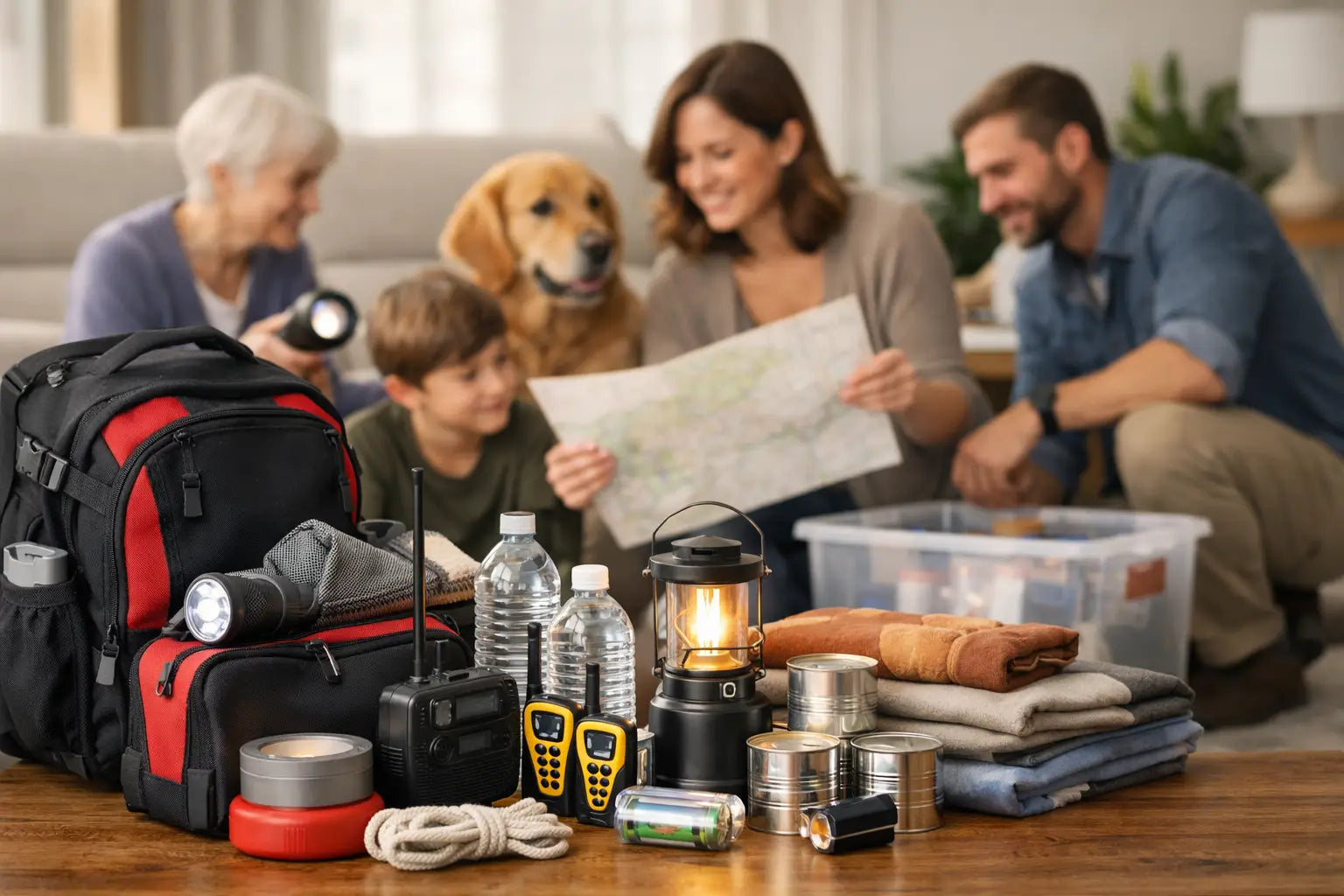
A storm warning hits your phone at 9:14 p.m. The grocery shelves were already thin this afternoon, your kid's school may close tomorrow, and you realize your backup plan is mostly batteries, canned soup, and good intentions. That is where natural disaster preparedness becomes real for most families - not as a hobby, but as a way to reduce chaos when the lights go out or the road out of town closes.
The good news is that you do not need a bunker, a giant budget, or a month of free time. You need a practical system that covers the basics first, then grows with your household. For most families, the right approach is simple: prepare for the disruptions you are most likely to face, then add flexibility for the ones you cannot predict.
What natural disaster preparedness actually means at home
For a family household, natural disaster preparedness is less about dramatic worst-case scenarios and more about staying functional for 72 hours to two weeks. That usually means safe water, enough food your family will actually eat, a way to handle power loss, basic medical supplies, and a clear plan for communication and evacuation.
The details depend on where you live. A Florida family may need to think hard about evacuation routes, fuel, and storm surge. A California homeowner may care more about wildfire smoke, fast evacuations, and backup power during public safety shutoffs. In the Midwest, winter storms and tornadoes can create very different problems, even if both leave you without electricity.
That is the first trade-off to understand. Preparedness is not one-size-fits-all. The right setup in hurricane country is not identical to the right setup in earthquake country. Still, the foundation is surprisingly consistent.
Start with the four systems every family needs
Most emergency plans break down because they focus on gear before systems. A better way is to think in four categories: water, food, power, and health.
Water comes first
If your municipal water supply is interrupted, contaminated, or simply inaccessible, stress rises fast. Store enough drinking water for each person and pet, and do not forget the unglamorous uses like basic hygiene and sanitation. A practical starting point is at least one gallon per person per day for several days, though many families find that amount feels tight once they actually try it.
Stored water is your first layer. Filtration and purification are your second. That matters because large-volume storage takes space, and many suburban households do not have room for an ideal setup on day one. If space is limited, start with a manageable amount of stored water and add a dependable way to treat additional water.
Food should be simple, familiar, and low-friction
Emergency food does not have to mean eating foods your family dreads. In fact, if you store items nobody likes, you are creating an expensive box of future regret. Start with shelf-stable meals, pantry staples, and easy proteins that fit your normal routine. Then expand into longer-term food storage if you want deeper resilience.
A common mistake is buying food that requires lots of water, cooking time, or special preparation when outages are the real risk. During a summer blackout, for example, a family may have plenty of dry goods but no simple way to cook them. Match your food storage to your likely conditions and your available equipment.
Power loss changes everything
Most families are not preparing for a disaster itself as much as they are preparing for the loss of electricity that follows. No power means no refrigeration, limited phone charging, possible well pump failure, no internet, and sometimes no heat or air conditioning. That is why backup power deserves early attention.
For some households, that starts with battery banks, lanterns, flashlights, and spare batteries organized in one place. For others, especially those who have already lived through multi-day outages, it may mean stepping up to a portable power station, solar charging, or a generator strategy. The right answer depends on budget, home setup, fuel storage options, and what you need to keep running. A family with a baby, refrigerated medication, or medical devices will prioritize power differently than a household that mainly wants lights and phone charging.
Health and medical supplies need more than bandages
A basic first aid kit is necessary, but real home readiness usually goes further. Think about prescription medications, backup glasses, pet medications, fever reducers, electrolyte support, gloves, masks, and sanitation items. If someone in your household has asthma, diabetes, severe allergies, or mobility limits, your plan should reflect that from the beginning.
This is one of the clearest examples of why generic checklists only go so far. A family with healthy teenagers has one set of needs. A household caring for an older parent has another. Preparedness gets better when it becomes personal.
Build your family plan before you need it
Supplies help. Plans reduce panic.
Every household should know how to handle three situations: sheltering at home, leaving quickly, and getting separated. Keep the plan plain enough that everyone can remember it under stress. Where will you go if you must evacuate? Who is the out-of-area contact if local networks are jammed? What do your kids do if school dismisses early and you cannot get there immediately?
If that feels like a lot, start with one page. Write down emergency contacts, local meeting places, evacuation routes, medication needs, pet needs, and the location of important documents. Print it. Put a copy in the kitchen, in vehicles, and in each evacuation bag.
Practice matters here. Not in a dramatic way. Just enough that everyone knows where shoes, flashlights, chargers, and medications are. A ten-minute drill on a quiet Saturday does more for family confidence than buying one more gadget.
The most overlooked part of natural disaster preparedness
Organization.
Families often own useful supplies already, but they are scattered across the house. Batteries are in one drawer, flashlights in the garage, medications upstairs, and the weather radio is missing its cord. That setup works fine until 2 a.m. in a storm.
Give your supplies homes. Keep daily-use items separate from emergency reserves. Label bins clearly. Rotate food and water on a schedule you will actually follow. Store your evacuation bags where they can be grabbed in under a minute. Preparedness is not only what you buy. It is how fast you can use it.
This is one place where a category-based setup helps. Group your gear by function: water, food, power, medical, shelter, and documents. When something changes - a new prescription, a child outgrowing clothing, a pet added to the household - you can update the right category without rethinking your whole plan.
Start small, then scale smart
A lot of people delay preparing because they picture an expensive, all-at-once project. It does not have to work that way. A strong first month might look like this: enough water for a few days, a simple food backup, reliable lighting, phone charging, a first aid kit, and one evacuation bag per person. That is already a major improvement over doing nothing.
From there, expand based on your real risks. If winter outages are common, add warmth and safe indoor cooking options. If wildfire season worries you, focus on air quality, rapid evacuation, and backup power. If hurricanes are your main concern, fuel planning, window protection, and longer food storage may move higher on the list.
That is the mindset we encourage at SHTF Prepper Club: start where you are, cover the basics, and build in layers. A family with a $200 budget can make meaningful progress. A family ready to invest more can create deeper resilience over time. Both are valid.
Where people get stuck
Usually, it is not laziness. It is decision fatigue.
There are too many product options, too many opinions, and too many giant lists online. When that happens, come back to one simple question: what would make the next 72 hours easier if utilities went down tonight? Answer that honestly, and your next purchase becomes clearer.
Maybe it is more stored water. Maybe it is a better first aid kit. Maybe it is a portable power station because your family has already suffered through enough spoiled food and dead phones. Preparedness is most effective when it solves the problems you are actually likely to face.
You do not need to do this perfectly. You just need to make your home less fragile this month than it was last month. That is how real readiness is built - one practical decision at a time, with your family in mind.