
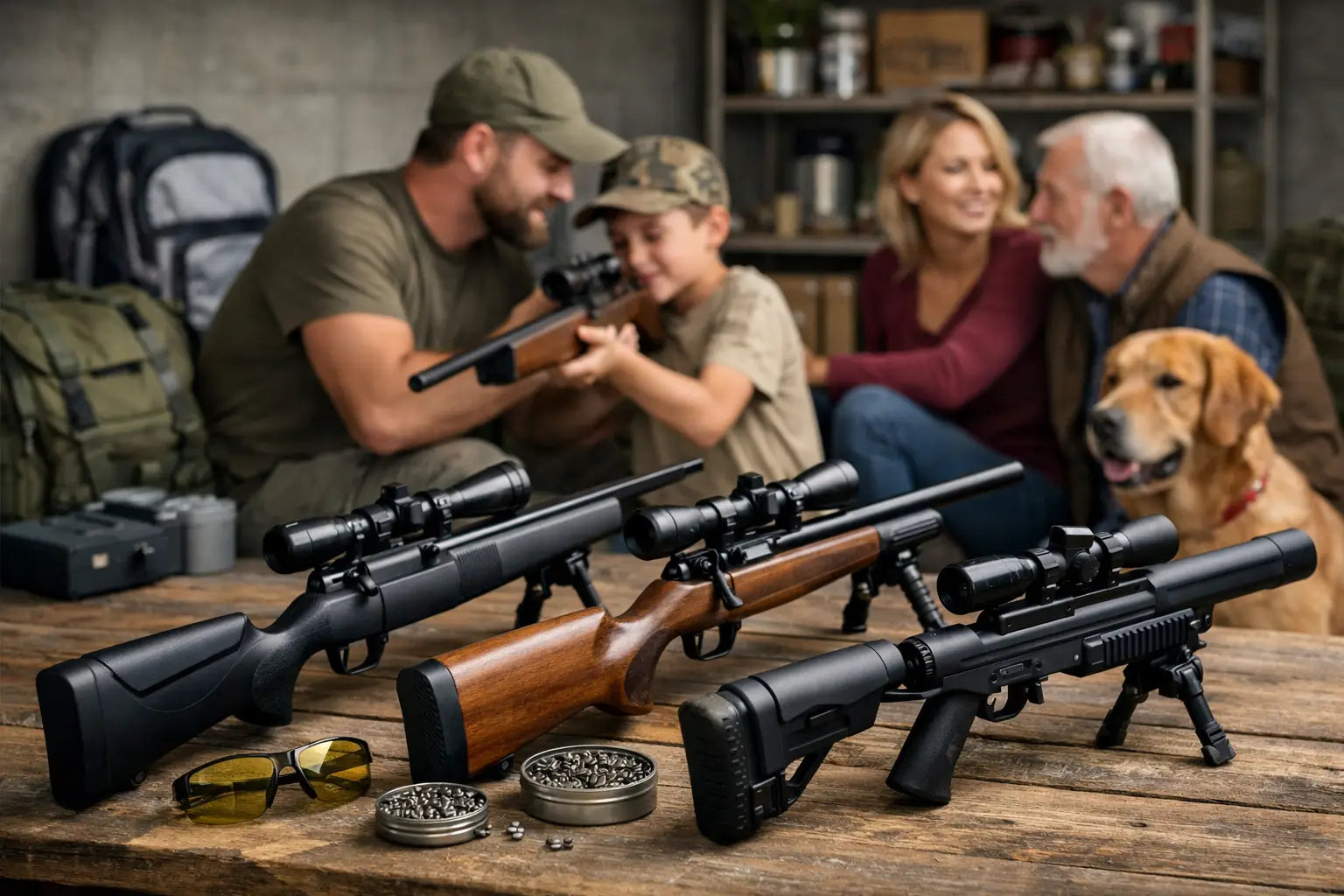
Most families building an emergency plan eventually hit the same question: where do airguns fit? If you have been researching SHTF Prepper Club Airguns, the smart answer is not hype or fear. It is role, limits, and usefulness.
Airguns can have a place in family readiness. They are quieter than most firearms, often easier to store, and usually simpler for new shooters to approach with proper training. For some households, they can support small-game hunting, pest control, and skill-building. But they are not a magic substitute for every defensive or hunting need, and treating them that way leads to bad decisions.
That matters because good preparedness is about matching tools to realistic problems. A hurricane aftermath, a winter outage, a wildfire evacuation, or a supply-chain disruption all call for calm choices. If you are adding any airgun to your household plan, it should be because it solves a real problem your family may face, not because it sounds dramatic online.
Where airguns actually fit in a family preparedness plan
For most families, airguns are a secondary tool. They sit somewhere between a preparedness tool and a skills tool. In the right setting, they can help with backyard practice, discreet pest control on rural or semi-rural property, and potentially harvesting small game if local laws allow and the shooter is competent.
That last part matters more than people admit. The usefulness of an airgun depends heavily on accuracy, range, caliber, local game, and the shooter behind it. A well-chosen airgun in practiced hands can be practical. A cheap one bought in a panic usually becomes garage clutter.
Families also like airguns because they can feel less intimidating than firearms. That can be a real advantage for households trying to build capability slowly. If one spouse is comfortable starting with an air rifle for marksmanship, safe handling, and confidence, that is progress. Preparedness does not have to begin at the deepest end of the pool.
Still, airguns do not replace the basics. Water storage, shelf-stable food, backup power, first aid, lighting, and a family communication plan will do more for most households than any airgun ever will. If your emergency shelves are still thin, an airgun should probably come after the fundamentals.
SHTF Prepper Club Airguns and realistic expectations
The biggest mistake people make with SHTF Prepper Club airguns is expecting one tool to cover every scenario. That is not how readiness works.
An airgun may be useful for small game. It may help protect a garden, chicken coop, or stored feed from pests. It may offer a lower-noise training option when ammunition costs are high or range access is limited. Those are all practical roles. But if you are imagining it as a one-size-fits-all answer for security, food procurement, and household defense, you are asking too much from one category.
Power source matters too. Some airguns are spring-piston models, some use CO2, and some use pre-charged pneumatic systems. Each comes with trade-offs. Spring-piston airguns are self-contained and appealing for long-term resilience because they do not depend on cartridges or tanks. The trade-off is recoil behavior, cocking effort, and often a steeper learning curve for accuracy.
CO2 models can be easy to use, but they rely on stored cartridges. That creates a supply issue in a prolonged emergency. Pre-charged pneumatic models can be accurate and powerful, but they require an air source such as a hand pump, compressor, or tank. If you choose one, your plan needs to include how you will keep it running when stores are closed or power is out.
That is the lens preparedness families should use: not just what works on a good day, but what still works after three hard days.
What to look for before you buy
Start with intended use. If your goal is backyard training and introducing safe shooting habits, your needs are different than a rural family dealing with pests around feed and outbuildings. If your property is suburban, local ordinances may sharply limit where and how an airgun can be used. A strong air rifle does not help much if using it at home creates legal problems.
Build quality should rank high. In preparedness, reliability matters more than novelty. A simple, durable airgun from a known manufacturer is usually a better choice than a feature-packed bargain model. Look for consistent accuracy, solid sights or optics compatibility, and parts support. The best emergency gear is often the gear that keeps doing its job without fuss.
Caliber deserves honest thought. Smaller calibers are often cheaper to shoot and easier to practice with. Larger calibers may offer better terminal performance for certain tasks, but they also raise cost and can reduce the amount of affordable training a family actually does. That trade-off is real. A tool you practice with regularly beats one that sits untouched because every session feels expensive.
Weight and fit matter more than many shoppers expect. A heavy air rifle may shoot beautifully from a bench and still be a poor fit for a spouse, older parent, or teenager learning proper control. If this is meant to serve the household, think about who can safely handle it, load it, and maintain it.
Training matters more than the airgun itself
A modest airgun plus regular practice will beat an expensive setup with no routine behind it. Families sometimes spend all their energy on product research and very little on safe handling, storage, and realistic skill-building.
Start with the basics. Muzzle discipline, trigger control, target awareness, safe storage, and eye protection all matter. If children or grandchildren are part of the household, airguns should be treated with the same seriousness as any other projectile tool. Familiarity should never turn into casual handling.
Then move into practical practice. Can the shooter hit consistently at realistic distances? Can they load and operate the system under mild stress? Can they do it safely in poor light or with cold hands? Preparedness training should reflect likely conditions, not just ideal ones.
It also helps to practice maintenance. A neglected airgun becomes unreliable at the worst time. Keep seals, lubrication, cleaning supplies, and any required support gear organized in one place. If the platform depends on pumps, tanks, or cartridges, store those with the same care you would give any other essential household system.
The limits families should respect
This is where calm decision-making matters. Airguns can be useful, but they are not a shortcut around hard preparedness choices.
They do not replace food storage. If your plan for feeding your family depends mainly on harvesting game with an airgun, your plan is thin. Small-game opportunities vary by season, location, pressure, and local law. During widespread disruption, anything huntable tends to become scarce quickly. Stored food is predictable. Field success is not.
They also do not erase security concerns. Some households ask whether an airgun can fill a home-defense role. The answer depends on the model, the user, local conditions, and the alternatives available, but this is not an area for wishful thinking. Families should be careful about betting safety on a tool chosen mainly because it felt easier to buy.
And they do not remove the need for community. Preparedness works best when your family has layered solutions: backup power, extra water, medical supplies, communication options, neighborhood awareness, and practical tools that fit your property. Airguns may be one layer. They are not the whole roof.
Who benefits most from adding an airgun
Rural and semi-rural households usually get the most practical value. If you manage land, outbuildings, feed, gardens, or small livestock, an airgun may fill an everyday utility role that also overlaps with emergency readiness. It can be a working tool before it ever becomes emergency gear.
Families who want a lower-barrier training option may also benefit. An airgun can help hesitant beginners build confidence with sight picture, trigger control, and safe handling. That can make later decisions about broader household readiness easier and more informed.
For suburban homes, the answer is more mixed. If local rules are strict and your property is tight, the real value may be limited to structured practice in appropriate settings. That is still useful, but it is different from the all-purpose emergency role some buyers imagine.
If you are building readiness one category at a time, keep your priorities in order. Water first. Food next. Light, power, first aid, and sanitation close behind. Then add tools that match your property, your skills, and your likely disruptions. That is the kind of practical thinking SHTF Prepper Club encourages: start small, choose well, and build a plan your family can actually use.
An airgun can be part of that plan. Just make sure it earns its place.