
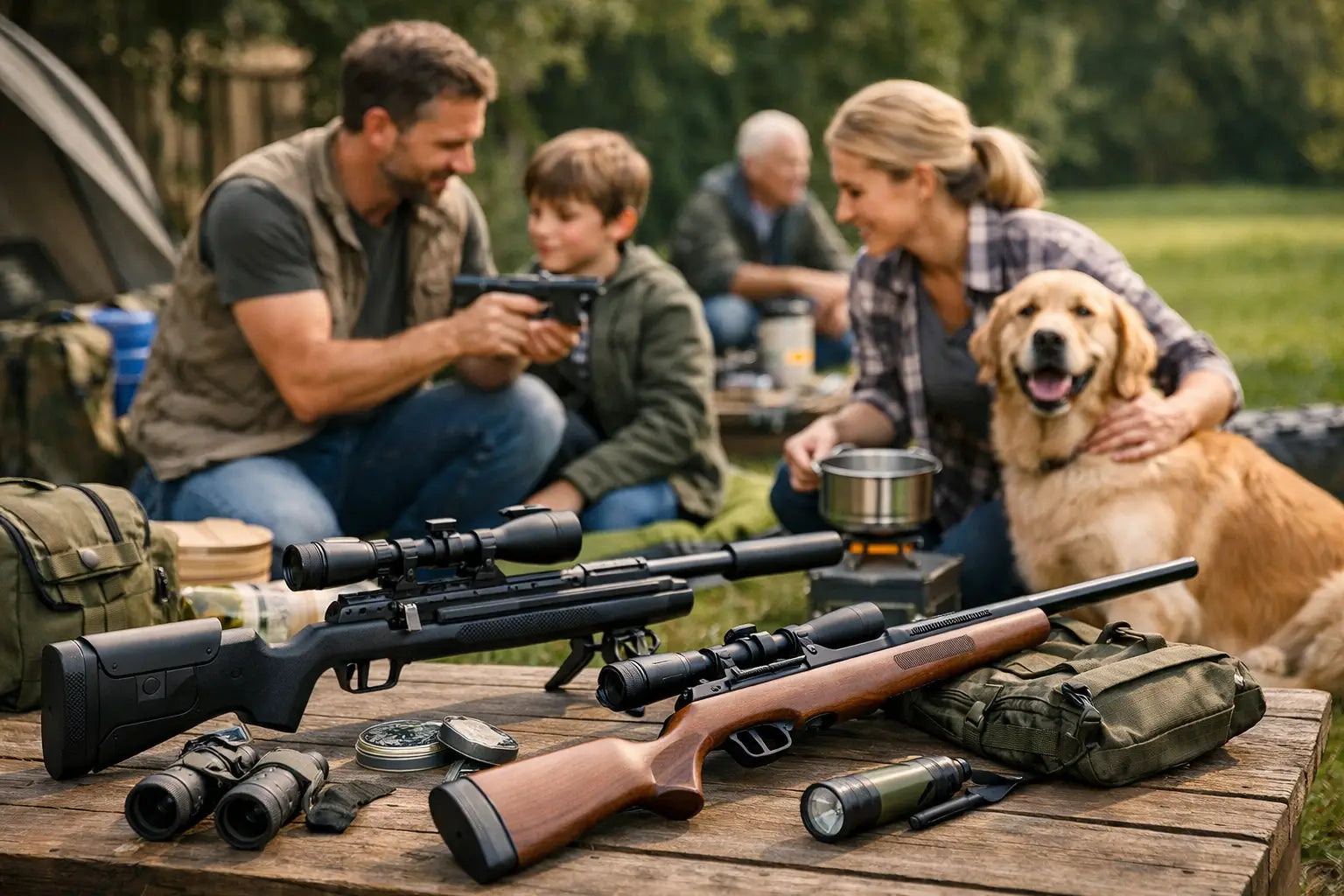
A lot of families start thinking about airguns for the same reason they start storing extra water or buying a backup power station - they want practical options at home that do not feel extreme. That is where airgun family preparedness fits. For some households, an airgun can be a useful tool for training, small pest control, and teaching safe habits. For others, it may add more complexity than value.
That distinction matters.
Preparedness works best when every item in your plan has a clear job. If you are considering an airgun, the question is not whether airguns are good or bad. The better question is what role, if any, an airgun should play in your family’s overall emergency plan.
What airgun family preparedness actually means
In a family setting, airgun family preparedness is not about building a tactical identity. It is about deciding whether a lower-powered projectile tool has a legitimate household use, then building rules around that use. Usually, that means one or more of three things: backyard marksmanship practice where legal, humane pest management on your property, or introducing older children to firearm safety principles in a more controlled format.
Notice what is not on that list. An airgun is not a substitute for water storage, emergency food, first aid supplies, weather radios, or backup power. It is not the center of a family readiness plan. At most, it is a supporting tool.
That framing helps keep priorities straight. If your pantry is thin, your medical kit is half empty, and your family has no communication plan for a blackout, an airgun should not move to the top of the shopping list.
Where an airgun can make sense for families
The strongest case for an airgun in preparedness is skill building. Many parents want a structured way to teach muzzle awareness, trigger discipline, target identification, and respect for tools that can injure people or animals. An airgun can provide that starting point, assuming local laws allow it and adults are willing to supervise consistently.
There can also be a practical property-management role. In suburban, exurban, or rural settings, small pests can damage gardens, feed stores, or chicken areas. Depending on your setup and local regulations, an airgun may be one option for managing that problem. The key phrase is one option. Traps, exclusion, fencing, and sanitation often do more to solve the issue long term.
Cost is another reason some families look at airguns. Training with an airgun can be less expensive than training with firearms, and in some places it is easier to practice safely on private property. That can make regular practice more realistic for busy households.
Still, airguns are not a universal fit. If you live in a dense neighborhood, have young children who struggle with boundaries, or know that consistent supervision will be difficult, the downsides may outweigh the benefits.
The trade-offs most people skip
This is where calm planning beats impulse buying.
Airguns are often marketed as beginner-friendly, and in one sense that is true. But families can get into trouble when “beginner-friendly” turns into “harmless.” Airguns can seriously injure people and pets. They can also create a false sense of security if buyers assume they are effective for every preparedness scenario.
They are not.
An airgun’s usefulness depends heavily on the platform, caliber, power source, intended purpose, and the experience of the person using it. A setup that works for target practice may be poorly suited for pest control. One that is accurate in calm weather may become frustrating in real outdoor conditions. And anything that requires consumables such as pellets, cartridges, seals, or specialized maintenance adds another dependency to your preparedness plan.
That does not mean avoid them. It means treat them honestly. Airguns are niche tools, not magic solutions.
How to decide if airgun family preparedness is a fit
Start with your household, not the catalog.
If your main goal is family resilience during storms, outages, or supply disruptions, focus first on water, food, light, cooking, backup power, sanitation, and first aid. Those categories help every family. An airgun helps only some families, in some homes, for some jobs.
If those basics are already covered, ask four simple questions. What exact job will this tool do? Who will use it? Where will it be used legally and safely? What supporting gear and rules are required to make that use responsible?
If you cannot answer those clearly, wait.
A family in a rural area with a garden, recurring small pest problems, and a parent committed to regular supervised training may have a solid use case. A family in a tight HOA neighborhood with no legal place to practice and no pest issue probably does not.
Set family rules before the airgun comes home
This step matters more than model selection.
Any household considering an airgun should establish written rules in advance. Simple, visible rules work best. Adults control access. The airgun stays secured when not in use. No handling without permission. No pointing at people, pets, or anything not intended as a target. Eye protection is mandatory. Outdoor use happens only in approved directions with a safe backstop and adult supervision.
For families with children, clarity beats intensity. You do not need a dramatic speech. You need repetition, consistency, and consequences that do not change from one weekend to the next.
Storage deserves special attention. If your preparedness plan includes kids, grandkids, visitors, or neighbors coming and going, secure storage is not optional. Pellets and related supplies should be stored separately if that supports better control in your household. The goal is to reduce curiosity, unauthorized handling, and preventable mistakes.
Don’t let one tool crowd out better investments
This is the biggest preparedness mistake we see in all kinds of categories. Families sometimes spend energy on specialized gear before they have covered the basics well.
A realistic home plan starts with the disruptions you are actually likely to face. For most readers, that means multi-day outages, severe weather, road closures, wildfire smoke, boil-water notices, or temporary shortages at local stores. In those situations, stored water, shelf-stable food, medical supplies, chargers, lanterns, a way to cook, and a family communication plan will do far more than an airgun.
That is not anti-airgun. It is pro-priority.
If your budget is limited, build layers in order. Start with the essentials every person in the house will need. Then add category-specific tools based on your property, region, and real experience. Preparedness should lower stress, not create a garage full of gear with no plan behind it.
Training matters more than owning
Owning an airgun without routine practice and safety habits is like owning a generator without ever testing it. The value is not in the object alone. The value comes from familiarity.
If you bring one into your family plan, schedule regular, calm practice. Keep sessions short. Focus on safety first, accuracy second. Review setup, targets, backstops, cleanup, and storage every time. If older children are involved, keep the standard high and the tone matter-of-fact.
That style of training does something useful beyond marksmanship. It teaches patience, responsibility, and respect for consequences. Those are preparedness skills too.
Keep the tool in its lane
The healthiest version of airgun family preparedness is modest. It does not turn every family conversation into a security discussion. It does not push aside more urgent categories. It does not rely on fantasy scenarios.
Instead, it looks like this: your household has water stored, food on hand, first aid covered, lighting ready, backup power sorted, and a plan for the most likely emergencies in your area. Then, if it makes sense for your property and your family culture, an airgun can be added as a specialized tool for training or pest control, with clear rules and realistic expectations.
That is how preparedness stays grounded. Not by collecting dramatic gear, but by choosing tools that match your home, your people, and the problems you are actually trying to solve.
If you are on the fence, that is fine. You do not need to decide everything this month. Start with what protects your family in the next storm, the next outage, or the next week when stores run thin. The rest can come in time, and it will make more sense when your foundation is already strong.