
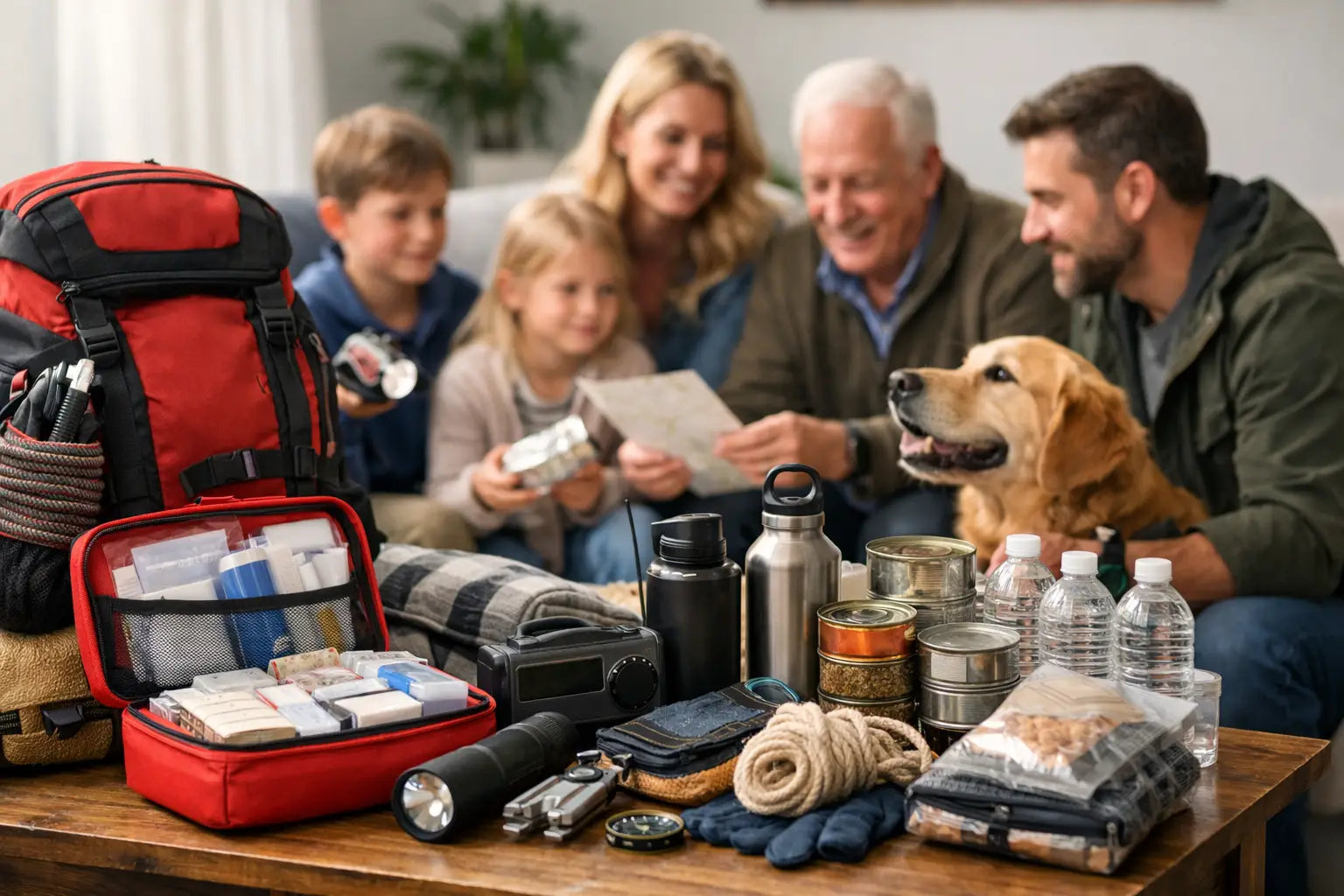
The power goes out at 6:20 p.m. Dinner is half-cooked, the phones are at 18 percent, and your youngest is already asking if the Wi-Fi will be back soon. That is the moment a family survival kit stops being a vague good idea and starts becoming a real household asset.
For most families, preparedness is not about dramatic scenarios. It is about getting through the disruptions that actually happen: a winter storm that closes roads, a hurricane that knocks out power for days, wildfire smoke that forces you indoors, or a supply shortage that makes a regular grocery run harder than it should be. A good kit helps your family stay safe, fed, warm, informed, and calmer when normal systems stop cooperating.
What a family survival kit is really for
A family survival kit is not one backpack and a few granola bars. It is a practical collection of supplies that supports your household for a specific amount of time, usually 72 hours at a minimum, and often much longer if you have the space and budget.
That distinction matters. A kit for sheltering at home during a three-day outage looks different from an evacuation bag for leaving quickly. A family of five in Florida has different priorities than grandparents in Arizona or a homeowner in Oregon during wildfire season. The best kits are built around the emergencies you are most likely to face, not the ones that make the loudest headlines.
If you are just starting, that is good news. You do not need to solve every possible emergency this weekend. You need to cover the basics well enough that your family is not scrambling during the next disruption.
Start with the five categories that matter most
Most emergency planning gets easier when you stop thinking in terms of random gear and start thinking in categories. For a family survival kit, five categories carry most of the load: water, food, power and light, first aid and sanitation, and shelter or warmth.
Water comes first
Water is usually the category families underestimate. In a short emergency, you need enough drinking water for everyone in the house. In a longer one, you need a backup plan if stored water runs low or local supplies become unreliable.
A useful rule is one gallon per person per day as a baseline for drinking and very limited hygiene. In hot climates, with children, pets, or medical needs, more is better. Bottled water can help you get started fast, but long term it is smarter to add dedicated water storage and a reliable filtration or purification option.
This is one place where trade-offs are real. Stored water is simple but takes space. Filtration saves space but depends on having a water source available. Most families are better served by having both.
Food should be easy, familiar, and shelf-stable
Emergency food does not need to be complicated. What matters is that your family will actually eat it, it stores well, and it can be prepared under less-than-ideal conditions.
For a short event, shelf-stable versions of your normal routine often work best: oatmeal, peanut butter, canned soup, pasta, rice, canned chicken, fruit cups, crackers, and ready-to-eat snacks. For longer disruptions, freeze-dried meals and bulk staples make more sense because they store longer and scale better.
Children, older adults, and anyone with allergies or dietary restrictions should shape your food choices from the start. A family survival kit that ignores gluten issues, diabetes, or a toddler who refuses unfamiliar foods is not as useful as it looks on paper.
Light and backup power reduce stress fast
A dark house changes the mood quickly. Good lighting is one of the fastest ways to make an emergency feel more manageable.
Every household kit should include flashlights, headlamps, spare batteries, and at least one area light or lantern. Headlamps are especially helpful because they free up your hands for cooking, cleanup, and first aid.
Backup power deserves the same practical mindset. A small power station can keep phones, flashlights, radios, and medical devices running. A larger setup can support a refrigerator, internet equipment, or fans depending on capacity. The right size depends on your priorities. If your goal is basic communication and lighting, you can start small. If someone in the home depends on refrigerated medication or powered medical equipment, power planning moves much higher on the list.
First aid and sanitation are not optional
Families usually remember bandages and forget everything else. A real medical kit should cover cuts, burns, sprains, fever, stomach issues, and common medications your household already uses.
Sanitation matters just as much, especially in longer outages when water service is interrupted. Think toilet backup, trash bags, wipes, soap, feminine hygiene items, diapers if needed, and a realistic plan for keeping hands and surfaces clean. Illness spreads faster when routines break down.
Shelter and warmth depend on your region
If you lose heat in Minnesota, your priorities are not the same as a family riding out a summer blackout in Texas. Blankets, sleeping bags, extra layers, and safe indoor heating options matter in cold regions. In hotter areas, battery-powered fans, shade, cooling towels, and extra water matter more.
Cooking fits here too. If your stove is electric and the power is out, how will you heat food or boil water safely? A compact camp stove, fuel, or another off-grid cooking option can make a short outage much easier.
How to build a family survival kit without overbuying
The easiest mistake is buying too much random gear before you know what problem each item solves. A better approach is to build in layers.
Start with 72 hours. Cover water, food, light, power for phones, first aid, sanitation, medications, pet needs, and basic comfort. Once that is in place, expand to one week. Then look at two weeks if your budget and storage space allow.
This keeps the process manageable and helps you avoid expensive purchases that do not fit your actual household. A family in a suburban home with a garage can store more than a condo owner. A retired couple may need more medication support. Parents with young kids may care more about comfort items, simple foods, and keeping routines stable.
That is why the best family survival kit is rarely the biggest one. It is the one matched to your home, your people, and the emergencies you are most likely to face.
The family survival kit items people forget
Some of the most important items are not dramatic. They are the things that make a bad week less chaotic.
Documents are high on that list. Keep copies of identification, insurance information, prescriptions, emergency contacts, and local maps in a waterproof pouch. If cell networks are spotty, paper still works.
Communication is another one. A battery or hand-crank radio helps when internet service is down. So does a written contact plan that tells everyone where to meet, who to call, and what to do if family members are separated.
Then there are the everyday essentials that feel obvious only after you need them: chargers, cash in small bills, spare glasses, pet food, manual can openers, work gloves, dust masks, and comfort items for children. A deck of cards and a familiar blanket can matter more than another gadget when the outage stretches into day two.
Store it like you plan to use it
A kit is only helpful if you can find it, carry it, and trust what is inside. That means organizing supplies in a way that fits real life.
Keep the core of your home kit together, not scattered across five closets and the trunk of one car. Use clearly labeled bins. Put heavier items low. Store medications where they are easy to grab. Rotate food and batteries before they expire. Check seasonal items twice a year.
It also helps to separate your supplies into roles. Home supplies stay home. Evacuation bags stay portable and ready to go. Vehicle kits cover roadside emergencies, weather delays, and unexpected overnights. These are related, but they are not the same thing.
For families who want a simpler starting point, SHTF Prepper Club focuses on realistic, category-based preparedness so you can build around water, power, food, medical, and shelter instead of guessing.
Preparedness should lower anxiety, not raise it
A well-built kit does something valuable beyond supplying your home. It gives your family options.
That matters for parents. Kids take cues from the adults around them. When you have light, water, food, and a plan, your home feels steadier. The emergency may still be inconvenient, but it does not have to feel chaotic.
If you have been meaning to get prepared, start smaller than you think and sooner than you think. A family survival kit does not need to be perfect to be useful. It just needs to be honest about your needs and ready before the next storm warning, outage alert, or empty store shelf reminds you why this matters.
Your family does not need fear. It needs a plan, a few solid supplies, and the confidence that when life gets messy for a few days, home can still work.