
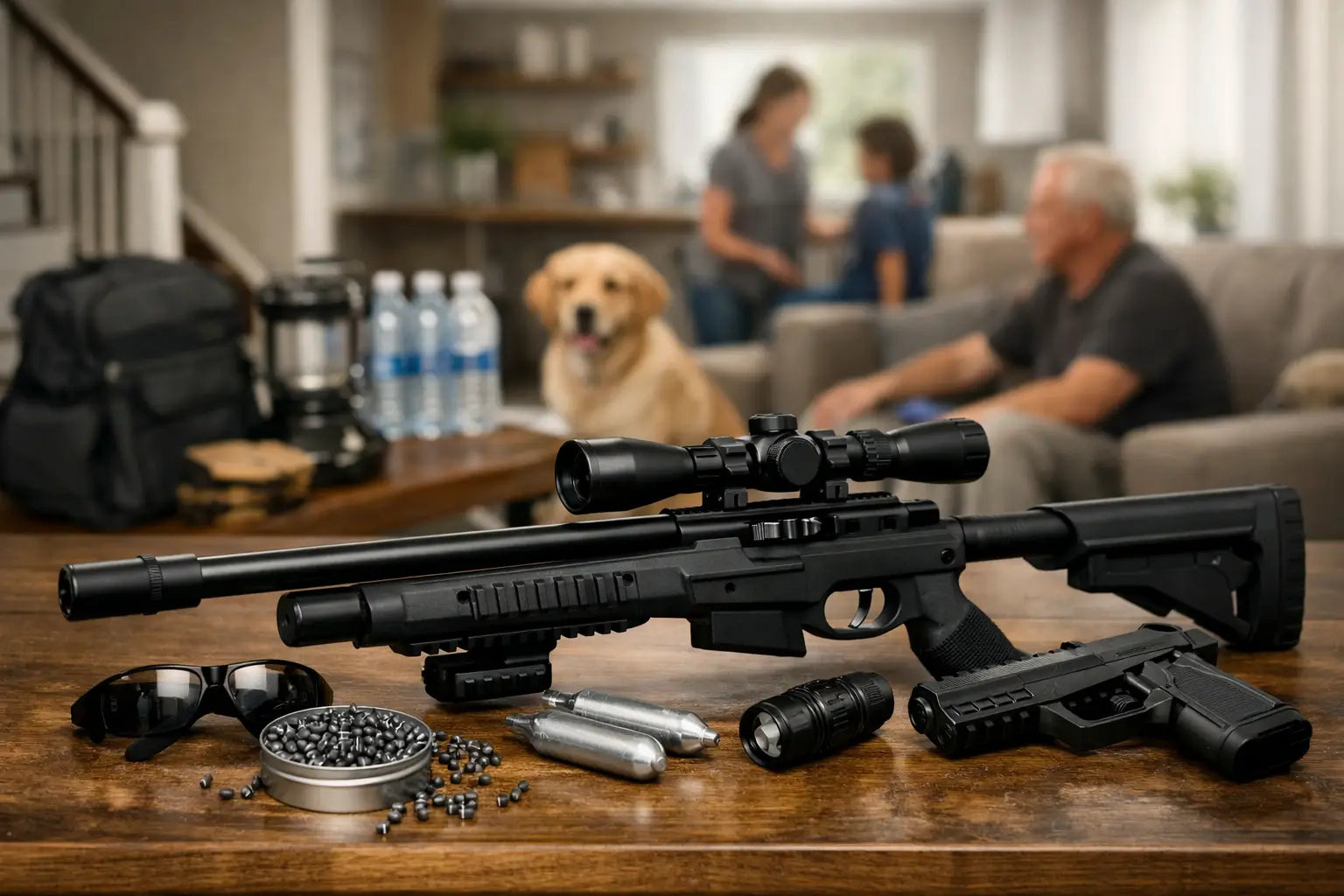
A lot of families start here for a simple reason: they want a layer of security at home, but they are not ready to bring a firearm into the house. That is usually what sits behind the search for an airgun for home protection and preparation. It is a fair question, especially for parents and homeowners trying to balance safety, legality, training, and peace of mind.
The short answer is that an airgun can have a place in preparation, but it is not a reliable primary tool for defending your family against a violent intruder. That does not make it useless. It just means you need to be honest about what it can do, what it cannot do, and where it fits in a real household security plan.
Where an airgun fits in home protection and preparation
An airgun sits in an awkward middle ground. It is more capable than many people assume, but far less capable than some marketing suggests. Depending on the model, caliber, and power source, an airgun may be useful for pest control, skill-building, and limited emergency use. Those are real benefits.
Where families get into trouble is when they treat an airgun like a stand-in for a full defensive system. If your concern is a raccoon getting into the trash, a stray animal threatening chickens, or maintaining basic shooting skills on private land, an airgun may make sense. If your concern is a forced entry at 2 a.m., you need to think bigger than one tool.
Preparedness works best when it is layered. Locks, outdoor lighting, window security film, cameras, a family communication plan, a charged backup power source, a medical kit, and a clear plan for where everyone goes in an emergency all matter. A defensive tool is only one part of that.
The real limitations of an airgun for home protection
This is the part that deserves plain English.
Most airguns are not designed to stop a determined attacker quickly. Even high-powered models can injure without reliably incapacitating. That gap matters. In a home defense situation, you are not trying to send a warning. You are trying to stop a threat before it reaches you or your family.
There is also a major difference between paper performance and real-world performance. Velocity numbers on a box do not tell you how a projectile behaves under stress, in low light, through heavy clothing, or against a moving target. Many families shopping for alternatives want a simple answer, but the honest answer is that an airgun is a compromise.
Then there is the psychological risk. If you present something that looks like a firearm, an intruder may react as if it is one. That can escalate the danger to everyone in the room, including you. At the same time, if the tool you are holding does not have the stopping power of a firearm, you may be assuming risk without gaining the level of protection you thought you had.
That trade-off is hard to ignore.
Legal questions matter more than people think
Airguns often get talked about as if they live outside the normal rules. That is not always true.
State and local laws vary. Some jurisdictions regulate airguns heavily. Others treat them more like sporting equipment. In a defensive incident, what matters even more is how the law views your actions, not just the tool itself. If you use force against another person, you may still face the same legal scrutiny around self-defense, reasonable fear, storage, negligence, and child access.
For families with teenagers in the home, this deserves extra attention. An airgun stored carelessly can still cause serious injury. A child who mistakes an airgun for a toy, or a guest who does not understand what it is, creates a real hazard. If it is in the house, secure storage is part of the decision.
Better uses for an airgun in a preparedness plan
If you already own one, or you are considering one, it helps to place it in the right category.
An airgun may be useful for small pest management, especially in rural or semi-rural settings. It can also be a lower-cost way to practice sight alignment, trigger control, and safe handling habits. During periods of disruption, when ammunition shortages or budget constraints are real, those training benefits can be meaningful.
For some households, an airgun may also serve as a bridge tool. It can help adults learn the basics of safe handling and responsibility before deciding whether a firearm belongs in the home. That is a valid part of preparation, as long as everyone understands it is a training and utility tool first, not a complete home defense plan.
If not an airgun, what should families prioritize?
The better question is not whether an airgun is good or bad. It is what gives your family the highest margin of safety for the money and effort.
For most households, the first upgrades should be boring. Solid exterior doors. Reinforced strike plates. Motion lights. Reliable locks. Alarm and camera coverage. A charged phone by the bed. Backup power for communications. A flashlight that works every time. A medical kit with supplies you know how to use.
That may not feel as decisive as buying a single defensive item, but it is often what prevents an incident from becoming a crisis. Criminals usually prefer easy homes, dark yards, and delayed responses. Basic hardening changes that math.
Next comes planning. If something goes wrong at night, where do the kids go? Which room is the fallback room? Who calls 911? Who turns on lights? If grandparents are visiting, do they know the plan? In real emergencies, simple plans beat dramatic gear.
If your household does want a dedicated personal protection tool, make that decision with training and local law in mind. For some families, that may be a firearm and a serious commitment to safe storage and education. For others, it may be pepper spray, reinforced doors, monitored alarms, and a strong emergency medical setup. It depends on your home, your comfort level, the ages of your children, and the threats you are realistically preparing for.
Airgun for home protection and preparation - questions to ask yourself
Before buying anything, stop and ask a few practical questions.
What problem am I actually trying to solve? If the honest answer is home invasion, an airgun is usually not the best answer. If the answer is backyard pest control, low-cost practice, or a first step into learning safe shooting habits, it may be a sensible purchase.
How much training am I willing to do? Tools do not create readiness on their own. A family with a modest setup and a rehearsed plan is often better prepared than a family with expensive gear they have never used under stress.
What else in my preparedness plan is unfinished? If you still do not have stored water, backup lighting, a weather radio, a trauma kit, or a household emergency plan, those gaps deserve attention too. Security matters, but readiness is wider than one scenario.
A calm way to think about household security
Preparedness is not about pretending every product solves every problem. It is about matching tools to likely needs.
That is why an airgun is better viewed as a supporting tool than a centerpiece. It may help with pests, training, and confidence-building. It may even serve a narrow role in certain rural settings. But for protecting your family during a violent break-in, it leaves too much to chance.
At SHTF Prepper Club, we believe families do better when readiness feels practical instead of theatrical. Start with the basics that make your home harder to target and your family easier to protect. Build from there. The best plan is the one your household understands, can afford, and will actually practice.