
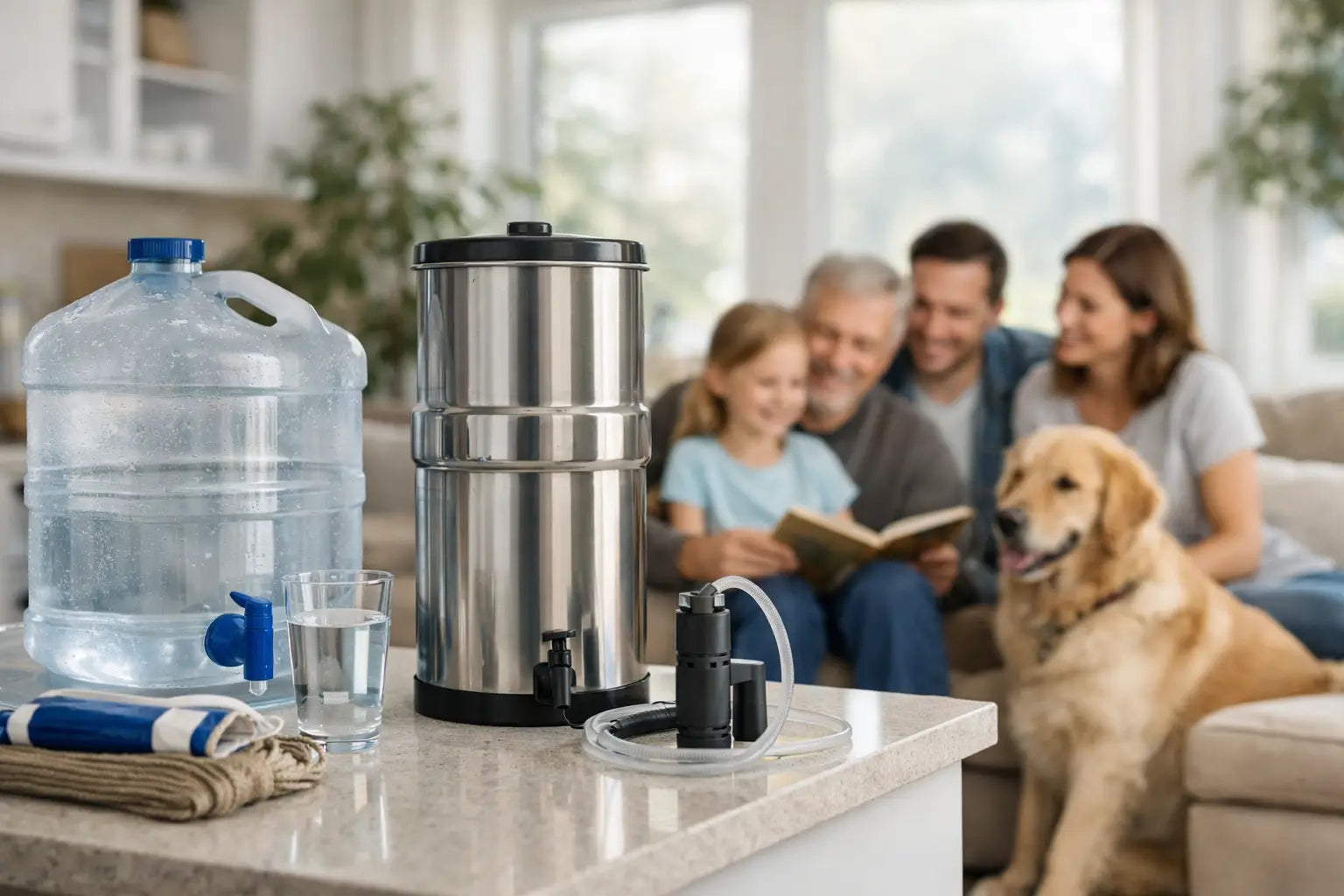
The faucet stops, and the stress hits fast. Not because water is optional, but because every part of family life depends on it at once - drinking, medications, cooking, handwashing, pets, and toilets. A good household guide to water security starts there: not with fear, but with the simple fact that most homes run on water more than people realize.
If you have ever lived through a boil notice, hurricane, winter storm, wildfire shutoff, or even a few empty grocery shelves, you already know the lesson. Waiting until an emergency starts is expensive and chaotic. Water security works better when it is built quietly, ahead of time, in layers your family can actually maintain.
What water security means at home
For most families, water security is not about becoming fully off-grid. It means your household can keep functioning if tap water becomes unavailable, unsafe, or unreliable for several days or longer. That includes having enough water stored, having a way to make questionable water safer, and having a realistic plan for daily use.
The key word is realistic. A family of five in suburban Florida facing hurricane season has different needs than a retired couple in wildfire country or grandparents preparing for weekend visits from grandkids. The right plan depends on household size, climate, local risks, storage space, and budget. Still, the basic framework stays the same.
Start with the amount your family actually needs
Most people have heard the one-gallon-per-person-per-day rule. It is a useful floor, but not a complete plan. One gallon covers drinking and a little basic sanitation. In hot weather, during illness, or with children, nursing mothers, or pets in the home, that number often falls short.
A better way to think about it is in three buckets. First is drinking water, which deserves the highest priority. Second is water for cooking and essential hygiene. Third is utility water for toilet flushing and limited cleaning. When people say they have "water covered," they often mean they bought a few cases of bottled water. That may help for a short outage, but it rarely carries a whole household very far.
For planning, many families do well with a two-week target for stored drinking and cooking water, plus a separate plan for hygiene and sanitation. If space is tight, start with a minimum of three days, then work toward seven, then fourteen. That approach is more manageable and much more likely to happen.
Don’t forget the people and animals with special needs
Water planning changes if someone in the home uses powdered formula, takes medications that require water, has kidney issues, or struggles with heat. Pets count too. Large dogs can go through surprising amounts of water, and if you keep chickens or other animals, your storage target needs to reflect that.
This is also where many families miss one practical detail: convenience. If all your stored water is heavy, hard to reach, or scattered in the garage behind holiday bins, you do not really have a usable system. Water security has to work on a tired Tuesday night, not just on paper.
Build storage in layers, not all at once
The strongest household guide to water security is usually built in layers. Small, easy-access water covers short disruptions. Larger containers cover multi-day events. A refill strategy helps with anything that lasts longer.
Commercial bottled water has a place. It is easy to rotate, portable, and useful for evacuation. It is also expensive per gallon and inefficient for larger reserves. Dedicated water storage containers are more space-efficient and better for households serious about building a cushion beyond a few days.
If you are just starting, keep it simple. Store some grab-and-go water where you can reach it quickly. Add stackable containers or larger tanks where space allows. Then think through how you would refill if the outage stretched on.
Where storage works best
Cool, dark, stable areas are best. Heat and sunlight shorten the life of stored water containers and can affect taste. Garages are common storage spots, but they are not ideal in very hot climates unless you are using containers rated for those conditions and rotating carefully.
Inside the house is often better than people assume. A guest room closet, basement shelf, laundry area, or mudroom corner can support more storage than a family expects. The right answer is the one you will maintain.
Filtration matters because stored water runs out
Storage buys time. Filtration extends options. That distinction matters.
A lot of families think buying one filter solves the whole problem. Sometimes it does for a weekend. Sometimes it does not. Filters vary widely in what they remove, how fast they work, how much water they can process, and whether they are meant for clear freshwater, municipal tap water, or emergency use with unknown sources.
That means your filtration plan should match your likely scenario. If your area mostly faces short-term storm outages, a gravity filter and good storage may be enough. If you live in wildfire country or somewhere with repeated infrastructure interruptions, it makes sense to add backup purification methods and more treatment capacity.
Filter, purify, and disinfect are not all the same
This is where clear thinking helps. A physical filter can remove sediment and, depending on design, many bacteria and protozoa. Some systems also reduce chemicals or improve taste. Viruses are a different question and often require a purifier or chemical treatment. Boiling is effective in many situations, but it takes fuel and time.
No single method is perfect for every emergency. That is why layered water readiness works so well. Stored water for immediate needs. A primary filter for ongoing use. A backup treatment option in case the source water quality changes or your main setup fails.
Plan for water sources before you need them
If the municipal supply is down or unsafe, where would you actually get more water? That answer should not be guessed in the middle of an emergency.
For some households, the answer is straightforward: filling containers before a storm arrives, drawing from a known private well with backup power, or collecting rainwater where local rules and system design allow. For others, it may mean identifying nearby freshwater sources and understanding the treatment needed before use.
Be honest here. A creek ten miles away is not much of a plan if you have small children, no truck, and roads that flood. A neighborhood pond may look like a solution and create more problems than it solves. Good planning is less about fantasy and more about logistics.
Make your daily-use plan now
When water is limited, waste happens by habit. Families do better when they have already talked through how they will use less.
That can mean shifting to paper goods for a few days, using hand sanitizer when appropriate, setting aside utility water for flushing, and changing how meals are prepared. Shelf-stable foods that need little or no water become much more valuable during a water emergency. So does having a clean way to dispense stored water without contaminating the container.
Kids should know the basics in plain language. Which water is for drinking. Which water is not. How to pour carefully. Why you do not leave the spigot open. The calmer the expectations, the better the household functions.
Maintenance is what turns supplies into readiness
Water security is not a one-time purchase. It is a system that needs light maintenance.
Containers should be labeled and rotated on a schedule you will remember. Filters need replacement elements on hand, not just the housing. Water treatment supplies need to be checked before they expire. If you own larger tanks, pumps, or rain capture equipment, test them before storm season, not during it.
This is also a good place to keep your plan modest and durable. The family that maintains a sensible two-week water setup is in better shape than the family that bought an ambitious system they never learned to use. At SHTF Prepper Club, that is the approach we trust most - start small, scale smart, and keep what you build usable.
A household guide to water security should fit your life
There is no prize for owning the most gear. The goal is steadiness.
For one family, that may mean bottled water, a solid gravity filter, and a few larger storage containers. For another, it may include long-term tanks, rain collection, portable purification, and backup power for a well pump. Both can be smart. Both can be enough if they match the risks, the home, and the people living there.
Water is one of the few preparedness categories where every improvement pays off quickly. Better storage reduces panic. Better filtration creates options. A better plan makes your home feel more secure even before anything goes wrong.
If your current setup is a case of water in the pantry and a vague intention to buy more later, that is okay. Start there. Then add the next layer while life is calm. Your family does not need perfection. It needs a water plan that works when the pressure drops and the tap goes quiet.