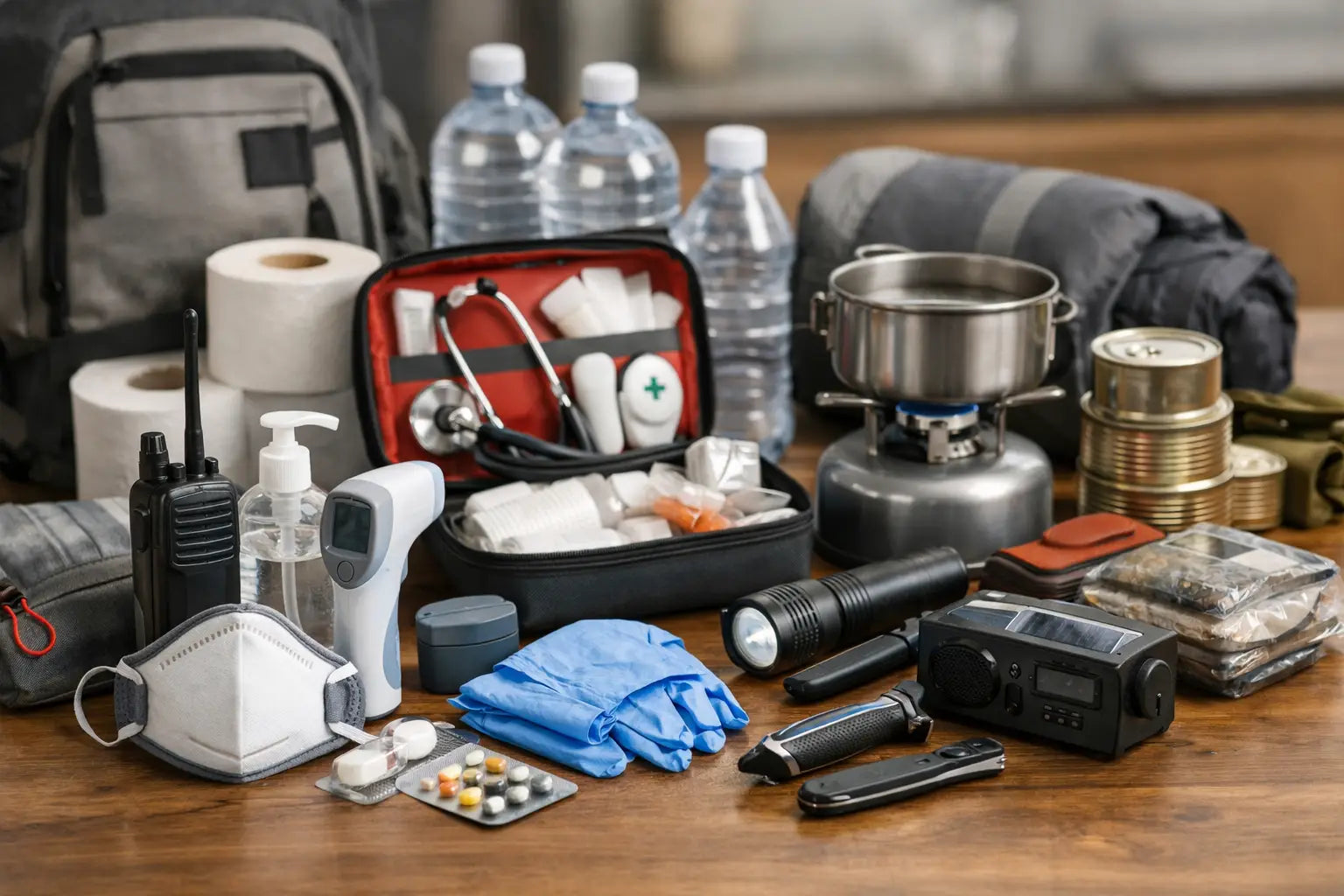
When store shelves thin out, it is rarely the dramatic items that disappear first. It is the everyday things your family uses without thinking - masks, soap, thermometers, basic medicine, shelf-stable food, and clean water. That is why the tools needed to survive next pandemic are not exotic. They are practical, familiar, and most useful when you already have them at home.
COVID taught a lot of families the same lesson. The hardest part was not always the illness itself. It was the ripple effect - delayed deliveries, limited clinic access, school disruptions, shortages, and the stress of trying to care for people at home while normal routines stopped working. A smart pandemic plan is really a stay-home resilience plan. You are preparing your household to function for several weeks with fewer trips out, fewer services available, and more pressure on your routine.
What tools needed to survive next pandemic actually matter
Start with the tools that protect health, support isolation at home, and reduce your dependence on strained systems. If a product does not help your family stay cleaner, safer, calmer, fed, hydrated, or powered, it probably does not belong at the top of the list.
That may sound simple, but it keeps people from wasting money. Families often overbuy niche gear and underprepare the basics. A better approach is to build in layers. Cover water, food, sanitation, medical monitoring, backup power, and communication first. Then add comfort and long-term independence over time.
Clean water and safe storage come first
A pandemic is not usually a water emergency by itself. But the reason water belongs near the top is that every home emergency gets harder without it. If someone is sick, you need water for drinking, hydration support, handwashing, cleaning surfaces, laundry, and basic food prep.
Store enough water for your whole household, including pets. A good baseline is at least one gallon per person per day, and many families are more comfortable with extra because sanitation needs go up when illness is in the house. Durable water containers matter more than people think. Cases of disposable bottles are easy, but they are not the best long-term system.
A backup water filtration option is also worth having. In a pandemic, you may not need to filter pond water. But if a storm, boil order, or local disruption overlaps with a disease outbreak, you will be glad you planned for both. This is one of those areas where layered readiness pays off.
Shelf-stable food that your family will actually eat
Food shortages during a pandemic tend to show up as gaps, not total collapse. You can still find food, just not always the kind you need when you need it. That is why pantry depth matters.
Focus on shelf-stable meals, easy proteins, staple ingredients, and foods that work when someone is tired or sick. Families with children should think in terms of routine. If your kids normally eat oatmeal, pasta, rice, peanut butter, applesauce, soups, or shelf-stable milk, start there. Preparedness works better when your food storage matches real life.
Longer-term food storage has a place too, especially for larger households or anyone who wants to reduce dependence on fragile supply chains. But there is a trade-off. Freeze-dried meals are convenient and last a long time, while pantry staples are cheaper and easier to rotate. Most families need some of both.
PPE and hygiene supplies that do not run out in week one
This category became painfully obvious in 2020. If the next outbreak spreads through the air, respiratory protection matters. If it spreads mostly through close contact, cleaning and hygiene matter. Since you do not get to pick the disease profile in advance, prepare for both.
Keep a supply of quality masks in adult and child sizes if needed, disposable gloves for cleanup tasks, hand soap, hand sanitizer, disinfecting products, paper goods, and trash bags. Add tissues, laundry detergent, and basic personal care items. None of this is glamorous, but these are the supplies households burn through quickly when everyone is home and one person is sick.
Think about quantity, not just category. A family of four can go through soap, sanitizer, tissues, and disinfecting wipes much faster than expected during a two-week illness cycle.
Medical tools for home monitoring
One of the best tools needed to survive next pandemic is simple: the ability to monitor symptoms calmly at home. That means having a dependable thermometer, a pulse oximeter, a blood pressure cuff if someone in the household already needs one, and a written list of medications and health conditions.
A well-stocked first aid and medical supply setup should include pain relievers, fever reducers, electrolyte support, cough and cold medications, stomach relief, oral rehydration supplies, and any physician-recommended over-the-counter items your family commonly uses. Prescription medications deserve extra attention. If your household relies on daily meds, build as much refill cushion as your doctor, insurer, and state laws allow.
This is also where a notebook earns its place. Write down temperatures, oxygen readings, medication times, fluid intake, and symptom changes. When people are tired and stressed, memory gets sloppy. Good notes help you make better decisions and communicate clearly if you need medical advice.
Backup power for the things that matter most
Pandemics and power outages are different emergencies, but they often overlap in real life. A winter virus surge during an ice storm, or a summer outbreak during hurricane season, can leave families dealing with both at once.
Backup power does not need to mean running the whole house. For many families, the priority is charging phones, powering lights, keeping internet equipment running, supporting medical devices, and protecting refrigerated medicine. A portable power station with solar capability is often a strong fit because it is quiet, indoor-safe, and approachable for households that do not want a gas generator.
The right setup depends on your home. If you have CPAP machines, refrigerated insulin, or work-from-home needs, your power plan should be more serious than a few battery banks. If your biggest concern is phones, radios, and a lamp, a smaller system may be enough.
Communication tools that work when everyone is confused
During a pandemic, information becomes part of your survival gear. Not because you need more headlines, but because you need reliable updates and a simple household plan.
Keep phones charged, maintain backup battery packs, and have a weather radio or emergency radio that can receive updates if internet service gets spotty. Printed contact lists still matter. If schools close, a relative gets sick, or travel plans change, you do not want critical numbers trapped inside one dead phone.
For households with older parents, college-age kids, or shared custody schedules, communication planning matters even more. Decide now who checks on whom, who can deliver supplies, and how you will handle temporary isolation if someone in the home becomes contagious.
Sanitation and home isolation tools
Most families do not think through the mechanics of caring for a sick person at home until they are already doing it. That is avoidable.
Useful tools include separate thermometers if needed, dedicated cleaning supplies, extra bedding, waterproof mattress protection, gloves, masks, a lined trash can for the sick room, and easy-to-clean meal supplies. If your layout allows it, identify in advance which bedroom and bathroom could serve as an isolation area.
Air quality can matter too. In some homes, a portable air purifier is a sensible addition, especially if you live in a small space or have vulnerable family members. It is not a magic shield, but it can be part of a layered plan.
The overlooked tool: storage and organization
Families do not fail at preparedness because they bought nothing. They fail because they cannot find what they bought when stress is high.
Use bins, labels, shelving, and simple inventory sheets. Store pandemic-specific supplies together or by category - medical, sanitation, food, water, and power. Rotate what expires. Check sizes for growing kids. Replace used items before the next emergency, not after.
This is where preparedness becomes sustainable. A calm, organized system beats a closet full of random purchases every time.
How to prioritize if you are starting from scratch
If your budget is tight, begin with water, a two-week food buffer, basic hygiene supplies, masks, a thermometer, over-the-counter medicines, and a way to keep phones charged. That alone puts your family in a better position than most households.
Then build outward. Add better medical supplies, deeper pantry storage, a more capable power solution, and stronger water storage. If you want a simple place to start, SHTF Prepper Club focuses on family-first readiness, which is exactly the right mindset for this kind of planning.
Preparedness is not about predicting the exact next pandemic. It is about making sure your family can stay home longer, make fewer desperate trips, and care for each other with less stress when normal life gets shaky. Start with the tools you know you would reach for on a hard week, and build from there.