
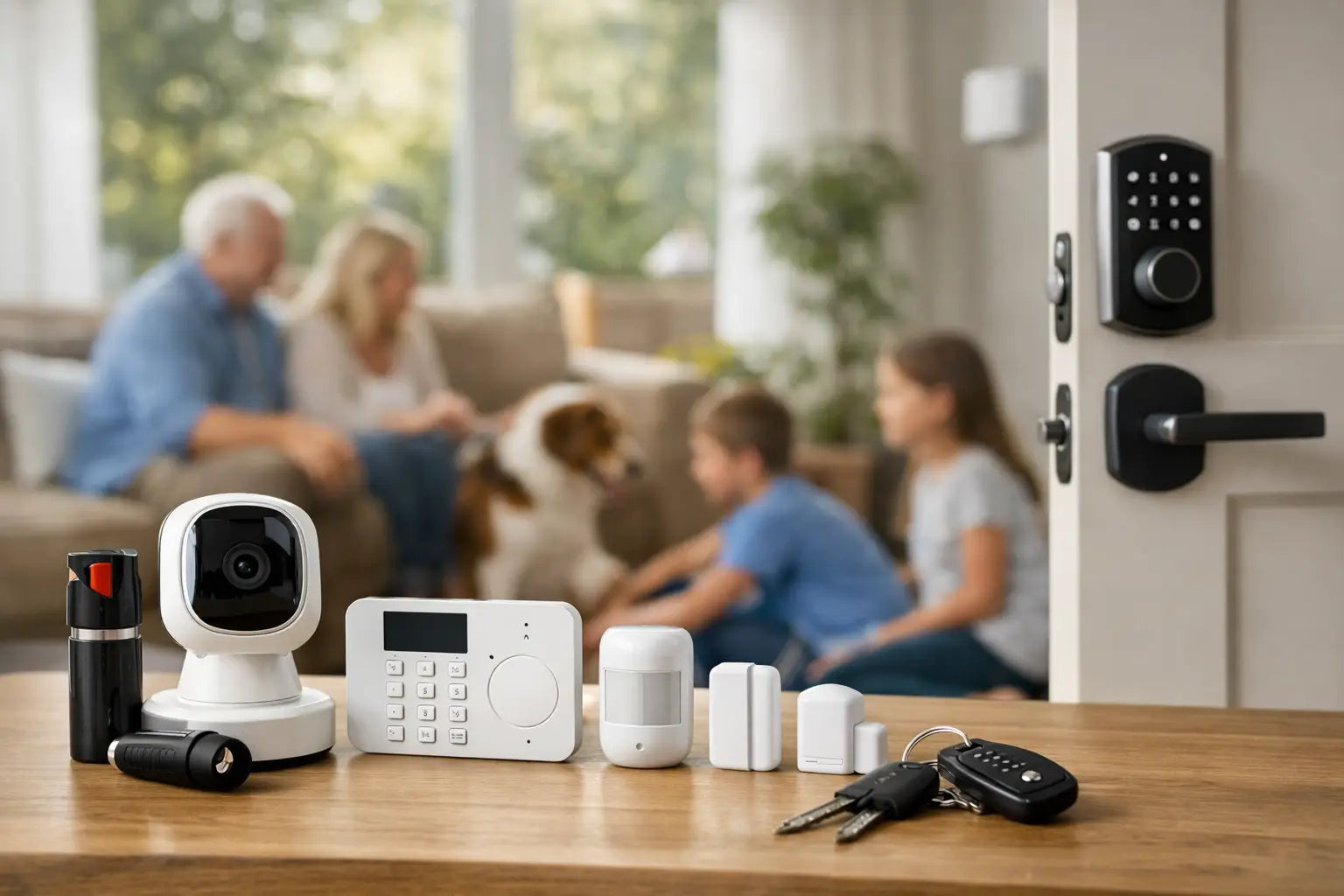
A lot of families ask the same quiet question after a break-in nearby, a tense knock at the door, or a stretch of civil unrest on the news: what is the best home safety without gun license if we want real protection and less risk under our own roof?
That question is more practical than political. For many households, the goal is simple. Keep intruders out, buy time, call for help, protect children, and avoid turning a bad night into a lifelong tragedy. If that sounds like your mindset, the strongest answer is not one item. It is a layered home safety plan built around hardening your home, creating early warning, using legal non-firearm tools, and rehearsing what your family will actually do under stress.
Best home safety without gun license starts with layers
Most home protection decisions go wrong when people look for a single fix. One camera will not stop a determined intruder. One can of pepper spray will not matter if you cannot reach it in time. One loud dog is helpful, but not a plan.
The best home safety without gun license usually looks boring on paper, and that is exactly why it works. Strong doors and locks slow entry. Exterior lighting removes hiding places. Alarms and cameras create early warning. A reinforced safe room door gives your family a place to gather. A charged phone, practiced code word, and clear 911 plan reduce panic. If someone still gets inside, legal defensive tools can add one more layer between your family and harm.
This approach also works better for real households. Parents have kids coming home from school. Grandparents host overnight visits. Teenagers forget to lock the back door. Life is messy. Layered safety gives you margin when one layer fails.
Hardening your home does more than any weapon substitute
If you can make your house difficult, noisy, and time-consuming to enter, you lower your risk before a confrontation starts. That matters more than most people realize.
Start at the doors. Many forced entries happen because the strike plate is weak or secured with short screws. Reinforcing the frame and using longer screws can dramatically improve resistance. Solid-core exterior doors and quality deadbolts matter too. Sliding doors need a physical blocker in the track. Ground-floor windows deserve working locks and, in some homes, security film that helps hold shattered glass together.
Then look outside. Motion lighting is one of the simplest upgrades with a high payoff. Trim shrubs near entry points so no one can work unseen. House numbers should be visible from the street, especially at night, so first responders do not lose time finding you.
Cameras help most when they support behavior, not when they become decoration. Place them where they can confirm movement early, not just record a face after someone is already at the door. A doorbell camera, one covering the driveway, and one watching the backyard or side gate often make more sense than an oversized camera system no one checks.
An alarm system is still one of the most practical choices for family homes. The best setup is one everyone can use half asleep. If a system is too complicated, people stop arming it.
The safest defensive tools are the ones your family can use under stress
Once you have worked on prevention and early warning, think about last-resort tools. This is where many homeowners get pulled toward gadgets that sound powerful but create more risk than protection.
Pepper spray is one of the more realistic options for many adults because it is portable, widely legal in many places, and effective at creating pain, disorientation, and time to escape. But it has trade-offs. Indoors, spray can affect everyone in the area, including you, your spouse, children, or pets. Ventilation, room size, and your own stress level matter. If you choose it, buy a quality product, learn the range, and understand local laws.
Pepper gel is often recommended for indoor use because it is less likely to spread through the air. That can be a better fit in hallways or bedrooms, though it still requires aiming and practice.
A very bright tactical-style flashlight is underrated. It can help identify a threat, disorient someone temporarily, and guide your movement in a blackout. It also has everyday value during outages, which makes it far more likely to stay charged and nearby. Unlike many self-defense gadgets, a flashlight has almost no downside when used responsibly.
Personal alarms can also help, especially for older adults, teens, or anyone home alone. A piercing alarm draws attention and can interrupt an intruder's momentum. It will not physically stop someone, but it may buy precious seconds and trigger a faster response from neighbors.
Batons, stun devices, and specialty impact tools are more complicated. Laws vary widely by state and municipality. They also demand close-range confrontation, which is exactly what most families should avoid. If a tool requires strength, precision, or getting within arm's reach of an attacker, it is usually a poorer fit for the average homeowner than prevention, distance, and escape.
Build a safe room plan before you buy more gear
For many families, the smartest move in a home invasion is not clearing the house. It is gathering in one defensible room, locking or barricading the door, calling 911, and making enough noise and communication to speed response.
A safe room does not need to be a bunker. A primary bedroom can work. So can an upstairs room with a solid door. What matters is function. The room should have a strong lock, a charged phone or backup power bank, a flashlight, a medical kit, and a way to monitor what is happening outside the room if possible.
This is especially important if you have children. Under stress, adults lose fine motor skill and clear thinking. Kids do too. A family plan should answer simple questions in advance. Where do the kids go? What word means move now? Who grabs the toddler? Who calls 911? What if the emergency happens at 2 a.m. during a power outage?
Practicing this once or twice a year does more good than buying another piece of hardware. Keep it calm. Keep it short. The goal is familiarity, not fear.
Best home safety without gun license also means legal awareness
Home defense laws are not the same everywhere. The legality of pepper spray, stun devices, expandable batons, and even certain door barricades can vary depending on your state, county, apartment lease, or HOA rules. If you travel, what is legal at home may not be legal in the next state.
That is one reason broad advice can fail. The best home safety without gun license for a suburban family in Texas may differ from what makes sense for a condo owner in New Jersey or a grandparent in California. Before you buy any defensive tool, check your local laws and think through your floor plan, your children, your pets, and your ability to use that tool correctly.
Training matters too. If you own pepper spray but have never tested the safety tab, checked expiration dates, or practiced accessing it from a drawer in the dark, you do not really own a solution yet. You own an idea.
The most overlooked security habits cost almost nothing
Some of the best protection is routine. Lock doors even when you are home. Keep first-floor blinds closed at night if interior lights make visibility easy from outside. Do not leave ladders, tools, or heavy objects in the yard where they can be used against your home. If you move into a new house, rekey or replace locks.
Package theft and casual checking of car doors can be early signals that your area is being tested. Take them seriously without becoming fearful. Motion lights, locked side gates, and not leaving garage door remotes in unlocked cars are small changes that close easy opportunities.
Neighborhood awareness still matters. You do not need a tactical network. You just need a few people who notice when something is off and will answer the phone. A text from a trusted neighbor is often your first alarm.
What to prioritize if you are starting from scratch
If your budget is limited, spend in this order: door reinforcement, exterior lighting, a simple alarm, a bright flashlight for each main bedroom, and one legal defensive tool you will actually learn to use. After that, work on cameras and a basic safe room setup.
That order reflects reality. A family is safer when an intruder never gets in, or gives up trying, than when everyone is depending on split-second heroics in a dark hallway.
At SHTF Prepper Club, we believe readiness should lower stress, not raise it. Home safety is no different. You do not need to become someone else to protect your family. You need a plan your household can live with, practice, and trust when the lights go out and your heart rate spikes.
Start with the house. Add warning. Add communication. Add one or two legal tools you can use responsibly. Then walk through the plan with your family while the house is quiet and everyone is thinking clearly. That is how confidence gets built - one practical layer at a time.