
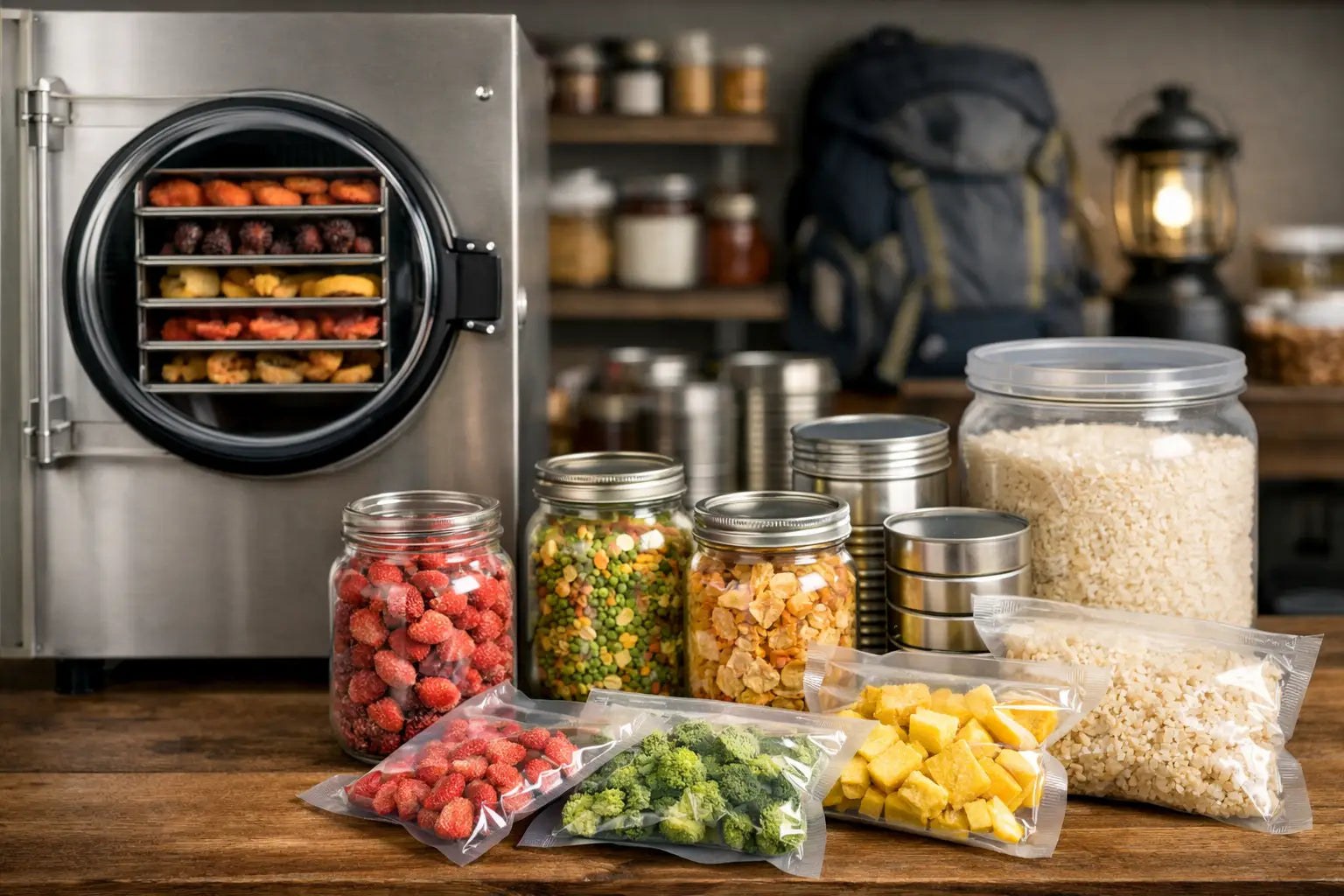
A pantry full of canned soup feels reassuring until the power is out for four days, the grocery store shelves are thin, and your family is tired of eating the same three things. That is usually the moment a home freeze dryer for emergency food storage starts to sound less like a luxury and more like a serious preparedness tool.
For some families, it is exactly that. For others, it is an expensive machine that solves the wrong problem first. The key is knowing where a freeze dryer fits in a realistic readiness plan, not an imaginary one.
What a home freeze dryer really does
A home freeze dryer removes moisture from food after freezing it, which lets you store that food for years when it is packaged correctly. Unlike a standard dehydrator, it preserves more of the food’s original shape, flavor, and nutrition. It also rehydrates far better, which matters when you are planning meals your family will actually eat during a stressful week.
That difference is why freeze drying gets so much attention in emergency planning. You can preserve full meals, leftovers, fruits, vegetables, meats, dairy, and even some comfort foods. If you already cook from scratch, garden, buy in bulk, or raise your own food, the value becomes more obvious very quickly.
Still, this is not magic. A freeze dryer does not replace a stocked pantry, safe water, backup power, or a sensible rotation system. It is one part of a bigger food strategy.
Is a home freeze dryer for emergency food storage worth it?
Sometimes yes. Sometimes absolutely not.
If your family is still building the basics, a freeze dryer should probably not be your first big preparedness purchase. A solid emergency food supply, water storage, a way to boil or filter water, and backup power for short outages will usually give you more immediate protection per dollar. If you have lived through hurricanes, winter storms, or wildfire shutoffs, you already know the first problem is usually disruption, not long-term collapse.
But if your basics are covered, a freeze dryer can be a smart next step. It gives you control over ingredients, portion sizes, and meal types. That matters for families dealing with allergies, picky eaters, low-sodium diets, or simply a desire to store food they already know they will use.
The machine also makes more sense when you have a steady stream of food to preserve. Garden surplus, bulk meat purchases, seasonal produce deals, and leftover cooked meals all improve the return on investment. If you only plan to run it a few times a year, buying ready-made freeze-dried food may be the better route.
The real trade-offs most families underestimate
The first trade-off is cost. A home freeze dryer is not just the machine. You also need bags or jars, oxygen absorbers, storage bins or shelving, and enough ingredients to make using it worthwhile. Over time, the machine can pay off, especially if you are replacing expensive packaged emergency meals. But the startup cost is real.
The second trade-off is time. Freeze drying is not a quick afternoon project. A batch can take many hours, sometimes longer depending on the food. Then there is prep work, packaging, labeling, and cleanup. Busy families should be honest about whether this will become part of their routine or become one more unfinished project in the garage.
The third trade-off is space and noise. These machines are not tiny, and they are not silent. Most households put them in a garage, utility room, or basement. You also need a clean, climate-conscious place to store the finished food.
Then there is the learning curve. Some foods freeze dry beautifully. Others need testing. High-fat foods are trickier. Certain textures do not return exactly the way you hoped. It takes some trial and error, and that is normal.
When a home freeze dryer makes the most sense
Families who get the most value from a home freeze dryer for emergency food storage usually fall into a few clear groups.
One is the family that cooks often and wants to preserve complete meals. Soups, casseroles, shredded chicken, pasta dishes, cooked rice, and breakfast items can all become shelf-stable options for future emergencies. During a long outage recovery or a supply shortage, having familiar meals matters more than people expect.
Another is the family trying to build long-term food independence. If you garden, buy beef by the quarter, keep laying hens, or shop warehouse sales with intention, freeze drying helps you capture abundance instead of losing it to spoilage.
It also makes sense for families with dietary constraints. Store-bought emergency food can be useful, but it is not always ideal for gluten-free, dairy-free, diabetic, or ingredient-conscious households. Making your own gives you control.
And then there are grandparents and multigenerational households. If you regularly have grandchildren visiting or support adult children during storms and shortages, storing ready-to-make family-friendly meals can be a real gift.
When it does not make sense yet
If you do not already have a basic emergency food supply, start there. The same goes for water. No freeze-dried meal matters much if you do not have the water to prepare it safely.
It may also be the wrong move if your preparedness budget is tight and your most likely risk is short-term disruption. In many homes, a balanced setup of shelf-stable groceries, canned goods, a few #10 cans of staples, and some ready-made emergency meals will cover realistic needs better than one expensive machine.
The same is true if you dislike food preservation projects in general. There is no shame in that. Preparedness works best when it matches your household habits. A system you will maintain always beats an ambitious setup you abandon.
What foods are best to freeze dry for emergencies
The best freeze-dried foods are the ones your family already enjoys and knows how to use. That sounds simple, but it saves money and frustration.
Cooked meats, vegetables, fruits, yogurt, eggs, and full meals are often strong candidates. So are ingredients that let you assemble flexible meals later, like diced chicken, cooked ground beef, berries, peas, corn, or shredded cheese. A good emergency pantry is not just calories. It is meals with options.
Think in categories. Store some full ready-to-reheat meals for stressful days. Store some ingredients for flexibility. Store some snacks and comfort items for morale. Kids who will happily eat freeze-dried strawberries or a familiar chicken soup are easier to care for during a rough week.
Avoid assuming every food is ideal. High-fat foods usually have a shorter shelf life. Some creamy foods can be finicky. Start with simpler wins, then expand as you learn the machine.
Packaging matters as much as the machine
This is where good intentions often fail. Food that is freeze dried but packaged poorly will not deliver the shelf life people expect.
For long-term storage, food needs to be fully dried, packed in quality mylar bags or appropriate jars, protected with oxygen absorbers when needed, sealed correctly, and labeled with contents and date. Storage conditions matter too. Cool, dark, dry spaces are always better than hot garages with wide temperature swings.
That does not mean your setup has to be perfect on day one. It does mean packaging is not optional. If you are investing in a home freeze dryer, plan for the packaging side from the start.
A better way to think about the investment
Do not compare a freeze dryer only to grocery prices. Compare it to waste, convenience, dietary control, and resilience.
If your family throws away leftovers, loses produce, or buys expensive specialty emergency food, a freeze dryer can close several gaps at once. If you regularly prepare for outages, storms, or wildfire season, it can turn your own kitchen into a long-term food storage system.
But if what you really need is two weeks of dependable food on hand right now, there is a faster path. Buy the basics first. Build a simple pantry. Add proven long-shelf-life items. Then decide whether producing your own freeze-dried food is the next smart layer.
That is often the most grounded approach for families. Start small, scale smart, and avoid buying advanced gear before the foundation is in place.
The bottom line for family readiness
A home freeze dryer is not the first preparedness tool every family needs. It is a serious, useful machine for households ready to preserve real food in a deliberate way.
If you have the budget, the space, and the habit of cooking or producing food at home, it can become one of the most valuable pieces of your long-term storage plan. If you are still covering the basics, give yourself permission to do that first. Readiness is not about buying the biggest machine. It is about building a food system your family can actually rely on when life gets complicated.
The best preparedness choice is usually the one you will keep using six months from now, when the weather is calm, the shelves are full again, and you still want your family to be ready.