
Table of Contents
- Best Emergency Lights for Power Outages: Top Picks Compared
- How Many Lumens Do I Need for a Power Outage?
- Types of Emergency Lighting Solutions
- Rechargeable Emergency Lights vs. Battery-Powered Options
- Battery Backup Emergency Lights with Smart Home Integration
- Key Features to Evaluate: Lumens, Runtime, and Durability
- Building Your Emergency Lighting Kit
- Conclusion: Choosing the Right Emergency Lights
Best Emergency Lights for Power Outages: 2026 Guide
Last Updated: July 22, 2026
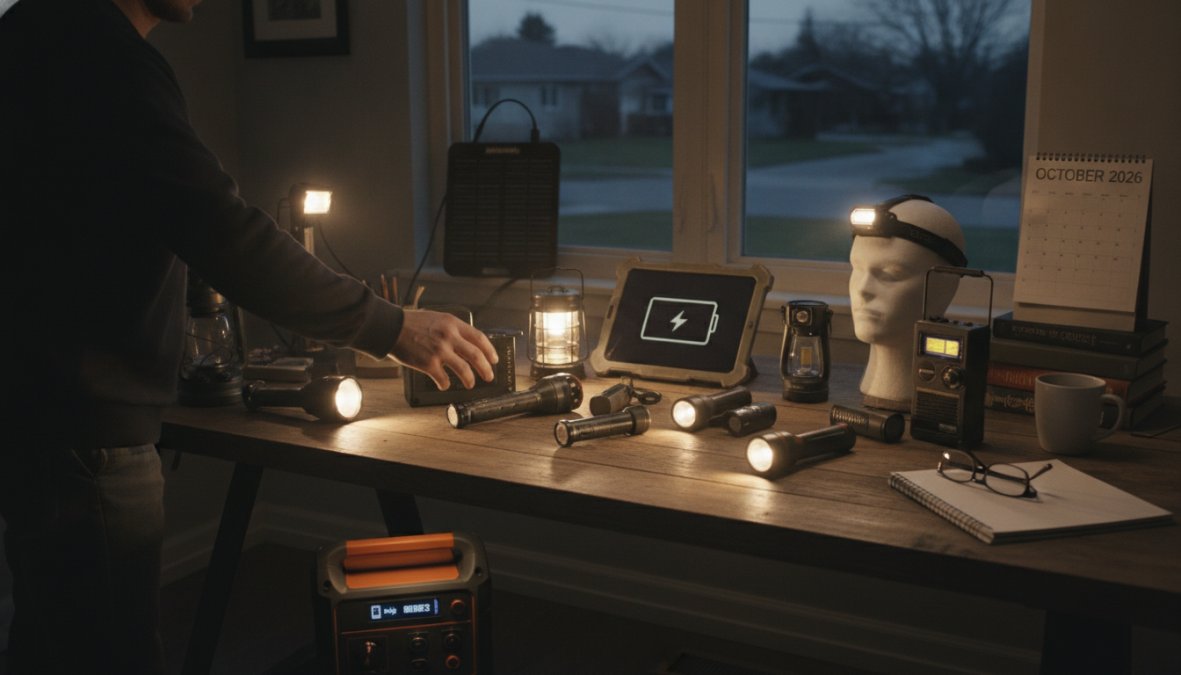
When the grid goes down, darkness becomes your first problem. Finding the best emergency lights for power outages isn't about grabbing whatever's cheapest, it's about having the right tools ready before you need them. At SHTF Prepper Club, we've tested emergency lighting solutions to help families stay prepared. Below, we'll show you how to choose lights that match your specific needs, from portable headlamps to area-filling lanterns that keep your home functional when power fails.
Best Emergency Lights for Power Outages: Top Picks Compared
Quick Comparison Table
| Product | Type | Lumens | Best For | Key Feature |
|---|---|---|---|---|
| SHTF Prepper Club Emergency Lighting Kit | Mixed | 250-600 | Complete household prep | Expert-curated bundle with multiple light types |
| Goal Zero Lighthouse 600 | Lantern | 600 | Multi-purpose emergency use | USB charging + hand crank power |
| LuminAID PackLite Max | Lantern | 150 | Portable emergency kits | Solar + USB rechargeable, floats |
| Eton Blackout Buddy Connect | Smart Nightlight | 50 | Automatic home outage response | Smart home integration, motion sensing |
| Duracell 1000 Lumen Lantern | Lantern | 1000 | Large area illumination | Long runtime, USB device charging |
| Energizer Vision HD Headlamp | Headlamp | 300 | Hands-free tasks | Water-resistant, multiple modes |
| Eveready LED Compact Lantern | Lantern | 250 | Storage and basic use | Long 100-hour runtime, durable |
| LitezAll 3500 Lumen Lantern | Rechargeable Lantern | 3500 | Bright area lighting | Power bank included, 5 brightness modes |
SHTF Prepper Club recommends a layered approach: one bright lantern for main living areas, headlamps for hands-free work, and backup battery-powered lights for redundancy. The table above shows the range of options available, from basic battery-powered lanterns to rechargeable systems with smart home integration.
How Many Lumens Do I Need for a Power Outage?
Brightness needs vary by task and space. A lumen measures light output; higher numbers mean brighter light. For emergencies, you need enough illumination to navigate safely without draining batteries excessively.
General lumen recommendations by use case:
- Navigation and safety (hallways, stairs): 50-100 lumens
- General home activities (cooking, reading, basic tasks): 150-300 lumens
- Large area illumination (living room, garage, outdoor perimeter): 400-1000 lumens
- Emergency work (repairs, medical attention): 300-600 lumens
- Backup/emergency-only use: 50-150 lumens
Most households benefit from a mix. One 600-1000 lumen lantern handles main living areas, while 150-300 lumen headlamps manage task-specific work. LED lights use far less power than older incandescent bulbs, meaning modern 300-lumen lights run longer than older 100-lumen models.
Types of Emergency Lighting Solutions
Emergency lighting comes in distinct categories, each solving different problems. Understanding the differences helps you build a complete kit rather than duplicating functionality.
Lanterns for Area Illumination
Lanterns project light in multiple directions, making them ideal for illuminating rooms or outdoor areas. The Goal Zero Lighthouse 600 ($69.95) delivers 600 lumens with three charging methods: USB, solar, and hand crank. This versatility matters during extended outages, when batteries die, the hand crank keeps providing light. The built-in 5200 mAh lithium battery also charges small USB devices.
For compact storage, the Eveready LED Compact Lantern ($20.59) offers 250 lumens with a remarkable 100-hour runtime on low settings. Its impact-resistant design handles drops, and the integrated carry handle makes it portable.
If you need maximum brightness, the LitezAll 3500 Lumen Rechargeable Lantern ($59.99) dominates large areas. Five brightness modes include a 50-lumen night-light setting that extends runtime to 120 hours. The integrated 6400 mAh power bank charges phones.
The LuminAID PackLite Max 2-in-1 ($60.00) is an inflatable solar lantern weighing almost nothing. At 150 lumens with 50 hours of low-setting runtime, it's designed for portability. The waterproof, floating design makes it ideal for emergency kits in apartments or vehicles.
Headlamps and Hands-Free Options
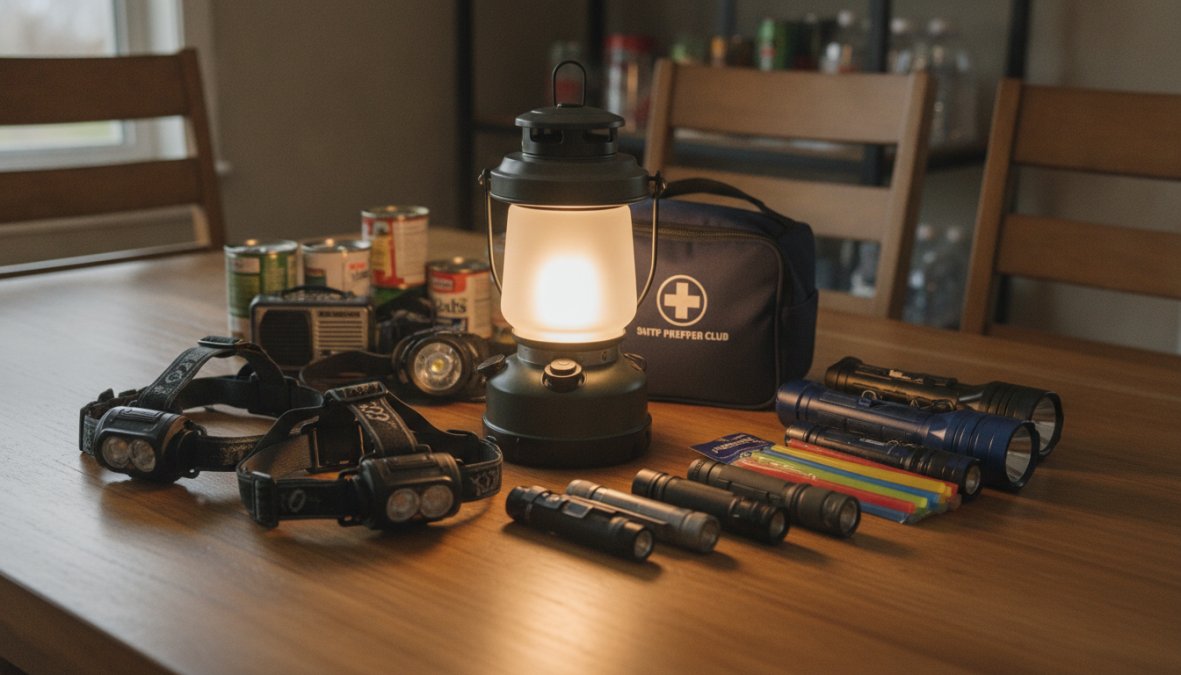
Headlamps free your hands while providing focused light. The Energizer Vision HD LED Headlamp (typically $9.94-15) delivers 300 lumens with a 55-meter beam distance. Four light modes adapt to different tasks. IPX4 water resistance handles wet conditions, and the pivoting head directs light where needed.
High brightness runs about 4 hours before AAA batteries deplete. Low settings extend runtime to 12+ hours. Most people keep a headlamp alongside a lantern, the lantern provides ambient light while the headlamp handles specific tasks.
Tactical Flashlights and Spotlights
The Duracell 1000 Lumen LED Lantern ($22.99 for two-pack) bridges flashlight and lantern functionality. While marketed as a lantern, its 1000 lumens and four light modes make it functional as both area light and tactical tool. The USB charging port adds device power capability.
Glow sticks provide passive, battery-free light for 8-12 hours. They don't require charging or batteries, making them ideal backup solutions for extended outages. They work best as supplementary tools rather than primary lighting.
Rechargeable Emergency Lights vs. Battery-Powered Options
The rechargeable versus battery-powered decision shapes your entire emergency lighting strategy.
When to Choose Rechargeable
Rechargeable lights make sense when you have reliable pre-outage charging time and want to minimize battery replacement costs. The Goal Zero Lighthouse 600 and LitezAll 3500 use lithium-ion batteries that recharge via USB or solar panels.
Advantages include lower long-term costs, environmental benefits, multiple charging options providing redundancy, and higher brightness options. The critical weakness: rechargeable lights only work if you charge them before the outage. A fully charged lantern provides hours of light, but a depleted one is useless.
Lithium-ion batteries degrade over time. A rechargeable lantern will hold less charge in 3-5 years, problematic if it sits unused in emergency storage.
When to Choose Battery-Powered
Battery-powered lights shine during extended storage and unpredictable outage scenarios. The Eveready LED Compact Lantern and Duracell 1000 Lumen use standard alkaline batteries.
Advantages include immediate functionality from storage without pre-charging, alkaline batteries maintaining charge for 5-10 years, simpler operation, and widely available replacement batteries. Disadvantages include higher long-term battery costs and waste.
Battery Backup Emergency Lights with Smart Home Integration
The Eton Blackout Buddy Connect Charge ($69.99) automatically activates when AC power cuts. Wi-Fi connectivity enables remote notifications, your phone alerts you to the outage even if you're away from home. Compatibility with Amazon Alexa, Google Assistant, and Apple HomeKit means it integrates with existing smart home setups.
The automatic activation feature matters during sudden outages. The 50-lumen output and 2000 mAh battery provide emergency device charging. The limitation: Wi-Fi-only connectivity means it won't function if your router loses power.
Alkaline batteries maintain 80-90% capacity for 5-10 years when stored in cool, dry conditions. Lithium batteries last 10-15 years. Lithium-ion rechargeable batteries lose 2-3% capacity per month even when not in use. A lantern stored for two years may only hold 70% of its original charge. For maximum reliability in long-term storage, alkaline battery-powered lights outperform rechargeable systems.
Key Features to Evaluate: Lumens, Runtime, and Durability
Three features separate adequate emergency lights from truly reliable ones.
Brightness and Beam Distance
Lumens measure total light output. Beam distance measures how far a focused beam reaches. A 300-lumen headlamp might project its beam 55 meters, while a 300-lumen lantern spreads light across a 20-foot radius.
For emergency use, you need both types. Lanterns (150-1000 lumens) illuminate rooms for general activity. Flashlights or headlamps (100-300 lumens) provide focused light for specific tasks. Color temperature affects usability, warm light (2700-3000K) feels comfortable but is dimmer, while cool white light (5000-6500K) appears brighter but causes eye strain.
Runtime and Battery Chemistry
Runtime varies dramatically by brightness setting. The LitezAll 3500 Lumen lantern runs 5-6 hours at maximum brightness but 120 hours on low (50-lumen) mode. Modern LED lights use 80% less power than incandescent bulbs, meaning today's 300-lumen LED headlamp outlasts older 100-lumen incandescent models on identical batteries.
Water Resistance and IP Ratings
IP44 means dust-resistant and splash-proof. IP67 means dust-tight and submersible to 1 meter. For emergency lights, IP44 suffices for most home use. IP67 matters if you're checking outdoor perimeters in rain or storing lights in damp basements.
The LuminAID PackLite Max is fully waterproof and floats, useful in flood-prone areas. The Energizer Vision HD is IPX4 (splash-resistant). Durability extends beyond water resistance, impact resistance matters. The Eveready LED Compact Lantern is impact-resistant up to 1 meter.
Building Your Emergency Lighting Kit
A complete emergency lighting kit layers different light types to handle various scenarios.
Layered Lighting Strategy
The foundation is one bright lantern (400-1000 lumens) for main living areas. The Goal Zero Lighthouse 600 or LitezAll 3500 work well depending on whether you prioritize portability or brightness.
The second layer is task-specific lighting. Two headlamps (150-300 lumens each) handle hands-free work. The Energizer Vision HD at $9.94-15 per unit makes this affordable. Keep them in accessible locations rather than buried in emergency storage.
The third layer is backup battery-powered lights. The Eveready LED Compact Lantern or Duracell 1000 Lumen provides redundancy if rechargeable systems fail. Store these with alkaline batteries included.
The final layer is passive light sources. A dozen glow sticks cost $10-15 and provide 8-12 hours of light per stick without battery drain during extended outages.
Storage and Maintenance Tips
Remove batteries from battery-powered lights if storing for more than six months, alkaline batteries can leak and damage contacts. Before storing, test each light to confirm it works.
For rechargeable lights, charge them quarterly to prevent lithium-ion battery degradation. Mark your calendar or set a phone reminder every three months. Store lights in cool, dry locations away from direct sunlight. Label batteries clearly and store them in their original packaging when possible.
Test emergency lights annually. Turn on each light, confirm brightness, and check that all modes function. Annual testing catches problems before an outage.
Conclusion: Choosing the Right Emergency Lights
Power outages will happen. Whether they last hours or days, having the right emergency lighting determines whether your household stays safe and functional. The best emergency lights for power outages are layered systems combining bright lanterns, hands-free headlamps, and backup battery-powered lights.
SHTF Prepper Club simplifies emergency preparedness by curating vetted lighting solutions and comprehensive guides. Rather than overwhelming you with options, SHTF Prepper Club provides expert-selected emergency kits combining multiple light types, long-term food storage with up to 25-year shelf life, and reliable water filtration solutions. Start building your emergency lighting kit today and ensure your family stays safe and prepared when the power fails.
Emergency preparedness guidelines from FEMA Lighting recommendations for emergency situations from the National Safety Council Battery storage and maintenance best practices from Energizer
Frequently Asked Questions
What types of emergency lights are best for power outages?
The best emergency lights for power outages depend on your needs. Lanterns with 250-1000 lumens work well for area illumination, while headlamps provide hands-free lighting for tasks. Rechargeable options like the Goal Zero Lighthouse offer multiple charging methods including solar and hand crank. Battery-powered lanterns ensure reliability without needing pre-charging. A layered approach combining lanterns, headlamps, and backup flashlights provides the most comprehensive coverage during extended blackouts.
How many lumens do I need for emergency lighting during a power outage?
Lumen requirements vary by task. For general home navigation and ambient light, 150-250 lumens suffices. Task-specific work like repairs needs 300-500 lumens. Wide-area illumination for larger spaces requires 600+ lumens. The Duracell 1000 Lumen Lantern provides bright output for extensive coverage, while the Eveready LED Compact Lantern's 250 lumens works for smaller areas. Consider multiple lower-lumen lights rather than relying on a single bright source for better flexibility and longer runtime.
Should I choose rechargeable emergency lights or battery-powered options?
Rechargeable emergency lights like the LitezAll 3500 Lumen offer long-term cost savings and multiple charging methods (USB, solar, hand crank), making them ideal for planned preparedness. Battery-powered lights provide immediate reliability without pre-charging and work indefinitely with fresh batteries. The best strategy combines both: keep rechargeable lights for everyday use and charging capability, paired with battery-powered backups for guaranteed functionality. Lithium-ion batteries offer better shelf-life than alkaline for long-term storage.
What emergency lighting features matter most for power outages?
Critical features include: lumens output (brightness for your space), runtime (hours of operation per charge/battery set), water resistance (IP rating for durability), and battery chemistry (lithium-ion lasts longer in storage than alkaline). Look for multiple brightness modes to extend runtime, USB charging ports for device backup, and hands-free options like headlamps or lanterns with hanging capabilities. Automatic power-failure detection in smart models like the Eton Blackout Buddy adds convenience, turning on instantly when the grid fails.
This article was written using GrandRanker