
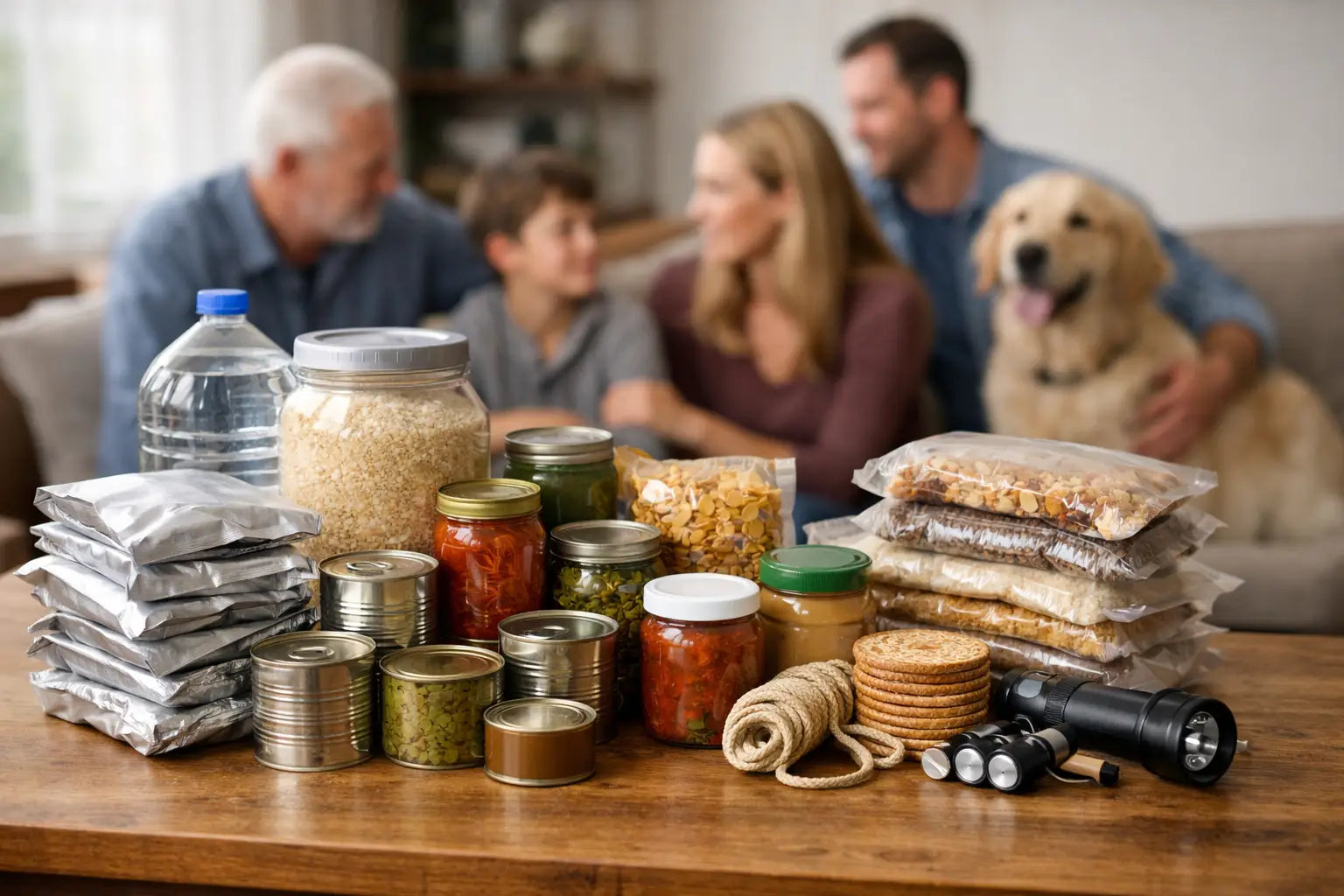
A storm does not need to be historic to interrupt dinner. A downed power line, a closed highway, or a week of smoke-filled air can turn a normal grocery run into a problem. An emergency food supply gives your family breathing room when stores are closed, shelves are thin, or leaving home is not the smart choice.
The goal is not to build a bunker pantry overnight. It is to make sure the people under your roof can eat familiar, satisfying food for long enough to get through a disruption without panic-buying or making risky trips out. Start with what fits your household, then build it steadily.
Build an emergency food supply around real life
Three days of food is a sensible starting point. Two weeks is a stronger goal for most households, especially in hurricane country, wildfire zones, areas with winter storms, or places where one closed road can isolate a neighborhood. Longer-term food storage can make sense too, but it should come after you have covered the basics.
Think in person-days. A family of four building a 14-day supply needs 56 person-days of food. If Grandma visits often, an adult child may come home during a storm, or you care for a neighbor, build in a little margin. Do not forget pets. Their food, medications, and water needs belong in the plan.
Calories matter, but comfort matters too. A rough planning figure is about 2,000 calories per adult per day, adjusted for age, activity, and medical needs. Teenagers, active adults, pregnant family members, and anyone doing cleanup after a storm may need more. Young children often need fewer calories, but they still need food they recognize and will willingly eat.
A case of emergency meals may look reassuring, but it is not a complete plan if nobody in your house likes the flavor or can prepare it with the water and fuel available. Store food your family knows how to use on an ordinary Tuesday.
Start with a simple two-week calculation
Write down every person who could reasonably be in your home during an emergency. Multiply that number by 14. Then consider what each person needs for breakfast, lunch, dinner, snacks, and any special nutrition requirements.
For example, a household of four may plan for 56 breakfasts, 56 lunches, 56 dinners, and enough snacks to prevent hungry, stressed people from burning through meal supplies early. You do not need 168 separate freeze-dried pouches. Oatmeal, cereal, canned fruit, rice, pasta, beans, soup, peanut butter, shelf-stable milk, and family-size emergency meal pouches can work together.
Choose food your family will eat
The best emergency pantry uses layers. Your normal pantry provides the first layer, with foods you already rotate. Shelf-stable staples build the second layer. Long-life emergency foods provide a dependable reserve when a disruption lasts longer than expected or grocery access stays uncertain.
A balanced supply usually includes these five categories:
- Ready-to-eat foods such as canned chili, tuna, chicken, fruit, crackers, nut butter, and granola bars.
- Easy staples such as rice, pasta, oats, pancake mix, potatoes, and beans.
- Protein sources including canned meat, beans, lentils, jerky, powdered eggs, and shelf-stable milk.
- Fruits and vegetables, whether canned, dehydrated, or freeze-dried.
- Familiar morale foods such as coffee, tea, hot cocoa, pudding, hard candy, or a favorite snack.
For a deeper reserve, freeze-dried meals and ingredients are useful because they are compact, light, and can last for years when stored properly. They are especially helpful for families who want food set aside beyond their normal pantry rotation. Brands such as ReadyWise and Augason Farms offer convenient meal and ingredient options, while bulk foods from providers like Rainy Day Foods can make sense for households that cook from scratch.
There is a trade-off. Freeze-dried food typically costs more per serving than grocery-store staples and usually needs water. Canned food is heavier and takes more storage space, but it can often be eaten immediately. A practical emergency food supply has both.
Plan for dietary needs before an emergency exposes them
If someone in your family has diabetes, celiac disease, food allergies, kidney disease, swallowing concerns, or a medically prescribed diet, generic meal kits may not be enough. Build a separate section of food that meets those needs and label it clearly.
Include baby formula, purees, and toddler-friendly foods if needed. Keep extra supplies of pet food in a sealed container. If you rely on refrigerated medication, discuss backup storage plans with a pharmacist or medical provider before an outage forces the issue.
Food storage only works with water and a way to cook
A pantry full of rice, pasta, and freeze-dried meals will not help much without water. Store drinking water separately and plan for at least one gallon per person per day for drinking and basic sanitation. Hot weather, pets, and medical needs can raise that number.
Keep some food that requires no cooking at all. During a short outage, you may not want to use your fuel on every meal. Canned meals, shelf-stable snacks, nut butter, fruit cups, and crackers can carry the family through the first day or two while you decide what is happening.
For foods that do need heat, have a safe outdoor cooking option and the fuel to match it. A camp stove, grill, or Kelly Kettle can be useful, depending on your space and local conditions. Never cook indoors with charcoal or use fuel-burning equipment in a garage. Carbon monoxide is a quiet danger during outages.
A manual can opener belongs beside your stored food, not in a drawer across the kitchen. So do basic utensils, paper plates if water will be limited, and a written list of what needs to be used first.
Organize it so you can use it under stress
Preparedness gets easier when your storage is visible and boring. Put food in a cool, dry place away from direct sunlight, moisture, and temperature swings. A basement shelf, interior closet, or dedicated pantry section usually works better than a hot garage or attic.
Group food by how it will be used: ready-to-eat meals, breakfast items, cooking staples, snacks, and special-diet foods. Keep older products at the front and newer products behind them. This first-in, first-out approach turns storage into part of your regular grocery routine rather than a forgotten pile of expired cans.
Once or twice a year, choose a weekend to check dates, inspect packaging, and update your inventory. Use approaching-date items for regular dinners, camping trips, or a family game night. Replace what you use. The habit matters more than having a perfect spreadsheet.
At SHTF Prepper Club, the most useful food-storage solution is not always the largest one. It is the one your family can afford, store safely, understand, and maintain over time.
Build in stages, not all at once
A $200 start can cover a meaningful amount of pantry food, water containers, and a few no-cook meals. From there, add one category at a time: a case of canned protein this month, a few long-life meal buckets next month, then extra water storage and a safe cooking method.
Families with more space and a larger budget may eventually add bulk grains, dehydrated ingredients, or a home freeze-dryer setup. Those options can lower long-term food costs and support greater independence, but they require storage space, packaging supplies, rotation, and the willingness to cook with what you preserve. They are valuable tools, not a requirement for being prepared.
Your location should shape your choices. In hurricane areas, protect food from floodwater and expect power outages. In wildfire country, keep a smaller portable food supply ready in case of evacuation. In cold climates, choose foods that can be prepared without relying on an electric range. For every family, keep at least three days of compact, ready-to-eat food with your evacuation supplies.
The first shelf you fill changes the next emergency. It gives your family one less problem to solve when the lights are out, the roads are blocked, or the store shelves are empty. Start with the next 14 meals, make them foods your family trusts, and keep building from there.