
Table of Contents
- Can You Store Pasta for 20 Years?
- Understanding Shelf Life and Spoilage Signs
- Essential Storage Conditions for Long-Term Success
- Choosing the Right Long-Term Food Storage Containers
- How to Use Oxygen Absorbers for Food Storage
- Pest Prevention and Quality Retention
- Best Survival Food Brands for Long-Term Storage
- Cooking Aged Pasta and Handling Nutritional Changes
Last Updated: August 22, 2026
Can You Store Pasta for 20 Years?
Yes, you can store pasta for 20 years with proper environmental control and methods. Dry pasta is naturally shelf-stable due to minimal moisture, making it reliable for long-term food storage. However, exposure to oxygen, moisture, heat, and pests will degrade quality and eventually render pasta unsafe. At SHTF Prepper Club, we help families build emergency food supplies that last, and pasta storage is a cornerstone strategy because it's affordable, versatile, and genuinely viable for two decades when stored properly.
The key difference between pasta lasting two years and twenty is intentional storage design. Most households store pasta in original cardboard boxes in kitchen cabinets, which fails within months in humid climates or years in ideal conditions. For true long-term storage, you need to eliminate oxygen, control moisture, prevent pests, and maintain stable temperature. This guide covers the science, containers, supplies, and practical steps to ensure your pasta investment pays off when needed most.
Understanding Shelf Life and Spoilage Signs
How Long Dry Pasta Actually Lasts
Unopened dry pasta in original packaging typically lasts 2-3 years before quality noticeably declines (usda.gov). In reality, properly stored pasta lasts much longer. Pasta doesn't spoil like fresh food; it degrades gradually. Texture becomes brittle, flavor fades, and nutritional content declines, but properly stored pasta won't make you sick.
When you move beyond original packaging into long-term food storage containers, the timeline changes dramatically. Mylar bags with oxygen absorbers can preserve dry pasta for 20-30 years. Food-grade buckets with proper sealing and oxygen control extend shelf life similarly. The claim of "20-year storage" is based on how pasta degrades in oxygen-free, moisture-controlled environments where oxidation and moisture absorption, the two primary degradation drivers, are essentially halted.
Standard semolina-based dry pasta is the most stable option for maximum longevity. Egg pasta has a shorter shelf life due to fat content that can eventually go rancid, and gluten-free pasta may degrade faster depending on binding ingredients.
What Causes Pasta to Go Bad
Pasta degrades through three primary mechanisms: oxidation, moisture absorption, and pest infestation.
Oxidation is the main enemy. Oxygen breaks down starches and fats in pasta, causing rancidity and texture changes. Vacuum sealing and oxygen absorbers are effective because they eliminate the oxygen driving this chemical breakdown.
Moisture accelerates degradation. Pasta in humid environments absorbs water, promoting mold growth, pest activity, and oxidation. Even 5-10% moisture by weight cuts shelf life dramatically. This is why controlling humidity is non-negotiable for 20-year storage.
Pests are a practical concern often overlooked. Pantry moths, weevils, and other insects can infest pasta and multiply rapidly. Proper sealing prevents infestation, and oxygen absorbers kill any insects present by removing the oxygen they need to survive.
Essential Storage Conditions for Long-Term Success
Controlling Moisture and Oxygen
Two variables control pasta longevity: moisture content and oxygen presence. Moisture should stay below 10% of the pasta's weight, meaning storage in environments with relative humidity below 15% (fsis.usda.gov). Most homes stay between 30-60% humidity, too high for true long-term storage. Sealed containers like Mylar bags and food-grade buckets create a moisture barrier protecting pasta from ambient humidity.
Oxygen elimination is equally critical. Oxygen causes oxidative rancidity, degrading flavor and nutrition. Vacuum sealing removes most oxygen but not all. Mylar bags combined with oxygen absorbers remove virtually all oxygen, creating an anaerobic environment where degradation essentially pauses.
Temperature stability matters, though less critically than moisture and oxygen. Pasta stored at 50-70°F lasts longer than pasta stored at 75°F or higher. Heat accelerates chemical reactions including oxidation. A basement, root cellar, or climate-controlled storage area is ideal. Avoid attics, hot garages, and areas near heat sources.
Temperature and Humidity Requirements
The ideal storage environment is cool, dry, and dark: 50-70°F and below 15% relative humidity (fema.gov). These conditions are rare in typical homes, which is why sealed containers become essential, they create a microclimate protecting pasta regardless of external conditions.
Temperature fluctuations are worse than consistent warmth. A storage space swinging between 40°F in winter and 85°F in summer degrades pasta faster than one staying at steady 70°F because temperature changes cause moisture to move in and out of containers.
Light exposure also matters. Sunlight and UV radiation accelerate oxidation. Store pasta in opaque containers or darkness. Mylar bags are opaque, and buckets can be stored in dark spaces.
Most homes don't meet these conditions naturally. A sealed basement at 55°F and 12% humidity is excellent. Oxygen absorbers and Mylar bags are inexpensive insurance that turns a mediocre storage space into a viable long-term food storage location.
Choosing the Right Long-Term Food Storage Containers
Mylar Bags and Vacuum Sealing
Mylar bags are the gold standard for pasta long-term storage. A Mylar bag is thick, flexible plastic lined with aluminum foil that blocks light and oxygen. Combined with oxygen absorbers, Mylar bags create an oxygen-free environment preserving pasta for 20+ years.
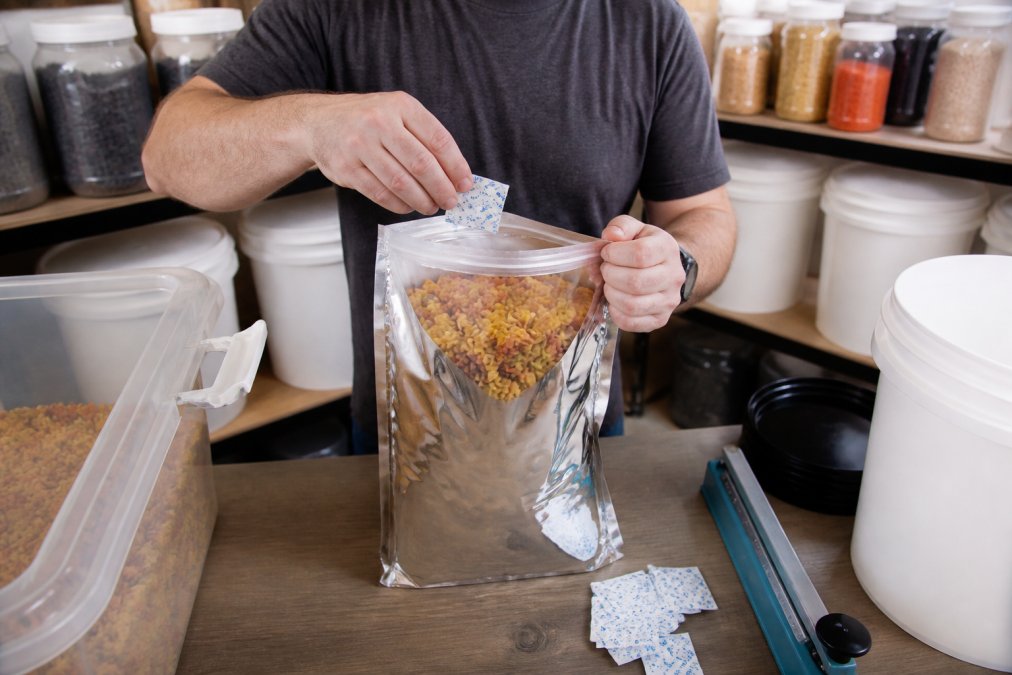
The process is simple: fill the Mylar bag with pasta, drop in an oxygen absorber, seal the top with a heat sealer or iron, and store in a cool, dark place. The oxygen absorber consumes remaining oxygen over 12-24 hours, and the sealed bag prevents new oxygen from entering. Mylar bags come in various sizes, from small pouches to gallon-sized bags holding 10+ pounds. For families building emergency food supplies, 1-2 gallon bags are practical.
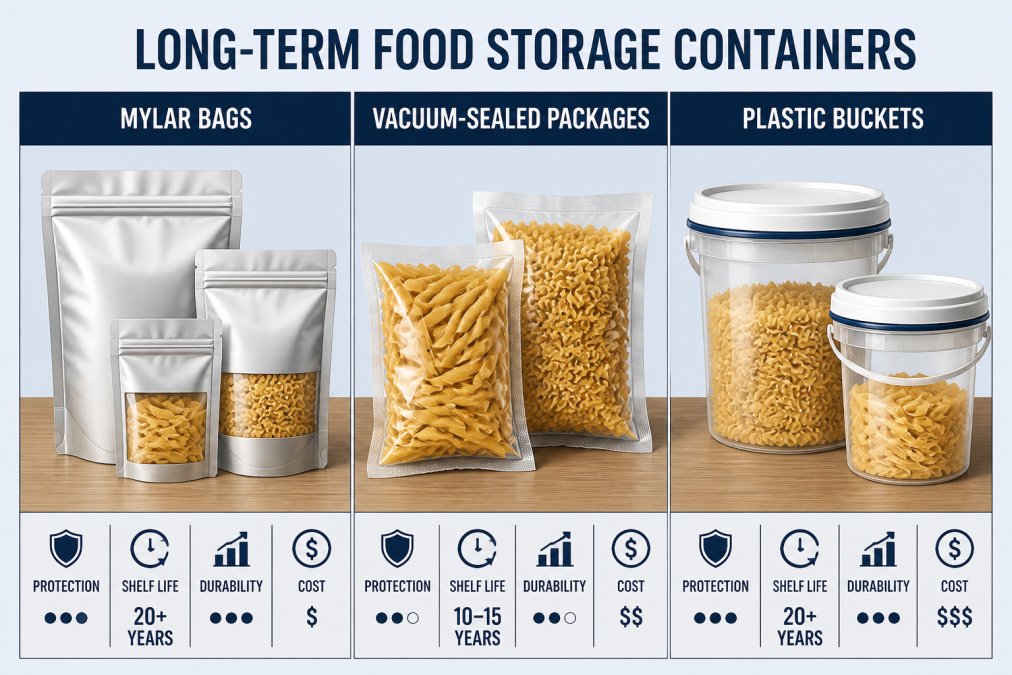
Vacuum sealing removes most oxygen but not all. A vacuum-sealed bag lasts 2-5 years, better than original packaging but insufficient for 20-year storage without oxygen absorbers. Mylar bags with oxygen absorbers are remarkably affordable compared to pre-packaged emergency food.
Food-Grade Buckets and Airtight Options
Five-gallon food-grade buckets with gamma-seal lids are another proven method for long-term pasta storage. A bucket holds 30-40 pounds of pasta. When sealed properly with an oxygen absorber inside, buckets preserve pasta for 20+ years.
Buckets are durable and reusable, allowing multiple openings and resealing without compromising the seal. This makes them practical if you plan to access your pasta supply periodically. The disadvantage is space; buckets require significant room.
Food-grade certification matters. Always buy buckets specifically labeled "food-grade." Smaller airtight containers like glass jars or plastic canisters work for small quantities but are less practical for serious 20-year storage.
Whichever container you choose, the seal must be airtight. Test your seals: with buckets, press the lid down firmly and listen for a click. With Mylar bags, run your hand along the sealed edge to ensure it's fully closed and crisp.
How to Use Oxygen Absorbers for Food Storage
Sizing and Placement
Oxygen absorbers are small packets filled with iron powder and other compounds that react with oxygen, removing it from the container. Choosing the right size is important; too small and oxygen remains; too large and you waste money.
Absorber size is measured in cubic centimeters (cc) of oxygen they can absorb. Common sizes are 100cc, 300cc, 500cc, and 1000cc. For a gallon-sized Mylar bag, use a 300-500cc absorber. For a five-gallon bucket, use a 1000cc absorber or two 500cc absorbers. The rule of thumb: use one absorber per 5 gallons of container space.
Drop the absorber into the container after filling it with pasta. It doesn't need specific positioning; it works by consuming oxygen throughout the container. Seal the bag immediately and let it sit for 12-24 hours. You may notice the bag shrinking slightly as oxygen is removed, this is normal and indicates the absorber is working.
Sealing After Absorption
Once the oxygen absorber has worked (12-24 hours), your pasta is in an oxygen-free environment. At this point, the seal becomes critical.
For Mylar bags, use a heat sealer or household iron to create a permanent seal along the top edge. Run the sealer slowly along the entire top to ensure a complete seal. A properly sealed Mylar bag is crisp along the top edge.
For buckets, ensure the lid is seated fully and locked. The lid should feel snug and shouldn't shift when pressed. Mark the seal date on the bucket with a permanent marker.
After sealing, store containers in a cool, dark place. A basement shelf, closet, or dedicated storage room works well. Avoid areas with temperature fluctuations, direct sunlight, or high humidity. Check containers periodically for damage or seal failure. If you notice any issues, reseal immediately.
Pest Prevention and Quality Retention
Sealed containers are your first defense against pest infestation. A properly sealed Mylar bag or bucket prevents insects from entering. Pests cannot penetrate a tight seal.
Inspect pasta before storing it. While commercial dry pasta is unlikely to contain insects, if concerned, freeze pasta for 48 hours before sealing it in long-term storage containers. Freezing kills any insects present without affecting the pasta.
Store containers away from areas where pests gather. Keep the storage area clean and free of spilled food.
Quality retention depends on minimizing light, heat, and oxygen exposure. Pasta stored in ideal conditions will cook and taste nearly identical to fresh pasta after 10-15 years. After 20 years, you may notice slight texture changes or slightly longer cooking times, but the pasta will be perfectly safe and edible. Nutritional content remains stable; B vitamins decline slightly, but enriched pasta retains nutritional value well.
Best Survival Food Brands for Long-Term Storage
Building your own long-term pasta storage is cost-effective and gives you control over what you're storing. However, pre-packaged emergency food options exist for those who prefer convenience. SHTF Prepper Club curates survival food brands offering genuine long-term shelf life, good taste, and reliable quality.
When evaluating survival food brands, look for transparency about ingredients, shelf life claims backed by testing, and customer feedback about taste and texture. The best approach combines DIY storage (bulk pasta in sealed containers) with pre-packaged emergency food for variety and convenience. Pasta provides calories and carbohydrates; emergency food kits add protein, vegetables, and ready-to-eat options requiring minimal preparation.
Cooking Aged Pasta and Handling Nutritional Changes
Pasta stored for 20 years will cook differently than fresh pasta. Expect slightly longer cooking times, perhaps 1-2 minutes longer than recommended. The pasta may be more brittle when dry, which is normal. It cooks normally once water is added.
Taste changes are minimal if storage conditions were ideal. Pasta stored in oxygen-free, moisture-controlled conditions will taste nearly identical to fresh pasta. Nutritional content remains largely stable. Carbohydrates and protein don't degrade significantly in sealed, oxygen-free storage. B vitamins decline slowly over time; enriched pasta loses about 10-15% of added vitamins over 20 years, a minor loss.
Cook aged pasta as you normally would: boil in salted water until tender. Adjust cooking time slightly if needed. Use aged pasta in dishes where texture matters less, like soups or casseroles, if concerned about texture changes.
Building a 20-year pasta supply requires intentional storage design, but it's straightforward and affordable. The cost of containers, oxygen absorbers, and bulk pasta is minimal compared to pre-packaged emergency food, and you control exactly what you're storing. SHTF Prepper Club helps you choose the right containers, absorbers, and storage locations so your investment actually lasts. Start with the methods in this guide, test your seals, and store your pasta in a cool, dark, dry place. When you need it, whether in a week or 20 years, it will be there.
=== FAQ ANSWERS (audit these too, same rules) ===
[1] Q: How long can you actually store dry pasta before it goes bad? A: Unopened, commercially packaged dry pasta lasts 2-3 years past its best-by date when stored in a cool, dry pantry. However, you can store pasta for 20 years or longer using proper long-term storage methods like Mylar bags, oxygen absorbers, and food-grade containers. The key is eliminating moisture and oxygen exposure, which are the primary causes of degradation. Properly stored pasta remains shelf-stable far beyond conventional pantry storage timelines.
[2] Q: What are the best containers for long-term pasta storage? A: Food-grade buckets with airtight seals and Mylar bags are the most reliable long-term food storage containers. Mylar bags offer superior protection against oxygen and light, especially when paired with oxygen absorbers. Five-gallon food-grade buckets with gamma seal lids provide durability and stackability for large quantities. Vacuum-sealed bags work well for shorter-term storage (5-10 years). For 20-year storage, combine Mylar bags inside food-grade buckets for maximum protection against pests, moisture, and oxygen.
[3] Q: How do oxygen absorbers work in food storage? A: Oxygen absorbers are small packets containing iron powder that chemically react with oxygen in sealed containers, removing it from the storage environment. This prevents rancidity, mold growth, and pest activity. To use oxygen absorbers for food storage, place the correct size packet (typically 300-2000cc) into your Mylar bag or container with pasta, then seal immediately. The absorber works for several hours after opening its packaging, so work quickly. Once sealed, the oxygen absorber removes nearly all remaining oxygen, creating an inert environment that preserves pasta for decades.
[4] Q: What signs indicate pasta has spoiled during storage? A: Spoiled pasta shows visible mold, an off or rancid smell, discoloration, or insect infestation. If moisture entered the container, you may see clumping or white powdery growth. Even without visible signs, pasta stored improperly may lose nutritional value and develop off-flavors over time. Always inspect sealed containers before opening, and discard any pasta showing mold, pest damage, or unusual odors. Properly stored pasta in Mylar bags with oxygen absorbers should show no spoilage signs even after 20 years.
Frequently Asked Questions
How long can you actually store dry pasta before it goes bad?
Unopened, commercially packaged dry pasta lasts 2-3 years past its best-by date when stored in a cool, dry pantry. However, you can store pasta for 20 years or longer using proper long-term storage methods like Mylar bags, oxygen absorbers, and food-grade containers. The key is eliminating moisture and oxygen exposure, which are the primary causes of degradation. Properly stored pasta remains shelf-stable far beyond conventional pantry storage timelines.
What are the best containers for long-term pasta storage?
Food-grade buckets with airtight seals and Mylar bags are the most reliable long-term food storage containers. Mylar bags offer superior protection against oxygen and light, especially when paired with oxygen absorbers. Five-gallon food-grade buckets with gamma seal lids provide durability and stackability for large quantities. Vacuum-sealed bags work well for shorter-term storage (5-10 years). For 20-year storage, combine Mylar bags inside food-grade buckets for maximum protection against pests, moisture, and oxygen.
How do oxygen absorbers work in food storage?
Oxygen absorbers are small packets containing iron powder that chemically react with oxygen in sealed containers, removing it from the storage environment. This prevents rancidity, mold growth, and pest activity. To use oxygen absorbers for food storage, place the correct size packet (typically 300-2000cc) into your Mylar bag or container with pasta, then seal immediately. The absorber works for several hours after opening its packaging, so work quickly. Once sealed, the oxygen absorber removes nearly all remaining oxygen, creating an inert environment that preserves pasta for decades.
What signs indicate pasta has spoiled during storage?
Spoiled pasta shows visible mold, an off or rancid smell, discoloration, or insect infestation. If moisture entered the container, you may see clumping or white powdery growth. Even without visible signs, pasta stored improperly may lose nutritional value and develop off-flavors over time. Always inspect sealed containers before opening, and discard any pasta showing mold, pest damage, or unusual odors. Properly stored pasta in Mylar bags with oxygen absorbers should show no spoilage signs even after 20 years.
This article was written using GrandRanker