
Table of Contents
- What Are Oxygen Absorbers and Why They Matter for Food Storage
- How Oxygen Absorbers Work to Preserve Food
- Step-by-Step Instructions for Using Oxygen Absorbers
- Oxygen Absorber Size Chart and Capacity Guide
- Best Foods for Oxygen Absorbers and Storage Success
- Foods to Avoid with Oxygen Absorbers
- Shelf Life of Dry Goods with Oxygen Absorbers
- Common Mistakes to Avoid When Using Oxygen Absorbers
Last Updated: August 12, 2026
What Are Oxygen Absorbers and Why They Matter for Food Storage
Oxygen absorbers are small packets containing iron powder and other food-grade materials designed to remove oxygen from sealed containers. When placed inside an airtight container with food, they chemically react with oxygen in the headspace, creating an anaerobic environment that prevents spoilage and extends shelf life dramatically. Oxygen absorbers solve the problem of oxidation, one of the two main enemies of stored food, the other being moisture, which requires a separate desiccant solution.
Oxygen triggers oxidation, a chemical process that degrades fats, proteins, and nutrients in stored foods while creating conditions where harmful bacteria and mold thrive. By removing oxygen, you put food into a state of suspended preservation.
How Oxygen Absorbers Work to Preserve Food
Inside each packet is iron powder mixed with salt, activated charcoal, and other food-grade materials. When exposed to air, the iron oxidizes, pulling oxygen molecules from the surrounding environment and converting them into iron oxide. This process continues until nearly all available oxygen is consumed, typically within 24 to 48 hours depending on packet size and headspace volume.
Their effectiveness lies in creating an anaerobic environment, a sealed space with minimal oxygen. Once oxygen levels drop below a certain threshold, biological processes that cause food spoilage essentially stop. Mold cannot grow without oxygen. Insects cannot survive. Lipid oxidation slows dramatically. Shelf life extends from months to years or even decades depending on food type and storage conditions.
Oxygen absorbers work best when paired with an airtight container and proper headspace management. Mylar bags with heat seals, canning jars with proper lids, and food-grade buckets with sealed lids all work effectively. Temperature also plays a role, cooler storage locations slow the iron oxidation reaction while reducing any remaining biological activity in the food. A cool, dark location extends shelf life further because it reduces the metabolic rate of surviving microorganisms.
Step-by-Step Instructions for Using Oxygen Absorbers
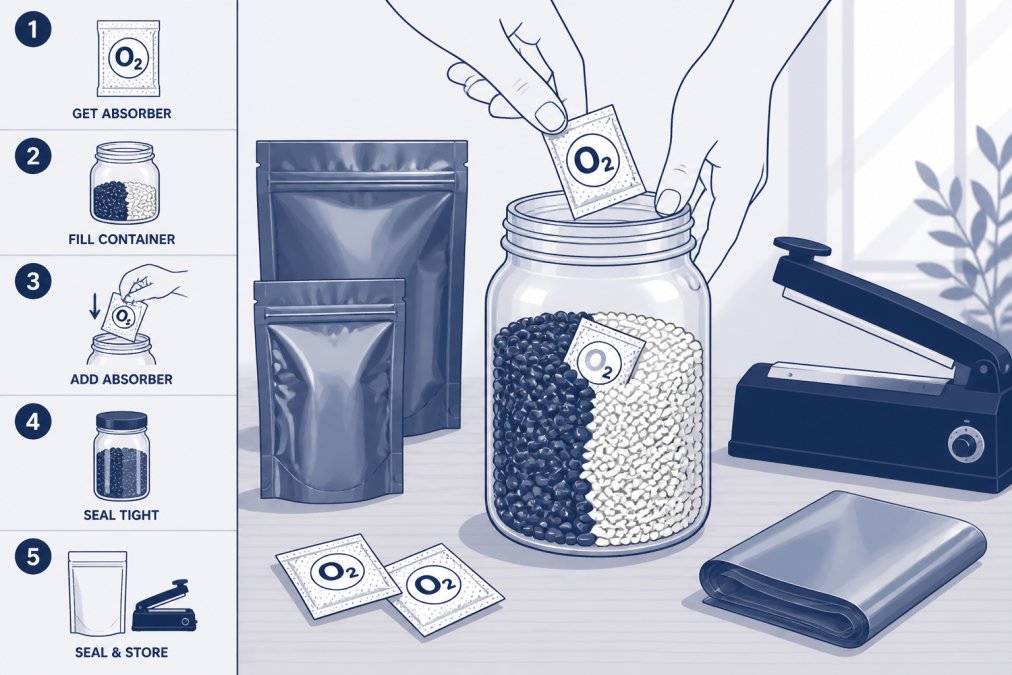
Step 1: Gather Your Materials and Prepare Your Container
Assemble everything you'll need within arm's reach: your food storage container (mylar bag, canning jar, or food-grade bucket), oxygen absorbers in the appropriate size, a heat sealer or canning equipment if using mylar bags, and optionally a desiccant packet. Inspect your container for cracks, damage, or poor seal areas. For mylar bags, ensure the sealing surface is clean and dry. For canning jars, check that the rubber gasket is in good condition.
Calculate the headspace in your container, the air gap between the top of your food and the container lid. Larger headspace requires larger or more absorber packets. A quart-sized canning jar might have 1-2 inches of headspace; a five-gallon bucket might have several inches.
Step 2: Fill Your Container with Food
Pour your dry goods into the container until it reaches the desired level, leaving appropriate headspace. Don't fill completely to the lid; you need room for the oxygen absorber and ideally 1-2 inches of air space above the food. For mylar bags, fill until roughly three-quarters full. For canning jars, leave about an inch of headspace. For buckets, aim for 2-3 inches.
Avoid compacting the food tightly, as this can reduce air circulation and slow the absorber's effectiveness. If using a desiccant packet alongside your oxygen absorber, place the desiccant at the bottom and the oxygen absorber near the top where it can access the headspace most effectively.
Step 3: Place Oxygen Absorbers in the Container
Remove your oxygen absorber packet from its outer packaging only when ready to place it in the container. Oxygen absorbers begin their chemical reaction the moment exposed to air, so minimize the time between opening and sealing. If using multiple packets, open them one at a time or work quickly to place them all before the first one has absorbed significant oxygen.
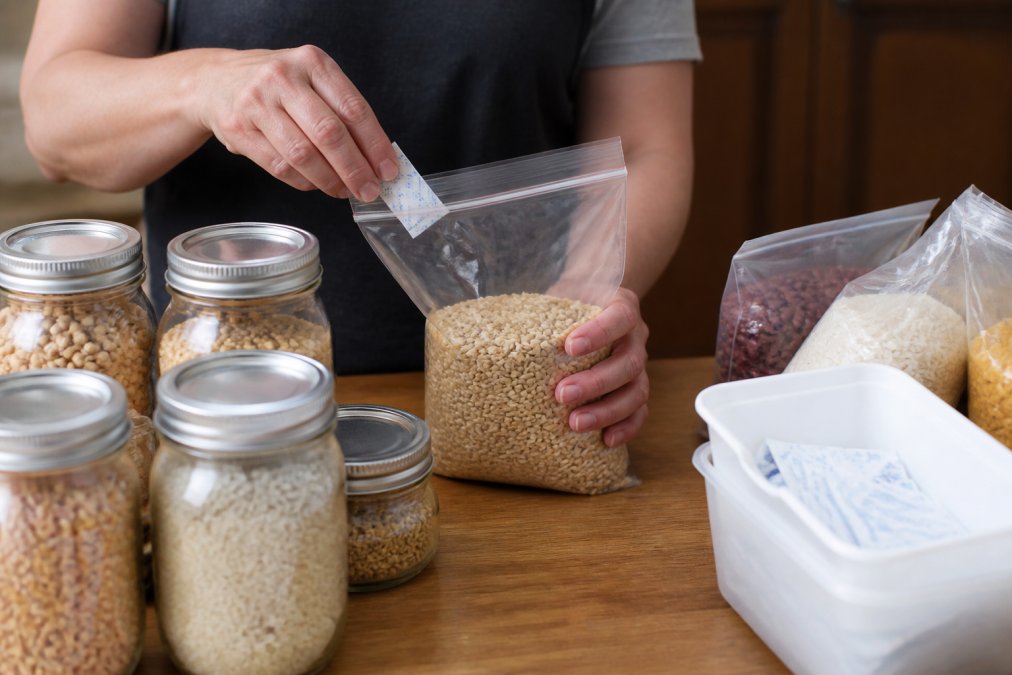
Place the oxygen absorber packet on top of your food in the headspace where it can access the air. For mylar bags, place the packet flat on the food surface. For canning jars, set it on top of the food or against the inside wall. For buckets, place it near the top.
Step 4: Seal the Container Immediately
Seal your container within 30 seconds of placing the oxygen absorber. For mylar bags, use a heat sealer to create an airtight seal along the top edge. For canning jars, place the lid and ring on immediately and tighten firmly. You don't need to process the jar in a canning bath; the oxygen absorber will create the seal. Within 24 hours, you should hear a slight pop as the lid seals.
For food-grade buckets, snap the lid on tightly or use the locking mechanism if available. Don't open the container for at least 48 hours while the oxygen absorber completes its chemical reaction.
Step 5: Store in a Cool, Dark Location
Move your sealed container to a cool, dark storage location away from direct sunlight and heat sources. Ideal storage temperatures range from 50°F to 70°F. Basements, pantries, closets, and interior rooms work well. Avoid garages, attics, and outdoor sheds where temperature fluctuations are extreme.
Darkness matters because light can degrade certain nutrients and trigger chemical reactions in stored foods. Check your containers periodically, every few months, for any signs of damage, rust, or seal failure.
Oxygen Absorber Size Chart and Capacity Guide
Choosing the correct size oxygen absorber is crucial for effective food preservation. Absorber packets come in several standard sizes, each designed for specific container volumes and headspace amounts.
Common oxygen absorber sizes and their typical applications:
| Absorber Size | Container Type | Headspace | Best For |
|---|---|---|---|
| 100cc | Quart canning jar | 1-2 inches | Flour, sugar, grains |
| 300cc | Half-gallon container | 2-3 inches | Mixed dry goods |
| 500cc | Gallon container | 3-4 inches | Bulk grains, beans |
| 1000cc | 5-gallon bucket | 4-6 inches | Large quantity storage |
| 2000cc | 5-gallon bucket | 6+ inches | Maximum capacity |
The 500cc absorber is the most popular size for home food storage because it handles gallon-sized containers efficiently. A single 500cc packet removes oxygen from approximately 1 gallon of headspace. For larger storage projects, 1000cc or 2000cc packets are more economical than buying multiple smaller packets.
A properly sized absorber that matches your headspace is more economical and just as effective as oversized absorbers. If uncertain about headspace volume, err on the side of using a slightly larger absorber.
Best Foods for Oxygen Absorbers and Storage Success
Certain foods respond exceptionally well to oxygen absorber storage and maintain quality for years when properly preserved.
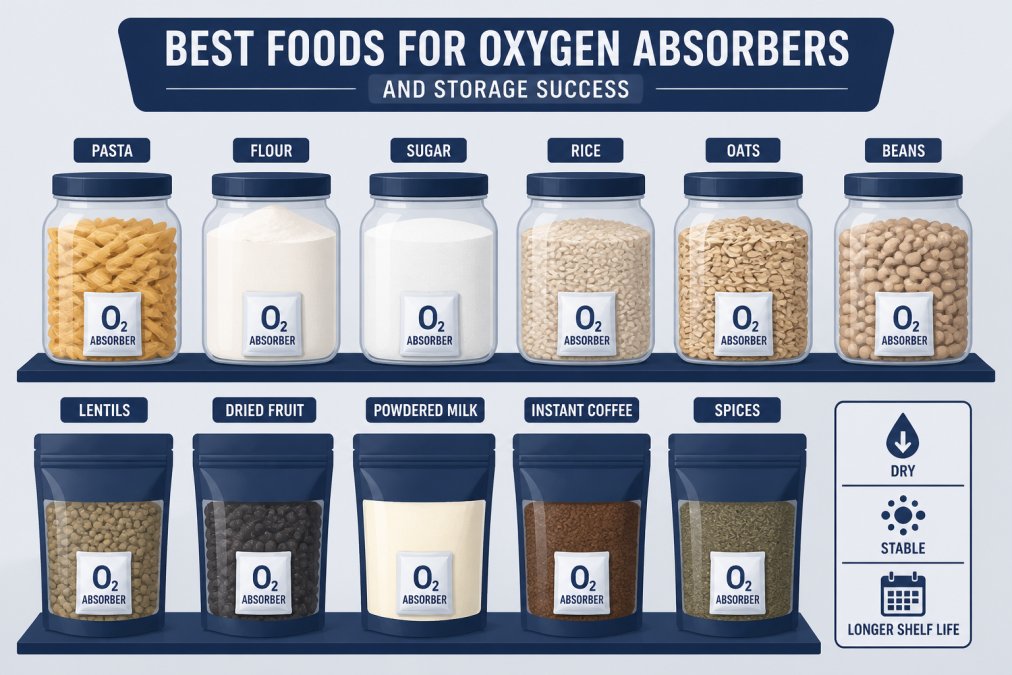
Grains and grain products are ideal candidates. Wheat berries, rice, oats, and barley store exceptionally well in an anaerobic environment. Whole grains contain natural oils that can go rancid through oxidation, making oxygen removal particularly valuable. A sealed container with an oxygen absorber can preserve whole grains for 10-25 years depending on storage temperature.
Legumes including beans, lentils, and peas are excellent candidates. Dried beans stored with oxygen absorbers maintain their nutritional value and cooking properties for 20-30 years.
Pasta and noodles store well with oxygen absorbers, particularly whole wheat pasta which contains oils that benefit from oxygen removal.
Powdered milk and dairy products benefit significantly from oxygen absorber storage. Powdered milk is prone to fat oxidation, which creates off-flavors and reduces nutritional value. Stored with oxygen absorbers in a cool location, powdered milk can remain usable for 10-20 years.
Sugar and salt are among the easiest foods to store long-term with oxygen absorbers. These foods are chemically stable and essentially don't spoil.
Dehydrated vegetables and fruits store well with oxygen absorbers, though quality gradually declines over time. Properly stored dehydrated produce remains edible for 5-10 years.
Foods to Avoid with Oxygen Absorbers
Certain items should not be stored with oxygen absorbers due to their chemical composition or storage requirements.
Foods with high fat or oil content are problematic with oxygen absorbers alone. Nuts, seeds, peanut butter, and oils contain lipids that can go rancid even in an anaerobic environment. These foods benefit more from freezing or refrigeration.
Foods with high moisture content should not be stored with oxygen absorbers unless you're also using desiccant packets. Canned goods, wet-packed foods, and fresh produce contain water that creates an environment where botulism and other pathogens can grow even without oxygen. Always ensure foods are completely dry before using absorbers.
Bread and baked goods don't store well with oxygen absorbers because they contain moisture and are prone to mold growth.
Soft cheeses and dairy products with moisture should be avoided. Hard cheeses can be stored with absorbers, but soft cheeses contain moisture that creates conditions for pathogenic growth in an anaerobic environment.
Honey and other high-sugar syrups don't require oxygen absorbers because they're naturally shelf-stable and antimicrobial.
Vitamins and supplements present a special case. Some vitamins degrade in anaerobic environments. Research the specific product or store them in cool, dry conditions with desiccants rather than oxygen absorbers.
Shelf Life of Dry Goods with Oxygen Absorbers
Understanding realistic shelf-life expectations helps you plan your food storage strategy and rotate supplies appropriately.
Grains and legumes represent the best long-term storage candidates. Whole grains stored with oxygen absorbers in cool conditions (50-70°F) remain nutritionally adequate for 20-30 years. White rice can last even longer, with some sources documenting viability for 40+ years. Beans and lentils typically last 20-30 years.
Flour and refined grain products have shorter shelf lives than whole grains, typically 8-15 years. Whole wheat flour degrades faster than white flour because the bran and germ contain oils that oxidize.
Powdered milk and dairy products stored with oxygen absorbers last 10-20 years. Powdered eggs typically last 10-15 years.
Dehydrated vegetables and fruits maintain acceptable quality for 5-10 years with oxygen absorbers.
Pasta and noodles last 8-10 years with oxygen absorbers.
Sugar and salt essentially last indefinitely when stored with oxygen absorbers and protected from moisture.
These shelf-life estimates assume proper storage conditions: cool temperatures (50-70°F), darkness, low humidity, and truly airtight containers. Storage in a warm garage or attic can reduce these timelines by 50 percent or more.
Common Mistakes to Avoid When Using Oxygen Absorbers
Understanding what goes wrong helps you avoid wasting absorbers and food.
Failing to seal containers properly is the most frequent error. Oxygen absorbers only work in sealed containers. If oxygen can continue entering from the atmosphere, the absorber will consume all its iron powder without creating a stable anaerobic environment. Always seal immediately after placing the absorber.
Undersizing oxygen absorbers for the headspace is common among people trying to save money. A 300cc absorber in a gallon container with 4 inches of headspace won't remove all available oxygen. When in doubt, use a slightly larger absorber.
Storing foods that are too moist leads to failures and potential safety issues. Moisture combined with the anaerobic environment can promote botulism and other pathogens. Always ensure foods are completely dry before sealing with absorbers.
Choosing poor storage locations undermines the entire effort. Storing sealed containers in hot attics or garages accelerates food degradation. A cool, dark basement or interior closet is far superior to a garage or shed.
Opening containers too frequently reintroduces oxygen and defeats the purpose. Once sealed, resist the urge to check on your storage frequently.
Mixing foods with different moisture contents can create problems. Store foods with similar moisture contents together, or use separate containers.
Assuming all oxygen absorbers are equal leads to purchasing low-quality products. Buy from reputable suppliers and check the manufacturing date.
Proper food storage requires attention to detail at each step: selecting the right container, choosing appropriately sized absorbers, preparing foods correctly, sealing immediately, and maintaining proper storage conditions. When you execute each step carefully, you create a preservation system that keeps your family fed during emergencies while providing the peace of mind that comes from knowing your supplies will actually be there when you need them. SHTF Prepper Club's comprehensive approach to emergency preparedness includes not just the tools you need, but the guidance to use them correctly, ensuring your long-term food storage investment protects your household for years to come.
Frequently Asked Questions
What foods should not use oxygen absorbers?
High-moisture and high-fat foods are incompatible with oxygen absorbers. Avoid storing anything with more than 10% moisture content, including dried fruits, nuts, seeds, peanut butter, and foods containing oils. These items create an anaerobic environment that promotes botulism and mold growth. Herbs, spices, and powdered milk also contain too much fat or moisture for safe long-term storage with absorbers. Stick to truly dry goods like white rice, beans, pasta, flour, and sugar.
How long does it take for oxygen absorbers to work?
Oxygen absorbers begin their chemical reaction immediately upon exposure to air and typically reach full effectiveness within 24-48 hours. However, most of the oxygen removal happens in the first few hours. Once your container is sealed with the absorber inside, the iron powder scavenger starts consuming oxygen to create an anaerobic environment. For best results, allow sealed containers to sit undisturbed for at least 24 hours before opening to verify the seal is holding and the absorber has done its job.
Can I store rice in mason jars with oxygen absorbers, and if so, how?
Yes, mason jars are excellent for storing rice with oxygen absorbers. Fill clean, dry jars with rice, leaving about 1-2 inches of headspace at the top. Place one 300-500cc oxygen absorber packet on top of the rice, then immediately seal the jar with a tight-fitting lid. The absorber will remove oxygen and create a hermetic seal as the jar's contents settle. Store in a cool, dark place away from direct sunlight. Properly sealed mason jars with absorbers can keep rice shelf-stable for 5-10 years.
How long will food last in mylar bags with oxygen absorbers?
Properly sealed mylar bags with oxygen absorbers can extend shelf life significantly. White rice and pasta can last 20-30 years, while flour lasts 10-15 years. Sugar and salt remain shelf-stable indefinitely when stored in an anaerobic environment. The exact duration depends on initial food quality, storage temperature, and light exposure. Keep mylar bags in cool conditions (50-70°F ideally) away from sunlight and moisture. Check seals periodically to ensure the hermetic seal remains intact and no oxygen has entered the package.
This article was written using GrandRanker