
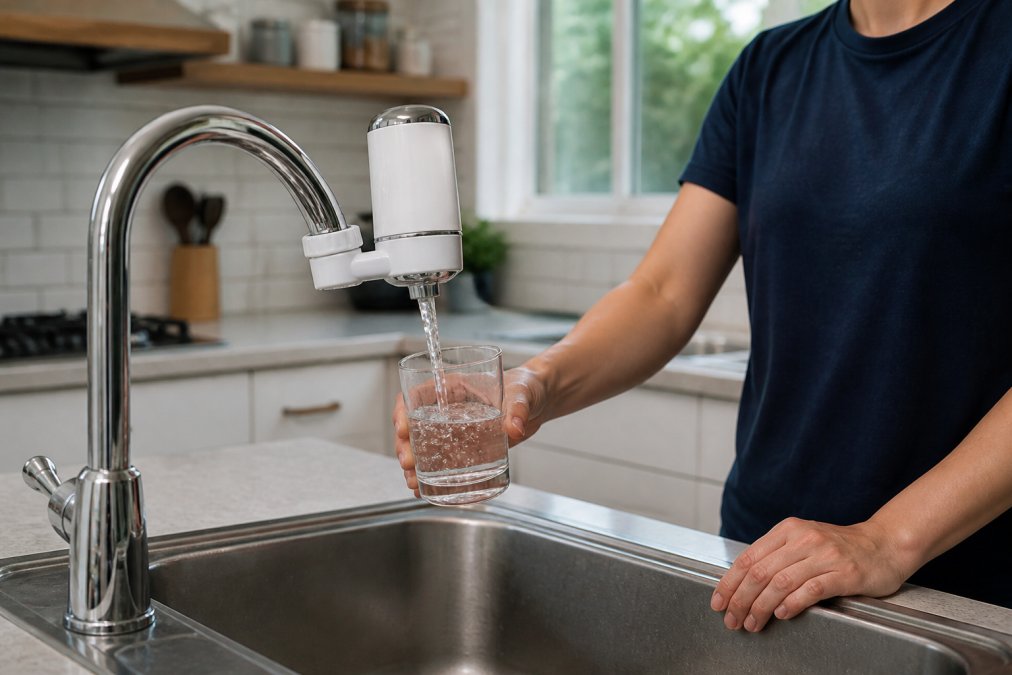
Table of Contents
- What Are Forever Chemicals and Why They Matter
- How PFAS Enter Your Drinking Water
- Step 1: Test Your Water for PFAS and Forever Chemicals
- Step 2: Choose Your Removal Method
- Understanding NSF/ANSI 53 Certification for PFAS
- Step 3: Install Your Chosen Filtration System
- Step 4: Maintain Your System and Dispose of Filters Safely
- What Home Filtration Cannot Remove
- Conclusion
Last Updated: August 12, 2026
What Are Forever Chemicals and Why They Matter
Forever chemicals are synthetic compounds that don't break down naturally in the environment or in the human body. The most common are PFOA and PFOS, part of a larger group called PFAS (per- and polyfluoroalkyl substances). These chemicals were engineered for industrial use because of their stability and water-repellent properties, but that same stability means they persist indefinitely once released.
These compounds accumulate in blood and organs over time through bioaccumulation. They've been detected in drinking water supplies of millions of households, with exposure pathways ranging from food packaging to firefighting foam to non-stick cookware. Understanding how to remove forever chemicals from drinking water has become essential for families serious about household safety.
At SHTF Prepper Club, we recognize that water security is foundational to emergency preparedness. When you can't trust your tap water, every other preparedness measure becomes more complicated. This guide walks you through testing, removal methods, and maintenance so you can take control of your family's water quality.
How PFAS Enter Your Drinking Water
PFAS contamination reaches drinking water through multiple pathways. Industrial facilities discharge these chemicals into surface water, landfills leach PFAS into groundwater, and aqueous film-forming foams (AFFF) used at airports and military bases have contaminated aquifers across the country. Wastewater treatment plants, which aren't designed to remove these compounds, release them back into water sources.
For households on public water systems, contamination depends on proximity to industrial areas, airports, or military installations. Rural well owners face different risks: PFAS can migrate through soil into groundwater, especially in areas with industrial activity or where firefighting foam was used. The molecular structure of PFAS makes them incredibly mobile in water, they don't adhere to soil particles the way other contaminants do.
What makes this particularly challenging is that PFAS are invisible. You can't taste, smell, or see them. Many people don't realize their water is contaminated until testing reveals it. This is why testing is always the first step toward removing forever chemicals from drinking water.
Step 1: Test Your Water for PFAS and Forever Chemicals
Testing is non-negotiable. You can't address a problem you don't know exists, and you can't choose the right removal method without understanding what you're dealing with.
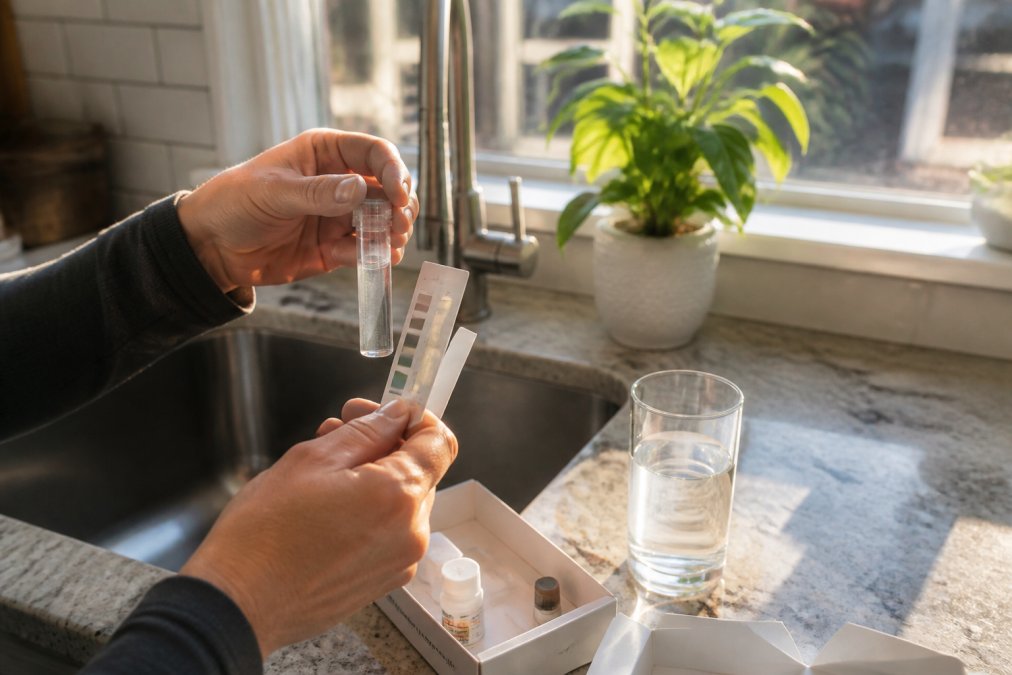
Public Water Testing
If you're on a municipal water system, request a water quality report from your local utility. These EPA-required reports detail contaminants detected during testing. Search for PFAS or PFOA/PFOS specifically. If your utility has tested for these compounds and found them, you have baseline data.
However, municipal testing often uses older methods that may miss certain PFAS compounds like GenX and other emerging forever chemicals. For comprehensive data, consider hiring a certified lab to test your tap water. Labs can measure multiple PFAS compounds and provide parts per trillion (ppt) levels, which helps you understand contamination severity.
The EPA established a health advisory level for PFOA and PFOS at 70 parts per trillion combined. While not yet a federal drinking water standard, it's the threshold many experts recommend for action.
PFAS Testing for Residential Wells
Well owners should test proactively since municipal testing doesn't apply to private wells. Contact your state's environmental agency or health department for a list of certified labs that perform PFAS testing. A comprehensive test measures at least the major PFAS compounds: PFOA, PFOS, PFNA, and PFHxS. Some labs offer expanded panels testing for 20+ compounds, which is worth the investment if you're concerned about emerging forever chemicals.
Step 2: Choose Your Removal Method
Your test results determine which removal method makes sense. Different technologies excel at different PFAS compounds, and water chemistry variables affect performance.
Activated Carbon Water Filters and How They Work
Activated carbon filtration works through adsorption, where PFAS molecules stick to the surface of carbon particles. The carbon is treated to create millions of tiny pores, dramatically increasing surface area. As water passes through, PFAS compounds are trapped.
Activated carbon filters are effective for removing some PFAS, particularly PFOA and PFOS, but effectiveness varies. Short-chain PFAS compounds don't adsorb as efficiently as longer-chain compounds. Some forever chemicals slip through activated carbon even when it's working properly.
Filter lifespan depends on PFAS concentration and flow rate. In heavily contaminated water, a carbon filter might saturate in months; in lightly contaminated water, it could last a year or more. The problem is that you can't see when breakthrough occurs, the filter looks fine even after PFAS starts passing through. Activated carbon works best as a first stage in a multi-barrier system, not as a standalone solution.
Maintenance is straightforward: replace cartridges on schedule. The real challenge is safe disposal. Saturated carbon filters contain concentrated PFAS compounds. Some water filter companies have take-back programs; others require contacting your local hazardous waste facility.
Reverse Osmosis System Effectiveness for PFAS
Reverse osmosis (RO) systems push water through a semipermeable membrane under pressure. The membrane has pores so small that most dissolved substances can't pass through, including PFAS molecules.
RO system effectiveness for PFAS removal is high, typically 90-95% reduction depending on the specific compound and membrane condition. RO is particularly effective against longer-chain PFAS, though some short-chain compounds pass through more readily.
The downside is that RO systems waste water. For every gallon of treated water produced, you typically discard 3-4 gallons as reject water containing concentrated PFAS. If that reject water goes to your septic system, you're moving the problem rather than solving it. For municipal sewer systems, the PFAS eventually reaches wastewater treatment, which can't remove it effectively.
RO systems also require pressure and regular maintenance. Membranes need replacement every 2-3 years, and pre-filters need changing more frequently.
Ion Exchange Treatment
Ion exchange resins work by swapping ions in the water. Certain resins are designed to attract and bind PFAS molecules, removing them from solution. This technology is particularly effective for PFOA and PFOS but less effective for some emerging forever chemicals.
Ion exchange doesn't waste water the way RO does, making it appealing for households concerned about water conservation. The limitation is similar to activated carbon: the resin eventually saturates and requires proper disposal.
Understanding NSF/ANSI 53 Certification for PFAS
NSF/ANSI 53 is a certification standard for drinking water treatment units that reduce specific contaminants. For PFAS removal, NSF/ANSI 53 certification means the filter has been independently tested and proven to reduce PFOA and PFOS to below the EPA health advisory level.
This certification is valuable because it provides third-party verification. A filter claiming to remove PFAS without NSF/ANSI 53 certification might work, but you're relying on manufacturer claims without independent testing.
However, NSF/ANSI 53 certification focuses on PFOA and PFOS. If your water contains other PFAS compounds like GenX or PFNA, the certification doesn't guarantee their removal. Check the specific certification details to see which PFAS compounds the filter has been tested against.
Step 3: Install Your Chosen Filtration System
Installation method depends on the system type, your household plumbing setup, and your comfort level with water treatment equipment.
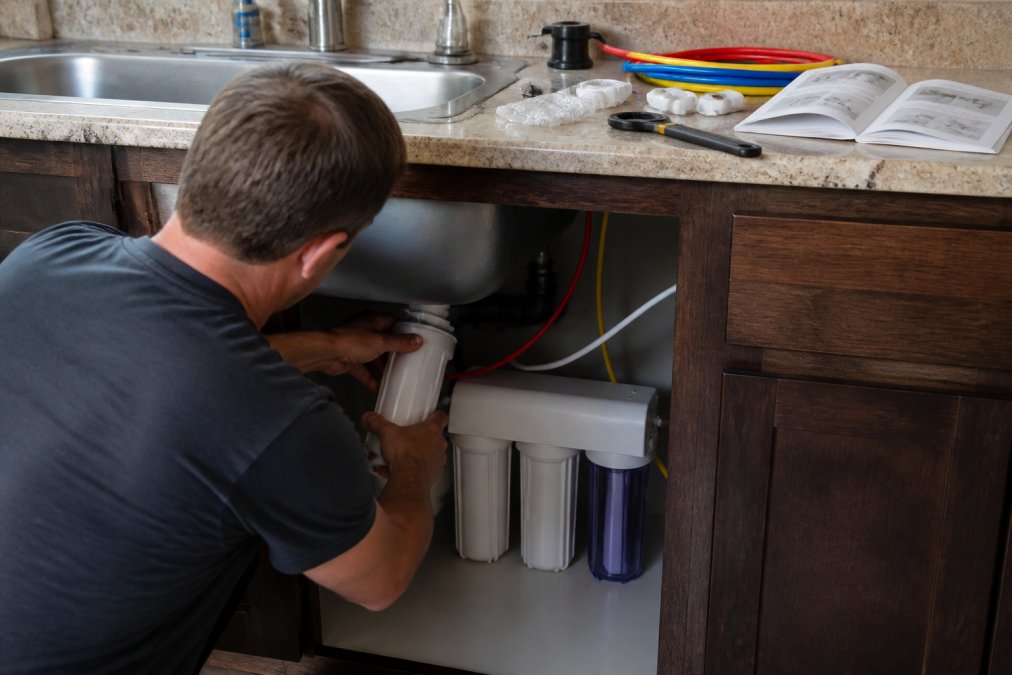
Under-Sink and Whole-House Options
Under-sink systems are point-of-use filters that treat water at a single tap, typically the kitchen sink. They're compact, relatively affordable, and don't require extensive plumbing modifications. The trade-off is that they don't treat water throughout your house.
Whole-house systems are installed where water enters from the main line. They're more complex to install, require more space, and cost more upfront, but they provide comprehensive treatment for your entire household. The decision depends on your contamination level, household size, and budget.
DIY Installation vs. Professional Setup: Technical Difficulty Breakdown
Under-sink systems: DIY-friendly with caveats
Most under-sink systems can be installed by a homeowner with basic plumbing skills. The process typically involves shutting off water, disconnecting the existing line, installing the filter housing, and reconnecting. However, success depends on your specific setup.
Common complications include no shutoff valves under the sink, limited space in cramped cabinets, non-standard fittings requiring adapters or soldering, and existing water softeners or treatment systems that require proper integration.
If you're comfortable with basic plumbing and your setup is straightforward, DIY installation saves money. If you encounter complications, professional installation is worth the cost to avoid leaks, water damage, or improper configuration.
Whole-house systems: Professional installation strongly recommended
Whole-house systems are significantly more complex than under-sink filters. They require integration with your main water line, often involve pressure gauges, bypass valves, and check valves, and may need electrical connections. Improper installation can result in pressure loss, water leaks, backflow issues, or system failure.
Professional installation is strongly recommended for whole-house systems. A plumber experienced in water treatment systems can assess your situation, recommend appropriate system sizing based on your household's flow rate, and ensure everything is installed correctly.
Assessing Your Own Capability
Before deciding between DIY and professional installation, ask yourself:
- Have you done basic plumbing before? If you've replaced a faucet or fixed a leaky pipe, you likely have foundational skills.
- Can you access your shutoff valves? Locate the shutoff valve under your kitchen sink and practice turning it off and on.
- Is your under-sink space accessible? Measure the space and compare it to filter housing dimensions.
- Do you have the right tools? Most under-sink installations require an adjustable wrench, a bucket, and possibly Teflon tape.
- What's your tolerance for risk? Water damage from a leaky connection can cost thousands to repair.
Working with a Professional Installer
If you choose professional installation, work with a plumber experienced in water treatment systems, not just general plumbing. Ask potential installers:
- Have you installed this specific brand or type of system before?
- What's included in your installation service?
- Do you handle filter disposal, or is that the homeowner's responsibility?
- What warranty or guarantee do you provide on the installation?
A professional installer should test your water pressure after installation to confirm the system isn't restricting flow and should walk you through maintenance requirements and filter replacement procedures.
Step 4: Maintain Your System and Dispose of Filters Safely
Installation is just the beginning. Ongoing maintenance determines whether your system continues removing forever chemicals effectively.
Filter Replacement Schedules and Water Chemistry Variables
Filter replacement schedules vary by system type and water conditions. Activated carbon filters typically need replacement every 6-12 months, RO membranes last 2-3 years, and ion exchange resins vary widely. Follow manufacturer recommendations, but understand that these are estimates based on average conditions.
Your actual filter lifespan depends on three water chemistry variables:
pH Level
Water pH affects how efficiently PFAS adsorbs to activated carbon. Neutral to slightly acidic water (pH 6.5-7.5) allows optimal removal. Alkaline water (pH above 8) reduces adsorption efficiency. If your water is alkaline, your activated carbon filter may saturate faster than estimated. Check your local water quality report for pH; if it's above 8, plan for more frequent filter replacements.
Total Dissolved Solids (TDS) and Water Hardness
Water with high mineral content competes with PFAS for space on the carbon surface. In hard water areas (above 200 mg/L of calcium carbonate equivalent), activated carbon filters may need replacement 20-30% more frequently. If your water is hard, either plan for more frequent replacements or add a water softener upstream of your PFAS filter to extend filter life.
Temperature
Water temperature affects adsorption kinetics. Colder water slows the rate at which PFAS molecules bind to activated carbon, reducing removal efficiency. Warmer water speeds adsorption but can cause the carbon to release previously adsorbed contaminants if temperature fluctuates. In areas with seasonal temperature swings, your filter performance may vary by season.
Testing Your Water After Installation
A filter that looks fine might have already started allowing PFAS breakthrough. Test your water 6 months after installation, then annually thereafter. If your water chemistry is poor, test every 3-4 months. If you notice any change in water taste, odor, or appearance, test immediately.
When you test, compare results to your baseline. You should see a significant reduction in PFAS levels. If PFAS levels are rising or approaching your baseline, your filter needs replacement immediately.
Safe Disposal of Spent Filters: Environmental and Health Hazards
Saturated filters contain concentrated PFAS compounds. Improper disposal creates environmental and health risks.
Why standard trash disposal is dangerous
Throwing a saturated PFAS filter in the trash sends forever chemicals to the landfill. Landfills don't prevent leachate from contaminating groundwater. PFAS is highly mobile in water and doesn't degrade in landfills. A single saturated filter can contaminate groundwater for years or decades.
Why drain disposal is dangerous
Never pour spent filter contents down the drain. Wastewater treatment plants aren't designed to remove PFAS. The treatment process removes some organic contaminants and pathogens, but PFAS passes through and is discharged into surface water, affecting downstream communities.
Safe disposal pathways
-
Manufacturer take-back programs: Some water filter companies have take-back programs for spent cartridges. Contact your filter manufacturer to ask if they accept returns. This is the easiest and most environmentally responsible option if available.
-
Hazardous waste collection events: Many communities hold hazardous waste collection days, typically once or twice per year. Saturated PFAS filters qualify as hazardous waste. Contact your local solid waste management authority or environmental agency to find collection events in your area.
-
Licensed hazardous waste facilities: If collection events aren't available, contact your local hazardous waste facility directly. Some facilities accept household hazardous waste by appointment.
-
Water treatment professional disposal: If you hired a professional to install your system, ask whether they handle filter disposal as part of their service. Some plumbers and water treatment companies have established relationships with hazardous waste facilities.
Documentation and Record-Keeping
Document your filter replacement dates, test results, and disposal method. This record helps you track whether your system is performing as expected and provides evidence of your maintenance diligence. Keep receipts for filter purchases and testing, and note the date and method of disposal for each spent filter.
What Home Filtration Cannot Remove
Home filtration systems are powerful tools, but they have limits. No home filtration system removes all PFAS compounds. Some emerging forever chemicals are poorly understood, and filtration technologies haven't been optimized for them. GenX, for example, is less efficiently removed by activated carbon than PFOA or PFOS.
Water chemistry variables affect filtration efficiency. High pH water, water with high mineral content, and water with other dissolved contaminants can reduce how effectively PFAS is removed. A system that achieves 95% reduction in one region might only achieve 85% reduction in another.
Filtration also can't address PFAS exposure from other sources. Food packaging, non-stick cookware, stain-resistant fabrics, and other consumer products contain PFAS. Drinking filtered water reduces one exposure pathway, but it doesn't eliminate PFAS from your environment entirely. Water filtration is an important part of reducing overall exposure, not a complete solution.
Finally, home filtration requires ongoing maintenance and filter replacement. A system that isn't maintained properly stops working. This is why testing your water periodically is essential, even after installation.
Protecting your family's water quality is a cornerstone of household preparedness. Testing reveals what you're dealing with, the right removal method addresses your specific contamination, and proper maintenance ensures long-term effectiveness. SHTF Prepper Club offers vetted water filtration solutions designed for reliability during emergencies and everyday use alike. Start by testing your water today, then explore filtration options that match your household's needs and your preparedness timeline.
Frequently Asked Questions
Does reverse osmosis remove forever chemicals from drinking water?
Yes, reverse osmosis systems are highly effective at removing PFAS and other forever chemicals. RO systems use membrane filtration to remove contaminants at the molecular level, reducing PFAS concentrations to parts per trillion levels. However, they require professional installation and produce wastewater. Look for systems certified to NSF/ANSI 53 standard to ensure PFAS removal capability.
What certifications should I look for when choosing a water filter for PFAS removal?
The NSF/ANSI 53 certification is the gold standard for PFAS removal. This certification means the filter has been independently tested and proven to reduce PFAS, PFOA, and PFOS to safe levels. Always verify the certification on the product label before purchasing. Some filters may claim PFAS removal without third-party testing, so certification provides proof of effectiveness.
How do I know if my water contains forever chemicals?
Contact your local water utility for a free water quality report, which lists detected contaminants including PFAS. If you have a private well, you'll need to arrange independent testing through a certified laboratory. Well water testing for PFAS is especially important in areas near military bases, airports, or industrial facilities where PFAS contamination is more common.
Do standard pitcher filters like Brita remove PFAS?
Most standard pitcher filters do not effectively remove PFAS. While some newer models claim PFAS reduction, they typically don't meet NSF/ANSI 53 certification standards. For reliable PFAS removal, choose systems specifically certified for forever chemical reduction, such as activated carbon block filters, under-sink systems, or reverse osmosis units designed for this purpose.
This article was written using GrandRanker