
Table of Contents
- Why Long-Term Flour Storage Matters
- Shelf Life of White vs Whole Wheat Flour
- Best Containers for Long-Term Food Storage
- How to Use Oxygen Absorbers for Flour
- How to Freeze Flour to Kill Eggs
- Temperature and Environment Requirements
- Step-by-Step Guide to Store Flour for Long-Term Use
- Pest Prevention and Control
Last Updated: August 10, 2026
Why Long-Term Flour Storage Matters
Flour is a pantry staple that forms the foundation of countless meals, from bread and biscuits to cakes and pasta. But flour doesn't last forever on a standard shelf. When exposed to air, moisture, and temperature fluctuations, flour oxidizes and becomes rancid within months. For families building emergency food supplies or anyone seeking genuine food independence, learning how to store flour for long-term use becomes essential.
The reality is simple: properly stored flour can remain edible and nutritious for years, while improperly stored flour may become unusable in weeks. At SHTF Prepper Club, we understand that long-term food storage isn't just about having ingredients on hand, it's about ensuring those ingredients remain safe, nutritious, and palatable when you need them most. This guide walks you through every step of the process, from selecting containers to monitoring storage conditions.
Shelf Life of White vs Whole Wheat Flour
White flour and whole wheat flour have dramatically different shelf lives, and understanding this difference shapes your entire storage strategy.
White flour contains the bran and germ removed, leaving primarily the starchy endosperm. This refinement actually extends shelf life significantly. When stored in cool, dry, airtight conditions, white flour remains stable for 8-10 years or longer. The lower lipid content means less opportunity for oxidation and rancidity to develop.
Whole wheat flour retains the nutrient-dense bran and germ, which contain oils that eventually oxidize. This makes whole wheat flour more prone to spoilage. In standard pantry conditions, whole wheat flour lasts 6-8 months. Even in optimal cold storage with oxygen absorbers, whole wheat flour typically remains viable for 2-5 years, considerably shorter than white flour.
The practical implication: if you're building a long-term food storage system, white flour is the more reliable choice for multi-year storage. Whole wheat flour works better for rotation within 1-2 years, or when stored in freezer conditions where cold temperatures slow lipid oxidation significantly.
Best Containers for Long-Term Food Storage
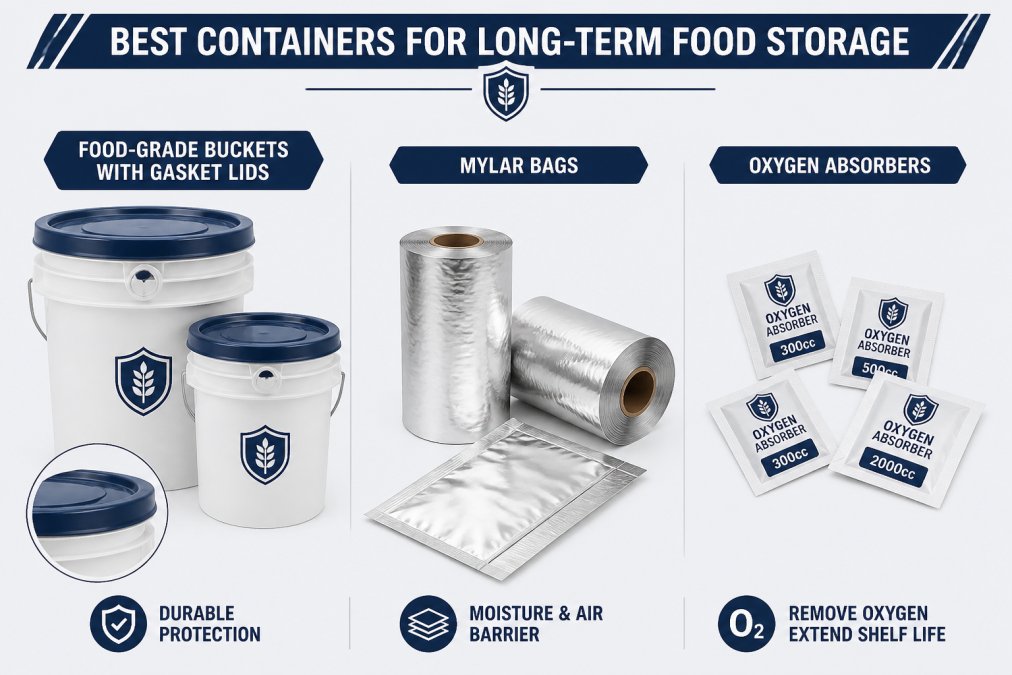
The container you choose determines whether your flour remains fresh or deteriorates. Three main options dominate long-term food storage: food-grade buckets, Mylar bags, and vacuum-sealed containers.
Food-Grade Buckets and Mylar Bags
Food-grade buckets made from high-density polyethylene (HDPE) are the workhorse of long-term storage. These buckets resist cracking, don't leach chemicals into food, and seal tightly when fitted with gasket lids. A 5-gallon food-grade bucket holds approximately 35 pounds of all-purpose flour, making them efficient for bulk storage.
Mylar bags are thin, metallized plastic pouches that create a hermetic barrier against oxygen and moisture. When sealed properly, Mylar bags offer superior protection compared to buckets alone. The advantage: they take up minimal space and stack efficiently. The trade-off is durability, Mylar can puncture if stored near sharp objects or rough surfaces.
Most serious preppers combine both methods. They place Mylar bags filled with flour inside food-grade buckets. This layered approach provides redundancy: if the bucket develops a crack, the Mylar bag still protects the flour. If the Mylar develops a pinhole, the bucket provides a secondary barrier.
Creating a Hermetic Seal
A hermetic seal, an airtight closure that prevents oxygen and moisture infiltration, is the foundation of long-term flour storage. Without it, oxidation proceeds rapidly and shelf life collapses.
For buckets, a gasket lid creates the seal. The rubber gasket compresses when you press the lid down, forming an airtight closure. Inspect the gasket before use; cracks or brittleness indicate replacement is needed. When sealing, press down firmly until you hear a slight pop or feel resistance, this confirms the gasket has engaged.
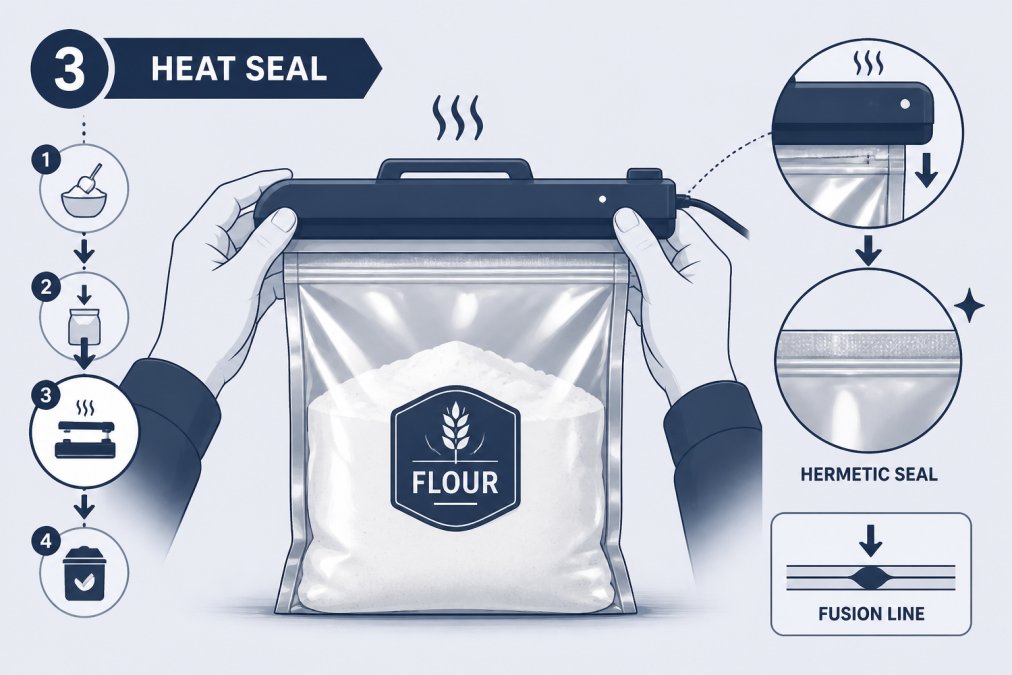
For Mylar bags, heat sealing is the standard method. A heat sealer (typically costing $15-40) melts the top edges of the Mylar together, creating a permanent seal. Many people use a household clothes iron on medium heat, running it slowly across the top of the bag. The goal is complete fusion with no gaps. Test the seal by attempting to pull the bag open, if it tears rather than peels apart, the seal held.
Some people use a vacuum sealer to remove air from bags before sealing. This reduces oxygen further, but it's not essential if you're also using oxygen absorbers.
How to Use Oxygen Absorbers for Flour
Oxygen absorbers are small packets containing iron powder and other compounds that chemically bind to oxygen molecules, removing them from the storage environment. They're the most effective tool for creating an anaerobic (oxygen-free) environment inside sealed containers.
A typical oxygen absorber packet removes 1,000-2,000 cubic centimeters of oxygen, depending on size. For a 5-gallon bucket of flour (approximately 1,200 cubic inches), use one 2,000 cc absorber or two 1,000 cc absorbers. The exact amount matters less than ensuring enough absorber capacity to remove the oxygen present.
Place the oxygen absorber directly on top of the flour before sealing the container. As it works over the next 12-24 hours, you may notice the bucket lid slightly concave, this indicates oxygen depletion. Don't be alarmed; this is the desired outcome.
One critical point: once you open a package of oxygen absorbers, they begin working immediately. Use them within 15-30 minutes of opening the package, or store the remainder in an airtight container with a desiccant packet. Absorbers exposed to air for extended periods lose potency.
How to Freeze Flour to Kill Eggs
Flour sometimes contains insect eggs, particularly weevil eggs, that remain dormant until conditions warm. Freezing kills these eggs and prevents future infestation.
The process is straightforward: place flour in freezer-safe containers and freeze at 0°F for at least 7 days. Most sources recommend 2 weeks for complete kill-off of all life stages. After freezing, remove the flour and allow it to return to room temperature before transferring to long-term storage containers. This prevents condensation from forming inside sealed storage.
The timing matters. If you purchase flour and immediately freeze it before any eggs hatch, you eliminate the infestation risk entirely. For flour already in storage, freezing serves as a remediation step if you suspect insect activity.
One limitation: freezing doesn't prevent future infestation. Once flour is removed from the freezer and stored at room temperature, new insects can lay eggs if conditions allow. This is why oxygen absorbers and sealed containers remain essential, they prevent insects from accessing the flour in the first place.
Temperature and Environment Requirements
Temperature is the second-most critical factor after oxygen removal. Heat accelerates lipid oxidation in flour, shortening shelf life dramatically. Nutritional quality also degrades faster at higher temperatures.
The ideal storage temperature is between 50-70°F. Basements, root cellars, and interior closets typically maintain this range year-round. Avoid attics, garages, and sheds where temperature swings are extreme. In summer, an uninsulated garage might reach 100°F+, while winter temperatures could drop below freezing.
Humidity should remain below 15% relative humidity. High moisture promotes mold growth and accelerates oxidation. Use a humidity meter to monitor your storage space. If humidity consistently exceeds 15%, add desiccant packets (silica gel or calcium oxide) inside sealed containers to absorb excess moisture.
Light exposure degrades flour quality over time. Store containers in dark locations or use opaque buckets and bags. Clear Mylar allows light penetration, so wrap clear Mylar bags in paper or cardboard for additional protection.
Avoid storing flour near strong odors, chemicals, or pest-prone areas. Flour absorbs odors readily, and proximity to pesticides or cleaning supplies creates contamination risk.
Step-by-Step Guide to Store Flour for Long-Term Use
This process takes 20-30 minutes per bucket and requires minimal equipment. The payoff is flour that remains edible and nutritious for a decade or more.
Step 1: Choose Your Storage Container
Decide between buckets, Mylar bags, or a combination. For most households, a 5-gallon food-grade bucket paired with a Mylar bag offers the best balance of protection and accessibility.
Purchase food-grade buckets from restaurant supply stores, online retailers, or from a selection of long-term food storage solutions. Verify the bucket is food-grade (not industrial waste buckets). Mylar bags come in various sizes; 5-gallon bags fit standard buckets perfectly.
Inspect all containers for damage before use. Cracks, discoloration, or chemical odors indicate the container isn't suitable for food storage.
Step 2: Prepare Your Flour
Before storage, consider freezing flour for 2 weeks to eliminate any dormant insect eggs. This step is optional but recommended for flour purchased from bulk bins or open containers.
If you skip freezing, ensure flour is at room temperature and completely dry. Moisture in flour introduces unnecessary humidity into sealed containers.
Pour flour into your chosen container. For a 5-gallon bucket, fill to within 2-3 inches of the top. Leave headspace for oxygen absorbers and to prevent flour from spilling during sealing.
Step 3: Add Oxygen Absorbers
Place oxygen absorber packets directly on top of the flour. For a 5-gallon bucket, use one 2,000 cc absorber or two 1,000 cc absorbers. If using Mylar bags inside the bucket, place absorbers inside the Mylar bag before sealing it.
Close the Mylar bag (if using) by heat sealing. Allow the oxygen absorber to work for 12-24 hours before sealing the bucket. This gives the absorber time to remove oxygen from the headspace.
Step 4: Seal and Label
Seal the bucket lid firmly, pressing down until you feel resistance. If using Mylar bags, ensure the heat seal is complete with no gaps.
Label the container with the contents (flour type), storage date, and expiration estimate. Example: "All-Purpose Flour | Stored 8/10/2026 | Use by 8/10/2034."
Consider noting the oxygen absorber size and freezing status for future reference.
Step 5: Store in Optimal Conditions
Move sealed containers to a cool, dark, dry location. A basement, interior closet, or pantry away from direct sunlight is ideal. Maintain temperatures between 50-70°F and humidity below 15%.
Stack buckets carefully to avoid crushing lower containers. Mylar bags should be placed in cardboard boxes or plastic bins for protection against punctures.
Pest Prevention and Control
Even with sealed containers, understanding pest behavior helps you maintain vigilance. The most common flour pests are Indian meal moths, flour beetles, and weevils.
Indian meal moths are attracted to flour by scent. They lay eggs on the outside of containers, and larvae burrow into flour once they hatch. Sealed containers prevent access, but inspect exterior surfaces regularly for moth activity.
Flour beetles and weevils are already present in flour when purchased. Freezing kills them before storage. If you skip freezing and later notice small brown insects or webbing inside opened flour, discard the batch and start fresh.
For your storage space itself, maintain cleanliness. Sweep floors regularly, remove spilled flour immediately, and store all grain products in sealed containers. A single open bag of flour attracts pests to your entire storage area.
If infestation occurs in stored flour, the container remains sealed and the problem is contained. Discard the affected batch and investigate the storage space for entry points or other infested products.
Long-term flour storage transforms your household's food independence. The process requires minimal investment, a few food-grade buckets, Mylar bags, and oxygen absorbers. More importantly, you gain the peace of mind knowing your family has reliable ingredients for meals during emergencies or extended supply chain disruptions.
SHTF Prepper Club provides vetted food storage solutions and expert guidance to simplify this process. Explore our long-term food storage product page to find buckets, Mylar bags, and oxygen absorbers tested and recommended by our team. Start with one bucket, master the process, and expand your storage as confidence grows. Your future self will thank you for taking action today.
| Storage Method | Best For | Shelf Life | Cost Level |
|---|---|---|---|
| Food-grade buckets alone | Short-term (1-2 years) | 3-5 years | Low |
| Mylar bags with absorbers | Medium-term storage | 10-15 years | Medium |
| Buckets + Mylar + absorbers | Long-term storage | 15-25 years | Medium |
| Freezer storage | Whole wheat flour | 5-10 years | Variable |
Frequently Asked Questions
How long can you store flour in long-term food storage?
White flour stored in airtight containers with oxygen absorbers can last 10-15 years or longer. Whole wheat flour has a shorter shelf life of 6-10 years due to higher oil content. Freezing flour before storage extends its life and kills any existing insect eggs. Temperature stability and moisture control are critical, store flour in cool, dry conditions below 70°F for maximum longevity.
What is the best way to use oxygen absorbers for flour?
Place oxygen absorbers directly in your storage container before sealing. Use 1,000cc absorbers for five-gallon buckets or smaller quantities in Mylar bags. Seal the container immediately after adding absorbers to create an anaerobic environment that prevents pest infestation and lipid oxidation. Avoid opening sealed containers unnecessarily, as this reintroduces oxygen and reduces shelf life.
Can you store flour in Mylar bags with oxygen absorbers?
Yes, Mylar bags are ideal for flour storage when used with oxygen absorbers. They provide an excellent hermetic seal and protect against moisture and pests. Place flour in the Mylar bag, add the appropriate oxygen absorber, then heat-seal the top. Store sealed Mylar bags in food-grade buckets for additional protection and easier organization.
How do you prevent weevils in stored flour?
Prevent weevil infestations by freezing flour at 0°F for at least 48 hours before storage to kill any existing eggs. Use oxygen absorbers to create an anaerobic environment that prevents pest reproduction. Store flour in airtight, pest-proof containers like food-grade buckets or sealed Mylar bags. Keep storage areas clean and inspect containers regularly for signs of pest activity.
This article was written using GrandRanker