
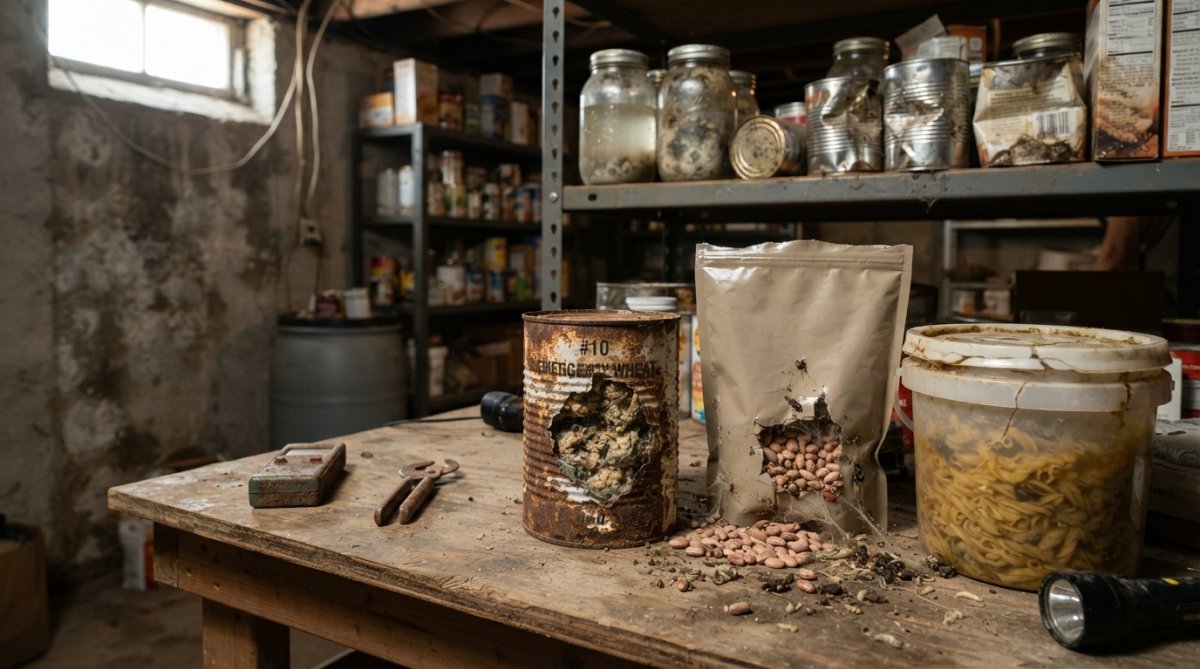
Table of Contents
- Why Emergency Food Storage Goes Bad: Understanding the Root Causes
- Temperature Control and Heat Sensitivity in Long-Term Storage
- Moisture and Humidity Management: A Critical Defense
- Oxygen and Oxidation Prevention Techniques
- Light Exposure and Packaging Integrity for Best Emergency Food Containers
- Common Emergency Food Storage Mistakes That Accelerate Spoilage
- Long-Term Food Storage Tips: Rotation and the Seal Integrity Test
- Signs of Spoilage: Color, Texture, Smell, and Freeze-Dried Indicators
Why Emergency Food Storage Goes Bad: 7 Critical Factors
Last Updated: July 25, 2026
Understanding why emergency food storage goes bad is essential for any household preparing for unexpected disruptions. At SHTF Prepper Club, we've tracked what causes food to deteriorate in storage conditions. Most people assume that simply buying emergency food and storing it ensures it will remain safe for decades. The reality is far more complex. Multiple environmental factors work simultaneously to degrade food quality, nutritional value, and safety. Knowing which ones to control makes the difference between a usable emergency supply and wasted money.
This guide covers the seven critical factors that cause emergency food storage to fail, along with practical strategies to prevent each one.
The Five Enemies of Food Storage
Emergency food storage faces five primary adversaries: temperature fluctuations, moisture and humidity, oxygen exposure, light penetration, and pest activity. Temperature stands as the most destructive force, heat accelerates oxidation, bacterial growth, and nutrient breakdown exponentially. Humidity promotes mold growth and pathogen proliferation. Oxygen exposure triggers oxidation that turns fats rancid and discolors dehydrated meals. Light, particularly UV rays, destroys vitamins and alters food color. Pests contaminate food directly and create entry points for bacteria and mold.
These five enemies rarely attack in isolation. A storage area that's warm, humid, and poorly sealed faces simultaneous assault from all five, which is why emergency food storage degrades faster in some homes than others.
Temperature Control and Heat Sensitivity in Long-Term Storage
Temperature is the single most important variable you can control. Every 10-degree Fahrenheit increase in storage temperature roughly doubles the rate of chemical degradation in food. Food stored at 70°F will degrade twice as fast as food stored at 60°F, and four times as fast as food stored at 50°F.
The ideal storage temperature for long-term emergency food is between 50°F and 70°F, with 55°F being optimal. Below 50°F, freeze-thaw cycles can damage texture. Above 70°F, degradation accelerates noticeably. Temperatures above 85°F significantly shorten shelf life, some freeze-dried meals may only last 5-10 years instead of 25 years.
Temperature fluctuations are as damaging as consistently high heat. When storage areas experience swings between hot days and cool nights, condensation forms inside sealed containers, triggering mold growth and accelerating oxidation. Basements maintain stable temperatures year-round and are excellent for storage. Attics and garages experience extreme swings and should be avoided.
Many households store emergency food in kitchen cabinets near ovens or dishwashers, where ambient heat creates a microclimate 10-20°F warmer than the rest of the kitchen, causing premature degradation.
Moisture and Humidity Management: A Critical Defense
Moisture is the second most destructive force in food storage. Humidity levels above 15% create conditions where mold spores germinate and bacteria multiply. Even sealed containers can develop internal condensation if temperature drops suddenly.
The safe humidity range for food storage is between 10% and 15%. Most homes maintain humidity between 30% and 60%, which is far too high for long-term food preservation. In humid climates, coastal areas, the Southeast, and regions with wet winters, humidity can exceed 70%, making moisture control critical.
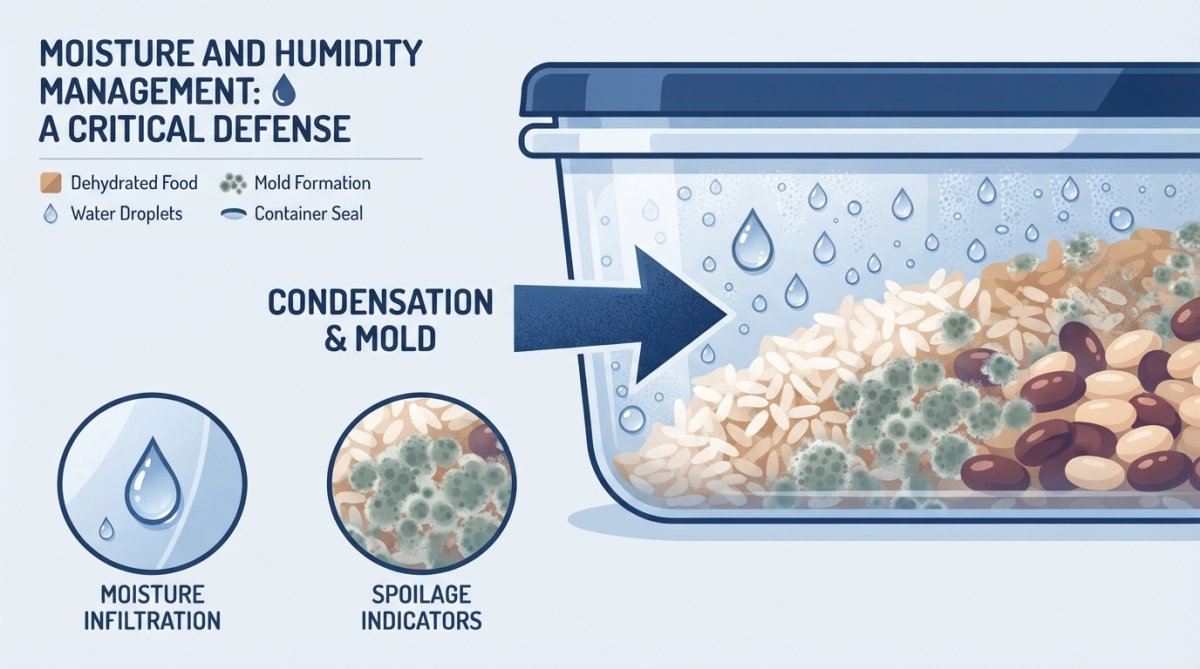
Moisture enters sealed containers through condensation from temperature changes and poor sealing. Mylar bags with oxygen absorbers are superior to plastic containers because Mylar has a lower water vapor transmission rate. Oxygen absorbers also absorb moisture as a byproduct, creating a drier internal environment.
To test whether your storage area has moisture problems, place a small glass of water in a sealed container overnight. If condensation forms on the glass, humidity is too high. Move your emergency food supply to a drier location or invest in a small dehumidifier for the storage area.
Oxygen and Oxidation Prevention Techniques
Oxygen is invisible but relentless. It reacts with fats, proteins, and vitamins in food, causing rancidity, discoloration, and nutrient loss. Oxidation is why freeze-dried meals sometimes develop off-flavors or brown discoloration over time.
Oxygen absorbers are the most effective tool for preventing oxidation. These small packets contain iron powder that reacts with oxygen and removes it from the sealed container. A single 300cc oxygen absorber can remove oxygen from a 1-gallon Mylar bag. For 5-gallon buckets, use multiple absorbers (typically 1,000-2,000cc total).
Mylar bags combined with oxygen absorbers create an oxygen-free environment that can last 25+ years. This is why SHTF Prepper Club emphasizes Mylar storage for long-term emergency food supplies. Mylar's multi-layer construction blocks oxygen far more effectively than standard plastic containers.
The seal integrity of your storage container is critical. Even small holes or loose seals allow oxygen to enter gradually. Before sealing any container, inspect it carefully for damage. After sealing, test the integrity by gently squeezing the bag, it should feel rigid, not soft.
Light Exposure and Packaging Integrity for Best Emergency Food Containers
Light, particularly ultraviolet (UV) rays, initiates photochemical reactions that degrade vitamins, fade colors, and create off-flavors in food. This is why emergency food should be stored in dark, opaque packaging.
Clear plastic containers allow light penetration and are unsuitable for long-term storage. Mylar bags, especially those with aluminum foil layers, block virtually all light. Metal cans block light completely. Glass jars should be stored in dark cabinets or wrapped in opaque material.
Mylar bags with oxygen absorbers are among the best emergency food containers because they provide multiple layers of protection: opacity (blocks light), low oxygen permeability (blocks oxygen), and moisture resistance. Food-grade plastic buckets with sealed lids are acceptable but less effective than Mylar because oxygen and moisture can slowly permeate the plastic over years.
Inspect packaging regularly. If you notice fading, discoloration, or the bag feels soft (indicating oxygen entry), the seal has failed and oxidation has begun. Replace compromised containers immediately.
Common Emergency Food Storage Mistakes That Accelerate Spoilage
Most households make preventable errors that shorten shelf life dramatically. Recognizing these mistakes is the fastest way to improve your storage system.
Storing food in the original packaging. Many emergency food kits come in cardboard boxes with plastic inner bags. Cardboard absorbs moisture and allows light penetration. Transfer food to sealed Mylar bags or airtight containers immediately upon arrival.
Using regular plastic bags instead of Mylar. Standard plastic grocery bags and freezer bags allow oxygen and moisture to permeate over time. Mylar bags have a much lower permeation rate and can maintain an oxygen-free environment for years.
Failing to use oxygen absorbers. Oxygen absorbers are inexpensive and dramatically extend shelf life. Skipping them to save money is a false economy that can result in spoiled food when it's needed most.
Storing food in warm locations. Kitchens, garages, and attics are convenient but terrible for food storage. Every day your emergency supply sits in a warm location, its shelf life decreases. Move it to the coolest spot in your home.
Mixing old and new food. When you add new emergency food to existing stock, older food gets pushed to the back and forgotten. Implement a rotation system so older food is used first.
Ignoring moisture in basements. Basements are cool but often damp. If you store food in a basement, use a moisture meter to monitor humidity. If it exceeds 15%, invest in a small dehumidifier or move food elsewhere.
Storing food in clear containers. Transparent plastic allows light penetration. After a few years, you'll notice discoloration and fading in the food itself, a sign that light-induced degradation has begun.
Long-Term Food Storage Tips: Rotation and the Seal Integrity Test
Effective emergency food storage requires two ongoing practices: rotation and seal testing. Without these, you'll eventually open your emergency supply only to discover it's no longer safe to eat.
Implementing a Food Rotation System
A food rotation system ensures older food is used first and replaced with fresh stock. The most common approach is FIFO (First In, First Out). When you purchase new emergency food, place it behind existing stock. When you need to use emergency food, use the oldest items first.
Label every container with the purchase date using a permanent marker. Create a simple inventory sheet listing what you have, where it's stored, and when you purchased it. Update it whenever you add or remove food. Rotate your emergency food supply at least annually by using some of your stored food and replacing it with fresh stock.
The Seal Integrity Test: Detecting Spoilage Before Crisis Hits
The seal integrity test is a simple but powerful technique that detects whether your storage containers have failed. Perform this test quarterly on a random sample of your emergency food supply.
How to perform the seal integrity test:
- Select 2-3 containers from different storage locations
- Gently squeeze the Mylar bag or container, it should feel rigid and firm
- If the bag feels soft or puffy, oxygen has entered and the seal has failed
- Inspect the seal visually for cracks, punctures, or separation
- Replace any container with a compromised seal immediately
A rigid feel indicates the oxygen absorber has successfully removed oxygen and the seal is holding. A soft or puffy feel means oxygen has re-entered. Document your test results. If you notice a pattern, for example, containers stored in a particular location consistently fail, you've identified a problem with that location's temperature, humidity, or light exposure.
Signs of Spoilage: Color, Texture, Smell, and Freeze-Dried Indicators
Before consuming any emergency food from long-term storage, inspect it for signs of spoilage. Never eat food that shows clear signs of degradation.
Color changes are the most obvious sign of spoilage. Freeze-dried meals that have darkened, developed brown spots, or show significant fading have experienced light or oxygen exposure. Dehydrated vegetables that have turned gray or brown instead of their original color have oxidized.
Texture changes indicate moisture infiltration or oxidation. Freeze-dried meals should crumble easily when crushed. If they feel rubbery, damp, or clumpy, moisture has entered the container. Dehydrated fruits and vegetables should be brittle and snap cleanly. If they're soft or chewy, they've absorbed moisture and may develop mold.
Smell is a powerful indicator. Open a container and smell the food before eating. Rancid odors indicate fat oxidation. Musty or moldy smells indicate mold growth. Sour or fermented smells indicate bacterial activity. Any off-odor is a reason to discard the food.
For freeze-dried meals specifically, watch for significant discoloration, clumping or caking (sign of moisture), off-odors, or visible mold. Canned goods are more forgiving, modern canned food can last 10-20+ years if the can remains intact. Inspect cans for rust, dents, or swelling. A swollen can indicates bacterial gas production and should be discarded immediately.
Emergency preparedness begins with understanding what threatens your supplies. Temperature fluctuations, moisture, oxygen, light, and pests work together to degrade emergency food far faster than most people expect. SHTF Prepper Club has helped thousands of families build storage systems that actually last by addressing these five enemies systematically. Start with the coolest, darkest, driest location in your home. Use Mylar bags with oxygen absorbers for long-term storage. Implement a rotation system and test seal integrity quarterly. These three steps, location, packaging, and maintenance, form the foundation of emergency food storage that remains safe and nutritious when you need it most.
Frequently Asked Questions
What are the most common emergency food storage mistakes that cause spoilage?
The most frequent mistakes include storing food in unsuitable containers that allow oxygen infiltration, failing to maintain consistent cool temperatures, and neglecting humidity control. Many households also overlook seal integrity, leaving mylar bags or canned goods exposed to air and moisture. Additionally, storing emergency food supplies in direct sunlight or near heat sources accelerates nutrient degradation. Poor food rotation systems mean older items expire before use. Finally, using non-food-grade containers risks chemical leaching into your stored meals, compromising both safety and shelf life.
How can I extend the shelf life of my emergency food with a proper food rotation system?
A food rotation system follows the FIFO principle: First In, First Out. Label all items with purchase and expiration dates, then store newer items behind older ones. Rotate stock every 6-12 months by consuming and replacing the oldest items first. Track your inventory in a simple spreadsheet or notebook. This ensures nothing sits unused until it spoils. For freeze-dried meals and dehydrated food, rotate annually even if expiration dates suggest longer viability, environmental factors like temperature fluctuations can degrade quality faster than expected. Consistent rotation also helps you identify which items your family actually prefers, ensuring your emergency supply remains practical and palatable.
What are the signs that my emergency food storage has gone bad?
Visual signs include discoloration, unusual spots, or cloudiness in canned goods. For freeze-dried meals, look for clumping, discoloration, or an off smell when you open the package. Texture changes, such as freeze-dried food becoming soft or mushy, indicate moisture infiltration. Trust your nose: any sour, musty, or rancid odor signals spoilage. Swollen or bulging cans suggest botulism risk and must be discarded immediately. For mylar bags, check the seal integrity by gently pressing the bag; it should feel firm and airtight. If the seal has weakened or the bag feels soft, oxygen has likely entered and degraded the contents. Never taste questionable food to test it.
How do temperature fluctuations affect why emergency food storage goes bad?
Temperature fluctuations accelerate oxidation and thermal degradation of nutrients in stored food. Each 10-degree temperature increase can roughly double the rate of chemical reactions that degrade food quality and shelf life. Freeze-dried meals and dehydrated food are especially sensitive; storing them in garages, attics, or basements where temperatures swing seasonally shortens their viability significantly. Ideal storage maintains a consistent cool temperature, ideally 50-70°F. Avoid locations near furnaces, water heaters, or direct sunlight. Climate-specific storage hacks include using basement corners in northern climates (naturally cooler) and investing in a small climate-controlled cabinet in hot, humid regions. Stable conditions preserve both nutritional value and palatability far longer than fluctuating environments.
This article was written using GrandRanker