
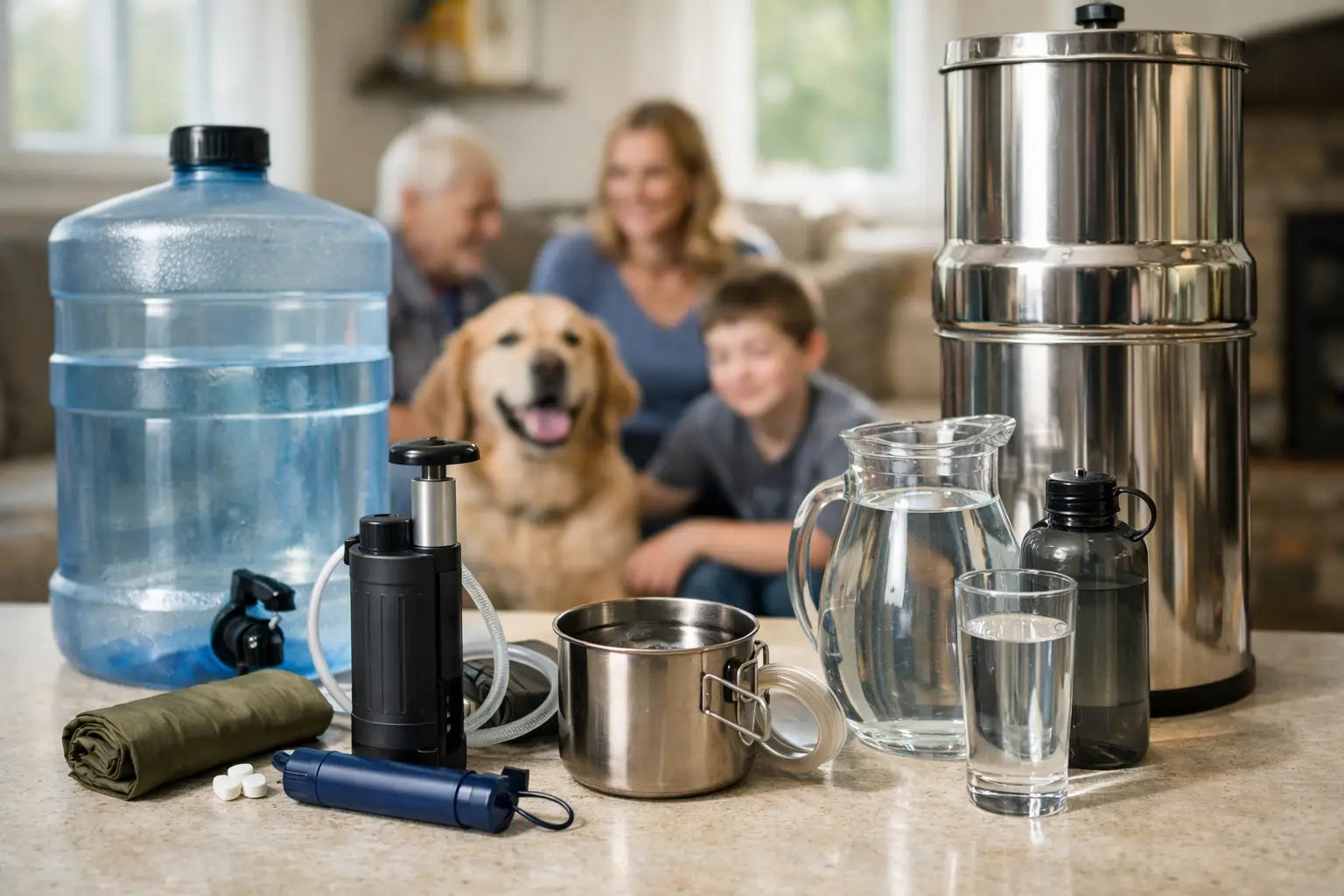
A water main break can turn a normal Tuesday into a long line at the grocery store. After a hurricane, wildfire, winter storm, or extended outage, tap water may stop flowing or arrive with a boil-water notice. A home water filtration backup guide helps your family avoid making rushed decisions when clean water suddenly becomes the household priority.
The goal is not to own one impressive piece of gear. It is to create layers: water already stored and ready to use, a way to treat additional water, and a realistic plan for collecting or finding water if the disruption lasts longer than expected. That approach works for a suburban home, a rural property, and a grandparent’s guest room alike.
Start With Stored Water, Not Filtration
Filtration is valuable, but it is not the first layer. Stored water is immediate, predictable, and does not depend on finding a source during an emergency. A practical baseline is at least one gallon per person per day for drinking and basic sanitation. Plan for a minimum of two weeks when space and budget allow.
For a family of four, that means 56 gallons. It sounds like a lot until you break it into manageable containers. A few cases of commercial bottled water can cover short disruptions. Stackable water containers, larger water jugs, or dedicated storage barrels make more sense as your plan grows.
One gallon per person per day is a planning minimum, not a guarantee. Hot climates, pregnancy, illness, strenuous cleanup, and pets increase demand. Babies may need extra water for formula. If a family member relies on a medical device or has a condition that makes dehydration more dangerous, build a larger reserve.
Store containers in a cool, dark location away from gasoline, pesticides, paint, and direct sunlight. Label each container with the fill date and rotate stored water on a schedule. Commercially sealed water should still be checked for damaged packaging, leaks, or contamination. A supply you cannot locate in the dark is not much of a supply, so keep it organized and easy to access.
Home Water Filtration Backup Guide: Build Three Layers
A good family water plan answers three different questions: What can we drink tonight? What will we use after the stored supply runs low? And what happens if our usual water source is contaminated or unavailable?
Layer 1: Ready-to-drink water
This is your stored supply. It requires no setup, no pumping, and no guesswork. Keep some smaller bottles for evacuation bags and vehicle kits, but rely on larger containers for the household reserve. Smaller bottles are convenient. Larger containers usually cost less per gallon and create less packaging waste.
Do not forget practical water for hygiene. You may use separate non-potable water for flushing toilets, cleaning, or washing muddy hands, but keep drinking water clearly labeled and protected from cross-contamination.
Layer 2: A primary filter for daily use
A gravity-fed filter is often the most family-friendly backup because it can treat several gallons at a time without electricity. Fill the upper chamber, let it run while you handle dinner or check on the kids, and collect treated water below. It is a strong choice when the water source is relatively clear, such as municipal water under a boil-water advisory or rainwater collected carefully.
A pump filter can be useful for faster, smaller batches. A squeeze filter or compact personal filter belongs in an evacuation bag, car kit, or camping tote. These lighter tools are excellent for mobility, but they are usually frustrating as the only solution for a household of four or five for several days.
The trade-off is simple: capacity and convenience generally cost more and take up more room. Choose the primary filter your family can actually operate, clean, and store properly. Read its instructions now, not while the lights are out.
Layer 3: Chemical treatment and boiling
Filters have limits. Some do not address viruses. Many are not designed to make water safe after chemical spills, floodwater contamination, saltwater exposure, or fuel contamination. This is why a backup treatment method matters.
Water treatment drops or tablets, including products from brands such as Aquamira, take little space and can be stored with your filtration supplies. Follow the product directions exactly, including the required contact time. Chemical treatment may leave a taste and may not remove sediment, so filtering cloudy water first through a clean cloth can help.
Boiling is another dependable option when you have a safe heat source, fuel, and a pot. Bring water to a rolling boil for one minute. At elevations above 6,500 feet, boil it for three minutes. Let it cool in a covered container before drinking.
Boiling kills disease-causing organisms, but it does not remove chemicals, heavy metals, or salt. Neither boiling nor ordinary camping filters can make every questionable source safe. If authorities say water has been chemically contaminated, use stored water until they provide specific guidance. When the risk is unknown, choose a different source rather than trying to force unsafe water through a filter.
Match Your Equipment to the Water You May Actually Have
The right backup depends on your likely disruption. Families on city water may mainly need a plan for boil-water notices and short outages. Families with private wells need to account for the fact that a well pump usually stops when the power fails. A generator or battery backup may restore access to the well, but it does not automatically make untreated well water safe after flooding.
If you live near wildfire zones, remember that smoke, ash, and damaged infrastructure can affect local water systems. In hurricane and flood regions, floodwater should be treated as highly contaminated. It may contain sewage, chemicals, and debris. Rainwater can supplement your plan, but it should be collected from a clean surface, filtered for particles, and treated before drinking.
Do not make a swimming pool your drinking-water plan. Pool water contains chemicals, and treatment methods vary. It may be useful for sanitation in some circumstances, but it is not a straightforward source of safe drinking water.
For most households, the best likely sources are stored water first, then water from the tap if officials say it can be boiled or treated, followed by carefully collected rainwater. A nearby lake, creek, or pond is a last-resort source that requires more caution and more capable treatment.
Keep the System Usable During an Emergency
Water equipment is only helpful if the pieces work together. Store your filter, treatment supplies, clean collection containers, a measuring cup, a pot, and written instructions in one clearly labeled location. Add a manual can opener and basic cleaning supplies nearby, since water planning is tied closely to food and sanitation.
Keep separate containers for untreated and treated water. Mark them plainly. This small step prevents one of the most common mistakes: pouring questionable water into the same jug used for clean drinking water.
Test the system once or twice a year. Fill the gravity filter. Practice using the pump filter. Time how long your household takes to treat a few gallons. Check replacement filter elements and chemical treatment expiration dates. A calm 20-minute practice session gives you more confidence than a closet full of unopened equipment.
If you have children, make the plan simple enough for older kids and visiting grandparents to understand. Post a short note: which water is safe to drink, which container is untreated, and who handles the filter. Preparedness should reduce stress, not create a household mystery.
A Sensible First Purchase Plan
You do not need to build a complete water station all at once. Start with enough stored water for three days, then work toward two weeks. Add a household-capacity filter next, followed by treatment drops or tablets and a reliable way to boil water. Finally, add replacement parts and extra containers as your budget allows.
At SHTF Prepper Club, water filtration and storage are best viewed as a connected category, not a single purchase. A filter without containers is incomplete. Containers without a backup treatment method leave you exposed if an emergency lasts longer than expected. Build the system in layers, and each purchase makes the next one more useful.
The reassuring part is that a family water plan does not have to be perfect to be worthwhile. Start with the water you can store this month, choose a backup method you understand, and test it before the next storm is on the forecast.