
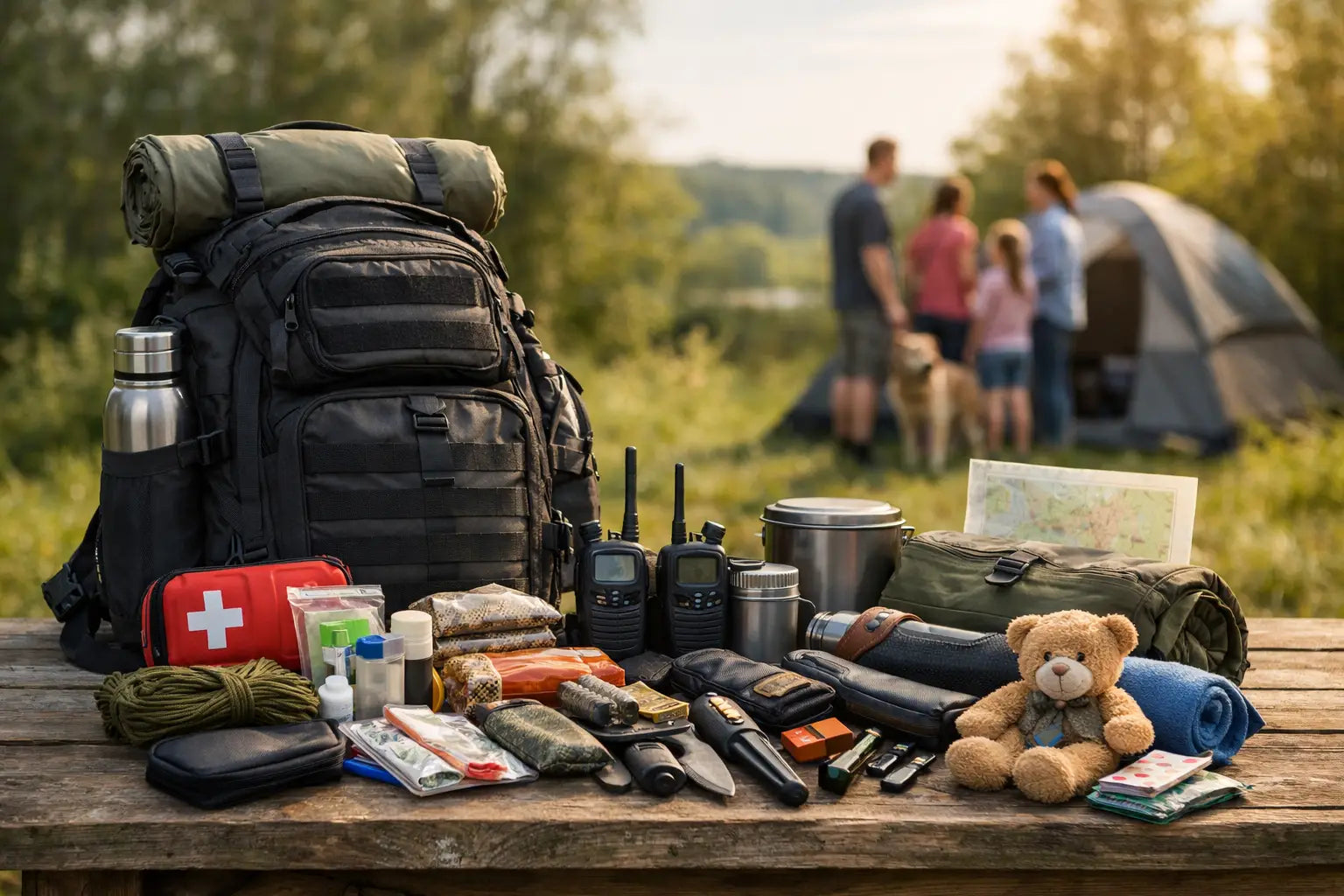
A mandatory evacuation order is not the moment to hunt for prescription refills, decide which charger fits your phone, or wonder whether the dog’s food made it into the car. Knowing what to pack in a bug out bag gives your family a calmer starting point when leaving home is the safest option.
At SHTF Prepper Club, we usually call this an evacuation bag. The name matters less than the job: it should hold the essentials your household needs to get out safely and function away from home for at least 72 hours. It is not a camping pack, and it is not a warehouse of every item you own. It is a portable bridge between your front door and a safe place to stay.
Start With a Bag Each Person Can Carry
One oversized bag looks simple until someone has to carry it down stairs, across a parking lot, or through a crowded shelter. Most families do better with one primary pack per capable adult and a smaller bag for each child who is old enough to carry one.
Choose a comfortable backpack in a neutral, durable fabric with padded straps. A rolling bag can help if mobility is a concern, but wheels are less useful on broken sidewalks, stairs, and uneven ground. Keep the heaviest shared items, such as water treatment and the first-aid kit, in adult bags.
Children’s bags should be light. A change of clothes, comfort item, snack, small water bottle, flashlight, and written family contact information are enough. Do not give a child a pack so heavy that it becomes one more thing an adult must carry.
What to Pack in a Bug Out Bag: The Core Needs
Build around the needs that do not pause because you are away from home: water, food, medication, warmth, communication, hygiene, and identification. The details depend on your climate, household size, health needs, and likely evacuation routes.
Water and simple treatment
Water is heavy, which makes this category a trade-off. Carrying three days of water per person can be unrealistic if you are on foot, but leaving with only one small bottle is not enough for a long drive, traffic backup, or shelter delay.
Aim to carry a reasonable amount of drinking water in durable bottles or pouches, then add a dependable way to treat more. A compact water filter, purification drops or tablets, and a collapsible water container make a practical combination. If your family is evacuating by vehicle, keep additional water in the car rather than forcing it all into backpacks.
Use treatment products exactly as directed. Filters and chemical treatment have limits, particularly with heavily contaminated water. The goal is to improve your options, not assume every water source is safe.
Food that works without a kitchen
Pack foods your family will actually eat under stress. Ready-to-eat meals, protein bars, nut butter packets, crackers, dried fruit, trail mix, shelf-stable milk, and familiar snacks are all useful choices. Include a manual can opener only if you pack canned food.
Look for calories, shelf life, and ease of preparation before novelty. Freeze-dried meals are a strong option when you can reliably add hot water, but they are not the only answer. For an evacuation bag, some no-cook food is essential in case power, fuel, time, or shelter rules make cooking inconvenient.
Account for allergies, infant formula, dietary restrictions, and grandparents’ needs. Pack food for at least three days, then rotate it into regular meals before it expires.
Medical supplies and prescriptions
A first-aid kit should handle more than a small cut. Include bandages, gauze, medical tape, antiseptic, gloves, pain relievers, allergy medicine, blister care, a thermometer, and any items your family has been advised to keep on hand.
Prescription medication deserves its own plan. Keep several days of critical medications in their original labeled containers when possible, along with a printed medication list that includes doses, prescribing doctors, pharmacy numbers, allergies, and health conditions. Ask your pharmacist or physician about refill timing well before storm season or wildfire season.
If someone uses glasses, hearing aids, mobility equipment, insulin, a CPAP, or other medical devices, plan specifically for that equipment. An evacuation bag cannot solve every medical need, but it should make continuity of care easier.
Light, power, and communication
Pack a headlamp for each adult and a flashlight for every family member, along with spare batteries if the equipment uses them. Headlamps are especially useful because they leave both hands free for children, maps, medical care, or loading a vehicle.
A charged power bank and charging cables can keep phones working during a long outage or evacuation. A vehicle charger is worthwhile too. Add a battery-powered or hand-crank weather radio if your area is prone to hurricanes, tornadoes, wildfires, or other fast-moving events where local updates matter.
Do not rely on one app, one phone, or one person knowing the plan. Write down important phone numbers and choose an out-of-area family contact who can help relay messages if local networks are busy.
Protect the Things That Cannot Be Replaced Easily
A waterproof document pouch takes little space and can prevent a great deal of frustration. Keep copies of identification, insurance cards, home and auto policies, medical information, emergency contacts, and any custody or pet records that may be needed at a shelter or hotel.
Include a small amount of cash in mixed bills. Card readers and ATMs can be unavailable during extended outages, and cash is useful for fuel, food, and small purchases. Keep it discreet and do not treat the evacuation bag as the place for valuables you would be devastated to lose.
Store digital copies of key documents in a secure, password-protected location as a backup. Paper still matters when your battery is low or cell service is limited.
Add Shelter, Clothing, and Hygiene for Real Conditions
A lightweight rain jacket, warm layer, extra socks, sturdy shoes, work gloves, and a hat can make a major difference. Pack for the weather you are likely to face, not the weather you hope for. Families in Florida may prioritize rain protection and cooling items, while households in the Upper Midwest need serious cold-weather layers.
A compact blanket or emergency bivy, poncho, dust masks, and basic eye protection are useful for many situations. Wildfire smoke, windblown debris, and post-storm cleanup can turn ordinary travel into a messy experience.
For hygiene, carry toothbrushes, wipes, toilet paper in a resealable bag, hand sanitizer, menstrual supplies, soap, and a small towel. Add diapers, formula, or incontinence supplies if your household needs them. These are not luxury items. They help your family stay comfortable and healthy when routines are disrupted.
Do Not Forget Pets and Comfort Items
If your pet is part of the family, plan for them before an emergency. Pack a leash or carrier, food, collapsible bowl, medication, vaccination records, waste bags, and a recent photo. Many evacuation shelters and hotels have specific animal rules, so identify pet-friendly options before you need them.
For children, one familiar item can be worth more than another gadget. A small stuffed animal, card game, book, or headphones can help settle anxious hours in a car, hotel room, or shelter. Adults benefit from comfort too, whether that means reading glasses, a favorite tea bag, or a small notebook.
Keep the Bag Ready, Not Perfect
An evacuation bag is a living household system. Review it twice a year, such as when clocks change or at the start of your local storm season. Replace expired food and medications, recharge power banks, adjust clothing sizes, update documents, and check that every flashlight works.
Then practice one simple question with your family: if you had ten minutes to leave, what would still need to come from the house? The answer may be daily medicine, a pet carrier, phone chargers, or irreplaceable photos. Put that short list by the door or in your family emergency plan.
Start with the essentials you can afford and improve the system over time. A well-packed evacuation bag does not promise that an emergency will be easy. It gives your family more choices, more comfort, and a steadier next step when leaving home cannot wait.