
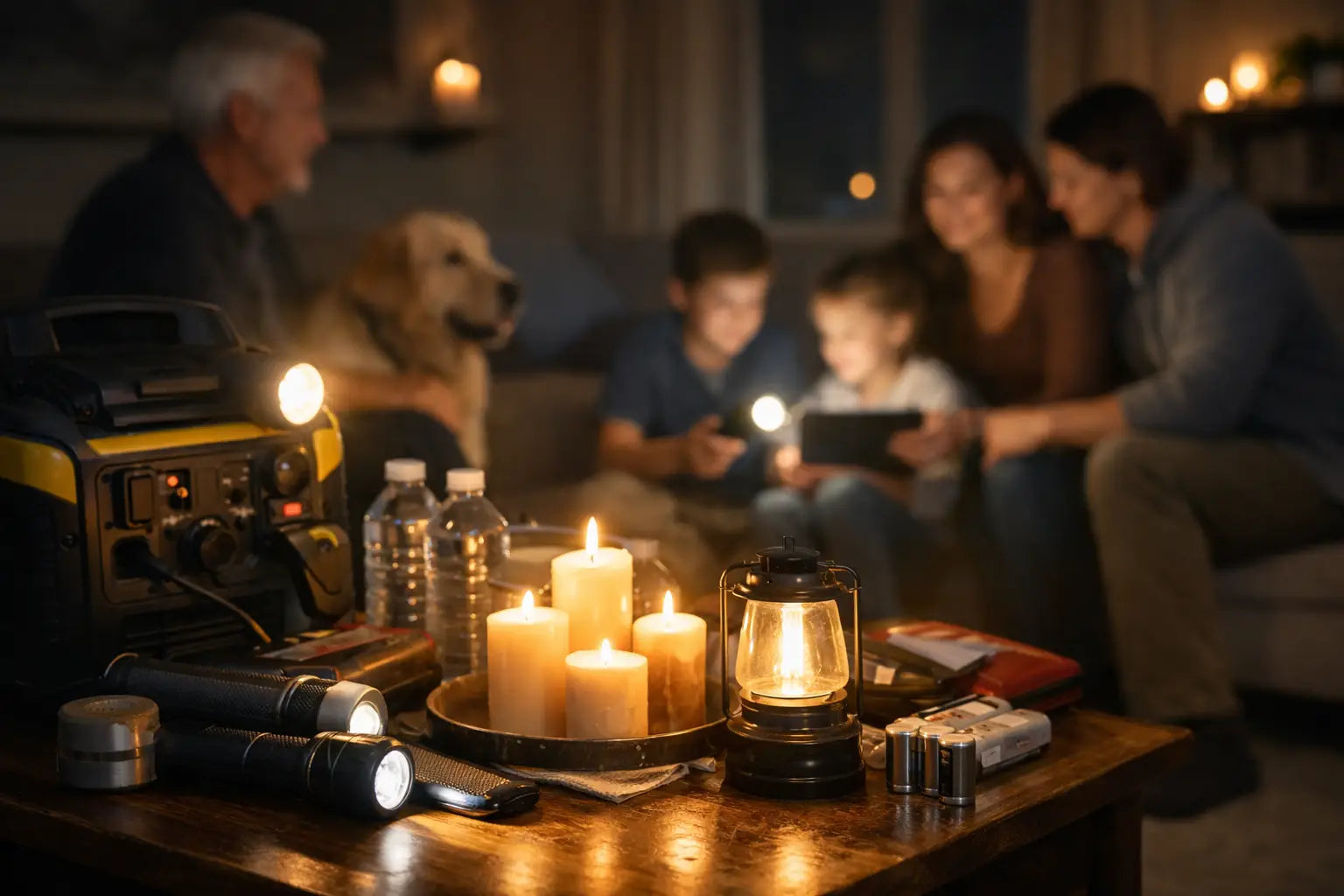
A power outage changes the rhythm of a house quickly. The refrigerator stops humming, the Wi-Fi drops, and suddenly every family member needs something at once. Knowing how to prepare for a power outage means making a few clear decisions before the lights go out, so your home can stay safer, calmer, and more comfortable for however long the disruption lasts.
Start with the problems that become urgent first: water, light, temperature, food, medical needs, and communication. You do not need a bunker or a garage full of gear. A well-organized plan, a few dependable supplies, and a way to use them safely will cover most real-world outages.
How to Prepare for a Power Outage Before It Happens
The best time to prepare is on an ordinary weekend, when stores are open and no one is stressed. Think about your household as it is now, not as you wish it were. Count the people, include pets, and consider anyone who relies on refrigerated medication, mobility equipment, CPAP machines, oxygen, or other powered medical devices.
Start by deciding how many days you want to cover. Three days is a sensible starting point for most households. Seven days provides more breathing room after hurricanes, ice storms, wildfires, or widespread utility damage. If you live in a rural area or a region where repairs can be delayed, two weeks may be a reasonable longer-term goal.
Write down the essentials your family uses in a normal day. This simple exercise often reveals the gaps: a toddler's formula, a grandparent's medication, pet food, a garage door opener, a phone charger, or the fact that the only manual can opener is buried in a kitchen drawer.
Store Water You Can Actually Use
Water is the first priority because tap water may be unavailable, unsafe, or difficult to access during a prolonged outage. Plan for at least one gallon per person per day for drinking and basic sanitation. A family of four preparing for seven days needs 28 gallons, plus additional water for pets.
A mix of container sizes works best. Small bottles are convenient during an evacuation or for children. Larger, stackable water containers give you a more economical home supply. Keep stored water in a cool, dark place and rotate it according to the container manufacturer's guidance. A reliable water filter and purification treatment add flexibility if your stored supply runs low, but they are a backup, not a substitute for storing water ahead of time.
Build a Food Plan That Does Not Depend on the Fridge
During a short outage, keep refrigerator and freezer doors closed as much as possible. An unopened refrigerator generally keeps food cold for about four hours. A full freezer can hold a safe temperature for roughly 48 hours, or about 24 hours if it is half full. A thermometer inside each appliance removes guesswork.
For the food you store outside the refrigerator, choose familiar items that your family will eat. Canned soups, beans, fruit, tuna, nut butter, crackers, shelf-stable milk, ready-to-eat meals, and comfort foods all have a place. Include a manual can opener, disposable plates if water is limited, and a way to heat food if your stove requires electricity.
Freeze-dried food storage can be a useful addition because it stores compactly for years and gives families more meal variety. The trade-off is that many meals require water and sometimes hot water. Keep a few no-cook options available for the first day, when you may be focused on other needs.
Make Light, Power, and Communication Reliable
Do not rely on candles as your primary light source. Open flames add risk when people are tired, children are moving around, or your home is already dealing with storm damage. Instead, place LED flashlights or headlamps where you can reach them in the dark: bedrooms, the kitchen, and a central family area.
Headlamps are especially useful because they leave both hands free for cooking, helping children, walking a dog, or finding supplies. Keep spare batteries with each device rather than in a separate mystery drawer. Rechargeable lanterns and battery banks are practical too, provided they are kept charged and checked a few times each year.
Your power plan should match what you truly need to run. A small battery power station may be enough for phones, lights, a modem, and a laptop. A larger unit can support a refrigerator, medical device, or small appliance, but capacity and surge requirements matter. Check the wattage of each item before buying a power station or generator. Bigger equipment is not always the better choice if it is too heavy, too expensive, or too complicated for your family to use.
A portable generator can provide substantial power, but it requires fuel, maintenance, and strict safety practices. Never run a generator, grill, camp stove, or any fuel-burning device inside the house, garage, basement, or near open windows. Carbon monoxide is colorless, odorless, and deadly. Install working carbon monoxide alarms with battery backup, and test them regularly.
Keep vehicles fueled when severe weather is expected, but never use a car as a power source inside an enclosed garage. For communications, charge phones early, keep a battery bank ready, and have a battery-powered or hand-crank weather radio for local alerts when cellular service is overloaded.
Protect Health, Warmth, and Daily Routines
A calm house is easier to manage. Set aside a clearly labeled outage bin with first-aid supplies, prescription copies, basic hygiene items, cash in small bills, batteries, charging cords, work gloves, and a printed contact list. If you take prescription medication, ask your pharmacist or doctor how to manage storage during an outage and keep a reasonable refill cushion when possible.
Temperature is often the hardest part of an extended outage. In cold weather, close off unused rooms, layer clothing, use sleeping bags and blankets, and gather the family in one insulated room. Avoid using ovens for heat. In hot weather, close blinds before the house heats up, drink water regularly, wear lightweight clothing, and identify an air-conditioned location you could use if heat becomes unsafe.
Plan for children and pets before they become restless. Keep a few low-tech activities on hand: cards, coloring supplies, books, puzzles, and downloaded entertainment on charged devices. Pets need stored food, water, medications, carriers or leashes, and a familiar place to sleep. If evacuation becomes necessary, bring them with you rather than assuming a shelter can accommodate every animal.
Know When to Stay and When to Leave
Most outages are inconvenient, not emergencies. Still, conditions can change. Downed power lines, flooding, wildfire evacuation orders, extreme indoor temperatures, or a family member's medical needs may make leaving the right choice.
Create a simple family communication plan. Choose an out-of-area contact, decide where everyone will meet if cell service is limited, and keep paper maps in the car. Your evacuation bags should contain essentials for several days, but do not wait until an evacuation order to decide where your important documents, medications, pet supplies, and chargers are kept.
After the power returns, inspect food carefully and discard anything that has been in unsafe temperatures. Restock what you used, recharge power stations and batteries, and write down what was missing or frustrating. That short review is how a basic setup becomes a dependable family preparedness system over time.
A Practical Way to Start This Week
If your supplies are thin, begin with a three-day water supply, shelf-stable meals, two dependable lights, a battery bank, and a first-aid kit. Then add capacity in the order your household needs it most: more water, more food, backup power, warmth or cooling, and medical support. SHTF Prepper Club approaches readiness the same way - start small, choose quality, and build a system your family can maintain.
Preparedness is not about expecting the worst. It is about making an ordinary home more capable when an ordinary service fails. A few thoughtful choices now can turn a dark, uncertain night into a manageable one.