
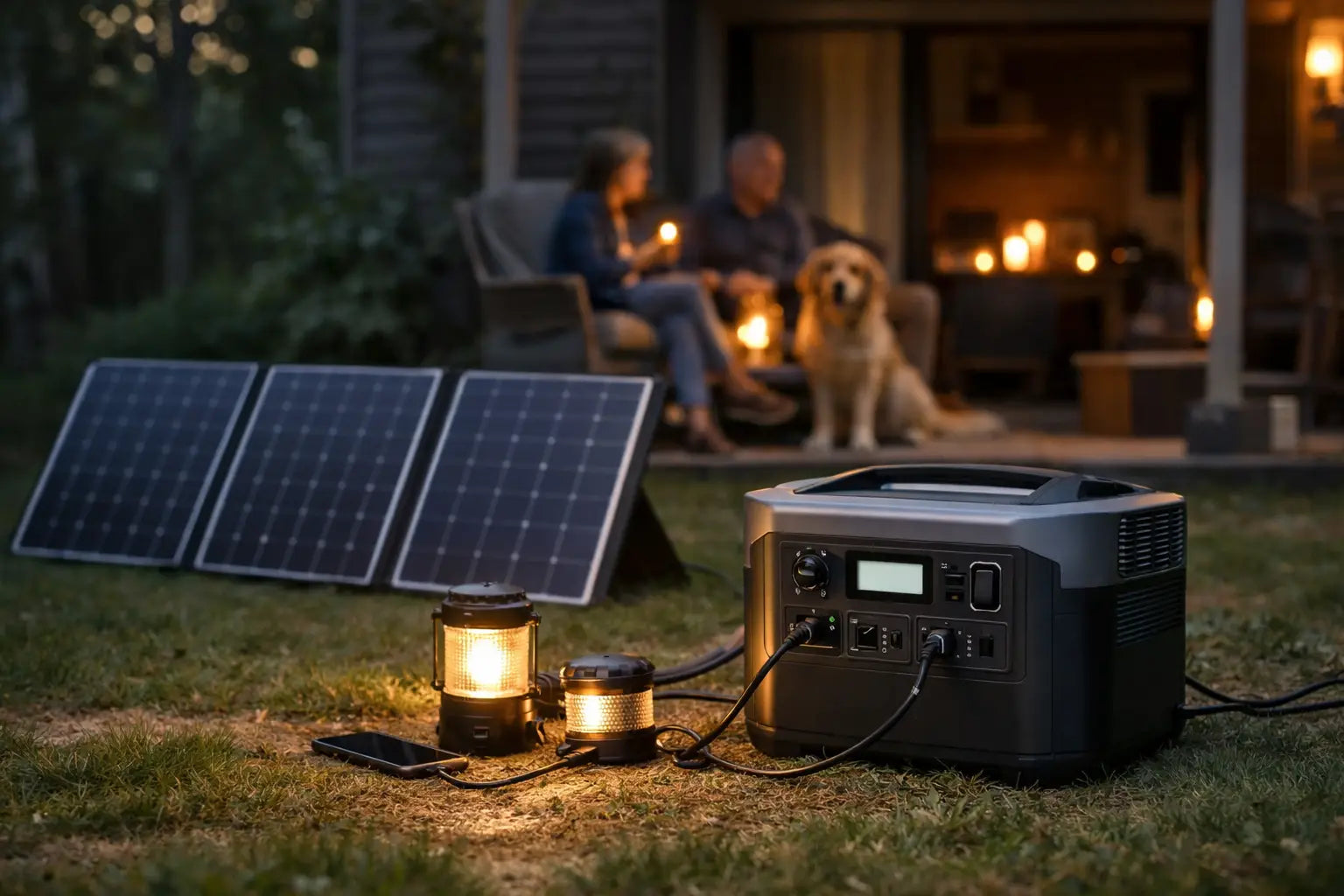
A power outage changes the rhythm of a home fast. The refrigerator starts warming, phones begin losing battery, and the question becomes less about convenience and more about what your family needs to keep running. A solar generator for power outage use can provide quiet, indoor-safe backup power without the fuel storage, noise, or carbon monoxide risks of a conventional gas generator.
That does not mean every solar generator is right for every household. The small unit that keeps phones, lamps, and a Wi-Fi router alive may be a smart first purchase. It will not run central air conditioning, an electric water heater, or every appliance in the kitchen. Buying the right system starts with a clear picture of the loads that matter most during the first few hours and the first few days.
What a Solar Generator Actually Does
A solar generator is usually a portable power station paired with solar panels. The power station contains a battery, an inverter that turns battery power into standard household-style AC power, and outlets for USB devices, 12-volt gear, and wall plugs. Solar panels recharge the battery when sunlight is available.
For families, the appeal is practical. You can operate a quality battery power station indoors because it produces no exhaust. It starts with the push of a button, runs quietly, and needs far less hands-on maintenance than a fuel-powered generator. This makes it useful for overnight outages, apartment or neighborhood restrictions, grandparents who may not be comfortable handling gasoline, and homes where noise would add stress.
Its limitation is capacity. A battery stores a finite amount of energy. Solar panels can replenish it, but clouds, short winter days, shade, and high household demand all affect recharge time. Think of a solar generator as a carefully managed power reserve, not an automatic replacement for the electric grid.
Start With the Needs That Cannot Wait
Before comparing models, make a simple outage priority list. Most families get the best value by protecting communication, light, food, medications, and a few comfort items first.
A phone, LED lamp, tablet, and Wi-Fi router use relatively little electricity. A refrigerator uses more, especially when its compressor starts. A CPAP machine, medical refrigeration device, sump pump, pellet stove, or well pump can turn backup power from a convenience into a serious household need. Check the label on each appliance or use a plug-in power meter before an emergency. Guessing is how people end up with a power station that is either too small or unnecessarily expensive.
Separate two numbers when you plan:
- Watts are the amount of power an appliance needs at one moment.
- Watt-hours are the total energy it uses over time.
A useful rule is to plan for 15 to 20 percent more battery capacity than your initial math suggests. Real-world conditions are rarely as tidy as a product specification sheet.
Watch for Startup Surge
Some appliances draw a brief, much higher surge of power when they start. Refrigerators, freezers, pumps, and certain power tools are common examples. A power station may have enough battery capacity to run the appliance for hours but still fail if its inverter cannot handle that starting surge.
Check both the unit's continuous AC output and its surge rating. For example, a station rated for 1,800 continuous watts may handle a refrigerator comfortably, while a small 300-watt unit is better reserved for electronics, lamps, and low-draw devices. If you depend on a well pump or sump pump, verify its startup requirements with the manufacturer or an electrician before purchasing. These loads are often beyond the practical range of a compact portable unit.
Choose Battery Capacity for the Outage You Expect
Battery capacity is measured in watt-hours, often shown as Wh. This is one of the most meaningful numbers when choosing a solar generator for a power outage.
A station in the 250 to 500 Wh range can be an excellent starter option for phones, headlamps, a radio, a small fan, and a laptop. It is useful for an overnight outage or as a dedicated communications backup. A 1,000 to 2,000 Wh system is a more realistic family preparedness level for rotating refrigerator power, running a CPAP, charging devices, operating lights, and supporting a router or modem.
For multi-day outages, look at expandable systems or power stations in the 2,000 Wh and above range. These cost more, but expansion batteries let you build in stages. That approach fits many households better than waiting until they can buy a whole-home system at once.
Battery chemistry matters, too. Many newer units use lithium iron phosphate, commonly called LiFePO4. It is generally valued for its long cycle life and thermal stability. It may be heavier than some alternatives, but it is often a sensible choice for equipment you expect to keep charged and ready for years.
Solar Panels Make It a Multi-Day Tool
Without solar panels, a power station is still valuable, but it is a battery with a countdown clock. Solar charging gives your household a way to recover power during a longer outage.
Panel wattage affects how quickly the station can recharge, but sunlight is not constant. A 200-watt panel does not necessarily deliver 200 watts all day. Panel angle, tree cover, clouds, season, temperature, and cable losses all reduce real-world output. It is wise to expect noticeably less than the nameplate rating over the course of a day.
Match panel capacity to the power station's maximum solar input. A unit that accepts only 200 watts of solar cannot use the full output of a much larger panel array. On the other hand, buying too little panel capacity can leave you waiting all day to restore a large battery.
Portable folding panels work well for households that need to store gear in a garage and set it up when needed. Rigid panels can make sense for a more permanent setup, but they require more planning and may need professional installation. In either case, practice positioning the panels before an emergency. A solar panel left in shade is an expensive piece of luggage.
Do Not Forget Charging Options and Connections
Solar is only one way to recharge. A well-rounded power station should also charge from a wall outlet before a storm, from a vehicle while driving or idling where safe, and sometimes from an additional battery or generator. Different charging methods give you options when weather does not cooperate.
Look closely at the outlets you will actually use. USB-C ports are helpful for newer phones and laptops. Regulated 12-volt outlets can support coolers and other vehicle-style equipment. Standard AC outlets cover common household plugs. If you want to power a refrigerator, choose a unit with enough accessible AC outlets and the right output rating rather than relying on a chain of power strips.
For refrigerated medication, medical devices, or a critical home system, plan redundancy. Keep a second charging method, spare cords, and a written note with the device's power needs. A solar generator is valuable equipment, but one device should not be the only layer in a medical emergency plan.
Build a Realistic Family Power Plan
The most effective setups combine equipment with habits. Keep the power station stored where it is dry, accessible, and protected from extreme heat. Check its charge level every few months, follow the manufacturer's storage guidance, and test it with the appliances you expect it to run.
During an outage, protect battery power by using it deliberately. Keep refrigerator and freezer doors closed. Charge phones during the day when solar production is strongest. Use LED lanterns instead of lighting whole rooms. Run high-draw appliances one at a time. These small decisions can stretch a battery far longer than buying a slightly larger model and using it casually.
A solar generator also works best as part of a broader home readiness plan. Water storage and filtration, shelf-stable food, battery lighting, a safe cooking method, warm bedding, first aid supplies, and an evacuation bag all solve problems electricity alone cannot. SHTF Prepper Club encourages families to start with the gaps that would affect them first, then add capability over time.
When a Gas Generator or Whole-Home System Makes More Sense
There are situations where a solar generator is not the whole answer. If your household needs central air conditioning, electric heat, a deep well pump, large medical equipment, or continuous power for several days, a properly installed whole-home battery system, standby generator, or conventional portable generator may be more appropriate.
Fuel-powered generators can deliver more power for the dollar, and they can run as long as you have safely stored fuel. They also require outdoor operation, careful carbon monoxide precautions, maintenance, noise tolerance, and secure fuel management. A solar power station is quieter and simpler, but it is not a substitute for high-demand backup power.
Many homeowners use both. A solar generator handles nighttime electronics, bedrooms, communications, and smaller essentials indoors. A larger fuel-powered generator, used safely outdoors, handles occasional heavy loads when necessary. The right answer depends on your climate, utility reliability, medical needs, budget, and the equipment already in your home.
Start with one honest question: what would make the next outage meaningfully easier for your family? A well-chosen power station that keeps food cold, phones charged, and a bedroom comfortable is not a small thing. It is a calm, practical step toward a home that can keep functioning when the lights go out.