
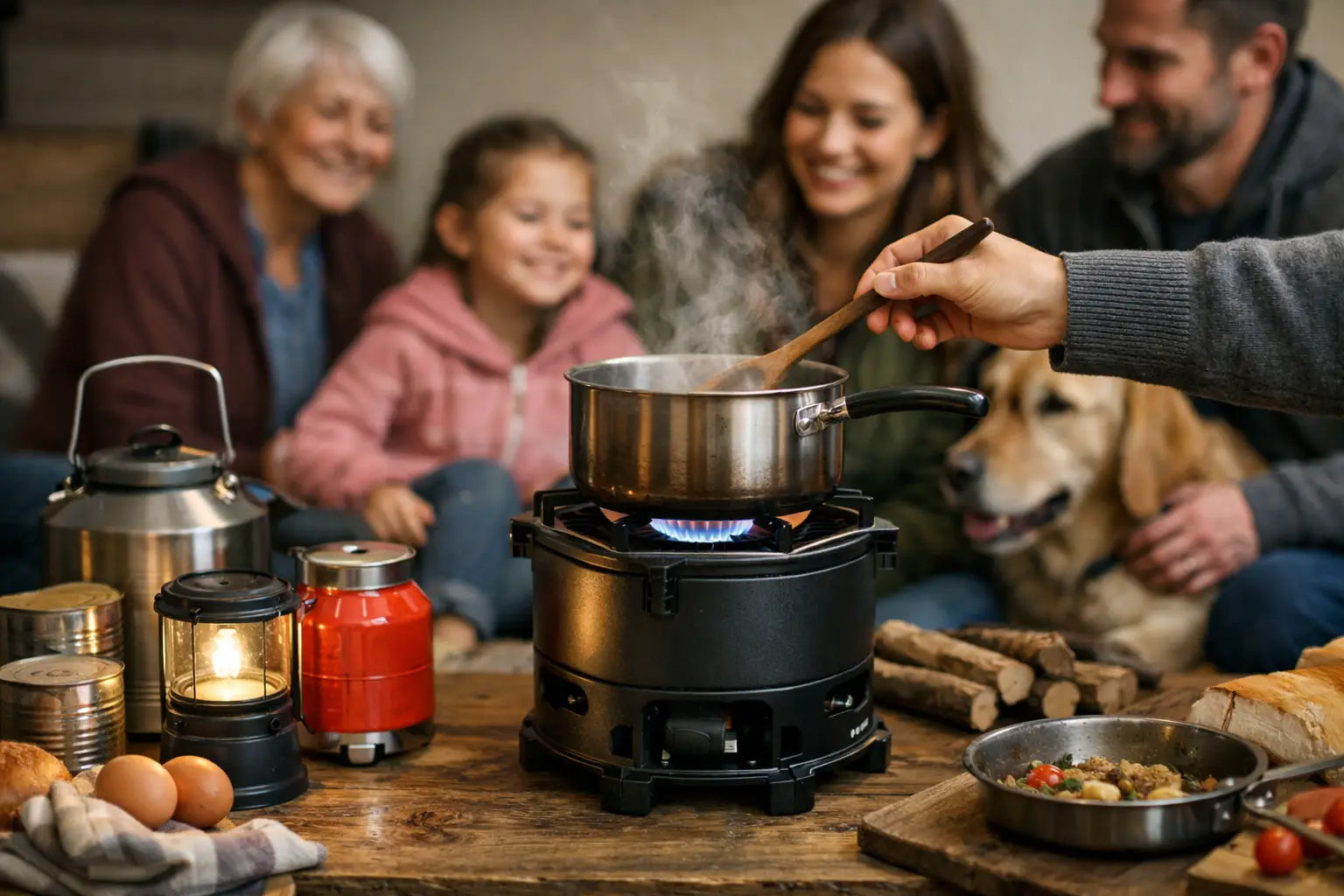
The microwave goes quiet first. Then you realize dinner is still sitting in the refrigerator, the kids are hungry, and a takeout run is not an option. An emergency cooking stove turns a stressful outage into a manageable evening by giving your family a dependable way to boil water, heat food, and keep routines moving.
For most households, the best choice is not the biggest stove or the most elaborate setup. It is the one you can operate safely, have fuel for, and are willing to use before an emergency forces you to learn. Start with the meals your family already eats, the weather where you live, and whether you may need to cook at home, outside, or away from home.
What an Emergency Cooking Stove Needs to Do
A family cooking plan has a few simple jobs: boil safe drinking water, heat shelf-stable meals, warm baby bottles or beverages when needed, and cook basic food during a multi-day outage. A good emergency cooking stove should handle those tasks without requiring a major learning curve.
The right stove also fits your likely emergency. A Florida family riding out a hurricane may need several days of outdoor cooking after an outage. A California household with wildfire evacuation risk may need a compact stove that travels easily. In a winter storm, outdoor cooking may be uncomfortable or unsafe, so an indoor-rated option becomes much more valuable.
Do not buy a stove based only on BTUs or a dramatic advertised burn time. Those details matter, but fuel availability, ventilation rules, pot stability, and ease of use matter more when you are tired, cold, and cooking for several people.
Choose the Fuel Before You Choose the Stove
Fuel determines where a stove can be used, how much you can store, and how long your cooking plan will last. It is the decision that deserves the most thought.
Propane: familiar and practical outdoors
Small propane canister stoves are a strong starting point for many families. They light quickly, offer good flame control, and work well for boiling water or heating a skillet. Larger propane camp stoves can support two burners, which makes a real difference when one pot is heating soup and another is making coffee or oatmeal.
The trade-off is clear: propane-burning stoves generally belong outdoors or in an open, well-ventilated cooking area approved by the manufacturer. Never run a standard propane camp stove inside your home, garage, tent, or enclosed porch. Carbon monoxide can build up without warning.
Propane also requires a fuel rotation plan. Keep cylinders upright in an appropriate outdoor storage location, inspect them periodically, and use older fuel during planned backyard meals or camping trips.
Butane: simple for short-term backup
Butane cassette stoves are popular because they are compact, easy to operate, and often feel more like a kitchen appliance than camping gear. They can be especially useful for heating one-pot meals during a brief outage.
Butane performs poorly in cold temperatures, however. If you live where winter outages are a real concern, do not make butane your only fuel source. Check the stove instructions carefully for indoor-use guidance, ventilation requirements, and compatible cookware.
Alcohol and solid fuel: compact, but slower
Alcohol stoves and solid-fuel tablet stoves pack small and store easily. They are useful in evacuation bags, vehicle kits, and as a last-ditch way to boil water. They are not usually the best primary cooking solution for a family of four or five.
They tend to boil water more slowly, offer limited temperature control, and can be difficult to use in wind. Open flames and hot metal surfaces also deserve extra attention around young children and pets.
Wood and biomass: useful only in the right setting
A wood-burning stove can reduce dependence on stored fuel, particularly for rural homes with space and a steady supply of dry wood. Some compact systems can boil water efficiently using twigs and natural fuel.
Still, wood smoke, fire restrictions, wet conditions, and wildfire danger can make this a poor choice during the very event you are preparing for. Treat it as a secondary outdoor option, not a universal answer.
Indoor Cooking Requires a Different Standard
During a blizzard or a prolonged outage, the temptation to cook in the garage or crack a window and use a camp stove indoors is understandable. It is also dangerous. A partially open garage door does not make a garage safe for combustion appliances.
If indoor emergency cooking is part of your plan, choose equipment specifically labeled by its manufacturer for indoor use and follow every instruction. Keep working carbon monoxide alarms on every level of your home and near sleeping areas. Test them regularly, replace batteries on schedule, and treat any alarm as a reason to get outside immediately and call for help.
Fuel-burning stoves are not the only option. A portable power station paired with a low-wattage electric kettle, hot plate, or rice cooker can be an excellent indoor setup if you have enough stored power and a realistic recharge plan. Electric cooking is quiet, clean, and simple, but it can drain a battery quickly. It works best when matched to efficient appliances and short cooking tasks, such as heating water or warming prepared food.
Size Your Cooking Setup for Your Real Family
A solo backpacking stove may be perfect for an evacuation bag, but it will feel painfully small when you are trying to make dinner for six people. Think in layers instead of searching for one perfect appliance.
A practical home setup often includes a two-burner outdoor stove for family meals, a compact backup stove for quick water boiling or evacuation, and a safe indoor option if weather could trap you inside. That approach gives you flexibility without requiring a garage full of equipment.
Also consider the cookware you already own. Check the stove's weight limit and burner size before placing a large Dutch oven or stockpot on a compact burner. A wide pot can become unstable, especially on uneven ground. A stable table, heat-resistant surface, long-handled lighter, pot gripper, and windscreen approved for your stove can make cooking calmer and safer.
For families with babies, older adults, or special dietary needs, add those requirements to the plan. You may need more hot water, gentler heating, or the ability to cook foods that cannot simply be eaten cold.
Plan Fuel Around Meals, Not Panic
Stored fuel becomes useful when you know what it will actually support. Write down three or four low-effort meals your family will eat during an outage. Examples might include soup, chili, oatmeal, pasta, freeze-dried meals, rice, canned chicken, or hot drinks.
Then practice preparing them with your chosen stove. Notice how much water you use, how long each meal takes, and whether you can comfortably manage two pots at once. This is the fastest way to find out whether one small canister is enough for a weekend or barely enough for breakfast.
Keep meals simple during an emergency. Foods that only need hot water reduce fuel use, cleanup, and stress. Foods requiring long simmer times can still have a place in your pantry, but they demand more fuel and attention.
A sensible fuel plan accounts for more than dinner. You may use fuel for morning coffee, sanitation water, washing a few dishes, warming formula, and making a hot drink on a cold night. Build a margin into your supply, and rotate fuel according to the manufacturer's guidance.
Practice Once Before the Lights Go Out
An emergency cooking stove should not stay unopened until the day you need it. Pick a calm weekend and cook one dinner outside with your family. Let adults in the household learn ignition, flame adjustment, shutdown, and safe cooling. Show older children how to keep a safe distance and where hot cookware should be placed.
Use the practice session to confirm the rest of the setup: stored water, a manual can opener, paper plates if water is limited, basic utensils, a fire extinguisher, and a way to wash hands before eating. Cooking is only one part of feeding a family safely during an outage.
Keep the stove, compatible fuel, lighter, cookware, and printed instructions together in a clearly marked bin. When a storm warning arrives, you will not have to search through camping supplies, holiday decorations, and garage shelves.
A good preparedness purchase earns its place by making ordinary problems easier. Choose a stove your family can use with confidence, cook one familiar meal on it this month, and let that small practice become part of a steadier home plan.