
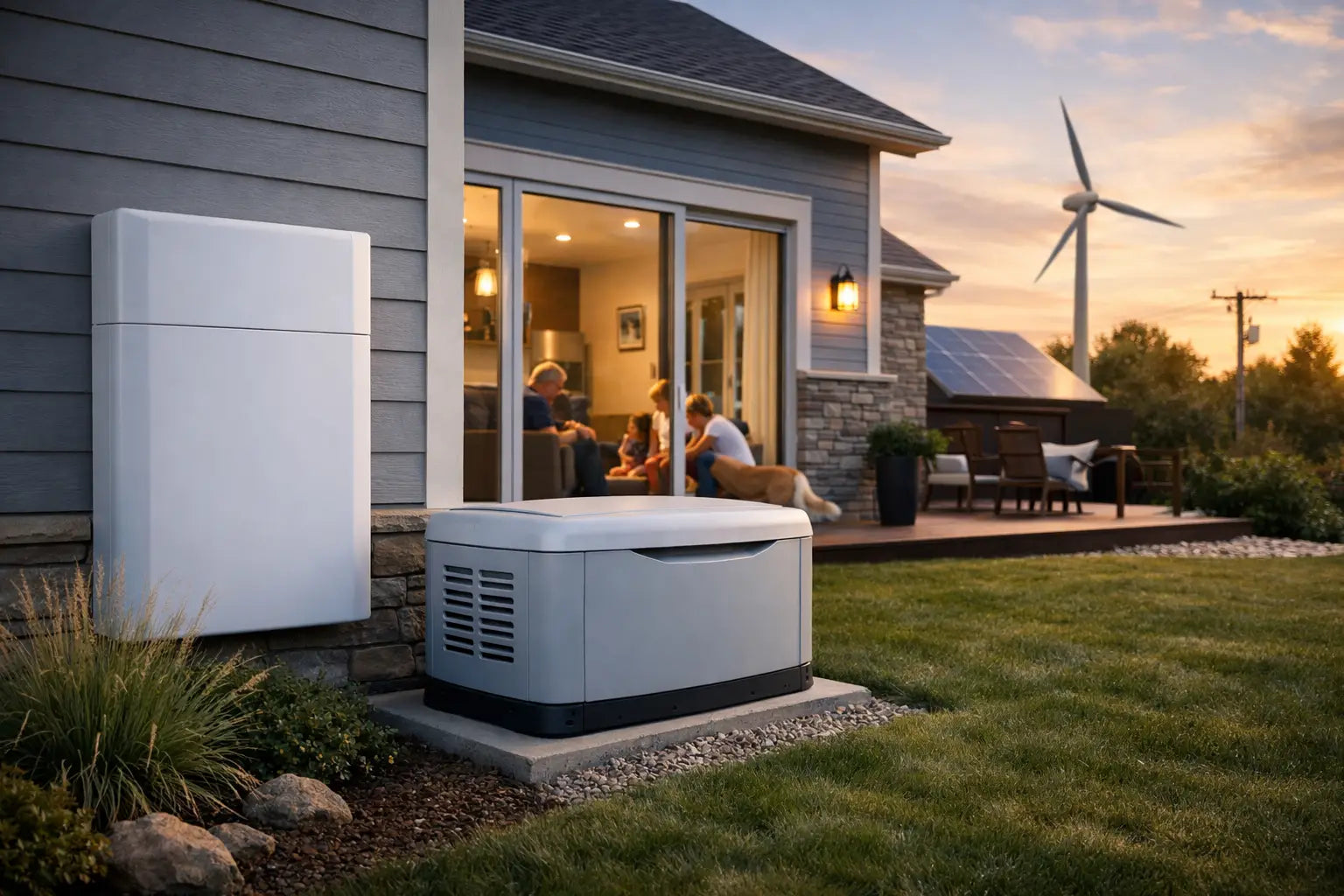
The next time your neighborhood goes dark, the biggest change may not be how long the outage lasts. It may be how many homes stay functional anyway. The future of residential backup power is moving away from one-size-fits-all generators and toward layered systems that keep the fridge cold, phones charged, medical devices running, and daily life calmer for your family.
That shift matters because most households do not need a whole-house power plant to be better prepared. They need a realistic plan. For some families, that means a portable power station for short outages. For others, it means a solar generator paired with battery storage, or a standby generator that carries essential circuits. The trend is not just bigger equipment. It is smarter matching between the outage risks you face and the power system you actually need.
Why the old backup power model is changing
For years, residential backup power mostly meant one thing: a gas or propane generator. That still has a place. In many homes, especially where outages last for days and air conditioning, well pumps, or sump pumps are non-negotiable, fuel-based generation remains the most practical option.
But the old model came with trade-offs families know well. Generators are loud. Fuel has to be stored safely or replenished during a regional emergency. Maintenance gets skipped. Starting procedures get forgotten. And many people discover too late that they bought enough generator for marketing claims, not enough for their real household loads.
At the same time, battery technology has improved fast. Portable power stations are more capable than they were even a few years ago. Home battery systems can now support more appliances for longer periods. Solar panels, transfer switches, and smart electrical panels are making it easier to stretch stored energy instead of wasting it.
That is a big part of the future of residential backup power: not replacing every generator with batteries, but giving families more usable choices.
The future of residential backup power looks more layered
The most practical systems going forward will often be layered, not singular. That means families will use more than one kind of backup depending on the job.
A common example is a portable power station for electronics, lights, internet equipment, and CPAP machines, plus a fuel generator for heavy loads or longer emergencies. Another is a home battery that handles overnight essentials, paired with rooftop or portable solar to recharge during daylight. Some households will still choose a standby generator, but even there, battery support may handle the smaller, quieter needs when running a generator around the clock makes no sense.
This layered approach is better aligned with real life. Not every outage is the same. A six-hour storm outage is different from a four-day ice event. A summer outage in Florida creates different priorities than a winter outage in the Midwest. Parents with a baby at home, grandparents storing medication, or rural families on a well all have different thresholds for what counts as essential.
The smarter question is no longer, “What backup system should I buy?” It is, “Which combination covers my most likely emergencies without overspending on the wrong capacity?”
Batteries are getting better, but they are not magic
Battery backup is attracting the most attention for good reason. It is quieter, easier to use, safer indoors when properly designed, and far less intimidating for households that have never owned a generator. For short and moderate outages, battery systems can be a relief. There is no engine noise at 2 a.m. No fuel line. No pull start. In many cases, setup is simple enough that a parent or grandparent can operate it confidently.
That said, batteries still force hard math. Running lights, phones, laptops, a modem, and a small medical device is one thing. Running central air, electric water heat, a clothes dryer, or a large well pump is another. Even as storage improves, big loads drain batteries fast.
This is where many families get tripped up. Marketing often highlights watt-hours and surge ratings, but what matters at home is runtime under your real conditions. If you have a chest freezer in the garage, two refrigerators, and teenagers trying to keep devices charged during a summer outage, your power use may be very different from a minimalist test scenario.
Battery systems are becoming more useful, but they work best when expectations are grounded. They shine on essential loads. They become expensive when asked to mimic unlimited utility power.
Solar integration will matter more than solar alone
When people picture the future, they often imagine solar panels solving the outage problem. Sometimes they do. Often, they only solve part of it.
Standard grid-tied solar does not automatically keep your home running during an outage. In many systems, if the grid goes down, the solar shuts down too unless it is paired with battery storage and the right equipment. That catches a lot of homeowners off guard.
The real opportunity is in solar integration. Portable solar panels can keep smaller battery systems going during extended blackouts. Home solar with battery storage can offset some daily household use and provide backup for essentials. For families who want long-term resilience, solar becomes less about instant independence and more about endurance.
Weather is the obvious limit. Smoke, storm clouds, snow cover, and shorter winter days all affect charging. So does roof layout. Solar can be a powerful part of a family preparedness plan, but it works best when paired with realistic storage expectations and another backup option if your region regularly sees long stretches of poor sunlight.
Smarter homes will change how backup power is used
One of the less flashy but more meaningful changes ahead is better power management. In plain English, homes are getting better at deciding what should stay on.
Smart panels, subpanels, and app-based energy controls can help homeowners prioritize critical circuits. Instead of trying to power everything, you can direct backup capacity to refrigeration, medical gear, internet, garage access, or a few key outlets. That matters because selective power use is often the difference between a battery lasting six hours and lasting two days.
This is especially useful for families who do not want to rewire their whole lifestyle every time the power goes out. Better monitoring also helps people understand their actual consumption before they buy equipment. That can prevent the expensive mistake of buying a system that looks impressive on paper but falls short where it counts.
The future is not just more stored power. It is better control over where that power goes.
Fuel generators are not going away
It is tempting to frame backup power as a battle between old generators and new batteries. That is too simple.
Fuel generators still make a lot of sense for many homes. If you need to run a deep well, central HVAC, or multiple freezers through a multi-day outage, a properly sized generator may remain the most cost-effective solution. Propane is especially appealing for some households because it stores longer than gasoline and fits well into broader preparedness planning.
The drawback is that generators require more from you. You need fuel planning, maintenance discipline, safe outdoor operation, and noise tolerance. In a regional emergency, fuel availability can become the weak link. That does not make generators outdated. It just means they are strongest when the family using them has also planned for storage, upkeep, and realistic run schedules.
For many households, the best answer over the next decade will not be generator or battery. It will be generator plus battery.
What families should do now
If you are thinking about backup power, start with your essentials, not the equipment catalog. Write down what must work in the first 24 hours, then what matters by day three. Refrigeration, medications, device charging, internet, heat, fans, cooking, water, and garage access usually matter more than people first assume.
Then look at how outages happen where you live. Hurricanes, wildfire shutoffs, tornado damage, ice storms, and overloaded summer grids all create different power problems. A suburban family with natural gas service has different options than a rural family on a well and septic system.
Once you know your must-haves, choose a system you will actually maintain and use correctly. That may be a modest power station and solar panel kit. It may be a transfer-switch-ready generator. It may be a larger battery setup if quiet indoor use and low-maintenance operation are top priorities. At SHTF Prepper Club, this is where practical preparedness matters most - starting with a setup your family can afford, understand, and rely on.
The future of residential backup power is not about chasing the newest technology for its own sake. It is about building a home that handles outages with less stress and fewer bad surprises. If your family is more comfortable, more informed, and less dependent on a last-minute scramble, you are already moving in the right direction.