
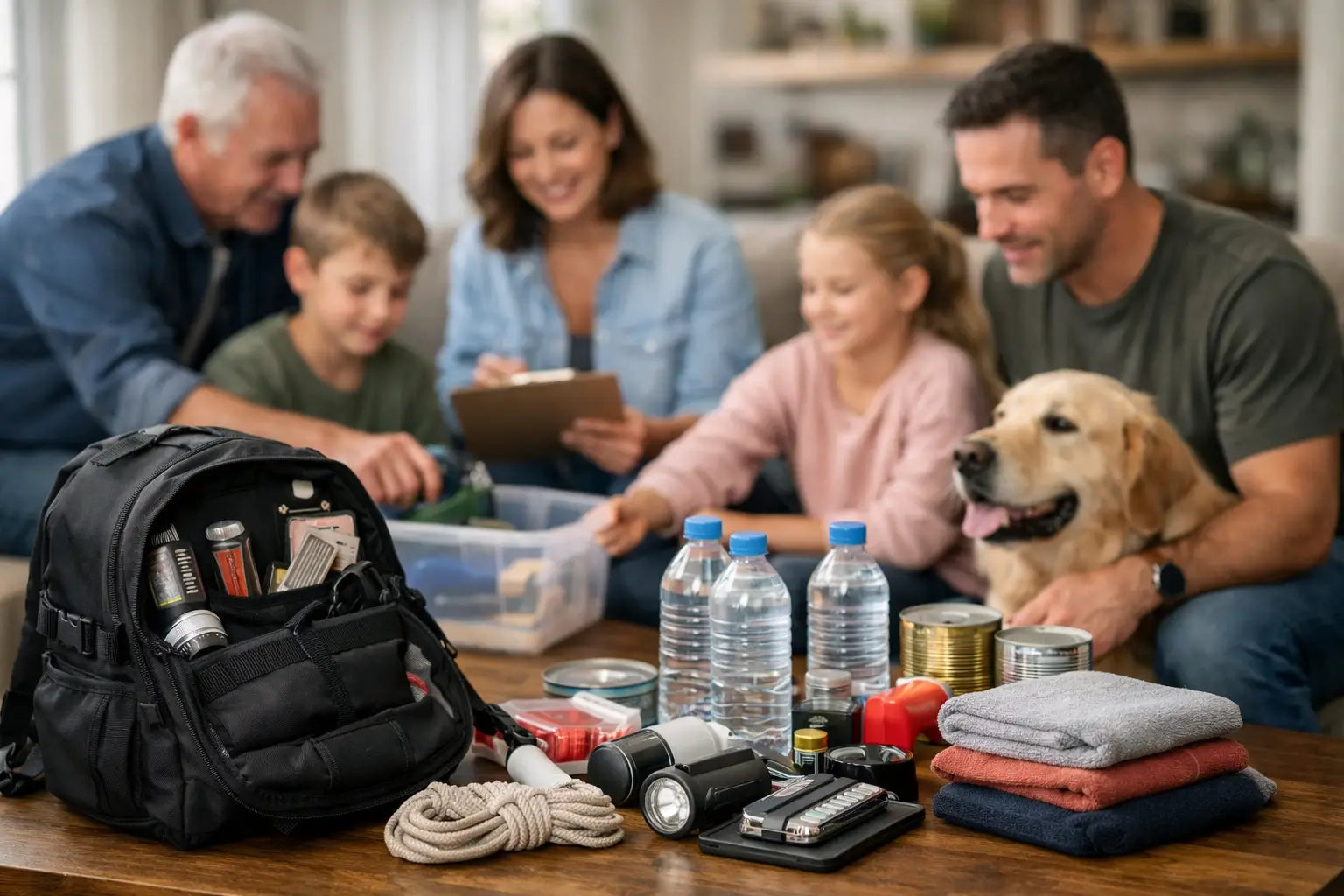
The power went out at 7:12 p.m. Dinner was half-cooked, phones were below 20 percent, and the kids assumed it would be back on in an hour. Twelve hours later, the fridge was warming up, the house was getting cold, and nobody was quite as relaxed. That is usually how family emergency preparedness begins - not with a dramatic scenario, but with one miserable inconvenience that exposes how thin the margin really is.
For most households, the goal is not to prepare for everything. It is to prepare well for the disruptions that are actually likely where you live. A family in Florida should think differently than a family in Oregon. A suburban household with two young kids will need a different setup than grandparents who host the grandkids a few weekends a month. Good preparedness is specific, realistic, and built in layers.
What family emergency preparedness really means
At its core, family emergency preparedness means your household can stay safe, fed, hydrated, informed, and reasonably comfortable when normal systems stop working for a few days or longer. That includes power outages, severe storms, wildfire evacuations, water disruptions, supply shortages, and the kind of local emergencies that never make national headlines but still turn a normal week upside down.
This is where many families get stuck. They picture an overwhelming checklist, a garage full of gear, or a huge one-time bill. In practice, readiness is usually much simpler. You need a plan your family can follow, supplies you can access quickly, and enough backup in the categories that matter most: water, food, light, power, first aid, sanitation, warmth, and communication.
The trade-off is straightforward. If you buy random gadgets without a plan, you spend more and still feel unprepared. If you make a plan without supplies, you are counting on luck. The sweet spot is a practical system that matches your family, your budget, and your local risks.
Start with the emergencies your family is most likely to face
The best family emergency preparedness plan is built around probability first, then severity. That sounds obvious, but many households do the opposite. They worry about rare worst cases and overlook the disruptions that happen every year.
If you live in hurricane country, extended outages and evacuation are not edge cases. If you are in wildfire country, smoke, fast-moving fire conditions, and short-notice evacuation matter more than deep pantry theory. In colder regions, winter storm readiness can be the difference between inconvenience and a serious home safety issue. In earthquake zones, water storage and securing heavy furniture may matter more than a backup generator.
A simple question helps cut through the noise: what are the three most likely ways your household loses normal services for 72 hours? Start there. If you can handle those well, you are already ahead of most people.
Water first, then food
People often start with food because it feels familiar. Water deserves first priority. You can stretch meals, but you cannot improvise safe drinking water for long. A useful baseline is one gallon of water per person per day for at least three days, and more if you have pets, hot weather, medical needs, or limited mobility. Many families are better served by storing closer to two weeks if space allows.
Storage is only half the equation. Think about access and rotation. Cases of bottled water are easy, but they take up space and disappear fast. Larger containers are more efficient, but they need to be filled, stored correctly, and refreshed on schedule. Water filtration also matters, especially for longer outages or for households that may need to use questionable water sources.
Food comes next, and this is where a lot of families can make fast progress. You do not need to jump straight to a year of freeze-dried meals. Start with foods your household will actually eat, that store well, and that do not depend entirely on refrigeration. Then add longer-term shelf-stable options for backup. The right mix depends on your family size, dietary needs, cooking setup, and how long you want your cushion to be.
Power changes everything
When the grid goes down, small problems multiply. Phones die. Medical devices need charging. Garage freezers warm up. Nights get darker and noisier. Power is one of the categories where families feel the difference immediately.
That does not mean every home needs a whole-house generator. For some households, a portable power station is enough to keep phones, lights, a router, and a few essentials running. For others, especially families with medication refrigeration needs, remote work demands, or repeated outage risk, a larger backup power system makes real sense. The right answer depends on what you actually need to run and for how long.
Lighting is part of this conversation too. Good lanterns, headlamps, and battery management are not glamorous, but they reduce stress fast. So do extra charging cables, car chargers, and a habit of keeping critical devices topped off when bad weather is forecast.
A plan matters more than most people think
Supplies help. A family plan keeps those supplies from turning into chaos.
Every household should know who grabs what, where the evacuation bag is, how to shut off utilities if needed, and how to communicate if cell service is spotty. Kids do not need a lecture. They need simple instructions they can remember. Grandparents who care for grandchildren occasionally should have the same basic plan in place, not a different one built from memory.
This is also where paperwork matters. Keep copies of identification, insurance information, prescriptions, emergency contacts, and key medical details in a format you can access if your phone is dead or your home is inaccessible. It is not exciting, but after a fire, flood, or evacuation, paperwork can save hours of stress.
Build for your house, not an imaginary version of it
Preparedness advice often assumes perfect storage space, endless budget, and a highly motivated household. Real life is messier. Maybe your garage runs hot. Maybe your spouse is on board in theory but does not want the basement to look like a warehouse. Maybe you are balancing readiness with sports fees, college savings, and home repairs.
That is why the best approach is modular. Start with a solid 72-hour base for every person and pet in the home. Then expand to two weeks. Then improve specific weak points like cooking without power, water storage capacity, or backup heat. If evacuation is realistic in your area, build that layer early. If sheltering in place is more likely, prioritize comfort, sanitation, and longer-duration supplies.
There is no prize for buying too much too soon. In fact, overbuying often leads to waste, poor rotation, and supplies you do not know how to use. Starting small is not a compromise. It is often the smartest way to build a system your family will maintain.
Family emergency preparedness should include comfort
This part gets overlooked, especially by practical adults who focus on calories and batteries. But stress management matters in an emergency. If your children are scared, if an older relative is cold, or if nobody has slept well, decision-making drops quickly.
That is why warmth, sanitation, and familiarity deserve attention. Blankets, sleeping bags, extra medications, hygiene supplies, comfort foods, baby items, pet food, and basic entertainment for long outages all matter. A deck of cards and familiar snacks will not solve a crisis, but they can make a hard situation more manageable.
The same goes for cooking. Families usually do better when they can heat water, make simple meals, and keep some routine. Even a modest backup cooking setup can change the mood of a long outage.
The gear should match your skill level
One quiet truth about preparedness is that the best equipment is the equipment your family will actually use correctly. Complex systems can be excellent, but only if someone in the house knows how to run them under stress.
Choose tools that fit your real habits. If you will never maintain a complicated fuel-powered system, a simpler backup may serve you better. If your household is serious about long-term food independence, a freeze dryer might make sense. If you are just getting started, a well-built family emergency kit, dependable water storage, and practical backup power will probably move the needle more.
This is where trusted brands and category-based planning help. Instead of buying whatever is on sale, think in terms of systems: emergency food storage, water filtration and storage, first aid and medical, power outage essentials, and shelter or warmth. That mindset leads to fewer gaps.
Review it before the next storm does
Preparedness is not a one-time purchase. Kids grow. Prescriptions change. Batteries expire. Seasons shift. A quick review twice a year usually catches most problems.
Check what is expired, what is missing, what needs to be moved, and what your last emergency taught you. If your family went through a hurricane, wildfire alert, or winter outage recently, use that memory while it is fresh. The best plan is often built from the last thing that went wrong.
At SHTF Prepper Club, we believe families do best when they start with what is likely, build in layers, and choose equipment they can count on. That approach is less flashy than panic buying, but it works better.
You do not need to become a different kind of person to be prepared. You just need to make a few good decisions before the next interruption asks more of your household than a flashlight and a case of bottled water can give.