
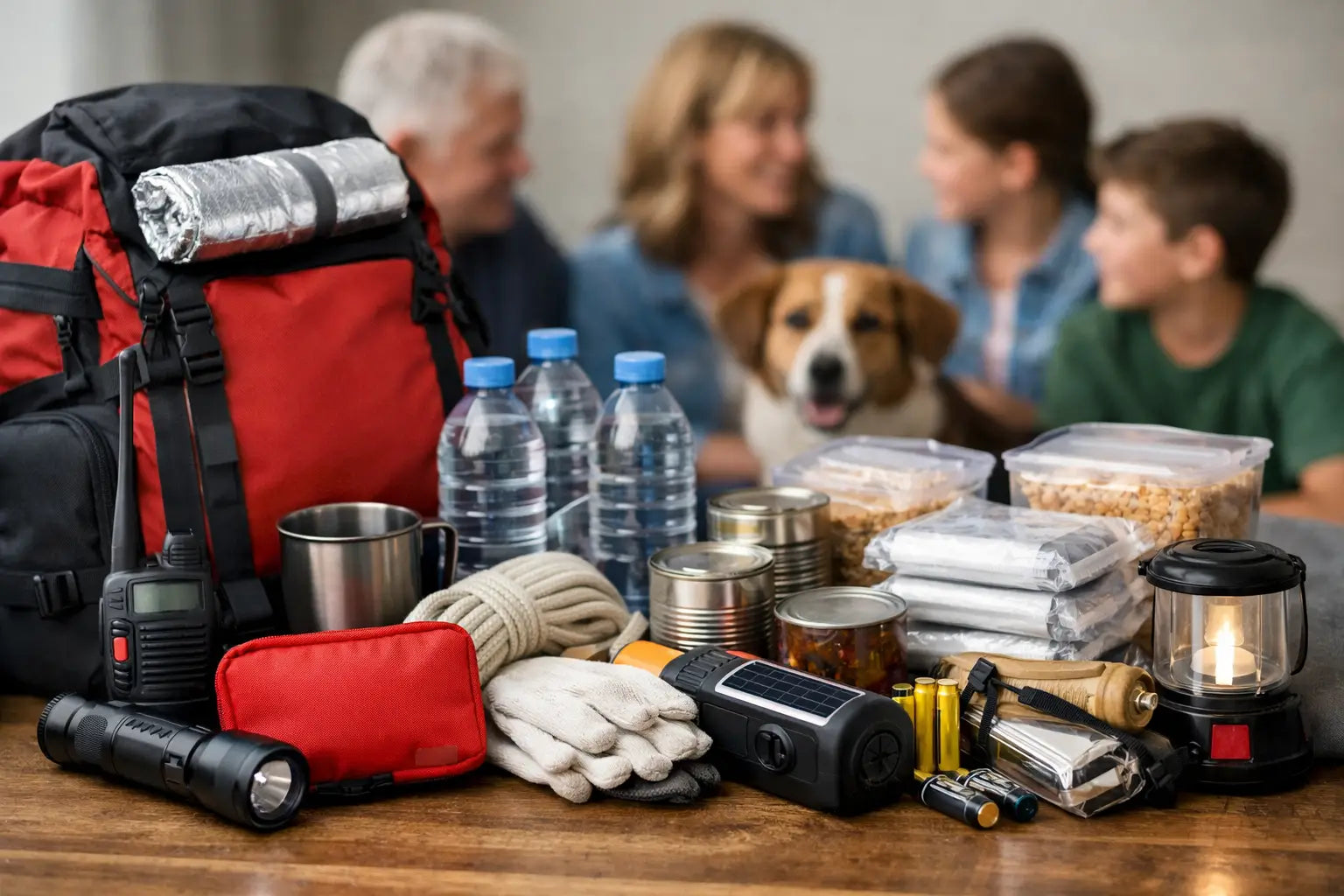
The first night of a long power outage is usually manageable. You use the flashlights, order takeout if restaurants are open, and assume the lights will return soon. By the second day, the questions change: Is the food still safe? How will we charge phones? Do we have enough water? What happens if the roads are blocked or the weather gets worse?
A shelter in place kit gives your household a calm, practical answer before those questions arrive. It is not a pile of random survival gear. It is a set of supplies organized around one simple plan: your family stays safely at home for several days because leaving is unsafe, unnecessary, or simply not possible.
For most families, that is a far more likely scenario than a dramatic evacuation. Winter storms, hurricanes, wildfire smoke, downed trees, chemical spills, extended outages, and public health disruptions can all make home the safest place to be - provided home is ready.
What Is a Shelter in Place Kit?
A shelter in place kit contains the food, water, power, medical supplies, sanitation items, warmth, and communication tools your household needs while remaining at home during an emergency.
It differs from an evacuation bag in one key way: weight and portability are not the priority. You can store more water, keep a better first-aid supply, include backup cooking options, and plan for the actual people who live in your home. That means prescription medications, pet food, infant supplies, reading glasses, mobility equipment, and the comfort items that make a stressful few days easier on children and older adults.
A good target is at least 72 hours of self-sufficiency. Many homeowners should plan for one to two weeks, especially in hurricane country, rural areas, regions with severe winter weather, or neighborhoods where restoration can take time. The right amount depends on your local hazards, household size, storage space, budget, and whether anyone in the home has medical needs.
Start With Water, Not Gadgets
Water is the supply that disappears fastest and is hardest to replace after stores empty. A practical baseline is one gallon per person per day for drinking and basic sanitation. For a family of four sheltering at home for seven days, that is 28 gallons before accounting for pets, cooking, or extra needs during hot weather.
Bottled water can be part of the plan, but it should not be the whole plan. Store a mix of sealed drinking water and larger water containers that fit your available space. Keep a reliable water treatment method as a backup. If a water main breaks, a boil-water advisory is issued, or your stored supply runs low, treatment options give you more flexibility.
Think through your actual water sources, too. A water heater can hold a useful reserve if the water supply is safe. Rain collection may be useful for sanitation, but it needs proper treatment before drinking. Pool water is not drinking water, though it may help with toilet flushing. Knowing the difference ahead of time prevents rushed decisions later.
Plan for the People and Pets in Your Home
The one-gallon guideline is a starting point, not a finish line. Babies may need formula and clean water for bottles. A family member who works outdoors, takes certain medications, or has a health condition may need more. Dogs, cats, and other pets need their own water and food reserve.
Write your household totals down. A clear number turns an abstract goal into a storage plan you can build over several shopping trips.
Build Food Storage Around Meals You Already Eat
Emergency food should reduce stress, not introduce a new problem. If your children will not eat it on a normal Tuesday, they may not happily eat it during a blackout.
Start with shelf-stable foods your family recognizes: canned soups, beans, vegetables, fruit, peanut butter, oatmeal, pasta, rice, crackers, granola, and ready-to-eat meals. Then add longer-term emergency food storage for deeper resilience. Freeze-dried meals and ingredients can be especially useful because they store compactly, last a long time, and require little preparation. The trade-off is that many need water, so food planning always comes back to water planning.
Build around real constraints. If your stove is electric, have a safe outdoor cooking option and fuel you know how to use. If a family member has food allergies, store safe alternatives separately and label them clearly. Include a manual can opener, disposable plates if water conservation matters, and a way to wash hands before preparing food.
Do not forget familiar comfort foods. Hot cocoa, coffee, tea, shelf-stable milk, or a favorite snack can make a difficult night feel more normal. That matters, especially for children.
Power, Light, and Communication Belong Together
A flashlight is useful. A household lighting and power plan is better.
Store several battery-powered lights so no one needs to move through a dark house with a phone flashlight. Headlamps are particularly helpful for cooking, checking a breaker panel, helping a child, or administering first aid because they keep both hands free. Keep spare batteries in the correct sizes, but do not rely on batteries alone.
A portable power station can keep phones, medical devices, radios, lights, and small appliances running during an outage. Capacity matters. Charging phones and powering a CPAP machine are very different jobs, so calculate essential loads before buying. A larger unit is not automatically better if it is too expensive for your budget or too heavy for the person who will move it.
For extended outages, consider how you will recharge your backup power. Solar panels can be a useful option, but performance depends on sunlight, weather, placement, and season. A generator may support more equipment, but it requires fuel management and must always operate outdoors, far from doors, windows, and vents. Carbon monoxide is a real risk, not a technical footnote.
Keep a battery or hand-crank radio available for local alerts if cellular networks are overloaded or internet service goes down. Maintain a paper list of family contacts, medical providers, insurance numbers, and utility accounts. Your phone may have the information, but a dead phone does not.
Make Medical, Sanitation, and Safety Supplies Easy to Reach
Small inconveniences become bigger during an emergency. A minor cut needs cleaning. A sick child may need fever medication. A toilet may not flush. These are the situations that make a well-stocked home kit valuable.
Your first-aid supplies should go beyond a few adhesive bandages. Include wound care items, gauze, gloves, antiseptic, basic over-the-counter medications, a thermometer, and supplies specific to your family. Keep prescription medications on a rotation plan whenever possible. Ask your pharmacist or physician what is reasonable for your situation rather than assuming you can always refill during a disruption.
For sanitation, store toilet paper, soap, hand sanitizer, trash bags, disinfecting wipes, feminine hygiene products, and sturdy disposable gloves. If water service may be disrupted, have a backup toilet plan. A portable toilet setup or lined bucket system can work in a short-term emergency, but everyone should understand how it will be used and where waste will be stored safely.
Also check the simple home safety basics: smoke alarms, carbon monoxide detectors, fire extinguishers, and extra fire extinguisher access near any backup cooking area. These items are not exciting, but they do more to protect a family than many specialized tools.
Store Your Shelter in Place Kit Where It Works
The best supplies are the ones you can find in the dark. Avoid scattering everything across the garage, pantry, basement, and car unless you have a written inventory that is easy to follow.
A practical setup often uses zones. Keep daily-use items such as flashlights, first aid, radios, and chargers in a central closet or cabinet. Store food and water in the pantry, basement, or another temperature-stable area. Keep outdoor cooking equipment and fuel in their appropriate safe location. Label containers clearly, and make sure every adult in the household knows where the kit is.
Avoid hot attics, damp crawl spaces, and areas that flood. Temperature swings can damage batteries, shorten food quality, and weaken plastic water containers. If you live in a wildfire or hurricane-prone area, consider placing key supplies where they are accessible without going outside.
Review the Plan Before You Need It
A shelter in place kit is not something you buy once and forget. Food expires. Children grow. Medications change. Batteries corrode. Your family may add a pet, begin caring for an aging parent, or replace an electric range with a gas one.
Set a reminder twice a year to check water containers, rotate food, test lights, recharge power stations, and update contact information. Use the clock changes, the start of hurricane season, or the first cold weekend of fall as your cue. Let children help with age-appropriate tasks so they understand the plan without feeling frightened by it.
Start with the biggest gaps, not the perfect shopping cart. Water for three days, food your family will eat, safe light, basic medical supplies, and a way to receive information will carry you a long way. SHTF Prepper Club is built around that practical approach: start small, improve what matters most, and give your family the steady confidence that home can remain a safe place when normal routines pause.