
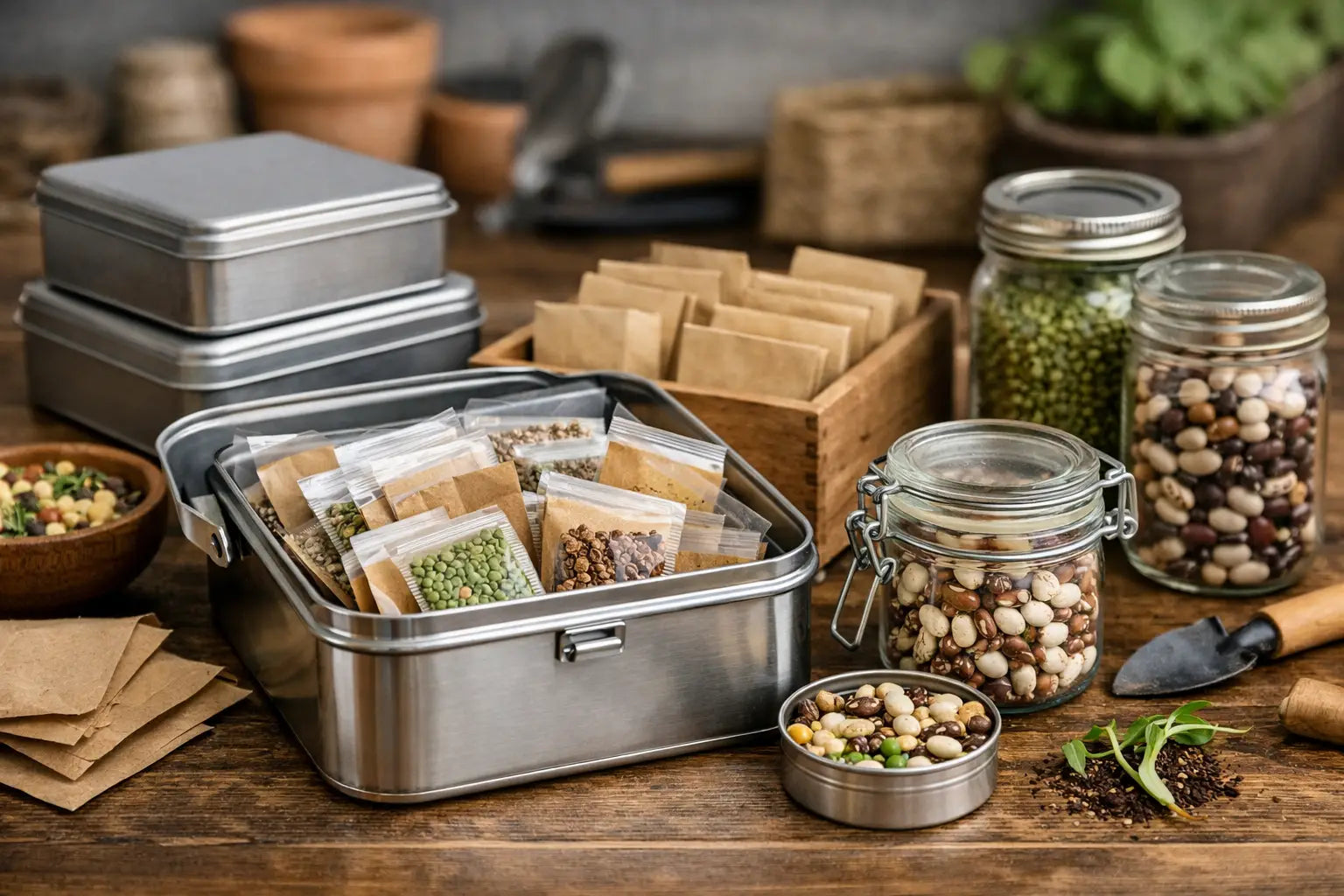
A seed vault is not a magic box that guarantees a garden years from now. It is a practical reserve of seeds, stored carefully enough that your family can plant when store shelves are thin, prices jump, or you simply decide it is time to grow more of your own food. This seed vault storage guide explains how to protect that reserve without turning a kitchen cabinet into a science project.
For most households, the goal is straightforward: keep a well-chosen supply of open-pollinated garden seeds cool, dry, dark, organized, and rotated. A modest seed reserve paired with a few successful growing seasons is far more useful than a giant collection you never open.
Start With Seeds Your Family Will Actually Grow
The best seed vault begins with your dinner table. Store varieties your family recognizes, will eat, and can reasonably grow in your space. A suburban backyard, a few raised beds, patio containers, or a community garden plot can all produce meaningful food, but each has limits.
Start with dependable crops that fit your climate and cooking habits. Tomatoes, beans, peas, lettuce, carrots, zucchini, peppers, cucumbers, squash, and herbs make sense for many families. In smaller spaces, prioritize crops that are productive and expensive to buy fresh, such as salad greens, herbs, pole beans, and tomatoes. Families with more room may add winter squash, corn, potatoes, dry beans, and storage onions.
Open-pollinated seeds are often a smart choice for long-term food independence because you can save seed from many varieties after a successful harvest. Hybrid seeds can be excellent garden performers, so there is no need to avoid them entirely. The trade-off is that saved hybrid seed may not grow true to the parent plant. If seed saving is part of your long-range plan, include open-pollinated varieties from the beginning.
A prepared seed collection from a reputable supplier, including options such as Seed Armory, can give a new gardener a useful starting assortment. Still, treat any collection as a starting point. Add varieties proven in your local growing conditions, and remove seeds that do not earn a place in your garden.
Seed Vault Storage Guide: Control Heat and Moisture
Seeds are living embryos in a resting state. Heat and moisture shorten that resting period. Light is less damaging than those two factors, but a dark location also helps prevent temperature swings and makes organization easier.
For a household seed vault, aim for a place that stays consistently cool, dry, and dark. A climate-controlled closet, interior basement shelf, or refrigerator can work well. Avoid the garage, attic, shed, laundry room, and any cabinet near an oven, dishwasher, or exterior wall. Those locations often experience the very temperature and humidity changes that reduce seed life.
The refrigerator is a good option for long-term storage if your seeds are sealed against moisture. It is usually cooler and more stable than most homes. The downside is condensation. Every time a cold container is opened in a warm room, moisture can form on packets and seeds. Let a sealed container reach room temperature before opening it, then reseal it promptly.
A freezer can preserve properly dried seeds for a very long time, but it is not necessary for most family seed reserves. Use it only if seeds are fully dry, packed in moisture-proof containers, and unlikely to be opened often. Frequent thawing and refreezing creates avoidable risk. For most beginners, a stable refrigerator or cool closet is the simpler, more reliable choice.
Use Layers of Protection, Not One Loose Box
Original seed packets are useful because they carry the variety name, planting information, and often the packing date. They are not always airtight. Keep packets inside a second container that protects against humidity, pests, and accidental spills.
Small labeled envelopes or resealable bags can organize individual varieties. Place those inside a gasketed storage box, glass jar with a tight lid, or food-safe metal container. Add a fresh desiccant packet to the larger container to absorb residual moisture. Desiccant is particularly helpful in humid regions and for seeds kept in a refrigerator.
Do not use a desiccant packet that has been sitting open in a drawer for years. It may already be saturated. Choose reusable indicating desiccant when possible, so you can see when it needs to be dried and reused. Keep seeds away from loose powders, strong odors, and areas where rodents can chew through packaging.
The label matters as much as the container. Write the crop, variety, source, and year packed or purchased on every packet. If you save seed yourself, also note the harvest year and any useful details, such as “best producer in heat” or “grew well in containers.” Six months from now, those notes will save you from guessing.
Know Which Seeds Need Faster Rotation
Seed longevity varies. Storage conditions matter greatly, but some kinds naturally keep longer than others. This is why a seed vault should be rotated rather than stored and forgotten.
Under good cool, dry conditions, lettuce, tomatoes, peppers, cucumbers, squash, and many brassicas can often remain viable for several years. Beans, peas, carrots, onions, parsley, corn, and parsnips generally deserve closer attention. Onion and parsnip seed are especially short-lived compared with many garden favorites.
Rather than memorizing a chart, use a simple family rule: grow older seeds first, replace what you use, and test anything that is getting old before relying on it. If you have three packets of beans from different years, plant the oldest one this season and keep the newer packets sealed as backup.
A seed reserve does not need to hold a decade of every crop. That sounds reassuring, but it can create waste and leave you with varieties that no longer fit your garden. A two- to five-year supply of your most useful crops, actively rotated through ordinary gardening, is a more practical target for many households.
Test Germination Before It Matters
A quick germination test tells you whether older seed is still worth planting. Place 10 seeds on a damp paper towel, fold it over, and set it inside a labeled plastic bag or covered container. Keep it warm but not hot, and check it according to that crop's normal germination time.
If eight of 10 seeds sprout, you have roughly 80% germination. That is still usable. Plant a little more densely than usual, or sow extra cells and thin later. If only two or three sprout, replace the packet and do not count it as part of your emergency garden plan.
This small habit prevents a frustrating situation: putting time, water, and effort into a garden bed only to discover that the seed was no longer viable. Test a few older packets during late winter, when you are already thinking about the coming garden.
Build a System You Can Maintain
A seed vault works best when it is part of an ordinary household rhythm. Keep an inventory sheet in the container or a simple note on your phone. Record what you have, how many packets remain, the purchase or harvest year, and when you last tested it. You do not need perfect records. You need enough information to make the next season easier.
Set one annual check-in, ideally before seed-starting season. Look for moisture damage, insect activity, faded labels, and packets that need replacement. Refresh desiccant if needed. Then make a planting plan based on what is oldest, what your family used most, and what you want to learn next.
If an emergency interrupts normal shopping, your seed reserve is only one part of the plan. Seeds need soil, water, sunlight, tools, and time. Keep basic hand tools, a way to store or filter water, and simple gardening supplies alongside your broader family preparedness plan. If you rent or have limited outdoor space, containers, balcony-safe crops, and a few indoor herbs may be the realistic first step.
Children and grandchildren can be part of this process, too. Let them choose a few crops, help label packets, and see a germination test work. Gardening skills are easier to build during calm seasons than during a stressful disruption.
The most valuable seed vault is the one you understand and use. Store it well, plant from it regularly, learn what grows in your yard, and replace what you use. A few organized packets and the confidence to grow them can become a quiet, useful layer of security for your family.