
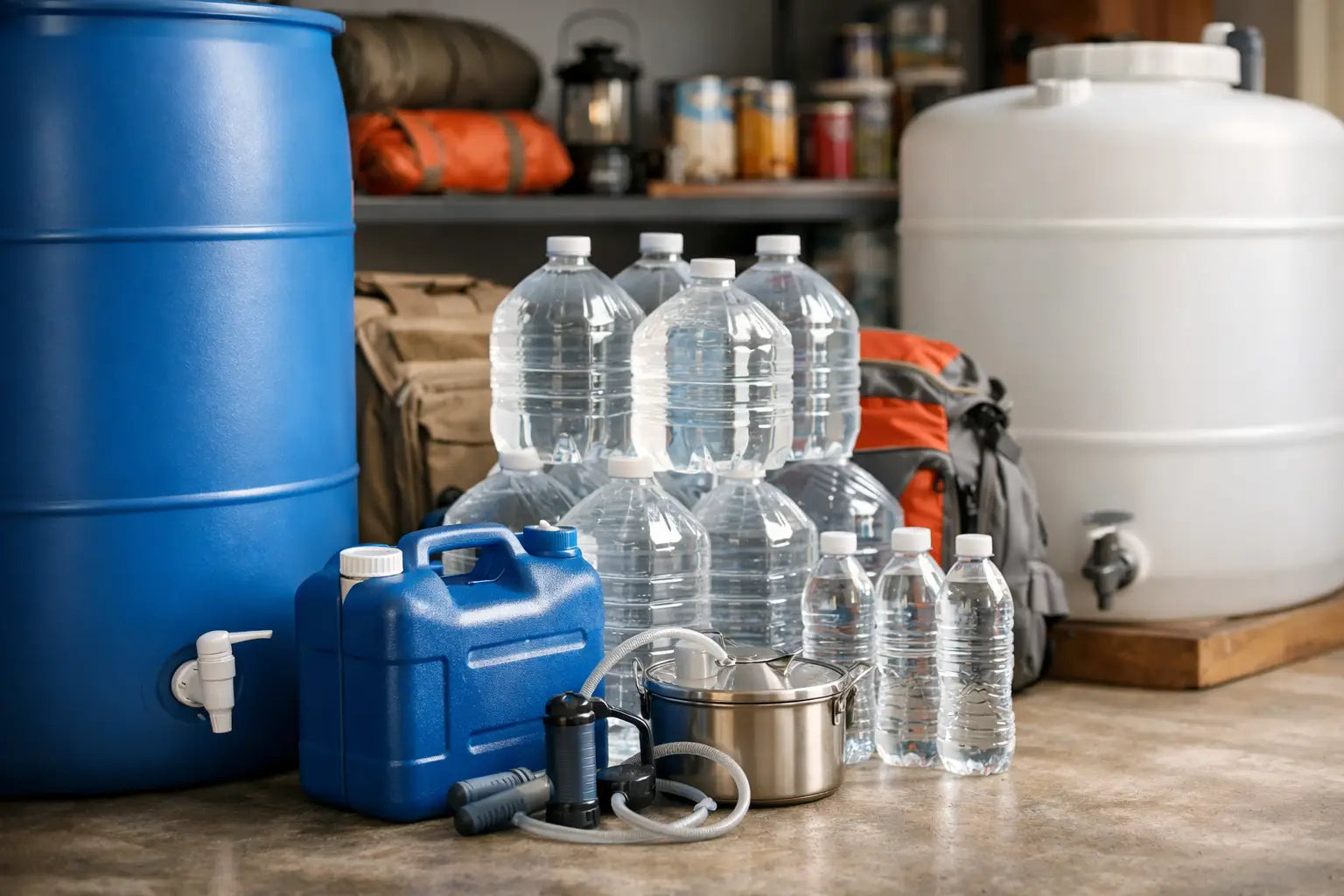
A water main breaks. The power goes out. A hurricane closes roads for three days. In each case, emergency water storage turns a stressful household problem into a manageable one. You do not need a bunker or a warehouse to get started. You need a realistic amount of clean water, safe containers, and a plan your family can maintain.
Water is the first preparedness category to handle because it is hard to replace once shelves are empty. You can skip a hot meal for a day. You cannot safely skip drinking water, sanitation, or the water needed for medications and basic hygiene.
How Much Emergency Water Storage Does a Family Need?
Start with the standard baseline: one gallon of water per person, per day. That amount covers drinking and limited sanitation. A household of four needs four gallons a day, 28 gallons for one week, and 56 gallons for two weeks.
Three days is a worthwhile starting point, especially for apartment dwellers or families with limited space. But a two-week supply is a more comfortable goal for homeowners. Major storms, wildfires, ice events, and infrastructure failures can disrupt water service longer than most people expect. Delivery trucks may not reach your neighborhood right away, and stores may have strict purchase limits.
Your family may need more than the baseline. Add water for pets, formula-fed babies, older relatives, and anyone with a medical condition that requires extra fluids or clean water for care. Hot climates and physically demanding cleanup work also raise daily needs. If you live in Texas, Florida, the Carolinas, California, or an area with frequent winter outages, planning beyond three days makes practical sense.
A simple way to set a household target is to write down the people and animals who would be under your roof during an emergency. Include visiting grandchildren if that is a regular possibility. Then multiply the total daily gallons by the number of days you want to cover. That number gives you a clear goal instead of a vague pile of bottled water in the garage.
Choose Containers You Can Actually Use
The best emergency water storage system is not always one large tank. For most families, a mix of container sizes is easier to store, carry, and use.
Cases of commercially bottled water are useful for a first layer of readiness. They are portable, familiar, and simple to hand to a neighbor or pack into an evacuation vehicle. Their downside is volume: a week of water for four people takes up serious space, and small bottles create more plastic waste.
Larger, food-grade water containers make more sense for your home supply. Five- to seven-gallon containers are manageable for many adults, although a full seven-gallon container weighs almost 60 pounds. If lifting is a concern, use smaller containers rather than assuming someone will be able to move a heavy one during an outage.
For deeper home storage, stackable water bricks, larger water containers, or a dedicated tank can store a meaningful supply without filling every closet. The right choice depends on your space and your physical ability. A family in a suburban home may have room for several stackable containers in a basement or climate-controlled garage. A condo owner may prefer a combination of bottled water and compact containers tucked into closets.
Avoid storing drinking water in milk jugs, juice bottles, or containers that previously held chemicals. They can be difficult to sanitize, may break down over time, and are not designed for long-term water storage. Use containers labeled for potable water or food-grade use, with secure caps that keep out dust and pests.
Store Water Where It Will Stay Safe
Water is heavy. One gallon weighs about 8.3 pounds, so 56 gallons weighs more than 460 pounds before counting containers. Spread that weight across sturdy shelves, closets, and storage areas rather than stacking everything in one risky spot.
Keep your main supply away from direct sunlight, gasoline, paint, pesticides, and other strong-smelling chemicals. Heat and light can shorten the useful life of stored water and weaken some containers. A cool, dark interior closet, basement shelf, or temperature-moderated garage is usually better than an uninsulated shed or attic.
Do not place all your water in one location. A burst pipe, falling tree, garage fire, or flood can make one part of the home inaccessible. Keep a small amount in your kitchen or pantry, a larger supply in a protected storage area, and portable water in or near your evacuation supplies. This is not about making the plan complicated. It is about avoiding a single point of failure.
If your area floods, store water above likely flood levels. If earthquakes are a concern, secure large containers so they cannot tip or fall. If freezing temperatures are common, remember that water expands as it freezes. Follow the container manufacturer’s fill guidance and avoid leaving containers in places that regularly drop below freezing.
Label Every Container
Mark each container with the fill date and its intended use. A simple label such as “Drinking Water - Filled March 2026” prevents guesswork later. If you have separate water for cleaning or flushing toilets, label that clearly too.
A basic inventory sheet on the pantry door can help. Note how many gallons you have, where they are stored, and the next rotation date. This matters when life gets busy, because preparedness works best as a household routine, not a one-time shopping project.
Rotate Water Without Turning It Into a Chore
Commercially bottled water should be rotated according to the date on the package. Properly stored water in sanitized, food-grade containers can last a long time, but container condition and storage temperature matter. Many households choose to rotate self-filled water every six months for confidence and simplicity.
Pick two dates you already remember, such as daylight saving time changes, your child’s birthday month, or the start of hurricane season. Check containers for leaks, cloudiness, cracks, or damaged caps. Use older water for plants, cleaning, or other non-drinking tasks, then refill containers with clean municipal water.
If your water comes from a private well, filling storage containers may require extra treatment and testing. The same is true if you are using collected rainwater. These sources can be valuable parts of a broader plan, but they should not be assumed safe to drink without appropriate treatment.
Storage and Filtration Solve Different Problems
Stored water is the clean water you already have. Water filtration and purification are your backup when stored water runs low, when a boil-water advisory is in effect, or when you must use an alternate source.
A filter can remove many contaminants and organisms, depending on its design, but not every filter removes viruses, chemicals, or dissolved metals. Purification drops, tablets, boiling, and some advanced systems address different risks. Read the capabilities of any system before an emergency, not while your phone battery is fading and the water coming from the tap looks questionable.
For a family plan, keep both. Build stored water first, then add a dependable way to treat additional water. At SHTF Prepper Club, that practical pairing is central to water readiness: a supply your family can use immediately and a backup option for disruptions that last longer than expected.
Do not rely on a backyard pool, hot tub, or water heater as your only plan. Those sources may be useful for sanitation or, in specific circumstances, emergency use, but they come with contamination and access concerns. They are backups, not a replacement for safely stored drinking water.
Keep Water Ready for an Evacuation
Home storage is only half the picture. A wildfire, hurricane evacuation order, or nearby chemical spill may require you to leave before you can load large containers into the car.
Keep a small supply of sealed water in each family evacuation bag and in your vehicle when weather conditions allow. A reasonable target is enough for at least one day per person while traveling, with more if you have the space. Review it seasonally, particularly if bottles have been exposed to extreme heat or freezing cold.
Plan for pets here, too. A thirsty dog in a stopped line of traffic is not an afterthought. Pack a collapsible bowl and enough water to cover the first day away from home.
Start With the Space You Have
You do not have to buy two weeks of water this weekend. Start with one case of bottled water and one or two durable containers. Then add a few gallons each month until your household reaches its target. That approach is easier on the budget, easier to organize, and far more likely to last.
Set aside 15 minutes this week to count what you have, choose a storage location, and write down your first gallon goal. Clean water is not a dramatic purchase. It is one of the quietest ways to give your family more options when the ordinary systems you depend on are temporarily unavailable.