
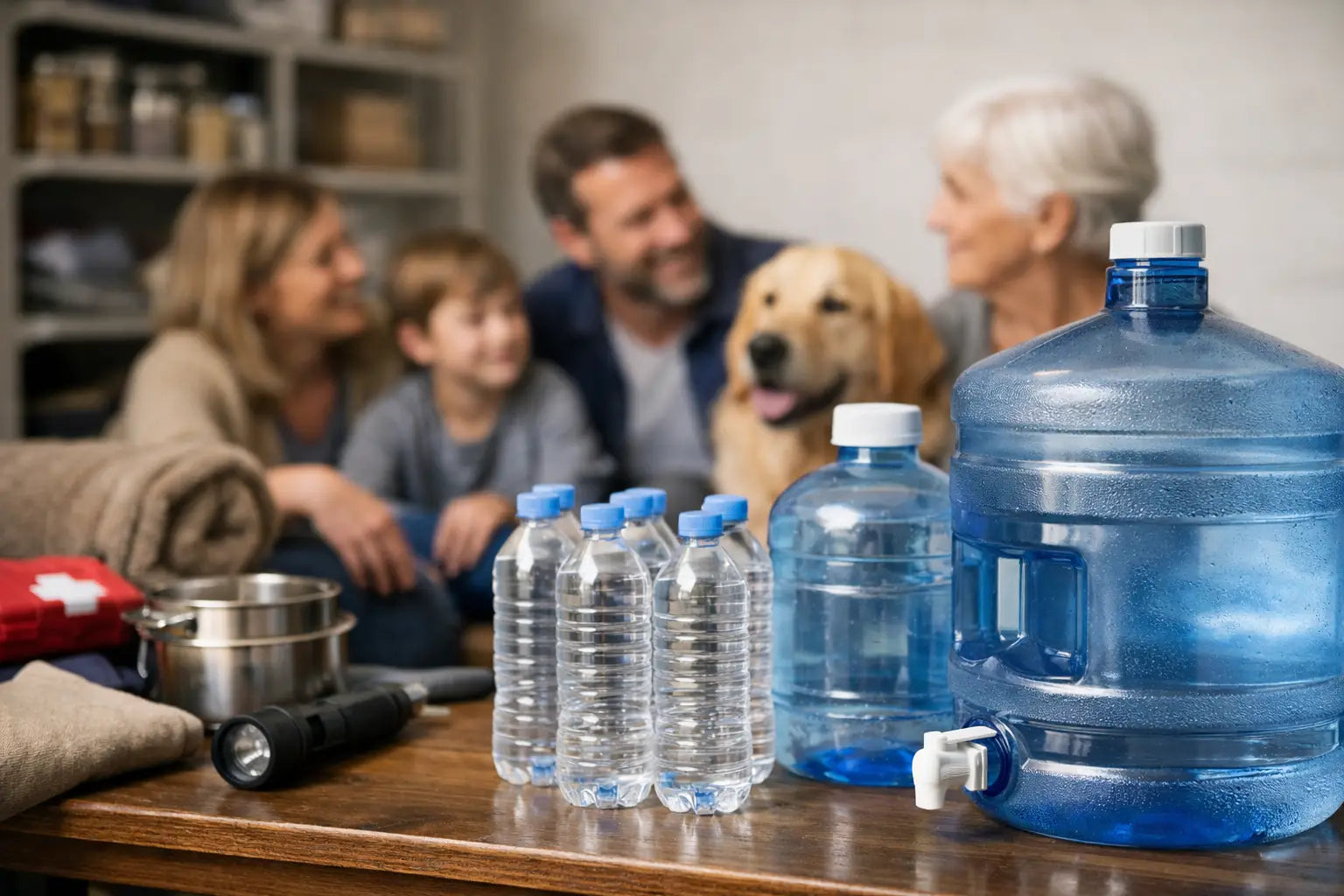
A full bathtub is helpful for flushing toilets. It is not a family water plan. When a storm, wildfire, broken water main, or long power outage interrupts the tap, the water you already have on hand becomes the resource that keeps meals simple, hygiene manageable, and stress lower.
Good water storage does not require a bunker or a garage filled with identical barrels. It starts with knowing how much your household needs, choosing containers you can actually manage, and putting them in places where they will stay clean and accessible. A few practical decisions now can spare your family a difficult scramble later.
How Much Water Storage Does a Family Need?
Start with one gallon per person per day for drinking and basic sanitation. That is the baseline, not a luxury allowance. A family of four needs 28 gallons for one week and 56 gallons for two weeks.
Two weeks is a sensible first goal for most households. It covers many common disruptions without demanding an enormous amount of space. If you live where hurricanes, wildfires, winter storms, or earthquakes can cut off services for longer, build toward 30 days over time.
Your actual number may be higher. Add water for pets, and plan extra for babies, older adults, nursing mothers, anyone with a medical condition, and hot climates. A large dog may need roughly a gallon a day in warm weather. If you use water for cooking freeze-dried meals, cleaning wounds, or washing dishes, your supply will go faster than the minimum calculation suggests.
Do the math for your household, then round up. A family of five with a dog is not really planning for five people. They are planning for six daily water users.
Use More Than One Type of Container
The best water supply is rarely one giant container. Large tanks offer volume, but smaller containers are easier to carry, rotate, and use if part of the home is inaccessible. A mixed system gives your family options.
Small containers for everyday access
Commercially bottled water, boxed water, and sealed gallon jugs are easy to place in closets, under beds, and on pantry shelves. They are useful for evacuation bags and for the first day or two of an emergency, when you want clean drinking water without opening your larger reserve.
The trade-off is space and cost per gallon. Store-bought cases are a good starting point, but relying on them alone becomes bulky for a two-week supply. Check bottles periodically for leaks, crushed plastic, or damage from heat.
Stackable containers for a practical home reserve
Food-grade stackable water containers and water bricks are often the sweet spot for suburban families. They hold more than a bottle, fit shelves and closets, and can be moved by one adult. A few containers near the kitchen, garage, or laundry room are easier to use than a single heavy barrel.
Choose containers made specifically for drinking water. Do not repurpose milk jugs, juice bottles, paint buckets, or containers that once held chemicals. Even thoroughly washed containers can retain residue or become difficult to sanitize safely.
Large tanks and barrels for longer disruptions
A 55-gallon water barrel, larger stationary tank, or rainwater collection system can make sense when you have a garage, shed, basement, or protected outdoor area. These systems provide real depth for a longer emergency, especially for toilet flushing, washing, and other non-drinking needs.
They also require planning. A full 55-gallon barrel weighs more than 450 pounds, so set it on a level, sturdy surface before filling it. It needs a pump, siphon, or spigot that your family knows how to use. A barrel is excellent storage, but it is not portable water.
Store Water Where It Will Stay Safe
Water itself does not spoil, but its container and surroundings matter. Heat can weaken plastic and affect taste. Sunlight encourages algae growth in translucent containers. Chemicals, gasoline, and pesticides can contaminate water through fumes or a damaged seal.
Keep drinking water in a cool, dark place away from direct sunlight and household chemicals. A temperature-controlled closet, basement shelf, pantry corner, or insulated garage cabinet is usually better than an exposed shed or hot attic. In areas where freezing is common, avoid locations that will freeze solid. Frozen water expands and can crack containers.
Think about access, too. If a storm blocks your garage door or an earthquake makes one part of the house unsafe, can you still reach your water? Splitting your supply between two or three safe locations is a simple safeguard. Keep a small amount on each floor if anyone in the household has mobility limitations.
Fill and Treat Water the Right Way
Factory-sealed commercial water is the simplest option. Keep it in its original packaging, use the manufacturer date as a rotation reminder, and replace damaged containers promptly.
For containers you fill at home, use potable water containers only. Wash them with dish soap and water, sanitize according to the container manufacturer’s directions, fill with treated municipal tap water, and seal tightly. If you use untreated well water or have concerns about your municipal supply, treatment matters before storage.
Water preserver products can extend the recommended storage period when used exactly as directed. They are helpful for larger containers that you do not want to empty frequently. They do not fix a dirty container or make visibly contaminated water safe.
A quality water filter and a backup purification method belong beside stored water, not instead of it. Filters are valuable when your supply runs low, but they have limits. Some remove bacteria and protozoa but not viruses, chemicals, or salt. Purification drops or tablets are compact backups, although they can change the taste and require waiting time. Keep the instructions with the equipment so nobody has to search for them under pressure.
Make Rotation Part of Household Routine
The hardest part of water storage is not buying containers. It is remembering what is there six months later. A simple rotation system keeps the supply dependable without turning preparedness into another complicated household project.
Label every filled container with the fill date and, if relevant, the treatment used. Put newer water behind older water. Use older stored water for watering plants, cleaning, or other non-drinking household tasks before refilling the container. If you store cases of bottled water, move one case into normal household use occasionally and replace it with a new one.
Many families tie this task to daylight saving time, a birthday month, or the first weekend of spring and fall. The exact schedule depends on your containers, water source, treatment, and storage conditions. What matters is having a schedule your family will keep.
During that check, inspect lids, spigots, pumps, and filters. Make sure children and visiting grandparents know which containers are for drinking. Replace anything that looks cloudy, leaks, smells unusual, or has been stored in extreme heat.
Plan for Water Beyond Drinking
Drinking water comes first. But a more comfortable emergency also requires a plan for basic sanitation. Stored rainwater or water from a larger non-potable tank can help flush toilets, wash hands, and clean up spills. Keep it clearly marked as non-drinking water.
If your water service stops, conserve immediately. Use disposable plates when appropriate, postpone laundry, take sponge baths, and collect gray water from handwashing for toilet flushing when safe to do so. These small adjustments stretch the clean water your family needs most.
Do not assume a pool, hot tub, water heater, creek, or rain barrel is automatic drinking water. Each can have contamination concerns. A water heater may be an emergency source if the water was safe before the outage and the tank remains intact, but it should be accessed carefully and treated as needed. Rainwater is useful, yet it needs proper collection, storage, and treatment before drinking.
Build Your Supply in Stages
A case of bottled water and a quality filter are a meaningful start. Next, add enough stackable containers to reach one week. Then work toward 14 days, followed by a larger tank or barrel if your space, budget, and local risks justify it.
That approach is more realistic than trying to solve every scenario in one shopping trip. SHTF Prepper Club families often build readiness category by category, and water is one of the best places to begin because the need is immediate and the plan is straightforward.
Set aside 20 minutes this week to count the water already in your home, calculate your 14-day target, and choose the first gap to fill. Your family does not need a perfect system by Friday. They need a dependable next step.